

For days, U.S. President Donald Trump and his administration had raised expectations of a dramatic announcement, promising an “economic D-Day” against Iran, invoking the term associated with the Allied invasion of Normandy during World War II. In a Truth Social post last Thursday, Trump promised unprecedented economic warfare in an effort to isolate Iran and force it into submission. His Treasury secretary, Scott Bessent, said the objective was to bring about the regime’s collapse.
Hours before Monday’s news conference, which he had announced several days earlier, Bessent further raised expectations in an opinion article for the Financial Times. “At dawn begins an economic D-Day — the single greatest financial offensive ever marshalled against an adversary,” he wrote.
US Treasury Secretary announces ‘Operation Economic Outcast’ against Iran


But it was not Trump who stepped up to the podium in Washington on Monday. It was Bessent, and the reason soon appeared clear: in practice, the announcement amounted largely to another threat, one of many made since the war began.
Bessent did announce new sanctions targeting around 60 individuals, entities and vessels with links to Iran, but such sanctions announcements are not in themselves unusual. The centerpiece of his announcement was instead a warning to countries around the world: cut all economic ties with Iran or face punishment yourselves.
In prepared remarks before taking reporters’ questions, Bessent said the campaign would intensify gradually until Iran was economically isolated and forced to choose between near-total isolation and compromise in negotiations to end the war. The Treasury Department described the objective as severing Iran’s economic lifelines until Tehran stood alone.
But when Bessent was asked why Washington was not immediately punishing countries that continue to do business with Iran, he effectively acknowledged that doing so could carry severe consequences for the world economy.
The question came from a reporter who noted that the original D-Day was not merely a threat and that the United States had not warned Nazi Germany in advance of the Allied invasion. Why, the reporter asked, were the sanctions not being imposed immediately? “We are giving everyone the opportunity to remedy bad behavior. Why would I want to blow up the global financial system?” Bessent replied.
He said Washington wanted to give countries a short period to change course before deploying secondary sanctions, which he described as an extremely powerful tool. Bessent said the administration believed “a warning shot” was appropriate, while making clear that countries that refused to meet U.S. expectations could ultimately find themselves outside the dollar-based financial system.
Gallery

Trump and Xi Jinping. The Chinese president is due in Washington next month, and Trump does not want another trade war
(Photo: Evan Vucci / POOL / AFP)
“We know who they are, they know who they are,” Bessent added, referring to countries that he said continue to provide Iran with a financial or commercial lifeline. He warned that when the “hammer of U.S. Treasury actions” came down on them, they would have only themselves to blame.
But he gave no explicit deadline and did not identify the countries concerned. He also declined to say whether the threat applied to China, which for years has largely ignored U.S. sanctions and continued buying Iranian oil.
China is currently unable to import Iranian crude as it did before because of the U.S. naval blockade of Iranian ports. Still, international media noted that the roughly 60 entities targeted in Monday’s sanctions did not include major Chinese financial institutions accused of helping Iran circumvent previous restrictions.
If Trump follows through and imposes sanctions on China, he risks triggering another trade war with Beijing. Analysts believe he would prefer to avoid that for now, particularly with Chinese President Xi Jinping expected to visit Washington next month.
Trump hopes during that visit to extend the temporary agreement reached with Beijing last November, which ended the trade war he had been waging against China. Turkey and Russia also maintain significant economic ties with Iran.
Trump himself made no public reference to the new sanctions campaign on Monday and did not mention it during an event later at the White House. Hours before Bessent’s announcement, however, he posted a brief message on Truth Social about the plunge in Iran’s currency: “IRAN IS COMPLETELY COLLAPSING!!!”
In his announcement, Bessent said the United States would focus its new campaign, dubbed “Operation Economic Outcast,” on five sectors that Washington says Iran uses to sustain its economy: digital assets, gold, technology, aviation and shipping.
He indicated that a “major” announcement involving sanctions against a financial institution was expected by the end of the week, although he did not identify it.
During the news conference, however, he specifically mentioned Bank Melli, the Iranian state-owned bank with branches and subsidiaries around the world, including in Britain, France, Germany, Hong Kong and Russia. Bessent said those overseas operations must be shut down or risk exclusion from the U.S. dollar system.
Washington has previously accused Bank Melli of providing financial services to entities involved in Iran’s nuclear and ballistic missile programs.
Markets were unimpressed too
The relatively muted impact of Monday’s announcement was also reflected in the way it was received by the U.S. media. The New York Times portrayed Bessent’s promised crippling sanctions campaign as having ultimately produced another round of warnings rather than an immediate economic strike.
Financial markets also showed little reaction. Oil prices had risen in the days before the announcement but fell after Bessent spoke, suggesting investors had expected something more consequential.
Market commentary noted that there was little in the announcement that required investors to immediately reassess the economic picture.
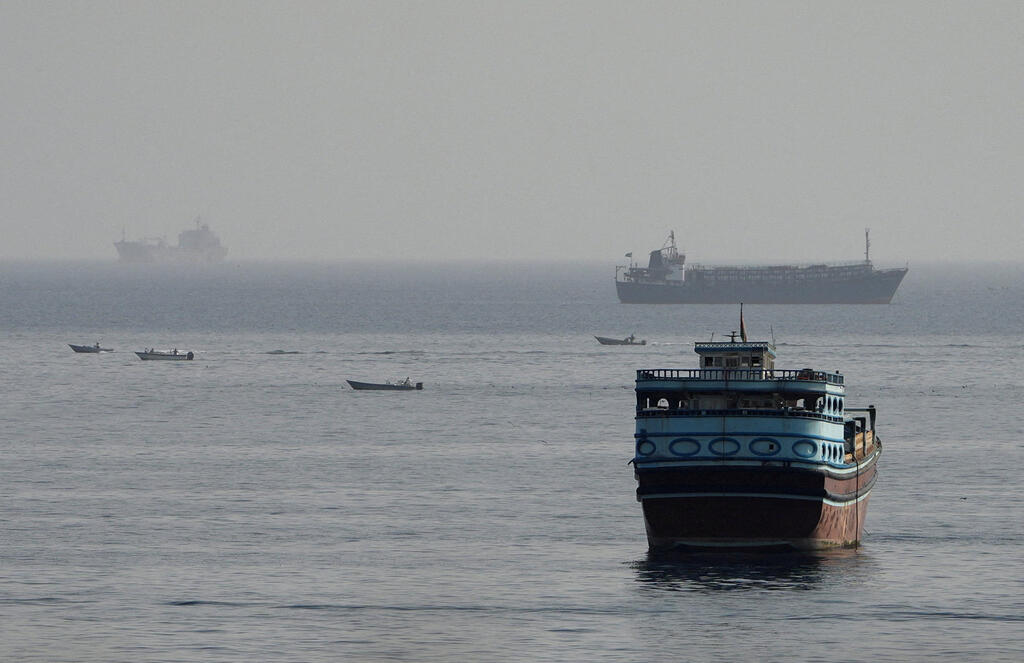
Ships in the Strait of Hormuz. The United States is already enforcing a blockade, leaving Iranian oil stranded
(Photo: REUTERS/Stringer)
Iran, meanwhile, responded dismissively to the announcement. On Monday, Tehran did not repeat the particularly sharp threats of attacks against countries joining what it calls the U.S. “economic war” that had been voiced a day earlier by Mohsen Rezaei, secretary of Iran’s Supreme National Security Council.
Even before Bessent began speaking, Iranian parliament speaker Mohammad Bagher Ghalibaf dismissed the measure. “The Americans know that no one believes their bluster,” Ghalibaf wrote on X. “The United States is not in an economic position to restrict its relations with other countries any further.”
He said Iran’s trading partners had indicated, both publicly and privately, that they attached little importance to Washington’s statements.
Shortly after the announcement, Iranian Economy and Finance Minister Ali Madanizadeh said the country had prepared in advance for the new measures. He said the latest U.S. sanctions would fail to sever Iran’s economic lifelines just as previous attempts had failed, adding that Tehran had been preparing for such measures for a long time and arguing that the era of a unipolar world had ended.
Prime Minister Benjamin Netanyahu, who on Monday said Iran had tried to assassinate one of his sons, welcomed Bessent’s announcement. In an English-language statement published by his office, Netanyahu congratulated Trump and Bessent on the new sanctions and said they were right to impose a heavy price on the Iranian regime and those enabling its continued aggression.
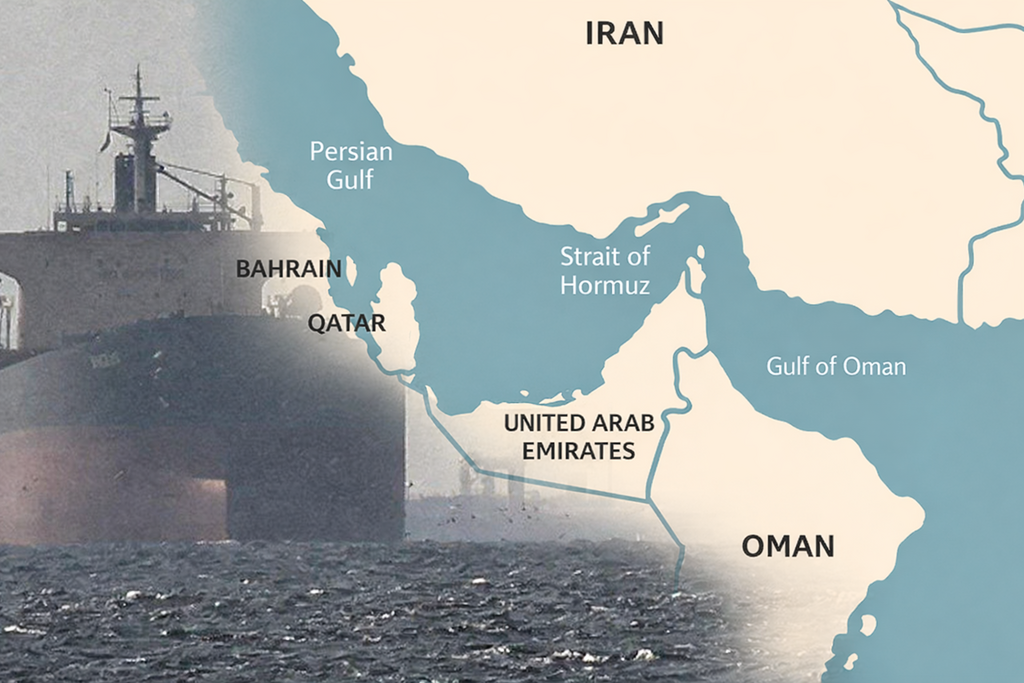
Trump has shifted strategy in recent weeks after negotiations with Iran reached an impasse and Tehran refused to fully reopen the Strait of Hormuz, the oil artery of the global economy, without U.S. recognition of its control over the strategic waterway. Rather than restart large-scale military action, Trump has opted for an increasingly severe economic blockade.
For now, however, that means global oil prices, and particularly fuel costs for American consumers, are likely to remain high. That in turn is increasing domestic political pressure on Trump to end the war, particularly ahead of the U.S. midterm elections in November.
Trump has insisted that he is in no hurry despite that pressure, arguing that Americans should understand the economic cost as a price worth paying to prevent Iran from obtaining a nuclear weapon. Polls, however, show that the war remains deeply unpopular in the United States and that Trump’s approval ratings have fallen to new lows.
So far, only the United Arab Emirates, once a critical hub for Tehran’s sanctions-evasion networks, has formally announced the suspension of trade with Iran.
But many analysts question whether economic pressure, even if other countries join the effort, can force Tehran into a rapid capitulation. Iran is now operating what has been described as a “survival economy,” designed to minimize the effect of sanctions that it has lived under for decades and repeatedly found ways to circumvent.
In line for dollars in Tehran, spending his last savings: ‘There is no hope’
Still, Iran’s economic crisis has worsened considerably following the two most recent wars. According to the International Monetary Fund, inflation in Iran is expected to approach 70% this year. Since the latest war began, the prices of some foods, including meat, have risen by as much as 150%, while the economy as a whole is expected to contract by a massive 5.4%.
Unemployment has surged, with at least 1 million people losing their jobs since the war began in late February.
Iran’s currency, the rial, had already fallen to a record low of 1.9 million to the U.S. dollar at the beginning of the month and continued to slide ahead of Monday’s announcement. On Sunday it crossed the threshold of 2 million to the dollar, and on Monday it reached 2.02 million. The naval blockade is also depriving Iran of oil-export revenues, with some estimates putting the loss at $435 million a day.
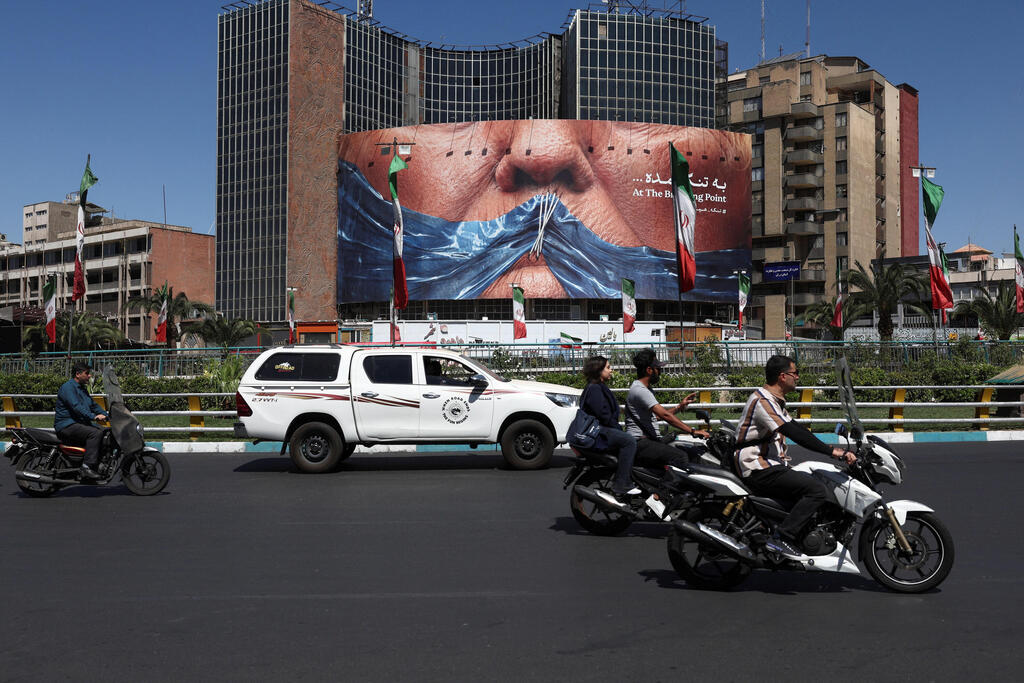
On a Tehran road, beneath a huge billboard mocking Trump. Residents say they are trying to survive from one day to the next
(Photo: Majid Asgaripour/WANA (West Asia News Agency) via REUTERS)
New accounts from inside Iran describe mounting frustration among residents struggling to afford basic food. “We have virtually given up on many things,” Ahmad Karimi, a 52-year-old taxi driver and father of two, told the Associated Press. Karimi works 15-hour days to make ends meet.
“We’re cutting out fruit, we’re cutting out protein, we’ve given up leisure, we even work on weekends,” he said.
Karimi said Iran’s leaders would ultimately have to act to ease the hardship facing him and millions of others. In his view, people cannot continue living under those conditions indefinitely and are increasingly focused simply on getting through each day.
Sadegh Mahmoudi, a 73-year-old Tehran resident, was equally pessimistic about the prospects of an agreement that could bring sanctions relief. “There is no hope for a deal and peace,” he told AP as he waited in line to buy U.S. dollars with what remained of his savings.
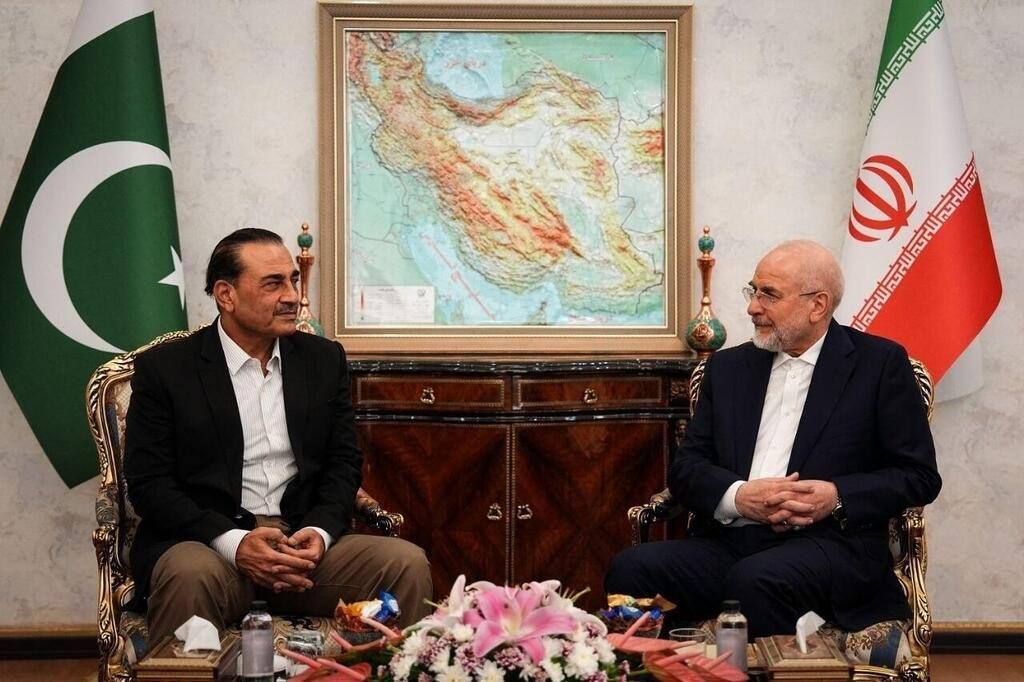
Pakistan’s Field Marshal Asim Munir, left, meeting Iranian parliament speaker Mohammad Bagher Ghalibaf in Tehran
Although senior officials in Tehran repeatedly say they recognize the seriousness of the crisis and the hardship facing ordinary Iranians, they insist the Islamic Republic will not surrender.
Ahead of the U.S. sanctions announcement, Iranian officials again threatened escalation, including possible attacks on countries that join the U.S.-led economic blockade.
There have so far been no signs of renewed mass protests against the government, against the backdrop of continued harsh repression and warnings that participation in anti-government demonstrations could be treated as an act of treason punishable by death.
At the beginning of the year, tens of thousands of Iranians were killed by regime forces during nationwide mass protests that erupted amid the economic crisis.
Meanwhile, mediators continue trying to prevent another escalation. Pakistan’s Field Marshal Asim Munir made a brief visit to Tehran on Monday, meeting Ghalibaf, Foreign Minister Abbas Araghchi and later President Masoud Pezeshkian.
Munir, who left Tehran within hours, has emerged as a central figure in mediation efforts. A visit he made to Tehran in May helped pave the way for the breakthrough that produced a memorandum of understanding between Washington and Tehran in June, an agreement that later collapsed.
Qatar’s Al Jazeera reported Monday that Trump had spoken with Munir last week about Iran. Citing a source familiar with the matter, it said Trump asked the Pakistani military chief to use Pakistan’s influence to help restart negotiations.
First published: 01:24, 08.25.26