


The Military Advocate General, Maj. Gen. Itai Ofir, announced today (Thursday) the withdrawal of the indictment against five soldiers from Unit 100 in the Sde Teiman abuse case. The soldiers were allegedly documented assaulting a terrorist detained in Gaza while he was being held at the detention facility.
According to Ofir, he made the decision “in light of significant developments” that have occurred since the indictment was filed, citing four main reasons.

First, the complexity of the existing evidentiary foundation.
Second, the release of the security detainee to Gaza and the implications this has for the evidentiary process, in addition to the existing complexity.
Third, “defense from justice” considerations stemming from the conduct of senior officials in the Military Advocate General’s Corps and the IDF law enforcement system in the case, as well as what Ofir described as its “exceptional and unprecedented circumstances.” In this section, Ofir effectively refers to the leak of the video to the media under orders from the previous military advocate general, Maj. Gen. Yifat Tomer-Yerushalmi, and what he described as an alleged subsequent cover-up by her and senior officials in the military prosecution.
Fourth, a procedural difficulty in transferring relevant investigative materials from a parallel investigation being conducted by the Israel Police, in a manner that harms the defendants’ right to a fair trial.
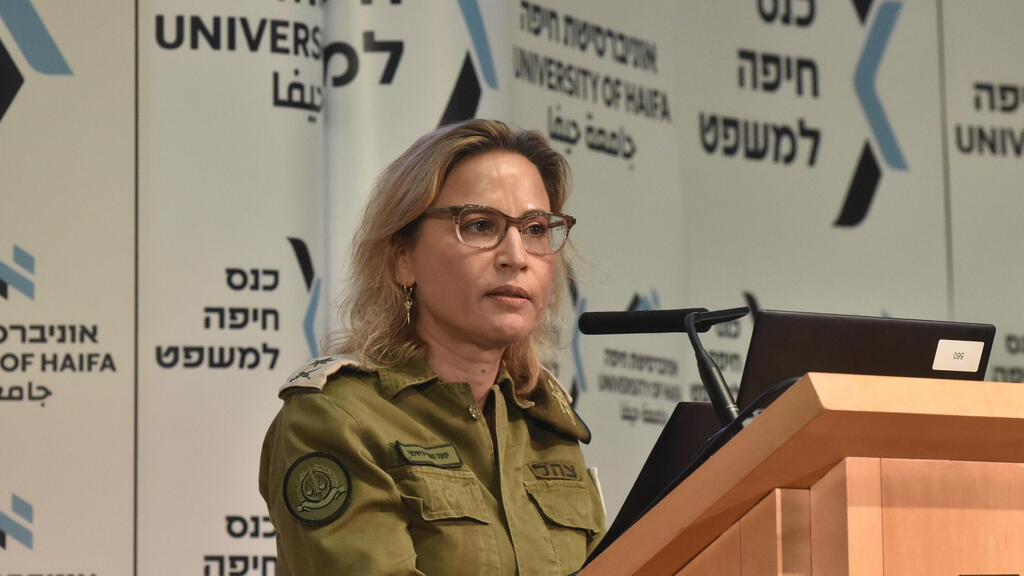
Yifat Tomer-Yerushalmi
(Photo: Sharon Zur)
Regarding the evidentiary basis, Ofir wrote that “the security footage does not present a clear and unequivocal picture of the charges attributed to the defendants. The vast majority of the defendants’ actions are concealed by shields. The video alone, certainly when combined with the defense’s claims, does not clearly and indisputably present severe acts of violence at the level required for a criminal conviction, as distinct from the use of force against resistance during a search.”
“While the alleged charges could have been strengthened by the detainee’s testimony alongside medical documents, the detainee’s testimony itself was not without difficulty, since there were changes in the versions he provided to different authorities regarding the circumstances of his injury,” Ofir wrote.
However, in October 2025 the security detainee was released to the Gaza Strip as part of the framework for the release of hostages. “This new circumstance fundamentally changes the evidentiary basis and makes it difficult to prove significant parts of the indictment.”
'The chief of staff supports the decision'
In its statement, the Military Advocate General’s Corps added that given the complex evidentiary circumstances of the case, and the lack of certainty about the ability to bring the detainee to testify and be cross-examined, the defendants’ ability to receive a fair trial is also affected. Defense arguments regarding the detainee’s testimony, raised by the defendants’ attorneys, might therefore not be properly examined.
“In these circumstances, the Military Advocate General and the prosecution team concluded that there is a significant difficulty in substantiating the charges at the criminal threshold required, based on the existing evidentiary foundation,” the statement said.
“The accumulation of all these exceptional circumstances, and their impact on the basic and fundamental right to a fair trial, in the view of the Military Advocate General necessitate the withdrawal of the indictment.”
The statement added that a central role of the Military Advocate General’s Corps is to enable the IDF to carry out its missions while also enforcing the law against those who act unlawfully. Members of the corps “are at the heart of the IDF’s operational and legal activity” and have continued to carry out a wide range of tasks during the war.
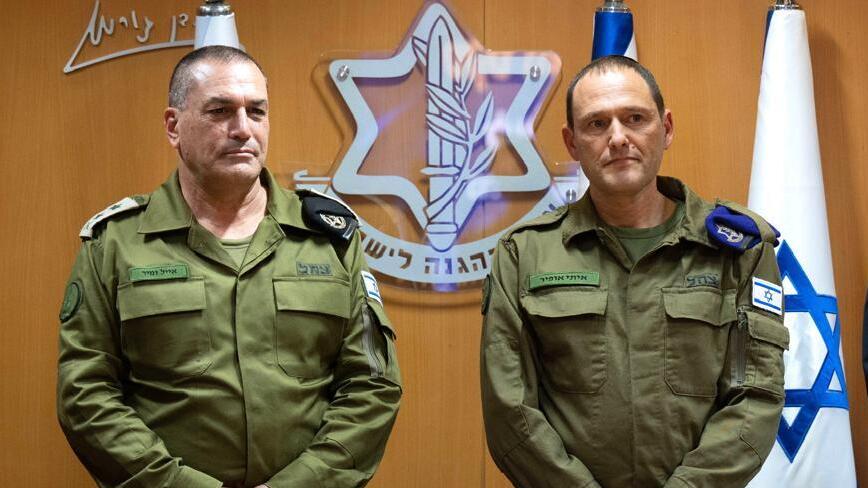
Itai Ofir and Eyal Zmir
(Photo: IDF)
IDF Chief of Staff Lt. Gen. Eyal Zamir was briefed on the decision and, according to the IDF, “supports, appreciates and backs the Military Advocate General and expressed his appreciation for the process carried out since he entered the position.”
Defense Minister Israel Katz also expressed support for Ofir’s decision, again describing the case as a “blood libel” and a “trial born in sin” during the tenure of Tomer-Yerushalmi, whom he accused of leaking the video to the media and then attempting to cover it up.
According to the IDF, “in light of the serious professional failure that was discovered, the chief of staff instructed that lessons be drawn and all necessary steps taken to prevent similar cases in the future.”
The chief of staff also emphasized that the professional independence of the Military Advocate General’s Corps is a foundational principle in the IDF and expressed support for those serving in the corps, who work “with professionalism, dedication and tirelessly to enable the IDF to achieve its goals and carry out its missions, including during these days of fighting.”
The IDF also said that when the affair first came to light, all officers involved were suspended from service. The chief of staff instructed that the review of disciplinary proceedings in their cases be completed as soon as possible.
Attorneys Adi Kedar, Moshe Polsky and Nati Rom, who represent two of the defendants on behalf of the Honenu legal aid organization, said in a statement: “We welcome the necessary decision. It is unfortunate that only dramatic events led to the withdrawal of an indictment that had no basis from the outset. It is doubtful that the decision will restore to the heroic soldiers what they lost during this period and the ordeal they endured, but at least they can once again hold their heads high and regain their honor. We thank the public for its support.”