


Lebanon’s parliament voted Tuesday to abolish the death penalty, making the country the first in the Arab world to formally eliminate capital punishment.
Under the newly approved law, death sentences will be replaced with life imprisonment accompanied by hard labor.
Gallery
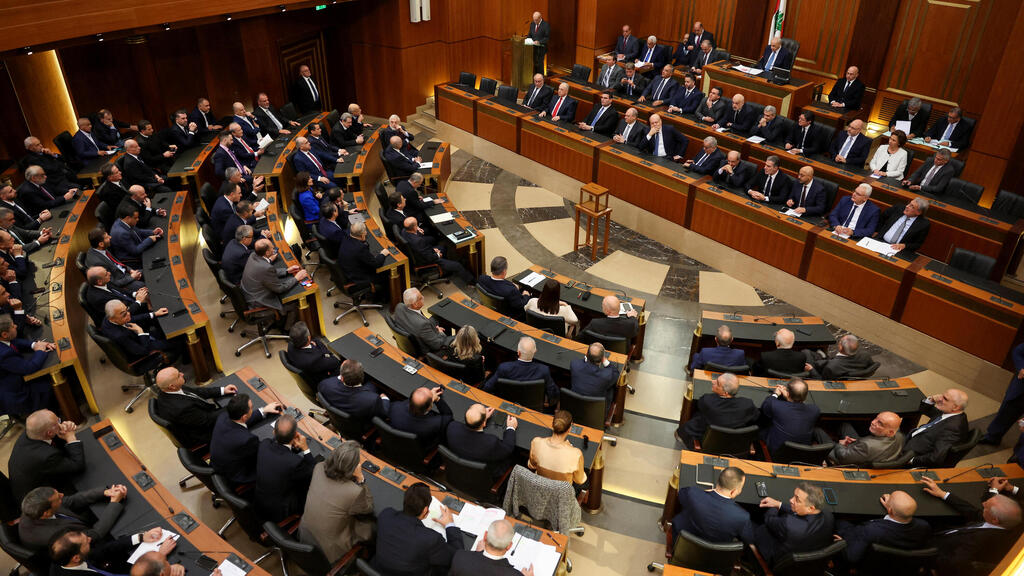
Justice minister: 'This is a historic step.' Parliament in Beirut
(Photo: REUTERS/Mohamed Azakir)
Lebanon had effectively maintained a moratorium on executions since 2004, but the death penalty remained on the books and continued to be handed down in dozens of cases over the years. Those sentences were either not carried out or were later commuted.
Most members of Lebanon’s 128-seat parliament backed the measure. Hezbollah’s parliamentary bloc was the only faction to vote against it.
Lebanese Justice Minister Adel Nassar called the approval “a historic step.”
Human rights organizations, which had long urged Lebanon to turn its de facto moratorium into full abolition, also welcomed the vote.
Ramzi Kaiss, a Lebanon researcher at Human Rights Watch, said the move marked “a definitive break with a cruel punishment that should never have been imposed.”
“The death penalty is uniquely cruel and irreversible, and it is riddled with arbitrariness, bias and error,” he said.
However, questions remain over how the replacement sentence of aggravated hard labor will be implemented.
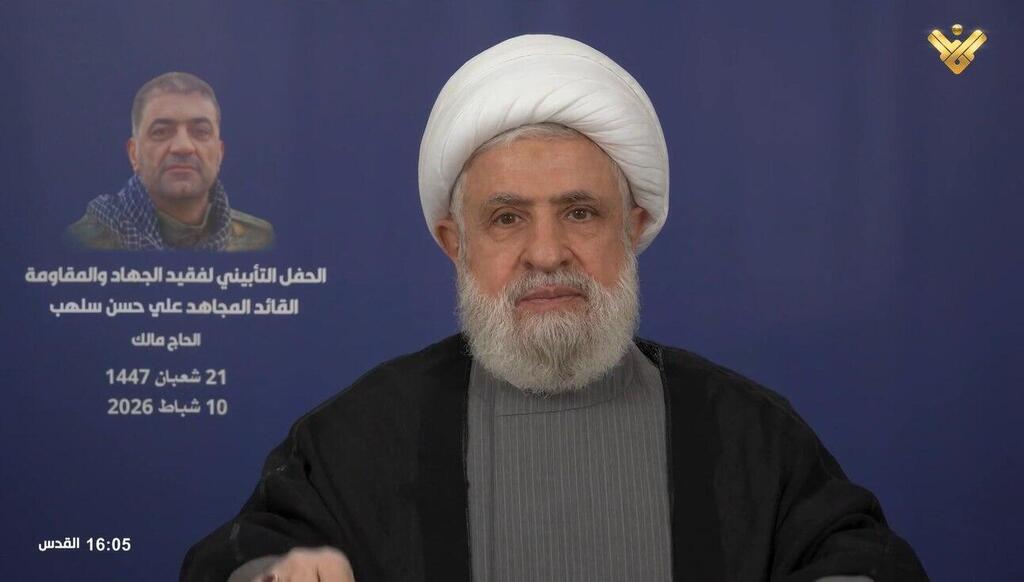
Hezbollah chief Naim Qassem
Lebanese law already allows courts to impose hard labor, but the punishment has rarely been carried out in recent years, in part because of limited resources and capacity in the country’s overcrowded prisons amid Lebanon’s continuing economic difficulties.
The abolition comes as parliament is also debating a controversial general amnesty bill, the broadest such measure since the end of Lebanon’s 15-year civil war in 1990.
The proposed amnesty could reduce sentences or lead to early release for convicted militants and drug traffickers, with several exceptions.
Relatives of Lebanese soldiers and members of the security forces who were killed or attacked by Islamist groups have repeatedly protested against the proposed legislation. Some have said they had hoped to see those responsible for killing their relatives executed rather than receive reduced prison terms.
Hezbollah did not immediately issue a formal response to the historic vote. Lebanon’s various religious institutions, some of whose court systems permit capital punishment, also did not immediately comment.
Hezbollah explained its opposition by arguing that the death penalty should not be abolished before lawmakers complete work on the general amnesty bill.
The group said that under the sequence currently proposed, some prisoners sentenced to death could effectively benefit twice: first by having their death sentences commuted to 28 years in prison, and then by seeing those terms reduced further, potentially to 17 years, under the amnesty law.
Hezbollah argues that such a sentence would be far too lenient for people convicted of attacks against its members who, in its view, should face much harsher punishment.