

On Tuesday night, on the eve of the fireworks marking the anniversary of the 1979 Revolution in Iran, many neighborhoods in Tehran and other major cities became scenes of confrontation between opponents and supporters of the regime.
While a limited number of pro-government residents in each neighborhood chanted the customary “Allahu Akbar,” opponents, unafraid of identification, responded with chants of “Death to Khamenei” and “Death to the dictator,” signaling that protests in Iran are far from over.
Meanwhile, the families of thousands killed in the bloody crackdown of January 8 and 9 are preparing to hold memorial ceremonies in the coming days. Two protesters in Tehran told The Media Line that they are no longer afraid and are determined to return to the streets to complete the unfinished 47-year struggle to bring down the Islamic Republic.
Arghavan, a law student in Tehran who spontaneously went onto her rooftop Tuesday night to chant against Khamenei and drown out pro-regime slogans, said: “The regime is trying to normalize the atmosphere through celebrations and festivities, even moving ahead to mark the upcoming Mid-Sha’ban holiday. But people are angry and deeply wounded. They will not back down so easily.”
Arghavan was struck by multiple pellets during clashes in western Tehran and still struggles to walk properly. She sought refuge at her boyfriend’s home, where his mother removed the pellets without anesthesia using basic medical supplies. According to Arghavan, they were fortunate that phone lines were down, as injured individuals taken to nearby hospitals had been detained. She described the scale of live ammunition and pellet fire as so intense that “almost everyone in the crowd was hit,” with many killed or wounded.
Reflecting on the 1979 Revolution, Arghavan said it had been driven by aspirations for freedom, equality, and a better life, but that people were misled by Ayatollah Khomeini’s promises. Not only were those hopes dashed, she argued, but living conditions deteriorated significantly, personal freedoms were curtailed, and the country experienced a profound regression.
Gallery
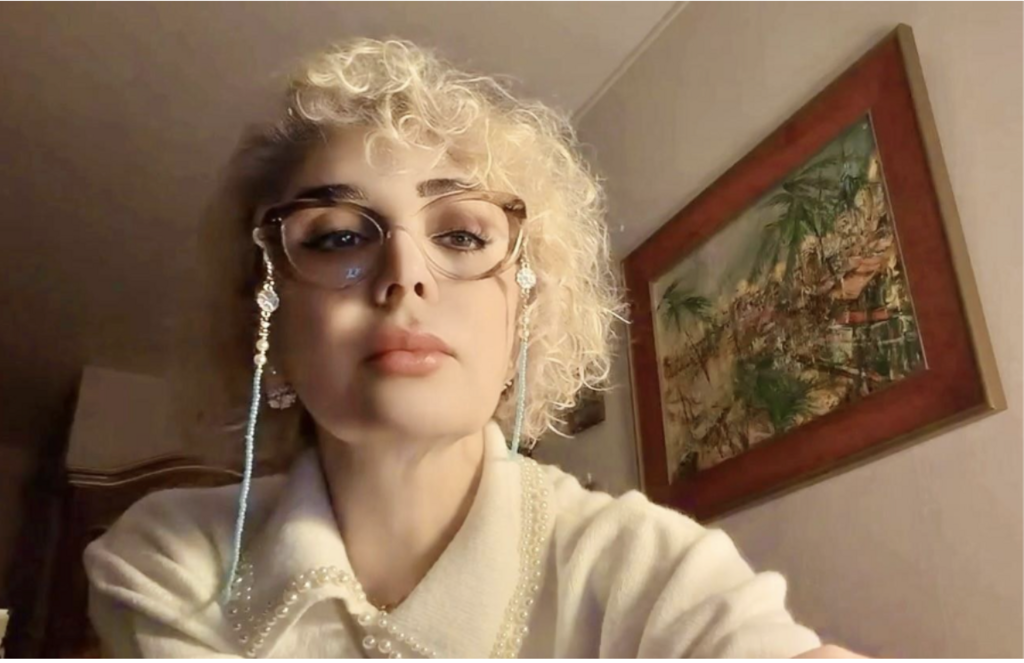
Maryam Afshari, a political activist in Sweden, says Iran now stands on the brink of another revolution, one that must learn from the failures of the 1979 uprising
(Photo: The Media Line)
Maryam Afshari, a political activist based in Sweden, offered a broader perspective: “Various contradictions, including those between modernity and tradition, fuelled the 1979 Revolution. However, the clerical establishment ultimately rode that wave and diverted it from its original demands.” This debate has continued within Iranian society for 47 years. The Islamic Republic, having suppressed its opponents in the early years of its rule, regards itself as the rightful victor of the revolution.
On Wednesday, the government staged official celebrations and marches, in which even some unveiled women participated, with state media highlighting their presence as evidence of broad societal support. Social media users, meanwhile, drew attention to the state broadcaster’s use of artificial intelligence to depict large crowds.
The volume of “Death to Khamenei” chants the night before was so overwhelming that the slogan was even mistakenly repeated by a local television presenter during a live broadcast. In response, the state broadcaster dismissed the broadcast director of the Sistan and Balochistan provincial channel and referred members of the program’s production team to a disciplinary committee.
A resident of Azadi Street in Tehran noted that despite official pressure and efforts to mobilize state employees, turnout toward Azadi Square appeared lower than in previous years.
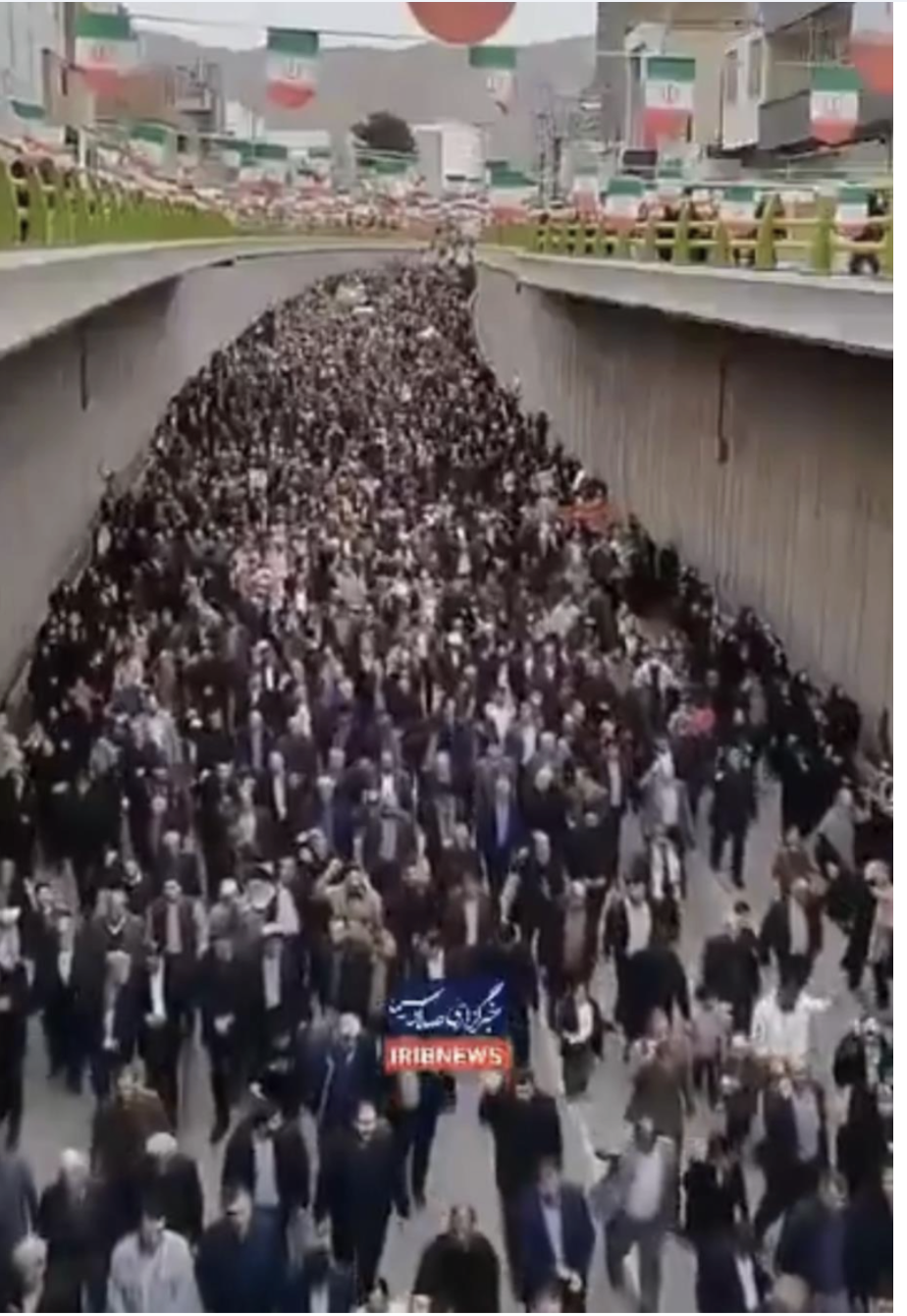
Social media users, after analyzing footage broadcast by state television, identified the use of AI to artificially inflate the size of pro-government crowds during Wednesday’s march marking the anniversary of the Islamic Republic’s rise to power
(Screenshot: IRIB)
Amid an atmosphere of fear, intimidation, and ongoing arrests, some protesters are now speaking openly on social media under their real names, saying they are no longer afraid.
Samad, a restaurant worker in southern Tehran, says he has witnessed scenes in protests unlike anything he has seen even in apocalyptic films. A former art student expelled for being unable to pay tuition, he is now worker. “Freedom has a cost,” he says. “We have paid it. And after all this killing and violence, our anger has only deepened. We have no choice but to return to the streets empty-handed. But we know the regime cannot kill 90 million Iranians.”
He describes the country’s economic and social conditions as a kind of slow death. “Dying with dignity is better than this daily, gradual death. Our history is now written in blood in the winter of 2026. We must finish this unfinished task after 47 years.”
The restaurant where Samad works has seen a sharp decline in business since the bloody crackdown of January 8 and 9, and he fears losing his job. He earns just $70 a month for ten-hour shifts. Even with free meals and living with his family rent-free, nothing remains at the end of the month to save, or even to buy a book.
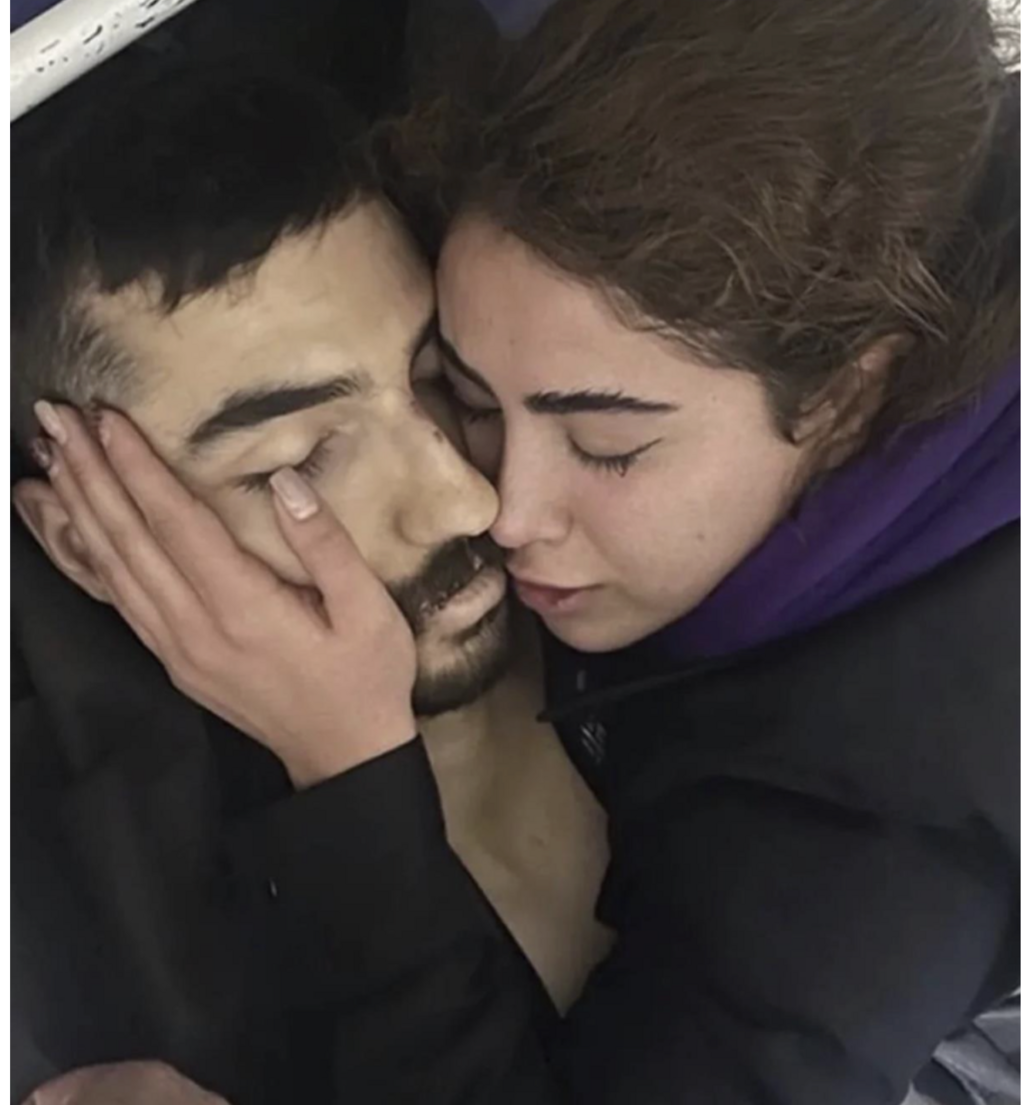
The lifeless body of Matin Ghorbani, a protester killed by security forces, is embraced by his fiancée, Mahsa
(Screenshot: Social media)
“Iranian legends about resisting tyranny and Zahhak are not just stories to read,” Samad says. “Last month, we embodied them in the streets. That is why we will return.”
As authorities brace for upcoming memorials for those killed during the uprising, concerns over potential U.S. or Israeli military action have further heightened tensions. For the first time, the Islamic Republic’s leader did not attend the annual Air Force Day meeting with commanders on February 8, with domestic media citing “security reasons.”
Instead, they met with Hassan Khomeini, grandson of the Ayatollah Ruhollah Khomeini. A website called Rouydad 24, which is reportedly connected to former President Hassan Rouhani, speculated that Khomeini, alongside Alireza Arafi, Mohsen Araki, Sadiq Larijani, and Rouhani himself, could be among Khamenei's potential successors.
The Islamic Republic marks its 47th year in power amid official inflation nearing 48 percent, a sharply depreciated national currency, and widespread economic stagnation following the January protests. The livelihoods of citizens who once aspired to a better future nearly half a century ago have visibly diminished.
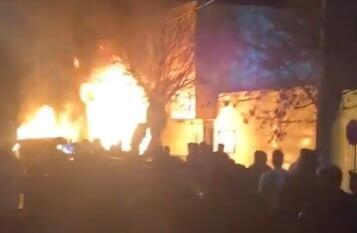
Anti-government protest in Iran, January 1, 2026
Many domestic analysts warn that the violent suppression of protests is not the end of the story and that authorities must remain prepared for renewed unrest. Afshin Davarpanah, an anthropologist in Tehran, said, “Young people under 30 and women are the main driving forces of the protests,” adding that since their demands remain unmet, “the protests will not end here but will continue in different and potentially more complex forms.” Even Judiciary Chief Gholam-Hossein Mohseni Eje’i has cautioned security forces to anticipate protesters’ return to the streets.
Despite what many describe as de facto martial law in numerous cities and a wave of arrests, students, retirees, workers, and various groups continue to strike and protest. With nightly rooftop chants and protest graffiti persisting until the moment, many believe that soon, mass demonstrations once again fill the streets.