

Extreme heat and severe drought continue to grip Europe, with temperature records broken this week across parts of the continent and the Danube River falling to historic lows. In Slovakia, authorities reported a new national temperature record of 42 degrees Celsius in the village of Dolné Plachtince.
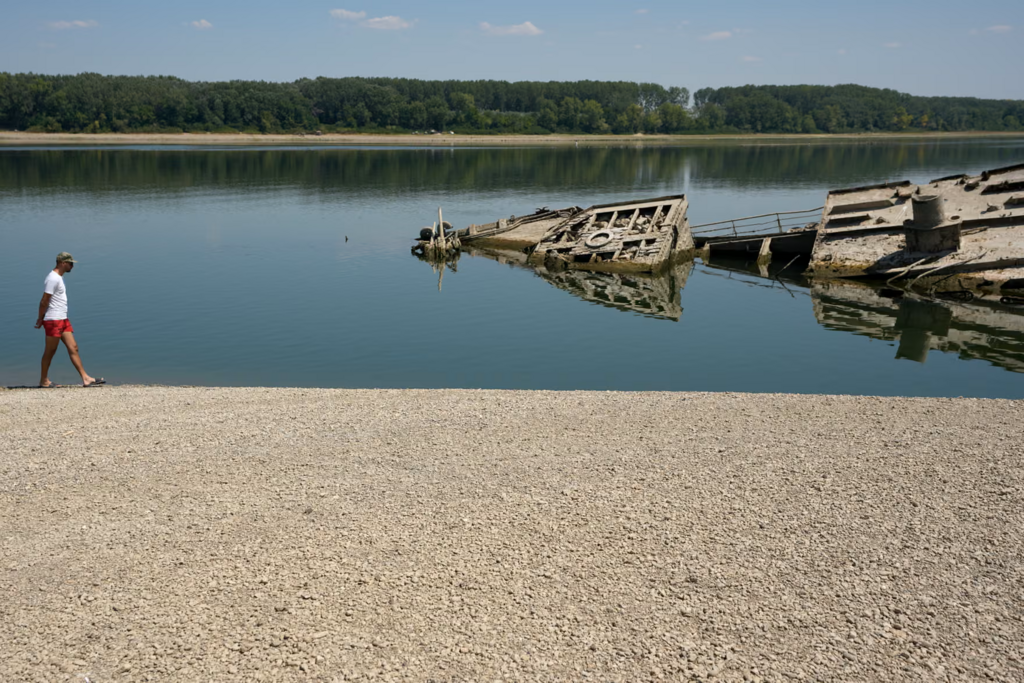
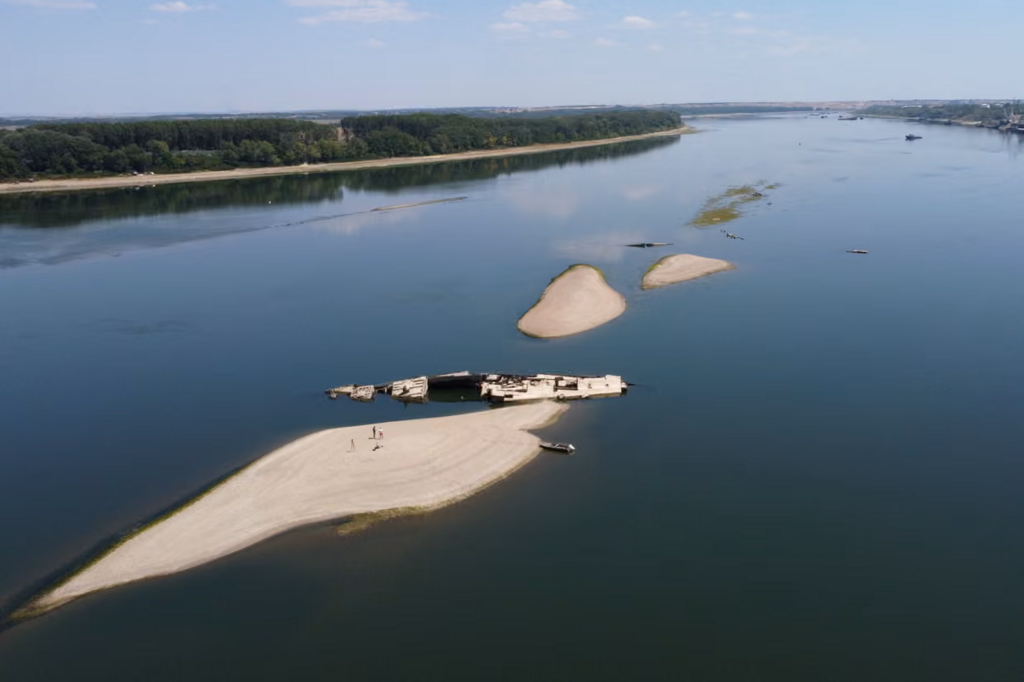
The falling water levels along the Danube, which passes through 10 countries, have also exposed remnants of Europe’s Nazi past. Dozens of German warships from World War II have emerged from the riverbed, some of them still believed to contain weapons and explosives.
Gallery
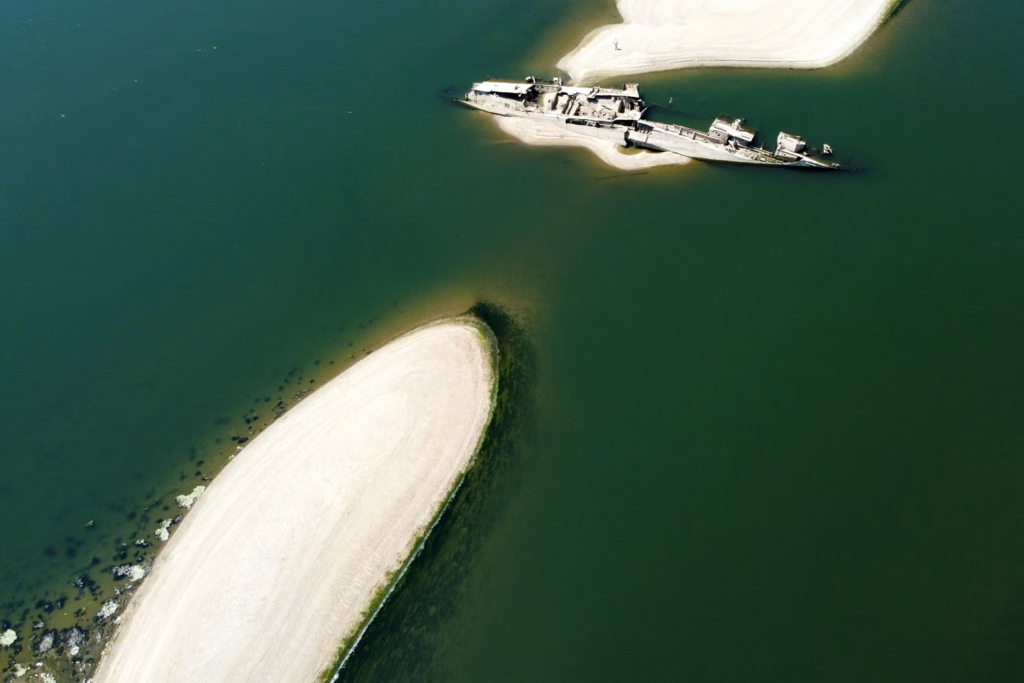
Nazi Germany deliberately sank the vessels in the Danube toward the end of World War II
(Photo: Darko Vojinović/AP)
The Danube dries up in Romania
(Video: Reuters)


In the middle of the river near the border between Serbia and Romania, the remains of one vessel can now be seen resting on a sandbank normally covered by water. Other ships remain partially submerged.
The vessels belonged to Adolf Hitler’s Black Sea fleet and were deliberately sunk by German forces near the end of World War II in an effort to slow the Soviet advance, The Guardian reported Saturday.
Historians say as many as 200 German warships were sunk in the river in September 1944. Nazi Germany surrendered the following year, in May 1945. The British Royal Air Force also mined sections of the Danube in 1944 in an effort to disrupt enemy troop movements.
The wrecks have emerged during previous periods of drought before disappearing again when water levels rose along the Danube, Europe’s second-longest river. Serbia has previously attempted to remove some of the wreckage, but most of the vessels remain in place because of the explosives and ammunition they may still contain. Other World War II relics have surfaced elsewhere along the river.
In Slovakia, police recovered an unexploded British bomb weighing about 700 kilograms. Authorities placed it aboard a specially modified fire truck fitted with a sandbox for safe transportation before taking it to a five-meter-deep pit, where it was detonated.
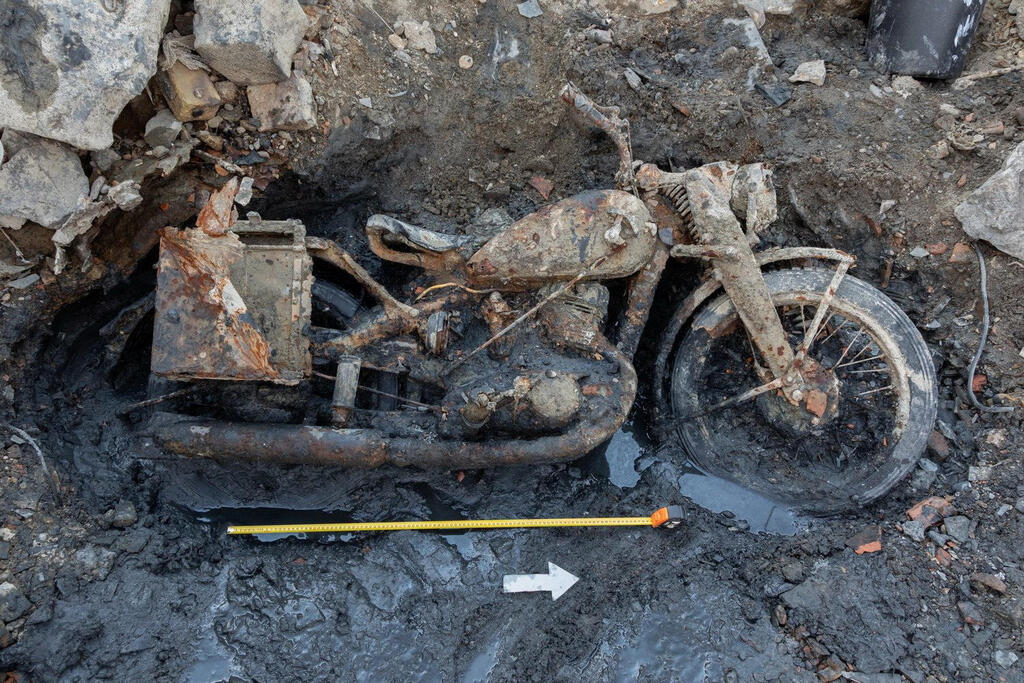
The German military motorcycle discovered in Hungary
(Photo: Volksbund Deutsche Kriegsgraeberfuersorge e.V./Handout via REUTERS)
(Photo: Darko Vojinović/AP)
(Photo: Darko Vojinović/AP)
A German military motorcycle was also discovered in Budapest, where the Danube fell to just 10 centimeters, well below the previous record low of 33 centimeters set in 2018.
Water levels are not expected to recover significantly in the coming days or weeks, with little substantial rainfall forecast. The shrinking Danube has also created an increasingly serious energy problem for countries in Central and Eastern Europe.
Several power plants depend on the river for cooling, forcing governments to take dramatic measures to conserve electricity and prevent a broader energy crisis.
In Romania, authorities this week resorted to blasting apart a large rock in the river to redirect water into a Danube channel supplying the country’s last operating nuclear reactor with the cooling water it requires.
Hungary’s only nuclear power station, the Soviet-era Paks plant, has also come close to a complete shutdown for the first time in its 44 years of operation. The facility, which has four reactors and relies on Danube water for cooling, was producing just 240 megawatts of electricity Saturday, compared with around 2,000 megawatts under normal conditions.
Hungarian Prime Minister Péter Magyar said in a Facebook video that engineers had managed to keep the plant’s final operating turbine running, preventing a shutdown that had been feared for the weekend.
He warned, however, that a complete shutdown could still become necessary as early as Sunday or Monday if water conditions continue to deteriorate.