

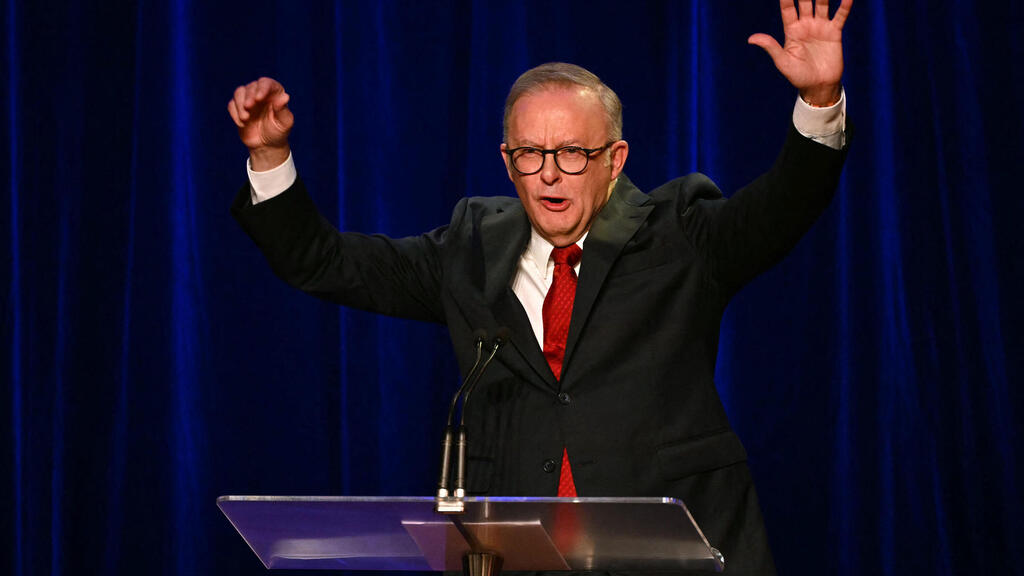
Australia Prime Minister Anthony Albanese said on Tuesday his Israeli counterpart Benjamin Netanyahu was "in denial" about the humanitarian situation in Gaza, a day after announcing Australia would recognise a Palestinian state for the first time.
Australia will recognise a Palestinian state at next month's United Nations General Assembly, Albanese said on Monday, a move that adds to international pressure on Israel after similar announcements from France, Britain and Canada.
Albanese said on Tuesday the Netanyahu government's reluctance to listen to its allies contributed to Australia's decision to recognise a Palestinian state.
"He again reiterated to me what he has said publicly as well, which is to be in denial about the consequences that are occurring for innocent people," Albanese said in an interview with state broadcaster ABC, recounting a Thursday phone call with Netanyahu discussing the issue.
Australia's decision to recognise a Palestinian state is conditional on commitments received from the Palestinian Authority, including that Islamist militant group Hamas would have no involvement in any future state.
Right-leaning opposition leader Sussan Ley said the move, which breaks with long-held bipartisan policy over Israel and the Palestinian territories, risked jeopardising Australia's relationship with the United States.
Sentiment Shift
Albanese said as little as two weeks ago he would not be drawn on a timeline for recognition of a Palestinian state.
His incumbent centre-left Labor Party, which won an increased majority at a general election in May, has previously been wary of dividing public opinion in Australia, which has significant Jewish and Muslim minorities.
But the public mood has shifted sharply after Israel said it planned to take military control of Gaza, amid increasing reports of hunger and malnutrition amongst its people.

Pro-Palestinian protest in Australia
Tens of thousands of demonstrators marched across Sydney's Harbour Bridge this month calling for aid deliveries in Gaza as the humanitarian crisis worsened.
"This decision is driven by popular sentiment in Australia which has shifted in recent months, with a majority of Australians wanting to see an imminent end to the humanitarian crisis in Gaza," said Jessica Genauer, a senior lecturer in international relations at Flinders University.
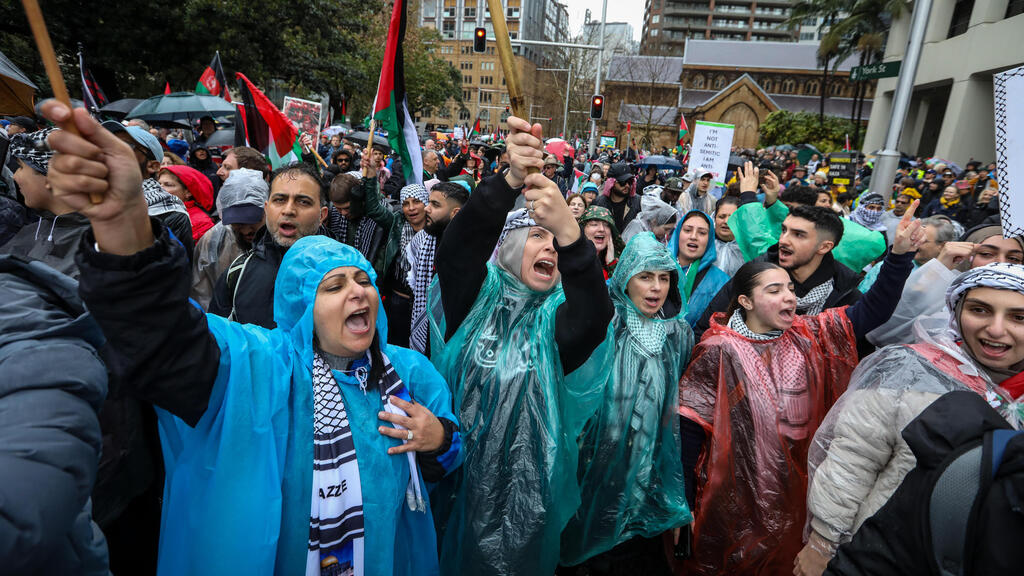
Mass anti-Israel rally in Australia
(Photo: Lisa Maree Williams / Getty Images)
Opposition leader Ley said the decision was "disrespectful" of key ally the United States, which opposes Palestinian statehood.
"We would never have taken this step because this is completely against what our principles are, which is that recognition, the two-state solution, comes at the end of the peace process, not before," she said in an interview with radio station 2GB.
Get the Ynetnews app on your smartphone: Google Play: https://bit.ly/4eJ37pE | Apple App Store: https://bit.ly/3ZL7iNv
Neighbouring New Zealand has said it is still considering whether to recognise a Palestinian state, a decision that drew sharp criticism from former prime minister Helen Clark on Tuesday.
"This is a catastrophic situation, and here we are in New Zealand somehow arguing some fine point about whether we should recognise we need to be adding our voice to the need for this catastrophe to stop," she said in an interview with state broadcaster RNZ.
"This is not the New Zealand I've known."
Chloe Swarbrick, the co-leader of the Green Party, said New Zealand's lack of decision was appalling before calling on some government members to support a bill to "sanction Israel for its war crimes." The bill was proposed by her party in March and is supported by all opposition parties.
"If we find six of 68 Government MPs with a spine, we can stand on the right side of history," said Swarbrick.