

Iran is close to reaching a deal with China to purchase advanced anti-ship cruise missiles, according to six people with knowledge of the negotiations, as the United States deploys a large naval force near Iran amid escalating tensions.
The agreement for the Chinese-made CM-302 missiles is nearing completion, though no delivery date has been set, the sources said. They include three officials briefed by the Iranian government and three security officials familiar with the talks.
Gallery
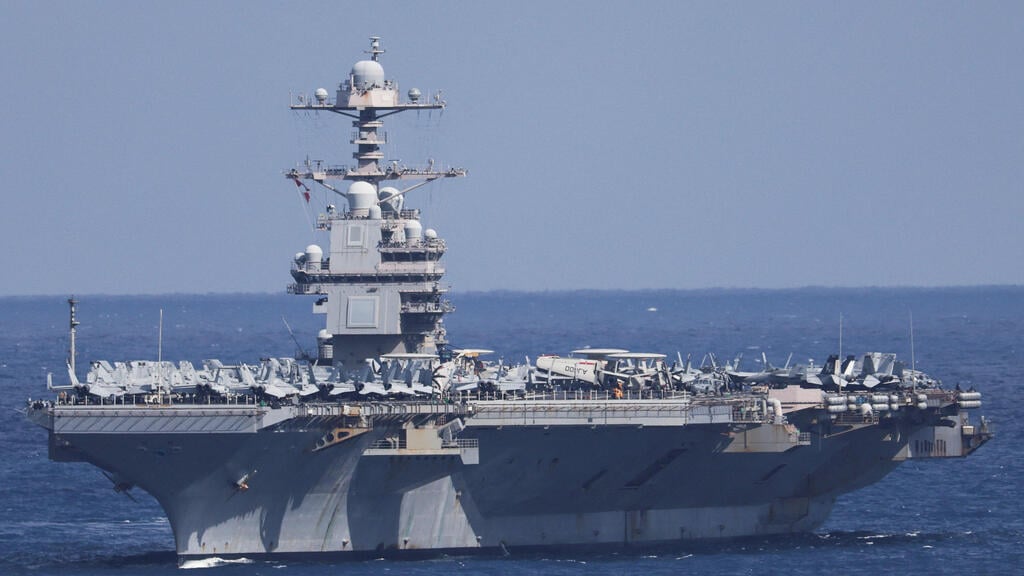
The US aircraft carrier USS Gerald R. Ford off the coast of Greece
(Photo: REUTERS/Stelios Misinas)
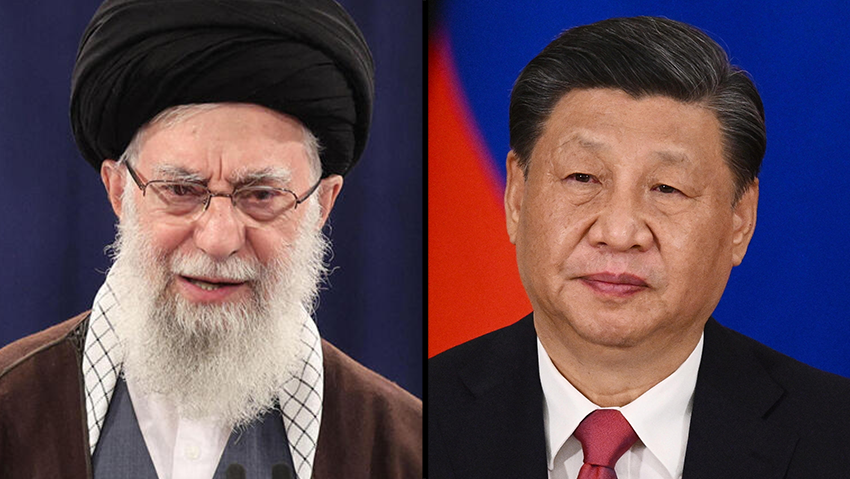
Chinese President Xi Jinping and Iranian Supreme Leader Ayatollah Ali Khamenei
(Photo: Reuters, Alex Kent / GETTY IMAGES)
Negotiations began at least two years ago but accelerated sharply after the 12-day war between Israel and Iran in June, the sources said. As discussions entered their final stages last summer, senior Iranian military and government officials traveled to China, including Deputy Defense Minister Massoud Oraei, according to two of the security officials. Oraei’s visit has not previously been reported.
The CM-302 is a supersonic anti-ship missile with a range of about 290 kilometers, according to weapons experts. Designed to fly low and fast to evade shipborne defenses, it would significantly enhance Iran’s ability to threaten naval vessels in the region, they said.
“It’s a complete gamechanger if Iran has supersonic capability to attack ships in the area,” said Danny Citrinowicz, a former Israeli intelligence officer and senior researcher on Iran at the Institute for National Security Studies in Tel Aviv. “These missiles are very difficult to intercept.”
Reuters could not determine how many missiles would be included in the potential deal, how much Iran would pay or whether China would proceed with the transfer given heightened regional tensions. “Iran has military and security agreements with its allies and now is an appropriate time to make use of these agreements,” an Iranian Foreign Ministry official told Reuters.
China’s mission to the United Nations referred requests for comment to the Foreign Ministry in Beijing. China’s Foreign and Defense ministries did not respond. The White House did not directly address the reported negotiations.
President Donald Trump has said Iran must reach an agreement over its nuclear program or face possible military action. “Either we will make a deal or we will have to do something very tough like last time,” a White House official said, referring to the current standoff.
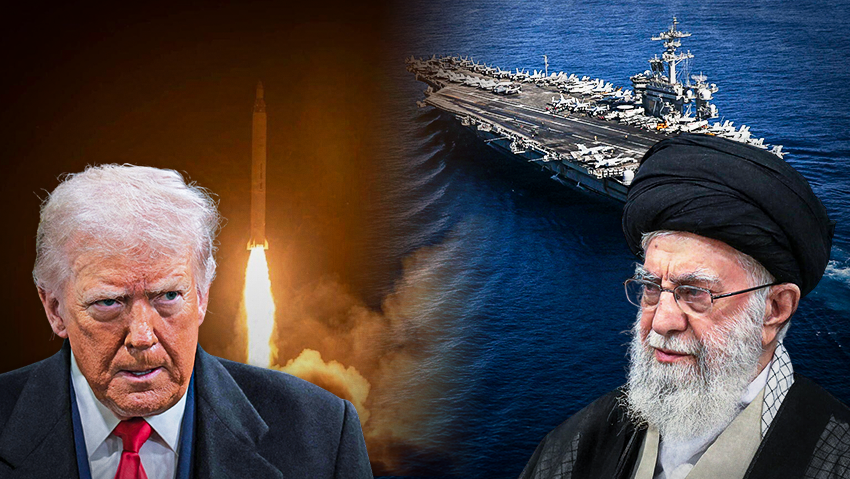
(Photo: Anna Moneymaker/AFP, KHAMENEI.IR/AFP)
If completed, the transfer would rank among the most advanced military systems China has provided to Iran and could test U.N. sanctions first imposed in 2006 over Iran’s nuclear program. Those sanctions were suspended in 2015 under a nuclear agreement with world powers and reimposed last September.
The potential sale underscores deepening military ties between Beijing and Tehran at a time of rising tensions in the Middle East, complicating U.S. efforts to curb Iran’s missile and nuclear programs.
China, Iran and Russia conduct annual joint naval exercises. Last year, the U.S. Treasury Department sanctioned several Chinese entities for allegedly supplying chemical precursors to Iran’s Islamic Revolutionary Guard Corps for use in its ballistic missile program. China rejected the allegations and said it strictly enforces export controls on dual-use items.
While hosting Iranian President Masoud Pezeshkian at a military parade in Beijing in September, Chinese President Xi Jinping said China supports Iran in safeguarding its sovereignty and territorial integrity.
China also joined Russia and Iran in an October letter criticizing the decision to reimpose sanctions on Tehran. “Iran has become a battlefield between the U.S. on one side and Russia and China on the other,” said one of the officials briefed on the missile negotiations.
The reported deal comes as the United States assembles significant naval forces within striking distance of Iran, including the aircraft carrier USS Abraham Lincoln and its strike group. The USS Gerald R. Ford and its escorts are also heading to the region. Together, the two carriers can carry more than 5,000 personnel and about 150 aircraft. “China does not want to see a pro-Western regime in Iran,” Citrinowicz said. “That would be a threat to their interests. They are hoping that this regime will stay.”
Trump said on Feb. 19 that he was giving Iran 10 days to reach an agreement over its nuclear program or face military action. Reuters reported earlier that the United States is preparing for the possibility of sustained operations against Iran if Trump orders a strike.
A depleted arsenal
The potential purchase would significantly bolster an Iranian arsenal depleted by last year’s war, said Pieter Wezeman, a senior researcher at the Stockholm International Peace Research Institute.
China Aerospace Science and Industry Corporation, a state-owned defense company known as CASIC, markets the CM-302 as a leading anti-ship missile capable of striking large vessels, including aircraft carriers and destroyers. The system can be launched from ships, aircraft or mobile ground platforms and can also strike land targets. CASIC did not respond to a request for comment.
Iran is also in discussions to acquire additional Chinese weapons systems, including surface-to-air missiles, man-portable air defense systems and anti-ballistic and anti-satellite weapons, the six sources said.
China was a major arms supplier to Iran during the 1980s, though large-scale transfers declined by the late 1990s under international pressure. In recent years, U.S. officials have accused Chinese companies of providing missile-related materials to Iran, but they have not publicly alleged that China supplied complete missile systems.