


The Bnei Brak municipality on Sunday expanded a local bylaw banning restaurants and food stalls from operating after 10 p.m., extending the restriction to vending machines selling drinks and snacks after officials said the machines had become gathering points for youths.
City officials said the original bylaw, which applied only to restaurants and food stands, was intended to prevent teenagers and yeshiva students from lingering outside study institutions in the evening and at night. But educational figures in the ultra-Orthodox city said that in recent months young people have instead been gathering around vending machines placed across the city.
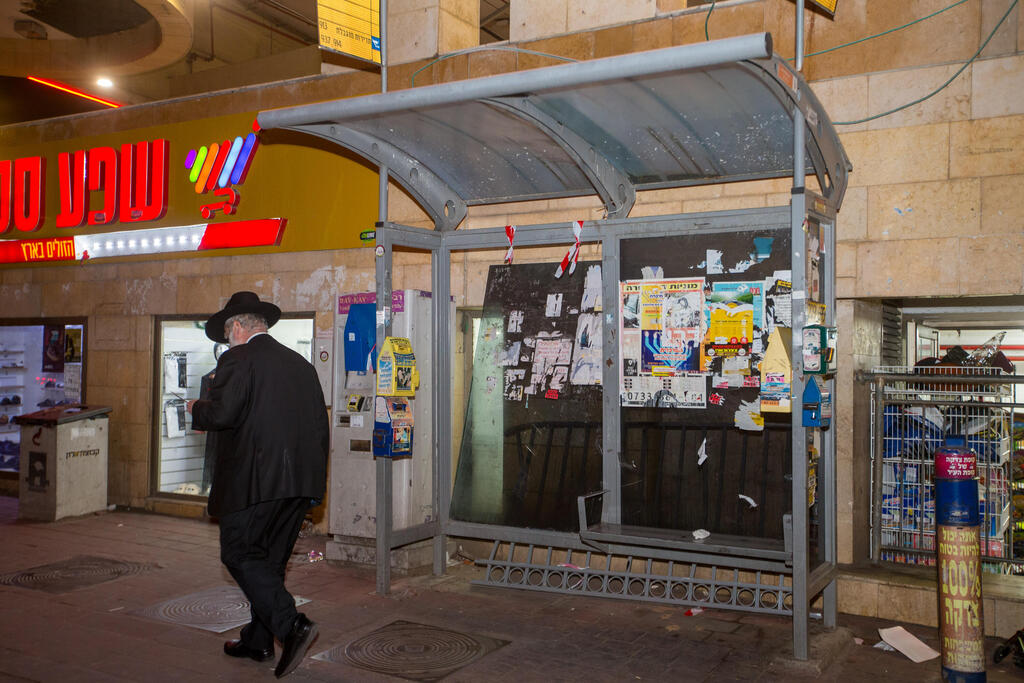
Bnei Brak
(Photo: Ido Erez)
The amendment was introduced by City Council member Rabbi Ze’ev Lipschitz, who said some operators had found a workaround to the existing restrictions by using vending machines that were not subject to closing hours.
In the proposal, Lipschitz pointed to two areas which he said were causing environmental, physical and, above all, “spiritual” harm. “Young men and women sit there until the early hours of the morning with devices,” the proposal said, referring to cellphones and other equipment, which it said they also charge at the sites. “How can a father send his 13-year-old son to evening prayers at the Synagogue without fearing for the child’s spirituality?”
The proposal also said the issue was not limited to vending machines, alleging that a vendor at one site was selling cigarettes into the late-night hours in addition to refilling the machines. It called on the municipality to enforce the rules strictly and require such businesses to close as well.
Residents attended the city council meeting along with their representative, Rabbi Goel Turgeman. Also speaking were rabbis involved in youth educational frameworks in the city, including Rabbi Yisrael Roth, one of the heads of the Be’er Yisrael youth yeshiva, and Rabbi Eliezer Zilberzweig, one of the heads of the Darkei Shlomo youth yeshiva.
One participant at the meeting said the gathering spots were “ruining our lives” and “corrupting our children.”
“What began as commercial convenience has turned into a magnet for marginalized youth and a center of spiritual decline,” the participant said. He said educators had presented troubling data about boys who had merely passed through the area on their way to prayer or home and were drawn into what he described as the questionable atmosphere that had developed around the machines late at night.
Not all council members supported the move.
Bnei Brak City Council member Yaakov Vider, who opposed the proposal, said the municipality’s role was to provide services, not to educate residents.
“In a city that is not North Korea, the job of a municipality is to serve the public, not educate it,” Vider said. He said Bnei Brak had one of the wealthiest municipalities in Israel but provided some of the worst services, and accused city officials of targeting residents instead of addressing those shortcomings.
“If there is noise, enforce the existing law and close the nuisance,” he said. “But by what right do disconnected political operators, who drive expensive jeeps, fly abroad and dine in luxury restaurants in Israel and overseas, deny a kollel student or a woman of limited means — who have no car and cannot leave the city at night — the simple right to enjoy a snack or a can of soda after a hard day?”