

Ukraine marked its 35th Independence Day on Monday as another drone attack struck warehouses belonging to Russian e-commerce giant Ozon, the latest target in Kyiv’s campaign to undermine the Russian economy and the sense of security that Vladimir Putin’s citizens had largely enjoyed until now.
Images and videos from Russia showed one warehouse in the Makhachkala area of Dagestan on fire Monday. The company said it had temporarily closed additional warehouses in nearby parts of the Caucasus, although it said those facilities had not been damaged.
Footage from Russia: Ukrainian attacks on Ozon warehouses in Orenburg, Krasnodar and St. Petersburg


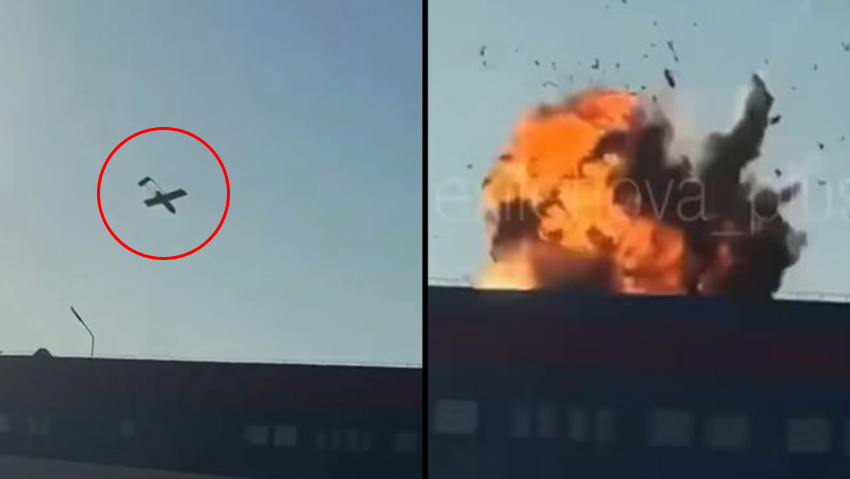

A distribution point operated by e-commerce giant Ozon; shares of its main controlling shareholder also plunged
(Photo: Reuters/Anton Vaganov/File Photo)
Ukraine has in recent months been waging what it calls a campaign to “bring the war to the Russian rear,” seeking to exact a price from ordinary Russians by sending explosive drones at targets deep inside the country, striking oil facilities and causing a fuel crisis, and setting fire to merchandise warehouses that serve as an important artery of the Russian economy.
After weeks in which Ukraine systematically attacked at least 24 huge warehouses belonging to Russian e-commerce company Wildberries, sometimes dubbed the “Russian Amazon,” destroying goods and facilities and causing billions of dollars in damage, the Ukrainian military has in recent days begun targeting warehouses belonging to Ozon, another Russian e-commerce giant and the country’s second-largest after Wildberries.
Ozon also operates pickup points and parcel lockers throughout Russia. Kyiv has justified attacks on both companies by saying they are also used to transfer military equipment to Russian troops at the front.

Ozon and Wildberries pickup centers in Moscow; billions of dollars in damage
(Photo: Igor Ivanko/AFP)
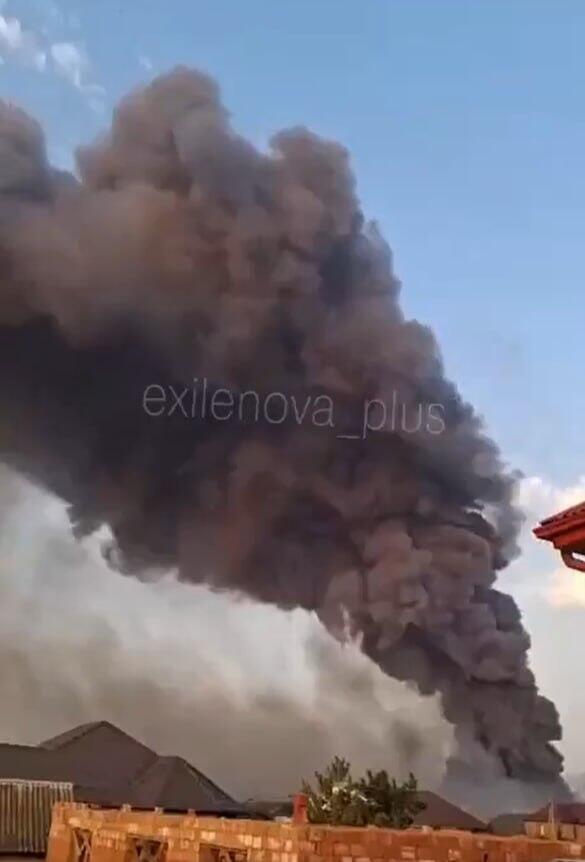
Smoke rises from an Ozon warehouse in Adygea after it was hit by a Ukrainian drone
Ukraine’s military officially announced its new campaign against Ozon on Saturday. In a statement, the Ukrainian Defense Ministry said: “After Ukrainian units struck 15 of Wildberries’ largest logistics centers, now it is Ozon’s turn.”
Ukraine struck an Ozon logistics center in the Samara region that same day. A drone was later reported to have exploded and sparked a fire at an Ozon logistics center in the neighboring Orenburg region. On Sunday, another drone caused a major blaze at an Ozon facility in the Krasnodar region. A logistics center near an Ozon facility outside St. Petersburg was also hit. Ozon says six of its facilities have been damaged so far.
Russian President Vladimir Putin addressed the attacks on merchandise warehouses last Wednesday, when they were still focused exclusively on Wildberries, promising that the government would help rebuild the logistics centers damaged in the strikes. He acknowledged that damage had been caused but sought to play down its scale, saying it would not have critical consequences.
On Saturday, Putin warned that by attacking Wildberries and Ozon warehouses as well as oil facilities deep inside Russia, Ukraine had “opened Pandora’s box.” He said Moscow would respond by “striking the most sensitive sectors of Ukraine’s economy.”

After 4½ years of war, Russia’s home front is also suffering; Ozon and Wildberries branches in Moscow
(Photo: Igor Ivanko/AFP)
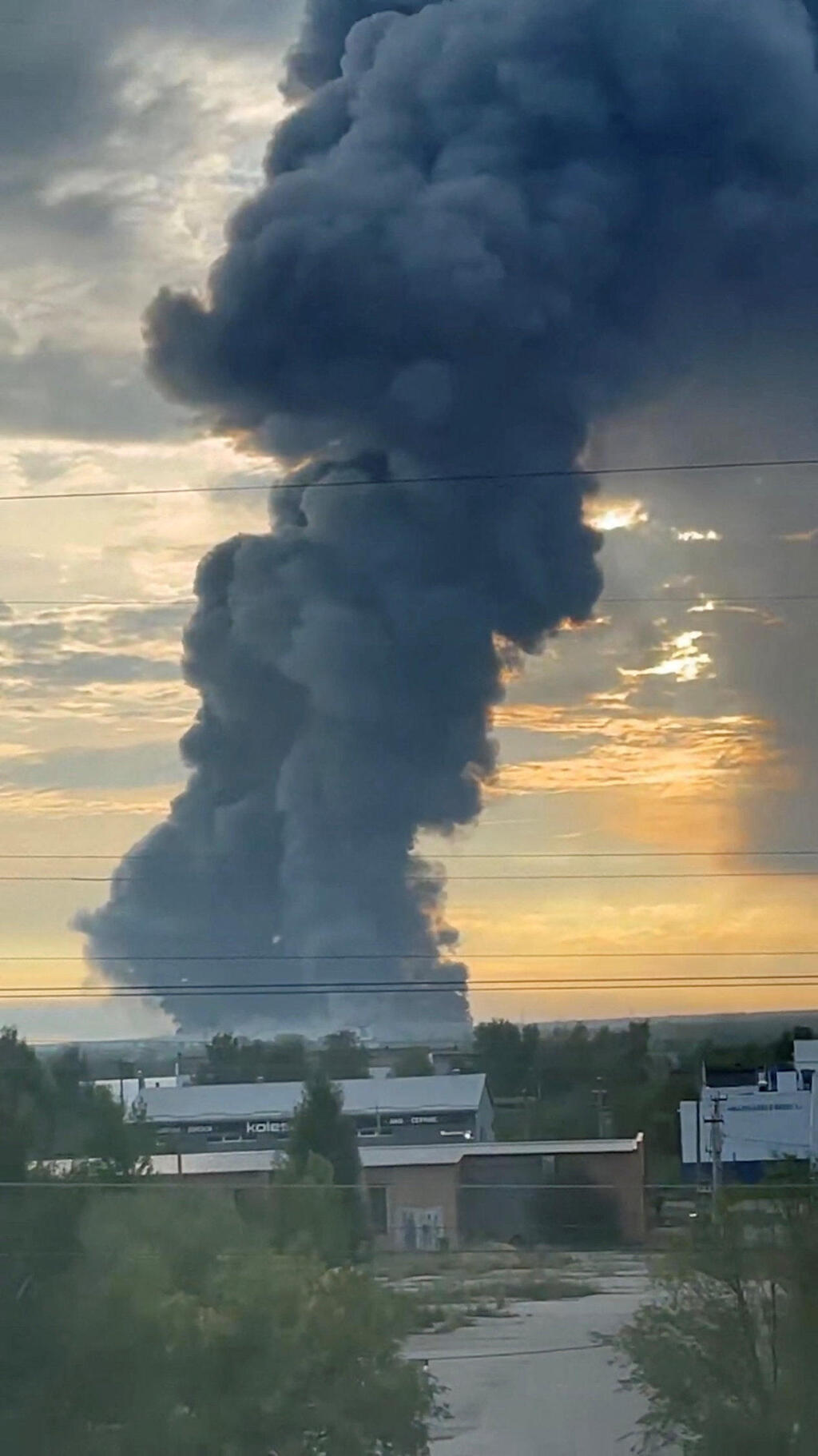
After a Ukrainian drone struck an Ozon warehouse in Samara, Russia
(Photo: Social Media via Reuters)
Following Monday morning’s attacks on Ozon facilities, shares in the e-commerce giant fell 12% on the Moscow Exchange. Shares in its main controlling shareholder, private investment company AFK Sistema, fell nearly 13%.
Ukraine marks Independence Day with 6.1 million euros from Europe
The growing number of Ukrainian drone launches against civilian targets in Russia is also taking an increasing toll in human life.
Russia said Monday morning that two children were killed in an overnight Ukrainian drone attack in which Kyiv launched more than 350 drones deep into Russian territory.
According to Moscow, drone debris fell on a children’s day care center in Krasnodar, killing two children and injuring seven others and two adults.
Ukraine said it also struck two Russian MiG-29 fighter jets and two Russian vessels in the Black Sea with drones Monday.
Russian attacks on Ukraine, meanwhile, have continued unabated. Three people were reported killed Sunday night by Russian fire on the outskirts of Kharkiv in northeastern Ukraine.

Ukrainian President Volodymyr Zelenskyy with British Prime Minister Andy Burnham; solidarity visit to Kyiv
(Photo: Simon Jones/Pool/AFP)
Ukraine was part of the Soviet Union until 1991, with Russia its dominant republic, and the two countries maintained close and friendly relations until 2014.
After Ukraine’s pro-Russian President Viktor Yanukovych was ousted in a popular uprising early that year, Russia seized Crimea, which until then had been part of Ukraine, and annexed it, arguing that the peninsula rightfully belonged to Russia and had been improperly transferred to Kyiv during the Soviet era.
Russia also sent forces into the Luhansk and Donetsk regions of eastern Ukraine, home to large Russian-speaking populations, saying it was acting to protect them from the new government.
After years of fighting in eastern Ukraine, and amid discussions over Kyiv moving closer to the West and potentially joining NATO, which Moscow views as its greatest security threat, Putin launched a full-scale invasion of Ukraine in February 2022.
Contrary to his expectations and those of others, Russian forces failed to capture the capital, Kyiv. Although Russia seized parts of four Ukrainian regions and forcibly annexed them, the Ukrainian military proved resilient and prevented the country from falling under Russian control.
As the months passed, Ukraine began carrying out an increasing number of retaliatory operations deep inside Russia, including targeted killings of senior figures and ground incursions. But Kyiv has inflicted most of its damage on Putin’s government through drone attacks, which have intensified in recent months.
Estimates indicate that hundreds of thousands of soldiers on each side have been killed since the war began, along with large numbers of civilians.
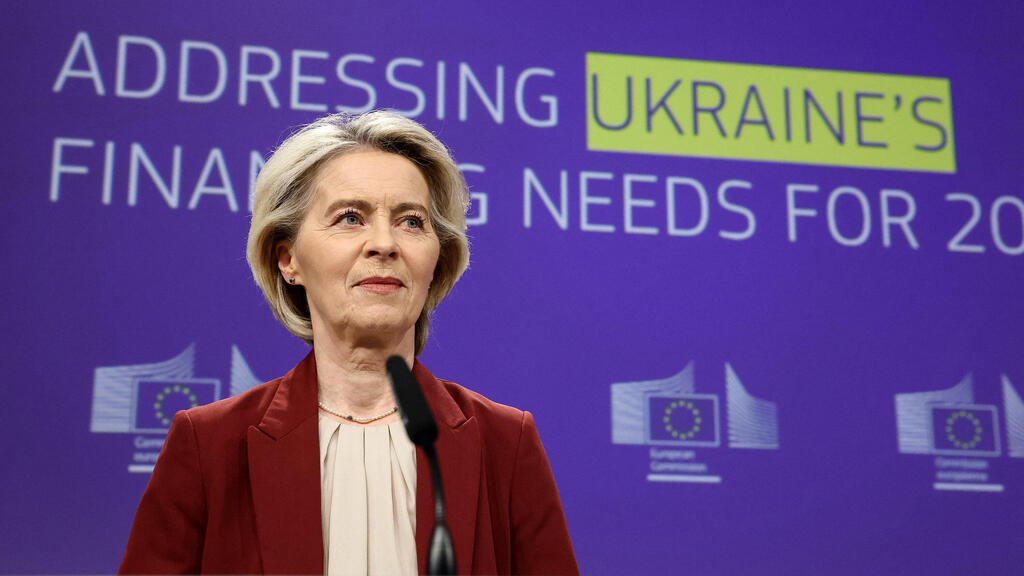
Ursula von der Leyen
(Photo: Yves Herman/Reuters)
Monday’s attacks came as Ukraine marked its 35th Independence Day. Leaders from several European countries and institutions that support Kyiv in its war against Russia arrived in the Ukrainian capital for the occasion, including new British Prime Minister Andy Burnham, the leaders of Luxembourg, Moldova and Estonia and European Council President António Costa.
European Commission President Ursula von der Leyen also announced Monday that the commission had approved a 6.1 million-euro aid package for Ukraine’s defense.
“On Ukraine’s Independence Day, we show our unfaltering support. Today, we approved €6.1 billion for the air and missile defence systems, missiles, ammunition and radars that Ukraine urgently needs,” von der Leyen said. “Europe stands with you today, tomorrow, and for as long as it takes.”