

Leah Goloventchitz, 3 months old, and Aaron (Ari) Katz, 6 months old, are the two babies who died Monday afternoon at an unlicensed daycare center in Jerusalem, as investigators increasingly suspect extreme heat and dehydration as the cause.
Initial findings from the investigation suggest that one of the infants may have died a significant period of time before rescue teams arrived, based on physical indicators. No signs of poisoning were found on either body. Forensic experts at the Abu Kabir Institute of Forensic Medicine are assessing that the likely cause of death was dehydration resulting from an air conditioner operating at very high heat in a closed room where the babies were kept, though no final determination has yet been made.
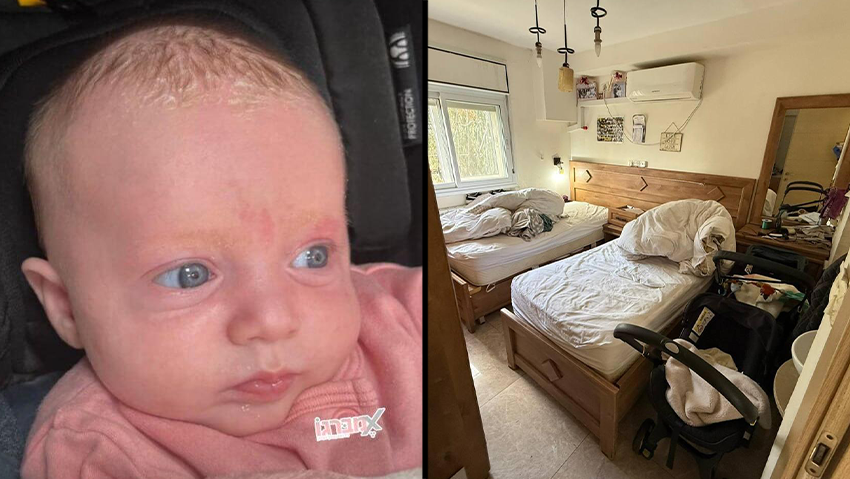
Witnesses at the scene said an air-conditioning unit in the daycare was set to an unusually high temperature, a level that could be dangerous for infants.
Leah was the daughter of Rabbi Mordechai Goloventchitz and her mother, Bracha Rolnik, who had only recently moved to Jerusalem’s Romema neighborhood. Leah had been enrolled in the daycare just days earlier and is survived by a younger sibling. Her mother wrote on Instagram: “My Leah, thank you for being mine. Your soul will be inside me forever. Blessed be the true Judge.”
Footage from the unlicensed daycare center in Jerusalem


Aaron arrived at the daycare for the first time on Monday, for only a few hours. He was the son of Rabbi Yaakov Katz and Hani Eisenbach, who owns a jewelry shop on Shamgar Street in Jerusalem. Eisenbach’s brother wrote that she had left the fashion production world to stay home with her son and had entrusted him that day, for the first time, to a caregiver she knew personally and trusted.
The medical investigation into the unusual incident is continuing. Dr. Saar Cheshbiah, head of the pediatric emergency department at Hadassah Ein Kerem Medical Center, said that initial tests at the scene did not point to poisoning of any kind, including gas exposure.
“At this stage, the circumstances are still unclear,” he said. Additional possibilities being examined include food poisoning or suffocation, such as being covered by a blanket.

An infant sleeping under a toilet seat
When dozens of infants were brought to hospitals across Jerusalem, most in good condition, medical teams began extensive testing to determine the cause of the incident. The initial working assumption was carbon monoxide poisoning, a scenario not uncommon during Jerusalem winters due to faulty heating or poor ventilation.
However, Dr. Cheshbiah said blood tests showed normal carbon monoxide levels in all children examined, including the infant who later died at the hospital. “These findings reduce the likelihood of such poisoning to almost zero,” he said.
Exposure to pesticides or other toxic substances was also examined. Dr. Cheshbiah noted that such poisonings typically present clear symptoms, including vomiting, diarrhea, excessive salivation or changes in pupil size, none of which were observed in the evacuated infants. Some toxicology results are still pending, but he said he would be “very surprised” if pathological findings emerged.
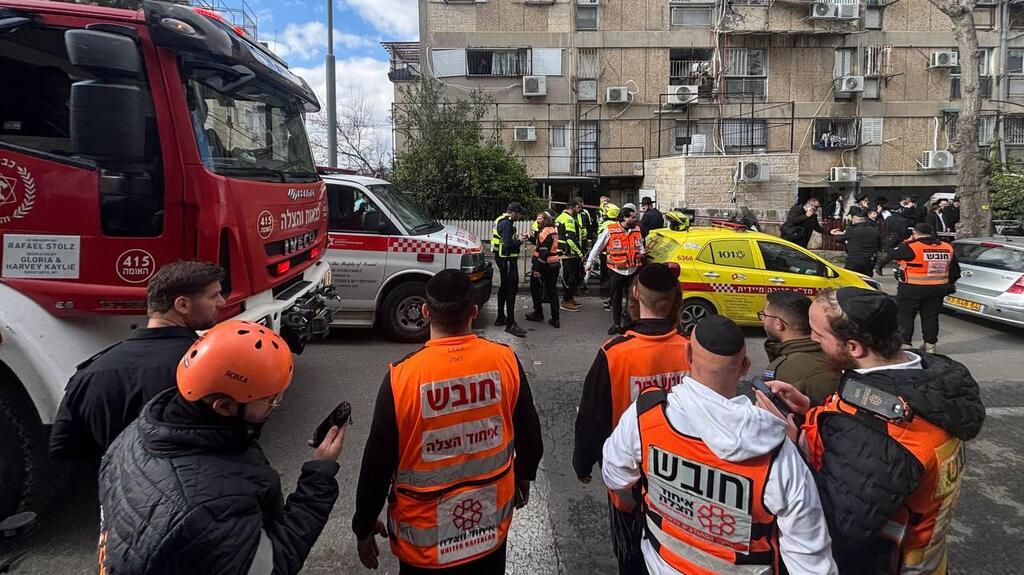
The Jerusalem scene
(Photo: Gil Yochanan)
“This is a very complex event,” he said. “For the medical teams, for the parents and for the children, both because of the large number of infants involved and because of the uncertainty surrounding what happened.”
The Environmental Protection Ministry said it had ruled out a hazardous materials incident at the daycare, following inspections carried out after the incident. Fire and rescue services also said no dangerous materials were found at the facility, which operated without a license in two apartments on HaMag Street in the Romema neighborhood.
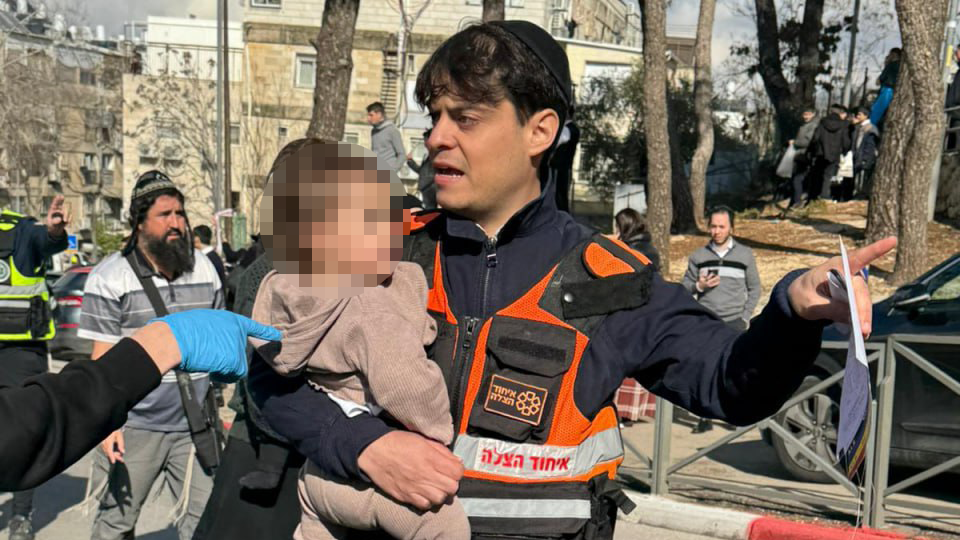
(Photo: United Hatzalah)
According to the daycare owner, the two infants were in the same room and were evacuated to hospitals in two separate emergency calls. She said the babies had been fed only milk that morning. Fire and rescue services published images of the room as it was arranged at the time.
Police evacuated the infants from the facility together with fire and rescue forces, and three caregivers were detained for questioning as part of the investigation.
Fifty-three infants were taken to hospitals in Jerusalem, all in good condition, contrary to initial reports of widespread breathing difficulties. As a precaution, and in the absence of a clear cause, hospitals decided to keep all evacuated children under extended observation.
Separately, a two-week-old baby girl from Safed died after being found without a pulse or breathing and was evacuated in critical condition to Ziv Medical Center. In another incident, emergency crews performed resuscitation on a baby girl from the southern Sharon region, who remains hospitalized.
The latest findings build on earlier reports of severe overcrowding and unsafe conditions at the unlicensed Jerusalem daycare, which has now been shut down by authorities.