

The High Court of Justice ruled Sunday that retired Judge Asher Kula may not serve as the supervisor of the investigation into the outgoing military advocate general, but permitted Justice Minister Yariv Levin to nominate an alternative candidate.
The decision resolves petitions filed over the appointment process for the high-profile inquiry into alleged misconduct related to the military prosecution. The court determined that Kula’s current role as state ombudsman for judges disqualifies him from overseeing the investigation due to potential conflicts of interest.
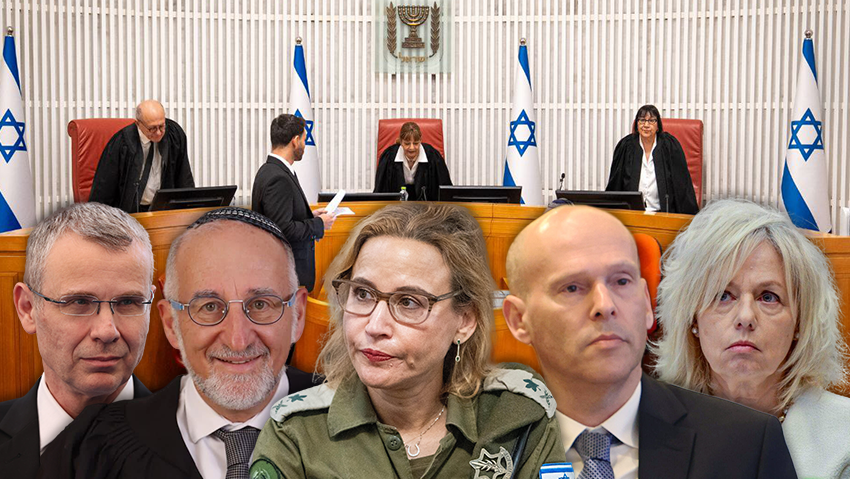
However, the justices affirmed that Levin retains the authority to appoint another candidate to lead the probe, effectively upholding the justice minister’s right to influence the investigation’s oversight, despite rejecting his original nominee.
Earlier, Levin launched a scathing attack on the court for its indication last week that Kula could not take part in supervising the probe because of his current role.
Levin accused unnamed opponents of trying to block Kula’s appointment “out of fear of the investigation’s results.” He said “no one questions his integrity or professionalism,” and argued there is “no justification” to bar him. Levin noted that former Supreme Court Justice Eliezer Rivlin previously headed a two‑year inquiry while serving in the same oversight post. “Any ruling preventing Kula’s appointment would allow the investigation to be covered up,” Levin wrote, adding that the attorney general’s involvement reflects an effort “to prevent the truth from coming out.”
Officials familiar with the matter said they could not recall a justice minister issuing such a warning so close to a High Court decision. They expressed concern that Levin’s comments may be laying the groundwork to challenge the ruling if the court bars Kula from accompanying the investigation.
The dispute follows the court’s order last week giving Levin and Attorney General Gali Baharav‑Miara until Thursday to reach an agreement on who would oversee the investigation into Maj. Gen. Yifat Tomer‑Yerushalmi, the outgoing military advocate general, for her part in the leak of classified footage from the Sde Teiman detention center allegedly showing soldiers abusing a Palestinian detainee. No compromise was reached. Levin formally asked the court to approve Kula’s appointment and said he had proposed adding a civil servant chosen by the court to accompany Kula, but the attorney general rejected the idea. Levin suggested that an active or retired district court judge could join Kula to “strengthen the balance.”

Justice Minister Yariv Levin
(Photo: Alex Kolomoisky)
Baharav‑Miara initially opposed transferring the probe to someone outside the chain of command of the state prosecution, arguing that Levin’s move to appoint a special investigator was an unprecedented political intervention that could invite future attempts to reassign sensitive cases by labeling them “special.”
As part of a compromise proposal submitted by state prosecutors, the court was asked to appoint a retired Supreme Court justice to lead the investigation into the Sde Teiman leak. Prosecutors argued that such an appointment would ensure public confidence because of the judge’s professional standing, the unusual nature of the process and the fact that retired justices are not candidates for future judicial promotions.
First published: 09:21, 11.16.25