


U.S. President Donald Trump said Wednesday he advised Prime Minister Benjamin Netanyahu against launching a military strike on Iran, as talks for a renewed nuclear deal continue.
“I told him I don’t think it’s appropriate right now,” Trump said, describing the conversation during ongoing efforts to reach a new agreement with Tehran. “It wasn’t a warning—I just said I didn’t think it was the right time.”

Israeli officials dismissed media reports of tension between the two leaders over the nuclear negotiations. “There is very close coordination between the U.S. and Israel,” one Israeli official said. “Neither side intends to surprise the other, as the relationship between the countries and the leaders is deep, intimate, and daily.”
The official added that Netanyahu and Trump have publicly agreed on a shared objective: preventing Iran from obtaining a nuclear weapon or the means to develop one. This position, they said, directly challenges Iran’s demand for autonomy over uranium enrichment, a provision allowed under the 2015 nuclear deal that both leaders opposed.
Netanyahu has long criticized policies of transparency with Washington. As opposition leader, he attacked the “no surprises” policy, and in 2021 accused then-Foreign Minister Yair Lapid of abandoning what he called a “sacred principle.” “Over my years as prime minister, I was often asked to make such a commitment,” Netanyahu said at the time. “I always refused. Sometimes I informed them of intended actions, often I did not. But I never—ever—committed to advance notice of everything we do.”
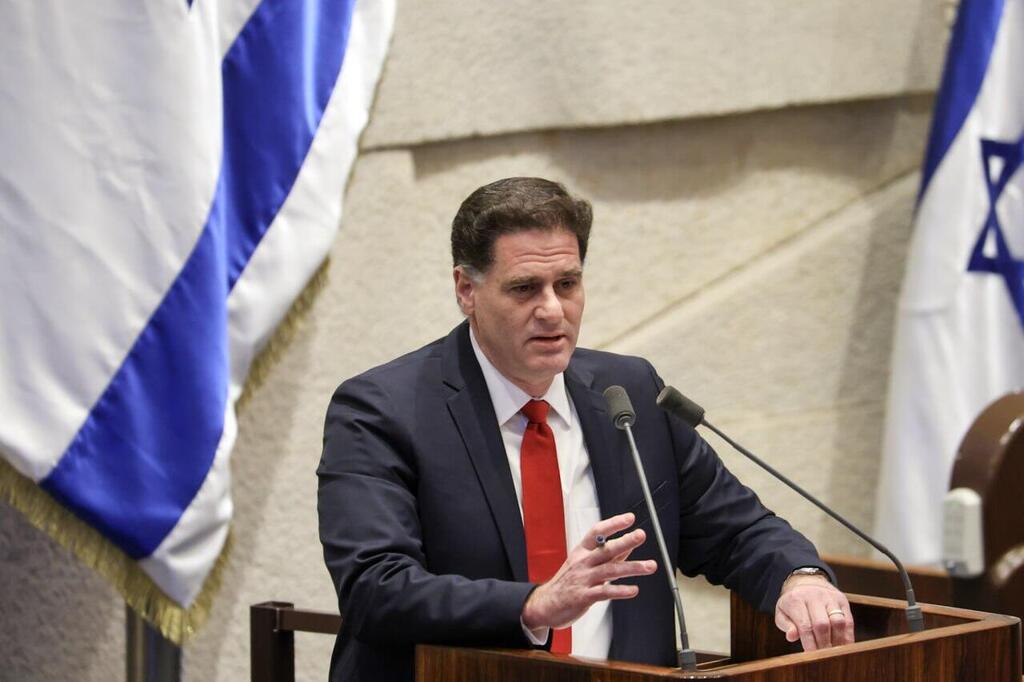
(Photo: Knesset)
A senior Israeli delegation, including Strategic Affairs Minister Ron Dermer, National Security Adviser Tzachi Hanegbi, and Mossad chief David Barnea, returned Tuesday from a two-day working visit to Washington. During meetings with Vice President J.D. Vance, CIA Director John Ratcliffe, and White House officials including special Middle East envoy Steve Witkoff, the delegation laid out Israel’s view on what would constitute a strong nuclear agreement.
Israeli officials acknowledge the outcome of the U.S.-Iran negotiations is unpredictable. American negotiators have presented clear principles for a deal, but these currently clash with Iran’s red lines. “One side will have to give ground,” a source said, “but it’s unclear if or when that will happen.”
Get the Ynetnews app on your smartphone: Google Play: https://bit.ly/4eJ37pE | Apple App Store: https://bit.ly/3ZL7iNv
Four possible outcomes are on the table: a collapse in talks, a deal requiring major U.S. concessions, one based on significant Iranian compromise, or a vague agreement allowing both sides to claim success.
Iran, meanwhile, said Wednesday that if a nuclear deal is reached with Washington, it may allow inspectors from the International Atomic Energy Agency to visit its nuclear sites. Mohammad Eslami, head of Iran’s Atomic Energy Organization, made the statement ahead of a sixth round of indirect talks with the U.S., brokered by Oman. Iranian Foreign Minister Abbas Araghchi said the next round could be scheduled in the coming days.