

In 2015, when then-Jewish Home chairman Naftali Bennett was asked about same-sex marriage, he said Judaism does not recognize LGBTQ people and compared it to the fact that a law cannot declare meat and milk kosher. He described his position at the time as: "Recognition — no; rights — yes."
Now, the Beyachad (Together) party he leads is offering a far more liberal vision: a party commitment to registering partnerships with the Interior Ministry and providing full equality of rights.
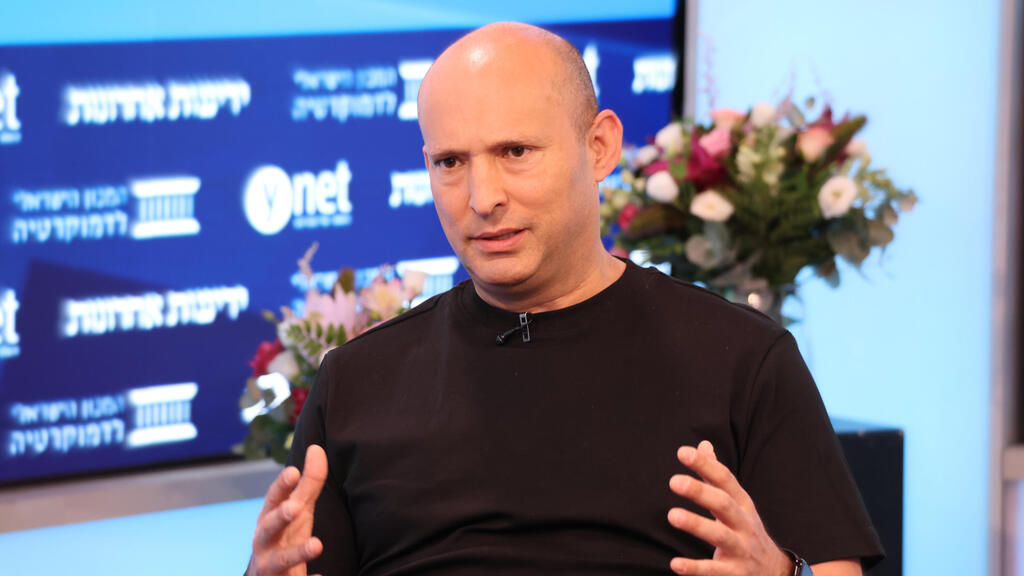
More than a decade after opposing recognition of same-sex marriage, Bennett is presenting a plan aimed at granting the LGBTQ community full civil equality. Beyachad's platform includes a civil partnership framework that would grant all the rights and obligations of married couples, enshrining the right to equality in a Basic Law, a sweeping statutory ban on conversion therapy and permanent funding for services for the community.
Many of the measures are not new. Proposals for civil partnerships, enshrining equality in a Basic Law, banning conversion therapy and expanding protections against discrimination have been introduced in the Knesset over the years, but many never became law. Measures involving parenthood, surrogacy, education, welfare and health have already been advanced in part through court rulings, government decisions and changes to regulations. What is new about the plan is not necessarily the measures themselves, but who is now committing to them.
Some of those measures were advanced while Bennett himself was prime minister. During the so-called change government, the surrogacy process was effectively opened to male couples and single men following a High Court of Justice ruling, and funding for services and programs for the LGBTQ community was significantly increased. The Health Ministry also issued a directive imposing restrictions on conversion therapy carried out by licensed professionals. However, no civil partnership framework was established, the right to equality was not enshrined in a Basic Law and no sweeping statutory ban on conversion therapy was enacted.
Now, that support in principle is becoming a party commitment. Beyachad is proposing a civil framework for registering partnerships with the Interior Ministry, regardless of religion, gender or sexual orientation, that would grant all the rights and obligations of married couples. The plan, however, does not use the term "civil marriage."

Omer Ohana and his partner, Maj. Sagi Golan, who was killed on October 7
At a "Sagi Laws" conference in July, Bennett said he supports allowing anyone who wants to start a family to do so in Israel "without having to travel to Cyprus, get married in Utah or go to court." The question of whether Bennett also supports same-sex marriage appears to remain open.
The party's plan also includes a commitment to advance the "Sagi Laws," a legislative package promoting equality that emerged from a campaign by Omer Ohana, whose partner, Maj. Sagi Golan, was killed on October 7.
The package addresses, among other issues, civil marriage, parental registration, a ban on conversion therapy, housing discrimination and hate crimes. At the same conference in July, Bennett said: "You are not asking for gifts here. You simply want the rights every Israeli deserves." He added: "The time has come to pass these laws."
One of the most significant provisions in the plan is a proposed "Basic Law: Equality," which would enshrine the right to equality before the law and explicitly state that rights may not be infringed on the basis of sexual orientation or gender identity. Beyachad is also proposing an amendment to the Interpretation Law to ensure that statutory bans on discrimination also apply to discrimination against LGBTQ people. Similar proposals have been introduced in the Knesset in the past, including by Yorai Lahav-Hertzanu, but were never enacted.

Bennett meets with members of the LGBTQ community; will the plan survive coalition negotiations?
The proposed ban on conversion therapy also seeks to go further than measures taken under Bennett's government. A 2022 Health Ministry directive subjected licensed professionals to sanctions if they offered, advertised or performed conversion therapy, but it did not impose a blanket legal ban. The new plan promises legislation that would prohibit the practice entirely.
Beyachad is also pledging to establish permanent, earmarked funding for programs serving the LGBTQ community in the state budget, rather than leaving such funding dependent on the decisions and priorities of each government.
Alongside the plan, Bennett has placed two openly gay former or current lawmakers who have worked to advance LGBTQ rights on his party slate: Eitan Ginzburg in the No. 8 spot and Yorai Lahav-Hertzanu at No. 18. Ginzburg was Israel's first openly gay mayor, while Lahav-Hertzanu serves as chairman of the Knesset's LGBTQ caucus.
Beyachad is not the only party putting LGBTQ rights on the agenda ahead of the election. The Democrats are pledging full legal equality, civil marriage for all couples, equal parental registration and a ban on conversion therapy. Yair Golan has also pledged to establish a national authority for LGBTQ rights.
Gadi Eisenkot pledged at the "Sagi Laws" conference to advance equality legislation. Yisrael Beytenu's platform includes civil marriage and divorce, though it does not explicitly refer to same-sex couples.
The plan's main test will be political. At this stage, it is unclear which of the commitments would survive coalition negotiations.
Bennett said: "In the next government, we will work for full equality of rights in order to protect the LGBTQ community from violence and incitement. Together, we will bring about a historic correction and erase the wrongful discrimination in this country."
Ginzburg added: "We are not second-class citizens. A country that asks everything of us must give us equal rights."