

Saudi Arabia’s de facto leader, Crown Prince Mohammed bin Salman, has urged U.S. President Donald Trump to continue the war against Iran, arguing that the U.S.-Israeli military campaign presents a “historic opportunity” to reshape the Middle East, according to people briefed by American officials.
In a series of conversations over the past week, the crown prince conveyed to Trump that the campaign should press forward toward dismantling Iran’s hard-line government, the sources said. He argued that Iran poses a long-term threat to the Gulf that can only be removed by eliminating the regime.
Gallery
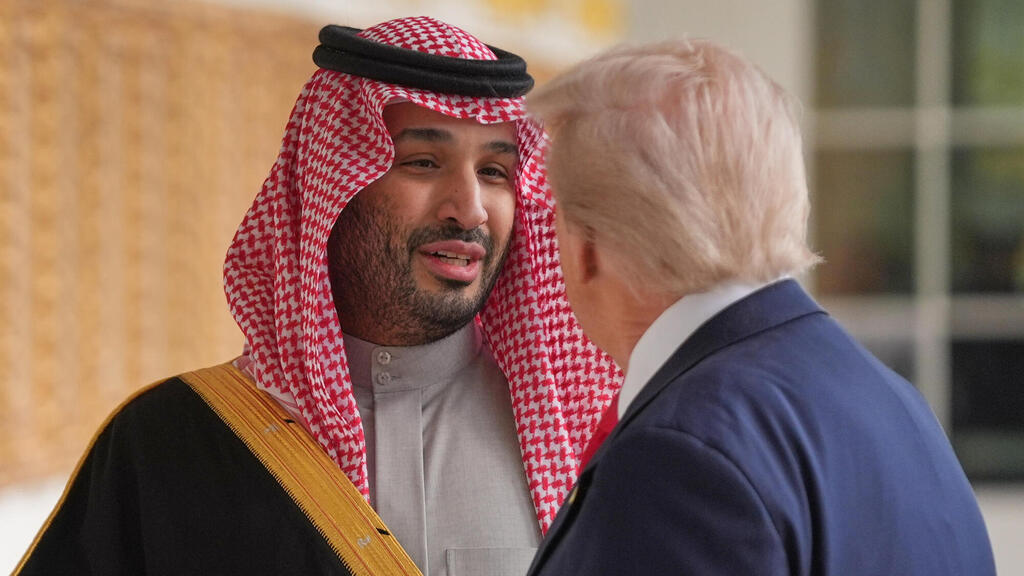
Crown Prince Mohammed bin Salman and US President Donald Trump
(Photo: Reuters/ Jessica Koscielniak)
The position underscores a divergence in regional thinking. While Prime Minister Benjamin Netanyahu also views Iran as a strategic threat, analysts say Israeli officials might accept a weakened, internally destabilized Iran as a strategic gain. Saudi Arabia, by contrast, fears that a failed Iranian state could pose a direct and unpredictable security threat.
Despite the prince’s reported position, senior officials in both Washington and Riyadh are increasingly concerned that a prolonged war could trigger escalating Iranian attacks on Saudi oil infrastructure and draw the United States into an extended conflict.
In public, Trump has sent mixed signals about the trajectory of the war. On Monday, he wrote on social media that his administration had held “productive conversations regarding a complete and total resolution of our hostilities,” though Iranian officials denied that negotiations were underway.
Saudi Arabia’s government rejected the suggestion that the crown prince is pushing to prolong the war.
“The kingdom of Saudi Arabia has always supported a peaceful resolution to this conflict, even before it began,” the government said in a statement, adding that officials remain in close contact with the Trump administration.
“Our primary concern today is to defend ourselves from the daily attacks on our people and our civilian infrastructure,” the statement said. “Iran has chosen dangerous brinkmanship over serious diplomatic solutions. This harms every stakeholder involved but none more than Iran itself.”
People familiar with the discussions said the crown prince has also advocated for strikes on Iran’s energy infrastructure and, in some cases, raised the possibility of deploying U.S. ground forces to seize key oil facilities, including Kharg Island, a central hub for Iran’s oil exports.
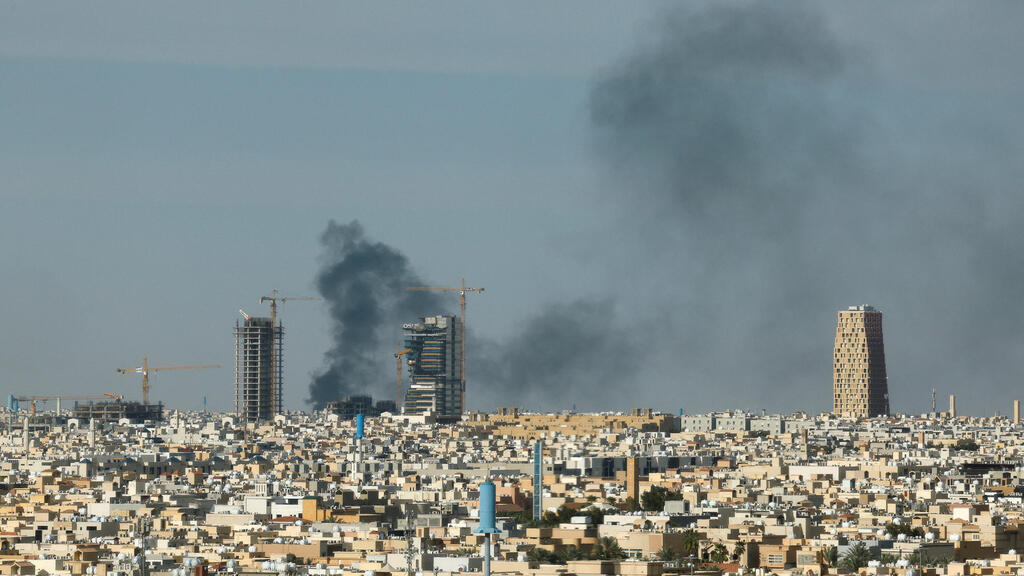
Saudi Arabia believes it can defend itself if the war continues. Smoke rises over Riyadh
(Photo: Stringer/ Reuters)
Such operations, potentially involving airborne troops or amphibious assaults, would carry significant risks.
The crown prince’s stance is shaped in part by economic pressures. Since the war began, Iranian retaliatory strikes have disrupted global energy markets, with attacks on infrastructure and shipping routes. The Strait of Hormuz, a critical chokepoint through which most Gulf oil exports pass, has been severely affected.
Although Saudi Arabia and the United Arab Emirates have developed alternative pipelines, those routes have also come under attack, limiting their effectiveness.
Analysts say Saudi leaders are weighing two competing risks: ending the war too early could leave Iran emboldened and capable of targeting the kingdom at will, while prolonging the conflict could expose Saudi Arabia to sustained attacks and economic damage.
“Saudi officials certainly want the war to end, but how it ends matters,” said Yasmine Farouk of the International Crisis Group.
The kingdom’s current position reflects lessons from past confrontations. A 2019 Iran-linked attack on Saudi oil facilities temporarily cut the country’s production in half, prompting Riyadh to pursue a diplomatic thaw with Tehran in 2023.
That fragile détente has since collapsed. Iranian missile and drone attacks across the region, launched in response to the current conflict, have upended efforts by Gulf states to stabilize relations.
“What little trust there was before has been completely shattered,” Saudi Foreign Minister Prince Faisal bin Farhan said last week.
Saudi Arabia has deployed its Patriot missile defense systems to intercept incoming attacks, but global shortages of interceptors have raised concerns about sustainability. Iranian strikes have already hit a refinery and the U.S. Embassy in the kingdom, while debris from interceptions has killed two Bangladeshi workers and injured others.
Since the start of the war, Netanyahu has pushed for operations that could lead to the collapse of Iran’s leadership. U.S. officials, however, have focused more narrowly on degrading Iran’s military capabilities and have expressed skepticism that the regime can be forced from power.
Despite significant Israeli strikes and the killing of senior figures, Iran’s leadership remains intact.
Saudi officials remain wary of the alternative scenario: a fragmented Iran in which militias or rogue military elements continue attacks on the kingdom, particularly against energy infrastructure.
Some intelligence analysts believe the crown prince also sees the conflict as an opportunity to expand Saudi Arabia’s regional influence and believes the kingdom can manage the risks even if the war continues.
Trump, for his part, has raised concerns about rising oil prices and broader economic fallout. The crown prince has reportedly assured him that disruptions would be temporary, though American and regional officials remain skeptical.
Economists note that Saudi Arabia cannot fully compensate for supply disruptions caused by the conflict, as its overland pipelines can carry only a fraction of the volume that typically flows through the Strait of Hormuz.
The stakes are particularly high for the crown prince’s domestic agenda. His Vision 2030 plan to transform Saudi Arabia into a global economic hub is already under strain, with rising costs, ambitious megaprojects and growing budget deficits.
A prolonged conflict could undermine investor confidence and disrupt tourism, both central to the kingdom’s economic strategy.
Asked whether Saudi Arabia preferred a quick end to the war or a prolonged campaign to degrade Iran’s capabilities, Prince Faisal said the priority is clear.
“We’re going to use every lever we have — political, economic, diplomatic, and otherwise — to get these attacks to stop,” he said.