

Dalia Azugi and David Levy, Orit Peretz and Eyal Radia, and Yael Fogel and Rafi Navon are three pairs of siblings whose two children were killed in battles and wars following Oct. 7. Ahead of Israel’s Memorial Day for fallen soldiers and victims of attacks, they speak about the bond formed through shared pain, coping with bereavement that struck their families twice and how they learned to support one another.
'I always wanted to be like you, Nivi'
Staff sergeant Omri Peretz and Staff sergeant Niv Radia, cousins from Elyakhin, built a treehouse as teenagers. Nearby, among small cacti, the couch where they sat and talked for hours still stands. They were always close, at heart as well. Only 50 meters separated the homes of their parents, siblings Orit Peretz and Eyal Radia. Today the cousins are buried a meter apart in the local cemetery. On Omri’s grave still lies the stone Niv placed there, reading: “I always wanted to be like you, Nivi.”
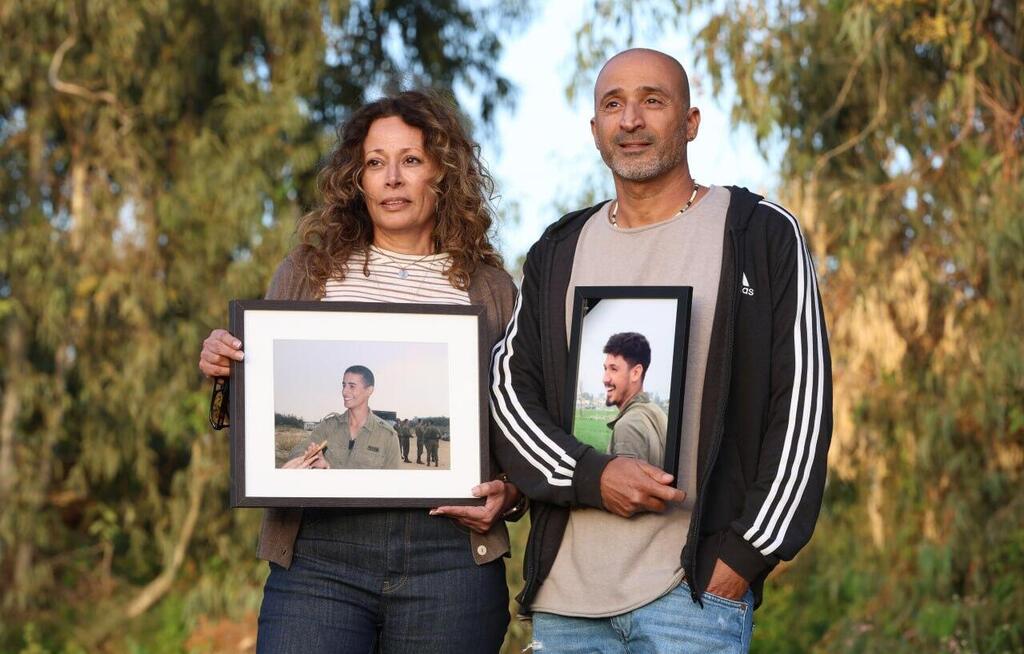
This will be Eyal’s first Memorial Day as a bereaved father, and the siblings are trying to process the double blow that struck their extended family. “After Omri fell, I tried to calm myself and his sisters,” Orit recalled. “I told them lightning doesn’t strike the same place twice. A year and two months later it did. I thought they were joking. Only in recent days have I begun to process Omri’s death. Nivi’s death I still can’t process.”
Eyal said he was anxious about his son Niv, whom he called “Nivi.” “People told me that after my nephew was killed it wouldn’t happen again, but I felt death was no longer far from me. I don’t understand how my sister and I are sitting here talking about our children who were killed.”
Omri, a year older than his cousin, was a paratrooper who was killed at 20 in a battle on that Saturday, defending communities near the Gaza border. He was serving as a squad commanders course instructor at the IDF Ground Forces training base. At 7 a.m., his battalion was rushed to the area as a first response force. Omri led his soldiers in clearing the Maon and Re’im junctions, killing militants and rescuing a hostage from a vehicle on its way to Gaza.
They were then ordered to move to Kibbutz Kissufim, where they fought fiercely near the captured outpost and among the homes. His team conducted a stubborn defensive battle that halted the militants’ advance into the kibbutz, saving its residents. Omri was killed in the fighting along with three of his soldiers.
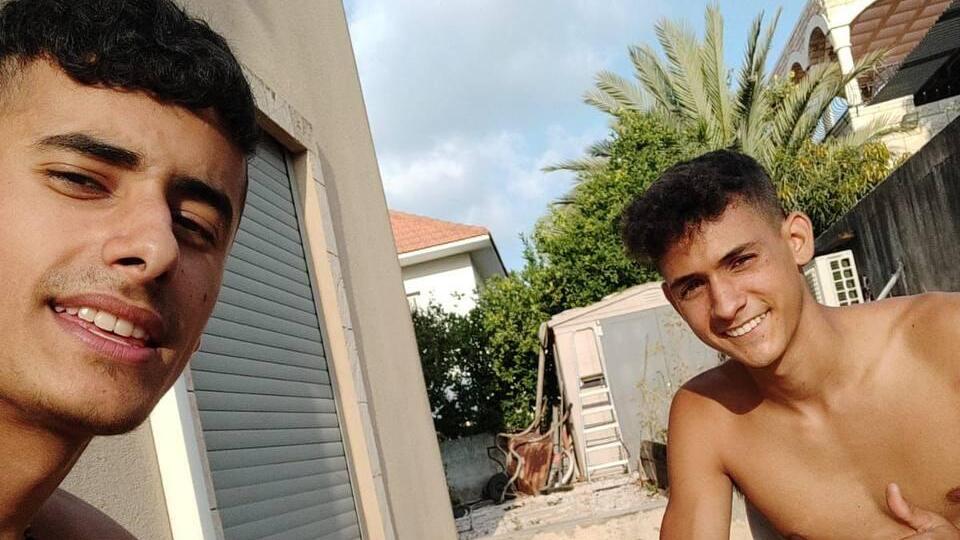
Omri Peretz and Niv Radia
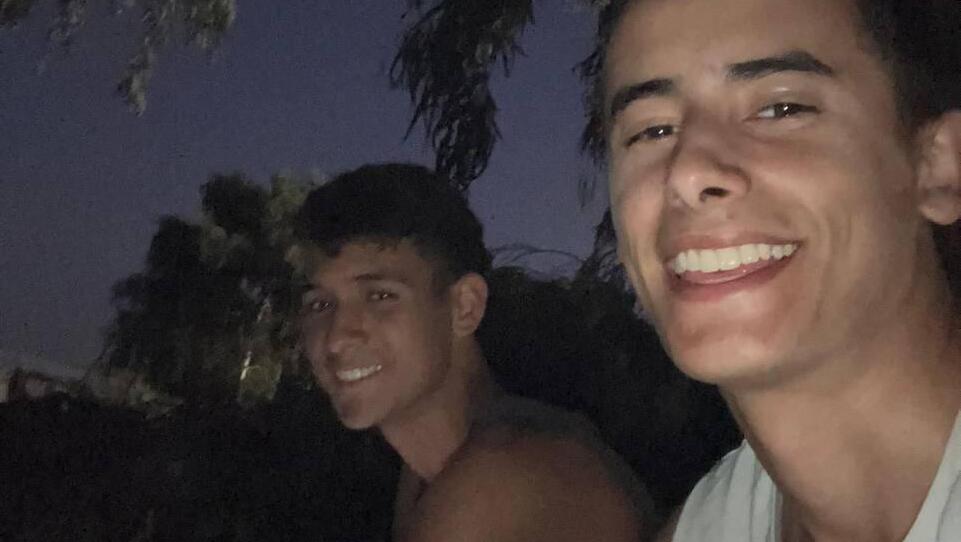
“Telling Nivi about Omri’s death was the hardest thing I ever did, until his own death,” Eyal said. “Because his parents were abroad, I initially had to tell him Omri was fine. Then the call came and we both cried. From that moment, wherever he went in Gaza he spray-painted Omri’s name and ‘May God avenge his blood.’ He wanted to avenge his cousin and friend.”
Niv, who enlisted in August 2023 in the Combat Engineering Corps, fought in Gaza and Lebanon for more than a year and a half. Despite the strain, he chose to remain with his battalion out of commitment to his comrades. On June 24, 2025, during operations in Khan Younis, a militant threw an explosive device at the Puma armored vehicle he was in. Seven soldiers were killed in the blast, including Niv, who was 20.
Their parents describe a special bond between the two, who walked to school together every day. “Omri was the older cousin and wanted to teach Niv things,” Eyal said. “Niv soaked up everything he said. He was a role model for him.”
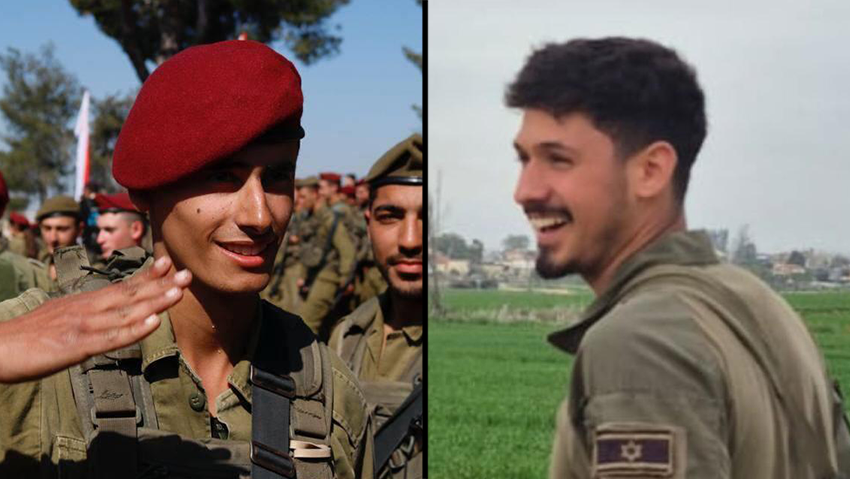
Omri and Niv
(Photo: IDF, Courtesy )
Orit added, “Omri started building the treehouse and Nivi joined because he admired him. Omri had charisma, he loved people and knew how to see them, so it was easy for Nivi to connect to him. They were both competitive, maybe Omri more so. He wouldn’t rest until he won.” Eyal said that for Niv, “family was the most important thing.”
Memorial Day is not the peak of their difficulty. “These have been 10 months of ceremonies,” Orit said. “It’s a shattering period. You deal with the most painful things all the time, but there are moments that hurt even more, like this day.”
“For me it’s the first time,” Eyal said. “Orit already knows what to expect. I hope we’ll be strong. We promised ourselves we would be strong for them. They went to the army for us and for our families, and we have to be strong for them.”
'Our children are superheroes'
Only 40 days separated the death of First Sgt. Elkana Navon during an operation in Jenin and that of his cousin, First Sgt. Ittai Fogel, in the Gaza Strip.
“When they came on the eve of Yom Kippur to knock on our door and tell us Ittai had fallen,” said Yael, Ittai’s mother, “I told them, ‘But we’re already a bereaved family. My nephew was killed.’ My world collapsed when Elkana fell, and then they told me about Ittai. An hour before the fast began, Rafi called and said, ‘Everything you told me a month ago to strengthen me, I’m now giving to you. Our children are superheroes. We’ll get through this together.’”
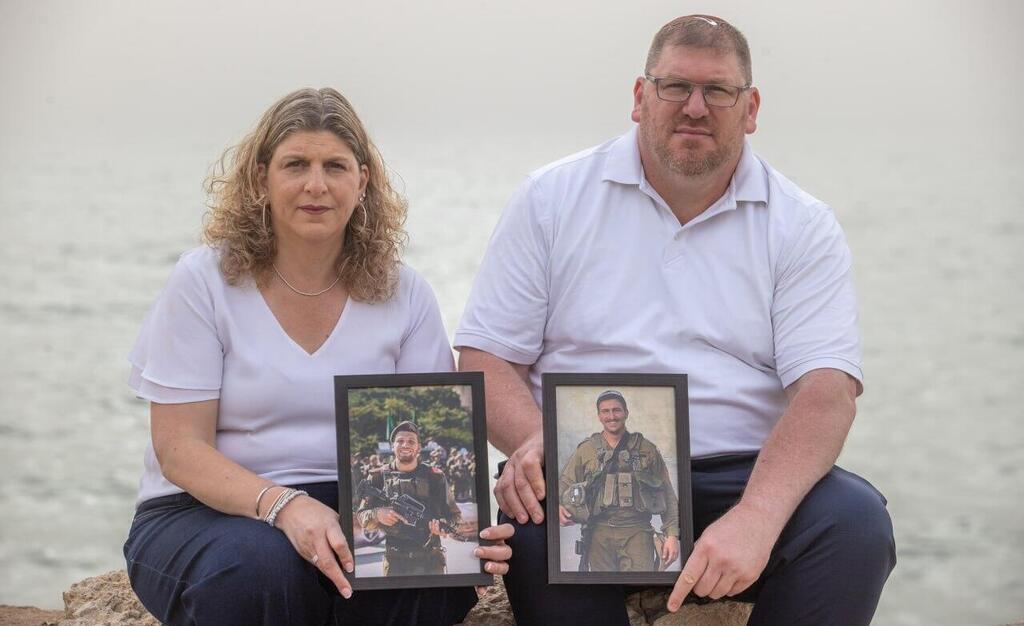
Yael Fogel and Rafi Navon
(Photo: Ido Erez)
Elkana, 20 at his death, and Ittai, 22, were the oldest cousins in the extended family, each the eldest in his household. Elkana served as an infantry soldier in the Nahal Brigade, Ittai in the Armored Corps. Ittai, a year and a half older, was close to his cousin. Due to a delay in enlistment for yeshiva studies, they enlisted the same week and accompanied each other.
“Elkana always smiled,” his father Rafi said. “He stood out in helping others and treating everyone with respect.” Yael added that her nephew “always had energy.” When his battalion commander visited, he said, “We didn’t lose a company commander, we lost a battalion commander.” He aspired to go far in the army. “His commanders said he always argued about who would go in first. He said he was the machine gunner and needed to go in first. He always wanted to act and to help.”
“Ittai was defined by his seriousness,” Yael said. “You could also say he was a genius,” Rafi added. “He excelled in his studies and at the same time was very down to earth with friends. He combined the world of Torah study with reading fantasy books and learning languages. In his tank they found many books: Mishna, Talmud, Jewish law, as well as ‘Narnia’ and Anne Frank. That says who he was.”
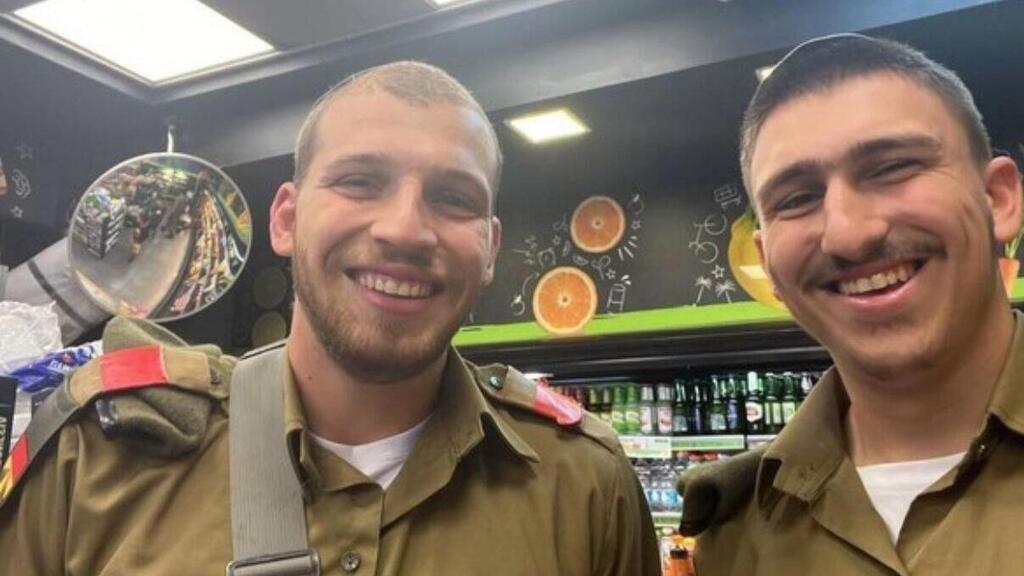
Only 40 days separated their deaths. The cousins, Elkana Navon and Ittai Fogel
(Photo: Courtesy)
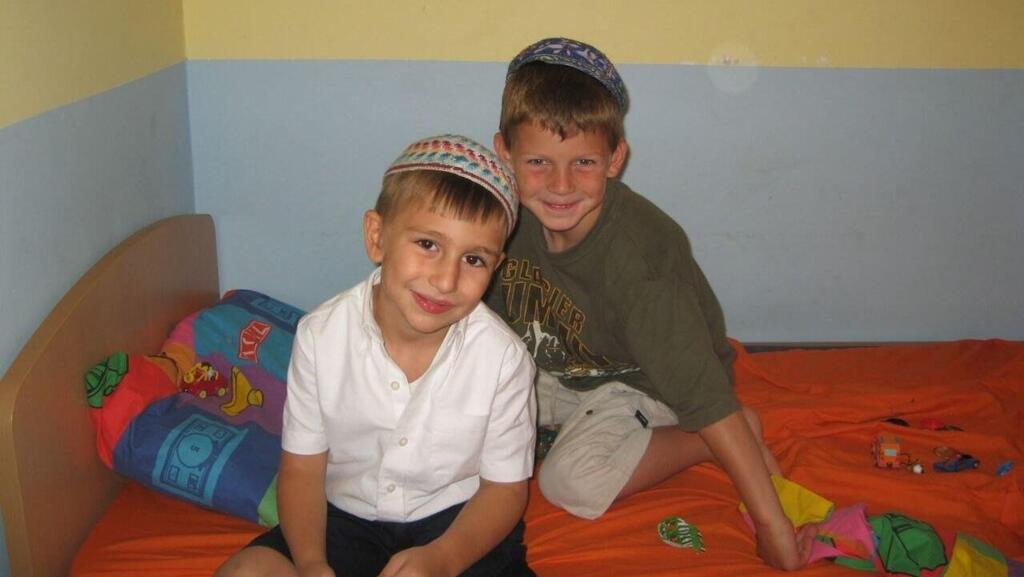
Elkana and Ittai as children
(Photo: Courtesy)
Yael is the eldest sibling and Rafi the second of four. “From the moment the children met, they had a strong bond. Since Oct. 7, it grew closer. Ittai would often say about family events, ‘If Elkana is there, I’m coming too.’ Ittai eulogized Elkana. Our last memory of them together is a selfie they took on the way to base. Their buses stopped at the same place and they met by chance, took a selfie and sent it to us. It’s proof of their bond and of the loss.”
“Elkana felt a deep sense of mission,” Rafi said. “He went through air force selection tests and other tryouts. Even though he didn’t pass, he kept his head high. He enlisted with his hesder yeshiva (a program combining religious study and military service) to the battalions, moved forward with confidence and encouraged those beside him. My father is a colonel, and he wanted to outrank him.”
“Ittai wanted to finish his military service and return to yeshiva,” Yael said. “But after Elkana fell, he told his commander he wanted to go to officers’ course to continue Elkana’s path.”
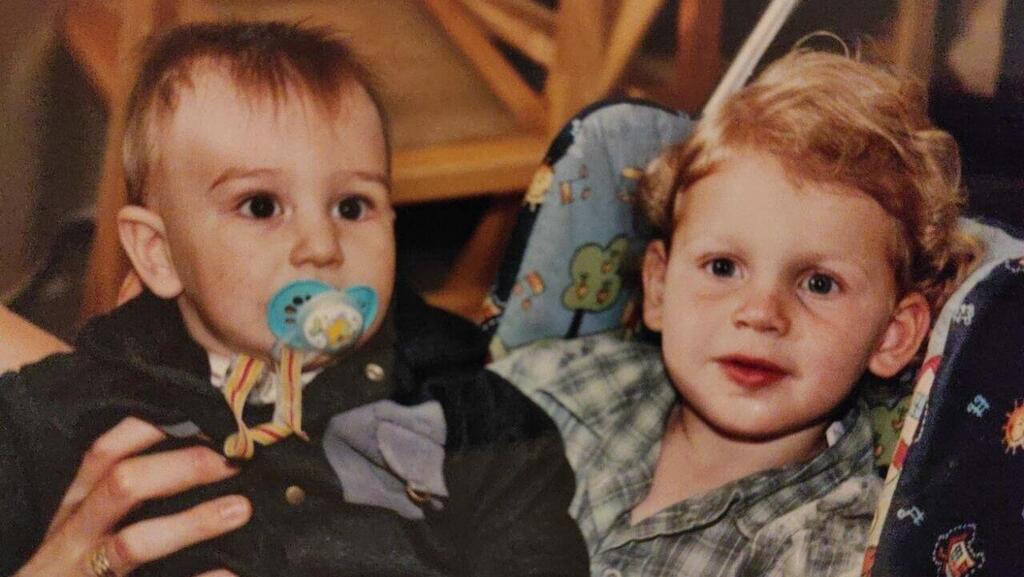
(Photo: Courtesy)
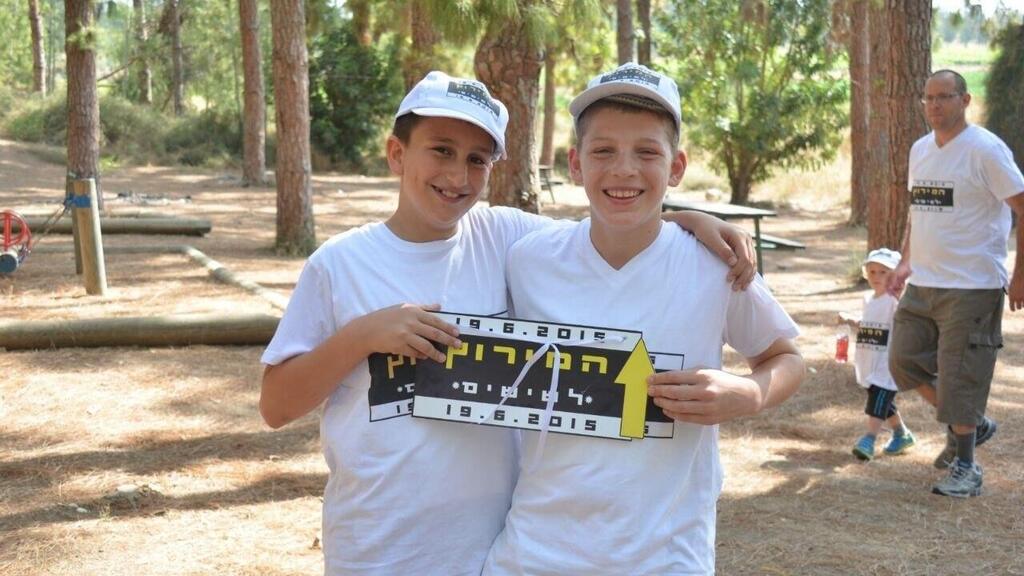
(Photo: Courtesy)
The siblings cope with the loss together. “There’s someone to share the pain with, who not only listens but understands. It makes the situation more bearable. We were always close, and now our children coordinate attending events for bereaved families together. They come as a group, and it gives strength.”
Elkana is buried in Petah Tikva, Ittai in Yakir, a settlement in the West Bank. “There are dilemmas in the family about where to go on Memorial Day,” they said. “We can’t go together, but each one also needs his own space.”
Rafi said, “At Ittai’s funeral I told my father and the family eulogists to speak as little as possible about Elkana. It’s easy to make the connection, but it was important to preserve Ittai’s place. When we dedicated a Torah scroll, my rabbi told me, ‘What kind of people are these, that after something is taken from them, they look for where to give?’”
'Grandmother Ninet lost two grandsons'
Staff sergeant Yedidya Azugi managed to attend the funeral of his beloved cousin, Sergeant Daniel Levy of Kiryat Ata, who was killed in Gaza’s Zeitoun neighborhood. Two and a half weeks later he was killed in Jabalia in northern Gaza.
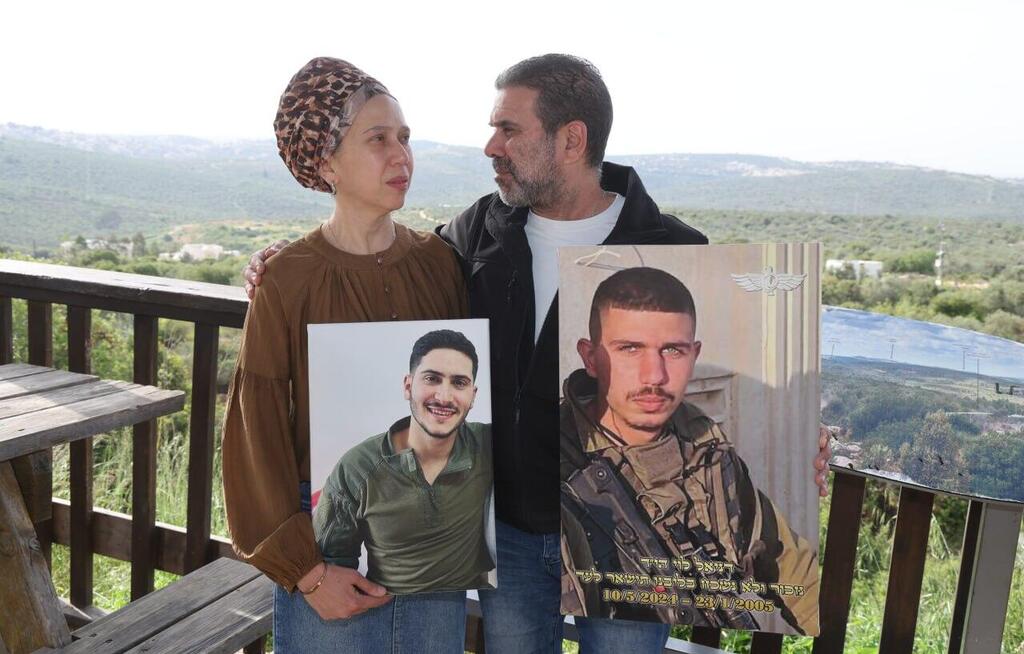
Dalia Azugi and David Levy
(Photo: Yariv Katz)
Daniel, a soldier in the Nahal Brigade’s 931st Battalion, was killed at 19 by an explosive device along with three other soldiers. “The pain is terrible,” said his father David. “We were very close. I took my son and his friend Yosef Dassa, who was later killed, to the bus as they headed south. A few days later they entered Gaza, and a day later my son was killed.”
Daniel, who dreamed of serving in the Oketz canine unit, was killed May 10, 2024. Three weeks later, on May 29, his cousin Yedidya, a paratrooper in the 101st Battalion, was killed. “They were close friends and loved each other very much. It’s inconceivable they’re not with us. Look at their memorial corner, how they smile, so young, proud of their service. Since they’re gone, life is not the same,” David said.
Yedidya, 21, from Revava, in the northern West Bank, was a platoon sergeant in the 101st Battalion.
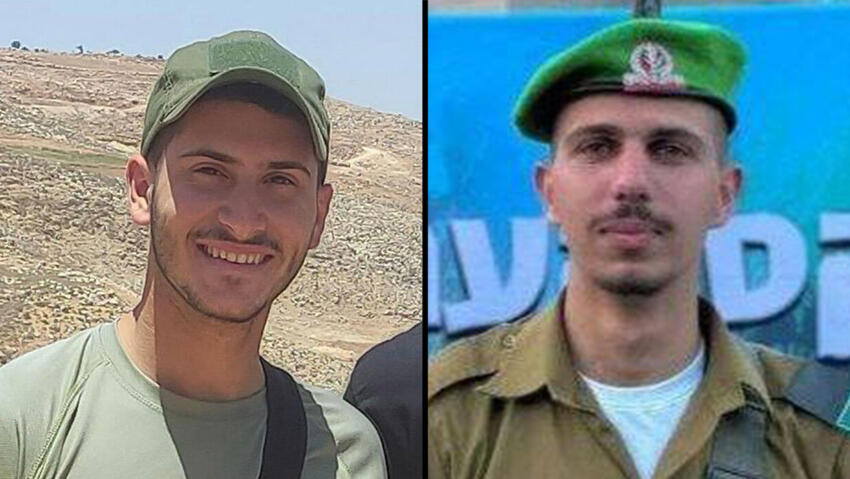
Daniel Levy and Yedidya Azugi
(Photo: IDF)
“My mother lost two grandsons in a short time, Daniel and Yedidya,” David said, his voice breaking as he looked at their photos. “Their deaths were so close together, it’s unimaginable. I miss him so much, talking with him, being with him in the stands. Every day is hard, especially now during the memorial days. These two grandsons were very close to her. Yedidya was like a copy of Daniel. They were very similar in character, modest, respectful and well-mannered.”
Two days before Daniel was killed, David spoke by phone with Yedidya. “They talked about going into Gaza and planned to try to meet inside. Sadly, they are now meeting above. I’m sure they are together and watching over each other,” he said.
“After Daniel was killed, Yedidya came to the funeral and the shiva, hugged the family and returned to Gaza,” David said. “My mother knew they were there and prayed for them every morning. After Daniel fell, she spoke with my sister and kept asking, ‘What about Yedidya? Did he call?’ She worried about him. I comfort my sister Dalia, who came to comfort me shortly before. It’s impossible to grasp.”
At her home in Revava, Dalia Azugi, David’s sister, spoke with pride about her son Yedidya. “That was the last time we saw him. He dreamed of joining an elite reconnaissance unit and almost made it, but as a paratrooper he couldn’t have been happier.”
She added, “My brother loses a son and I come to comfort him with the family, and shortly after we lose Yedidya, and my brother and his family come to our community for his funeral.”
Dalia spoke about Daniel’s love for the Hapoel Tel Aviv soccer club and her son’s passion for off-road motorcycles. “He had a dirt bike and was happiest in nature. It’s very hard without him, and we miss him deeply. Yedidya did everything quietly. We only learned things after the fact. He was very proud of the path he chose, defending our country.”