


The IDF is shifting direction after two weeks in which it said it would insist on disarming Hezbollah. Today, Friday, the military is already emphasizing that its war aims are primarily to significantly weaken the organization and create a deep defensive line, including demolishing dozens of homes along the first line of villages, similar to the “yellow line” model in the Gaza Strip.
IDF strikes in southern Lebanon
(Footage: IDF)


Regarding disarming the terrorist organization, the IDF says “we must be modest about it.” While officials stressed that only the IDF, and certainly not the Lebanese state or any other actor, could disarm Lebanon, they also emphasized that under current conditions the task is highly complex.
Defense officials say that to disarm Hezbollah, Israel would need to occupy all of Lebanon and reach every village. In the current situation, the IDF believes setting such a goal would be incorrect, and instead the objective is to significantly weaken the organization.
In the coming days, Northern Command is expected to present the General Staff and the political leadership with a defense plan for the first security zone near the border. The core of the plan involves blowing up and demolishing homes in the first line of villages, with appropriate legal backing. Christian villages are not included.
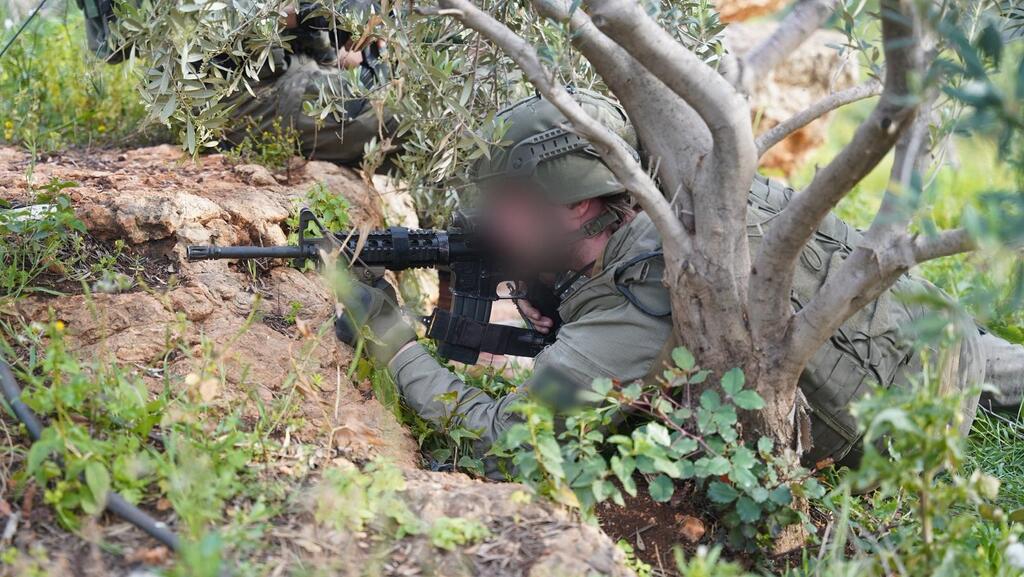
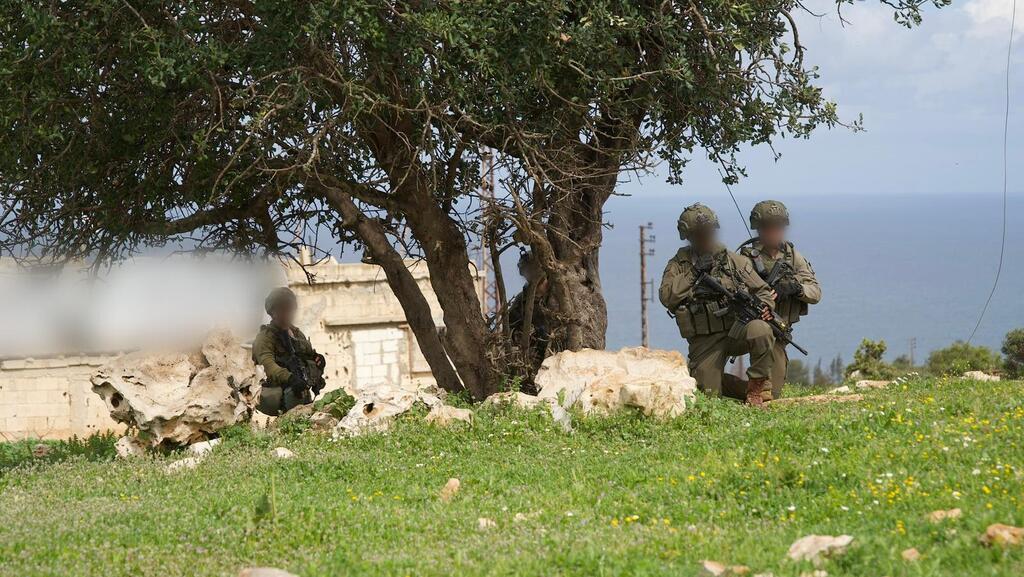
(Photo: IDF)
The IDF says the plan will include legal opinions supported by incriminating documentation collected in recent days, relating to terrorist infrastructure built in the past year in violation of signed agreements. The proposed model is that of the “yellow line” in Gaza. The IDF emphasizes that in any future agreement, residents will not be allowed to return to villages identified as having hosted Hezbollah terrorist activity.
By the end of the week, the IDF will complete the third phase of fighting in the north, which includes stabilizing forces along an anti-tank missile line. The goal is to position forces in villages that provide control over Hezbollah launch areas.
At the start of Operation “Lion’s Roar,” forces took up strong defensive positions along the border, based on the understanding that Hezbollah would join the fighting and to prevent infiltration threats against communities near the fence. The second phase included advancing forces with three divisions to push Hezbollah away from the border, and now the third phase is underway.
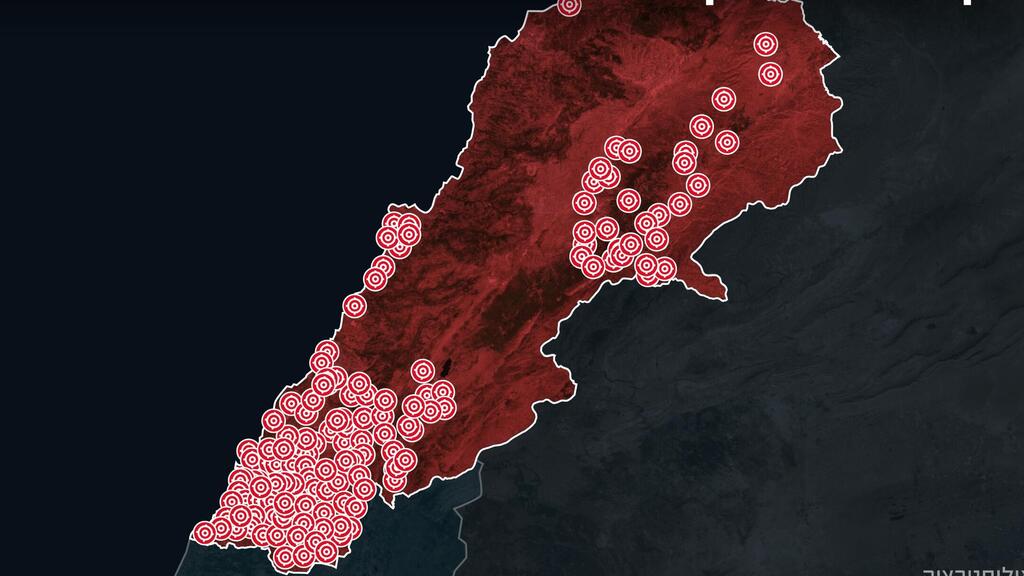
Map of IDF strikes in Lebanon
(Photo: IDF)
Four divisions are currently operating in southern Lebanon, the 91st, 146th, 36th and 162nd. Two are engaged in offensive defense and two are reinforcing border defense while working to capture territory, demolish structures and clear the area of terrorists and weapons stockpiles accumulated by Hezbollah. The maneuver’s objective is to push Hezbollah terrorists north of the Litani River and destroy the terrorist infrastructure built in southern Lebanon.
The IDF said today that in a targeted strike by Division 146, forces from the 213th Fire Brigade and the 226th Brigade identified about 15 terrorists in southern Lebanon who were planning to launch anti-tank missiles. The Air Force eliminated them. The IDF says the stabilization of forces will differ from the past security zone model, relying on mobile defense rather than a deep, static presence on the ground. Southern Lebanon will be divided into two areas, a “maintenance” zone and a “security” zone.
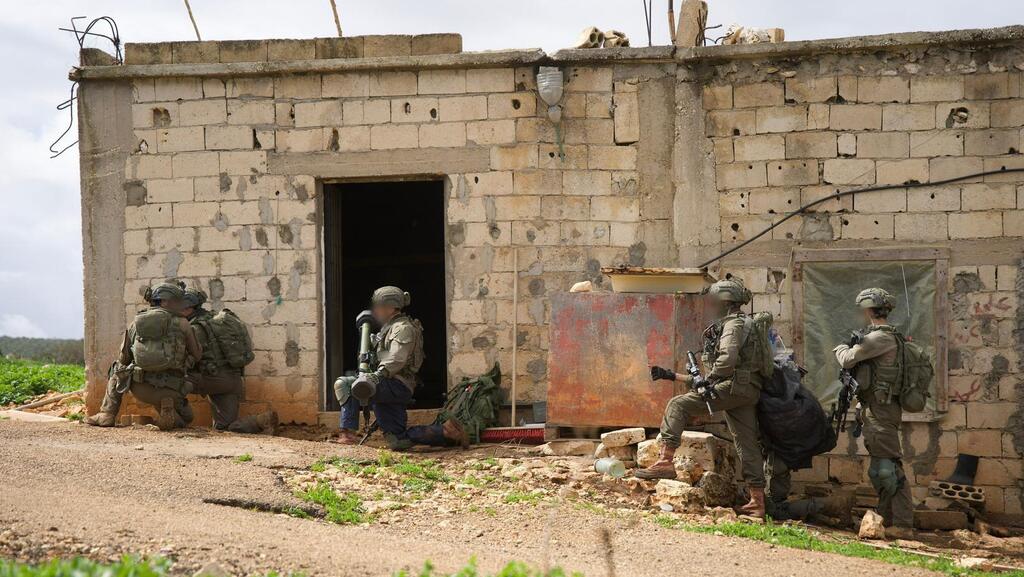
Brigade 226 forces in southern Lebanon
(Photo: IDF)
The maintenance zone refers to the first line of villages where infrastructure will be destroyed, while the security zone, located several kilometers deeper, will see forces operate with mobile defense. At the same time, the Air Force and Northern Command continue efforts against Hezbollah to strike senior operatives in Beirut and disrupt command and control systems.
Looking ahead, the IDF aims to separate Hezbollah from Iran rather than link the arenas. Officials say Hezbollah is highly concerned about being left “alone” if the confrontation with Iran ends in some form of agreement, a scenario that would allow Israel to intensify its strikes against the organization. Regarding the nature of the fighting in southern Lebanon, the IDF says the main threat is rocket fire and anti-tank missiles against maneuvering forces. In recent days, following a deadly encounter in which four soldiers from the Nahal Brigade reconnaissance unit were killed, Northern Command held a forum of brigade commanders fighting in southern Lebanon to assess key threats. One commander said that during a battle his forces came under fire from 40 anti-tank missiles, none of which hit the troops due to proper battle management and avoiding crossing the “exposure line,” where forces become vulnerable to long-range fire.
During the month of fighting on this front, about 1,000 terrorists have been killed, including many senior commanders and hundreds of Radwan force operatives. The IDF has struck more than 3,500 terrorist targets across Lebanon, focusing on infrastructure, weapons depots, launch positions and command centers.
In addition, key assets and financial warehouses of the Al-Qard al-Hassan association, a financial body operating as a parallel banking system in Lebanon and funded by Iran to support Hezbollah, were targeted. Five major bridges used for transporting weapons and enemy forces were also struck.