


The humanitarian situation in the Gaza Strip remained stable during the ceasefire from October 2025 through June 2026 and aid deliveries significantly exceeded needs identified by the United Nations and other international bodies, according to a new report published Thursday.
The report by the Coordinator of Government Activities in the Territories (COGAT), the defense body responsible for civilian affairs in the Palestinian territories, focused on food security, water, sanitation and hygiene, and medical response.
Large quantities of food available in markets across the Gaza Strip during the ceasefire
(Video: COGAT)


According to COGAT, about 1.78 million tons of food entered Gaza between the start of the ceasefire and June 7, 2026, roughly three times the requirements defined by the World Food Program. The report said that even excluding private-sector shipments, humanitarian food assistance exceeded defined needs.
COGAT said food prices in Gaza fell by about 72% between September 2025 and May 2026, alongside steep drops in prices for staples including flour, rice, lentils, vegetables and eggs. It said current prices are driven mainly by internal market conditions, including Hamas taxes and control over commercial distribution.
Gallery
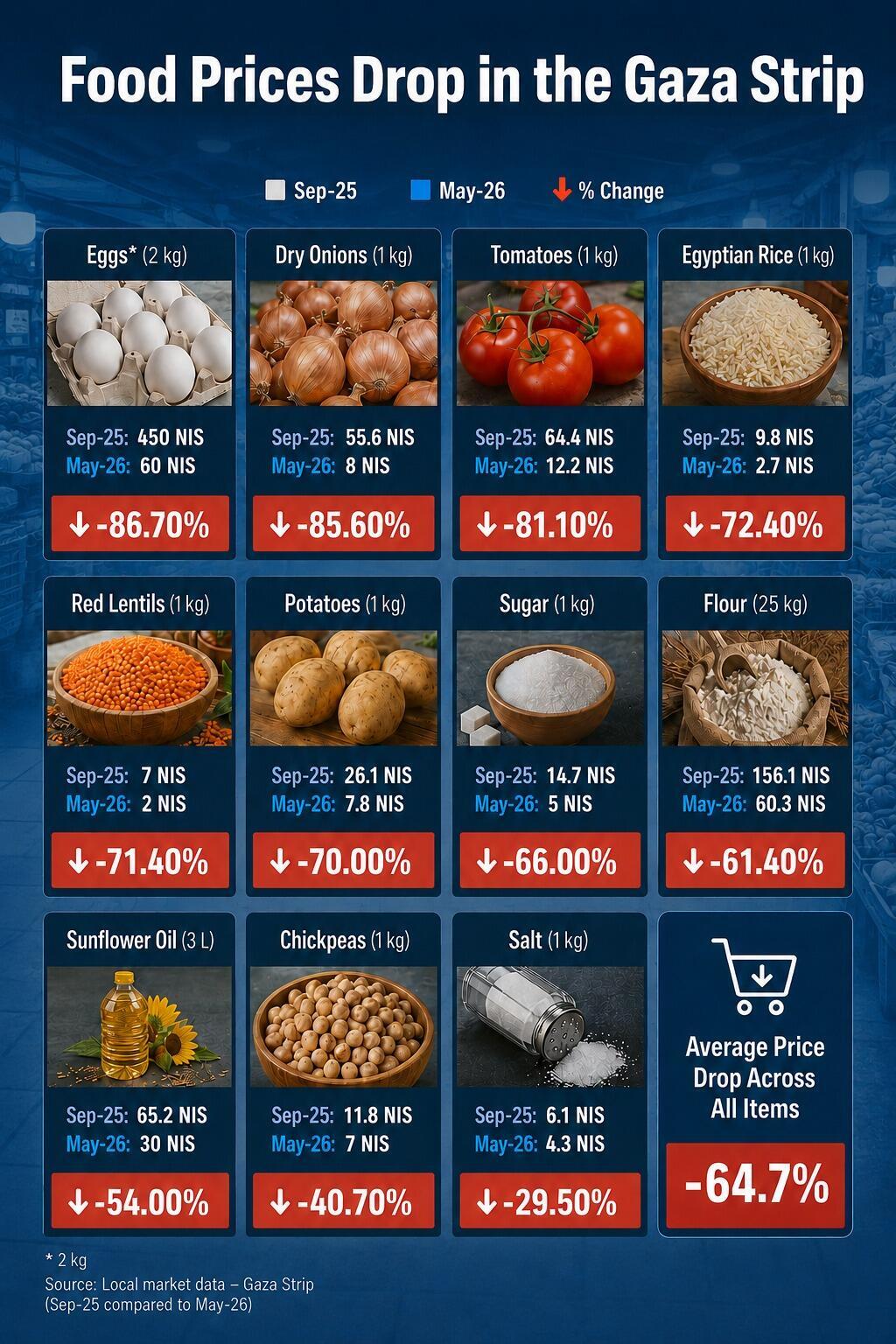
A comparison of prices for staple foods in Gaza between September 2025 and May 2026, showing declines across a range of products
(Illustration: COGAT)
The report said Gaza receives more than 70,000 cubic meters of water a day through pipelines, desalination facilities and other infrastructure, exceeding international humanitarian standards.
COGAT also said Gaza’s health care system remains operational, with more than 18,000 tons of medicines and medical supplies entering the territory since the ceasefire began. Hospital bed capacity has increased by more than 55%, according to the report.
Maj. Gen. Yoram Halevy, the coordinator of government activities in the territories, said the report was released to counter what he described as Hamas efforts to distort the humanitarian picture in Gaza.
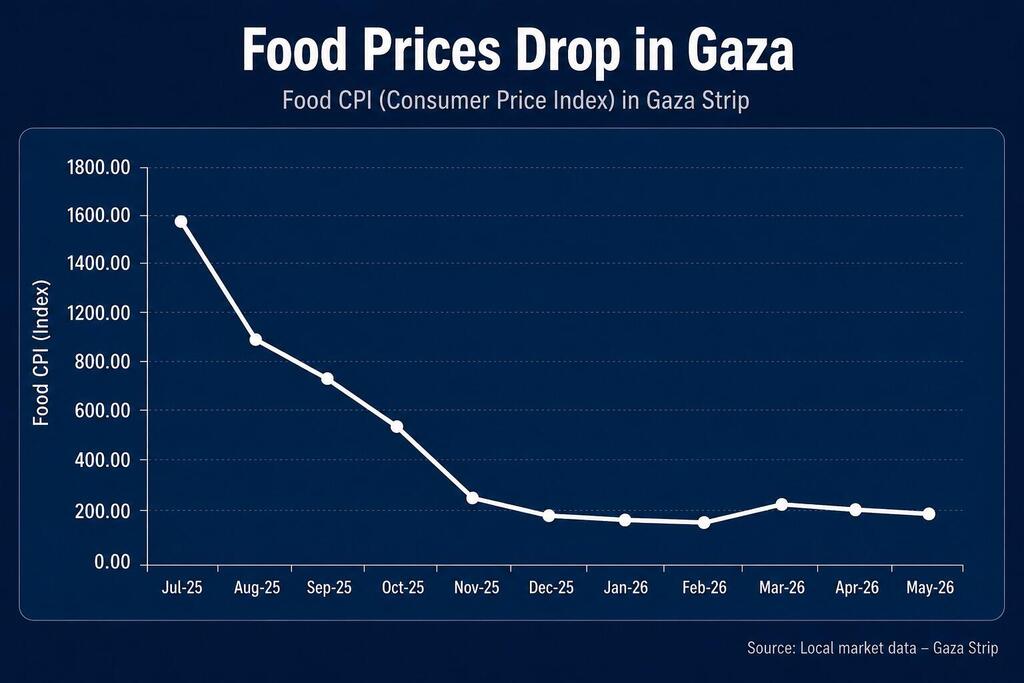
A sharp decline in Gaza's food consumer price index between July 2025 and May 2026
(Illustration: COGAT)
“Against the backdrop of Hamas' ongoing attempts, together with other actors, to distort the humanitarian picture in the Gaza Strip, we decided to publish this report in order to present the international community with the full factual picture,” Halevy said.
“The data are clear and leave no room for doubt: throughout the ceasefire, humanitarian stability was maintained in the Gaza Strip, and the volume of aid entering the territory significantly exceeded humanitarian requirements.
“Anyone who ignores these facts is amplifying Hamas propaganda, which exploits the humanitarian space for its military and governing purposes. COGAT will continue to work together with its international partners, in accordance with Israel's security interests, to expand the humanitarian response for the civilian population while preventing its exploitation by the Hamas terrorist organization.”