


Twelve days of military confrontation between Israel and Iran have brought Iran’s internal fragilities into sharp focus. From a sweeping domestic crackdown to renewed international sanctions and mounting distrust between Tehran and global institutions, the Islamic Republic now finds itself navigating one of its most critical diplomatic crossroads since the U.S. withdrawal from the Joint Comprehensive Plan of Action (JCPOA) in 2018.
The war, which saw Israeli strikes on military and nuclear targets within Iran, revealed not only security vulnerabilities but also exposed the regime to a new wave of international scrutiny. In response, the Islamic Republic has doubled down on domestic repression, expelling large numbers of Afghan refugees, interrogating minority communities and detaining dozens on allegations of espionage or collaboration with Israeli intelligence.
Gallery
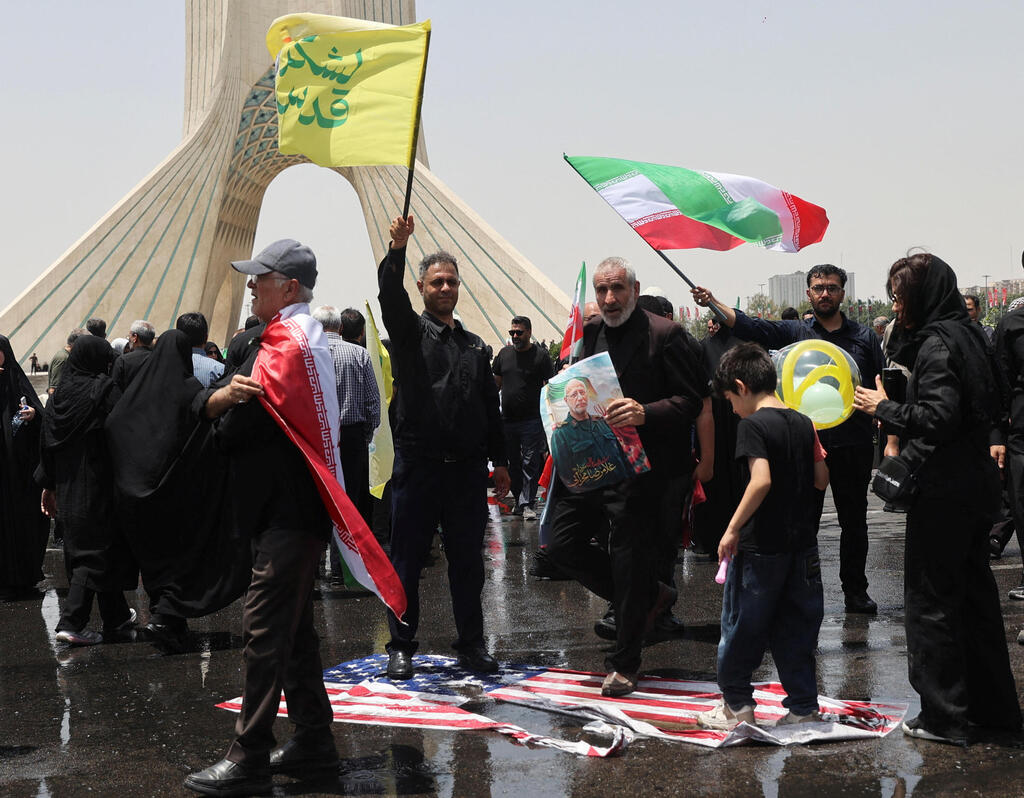
Iranian regime supporters at the funeral of top general killed in the war against Israel, Tehran
(Photo: Majid Asgaripour/WANA via REUTERS)
“The government, aware of its security deficiencies and how easily it was infiltrated, responded with repression,” Nima Baheli, an Iranian political analyst, said. “One tactic was the mass expulsion of Afghan refugees, possibly 300,000 or more. These deportations intensified after the conflict, suggesting an effort to reassert internal control,” he added.
Interrogations extended even to members of the Jewish community. “They avoided targeting Iranian Jews directly this time, but many were questioned and socially isolated for hours before being released. It caused panic. The regime understood the risk of provoking international reactions if it crossed a red line,” Baheli noted.
Meanwhile, the international community, particularly the United States and European Union, has responded with sanctions aimed at curbing Iran’s nuclear development and punishing human rights violations. Yet the nature and scope of these sanctions differ sharply between Washington and Brussels, reflecting divergent geopolitical philosophies.
From the U.S. side, sanctions on Iran are among the most comprehensive in the world. These are divided into primary sanctions, which prohibit virtually all trade between U.S. persons (including citizens, companies and entities operating under U.S. jurisdiction) and Iran, and secondary sanctions, which penalize non-U.S. persons who engage with specific sectors of the Iranian economy.
“The U.S. approach is about isolation,” Daniel Martin, partner and head of the sanctions team at HFW, a leading global law firm in the aerospace, commodities, construction, energy, insurance and shipping sectors, said.
“At present, U.S. persons are essentially banned from trading with Iran, apart from limited exemptions such as food or humanitarian goods. But the more aggressive component now being emphasized is the secondary sanctions regime designed to deter global companies, even those outside the U.S., from doing business with Iran,” he added.
Israeli airstrikes in the heart of Tehran


Martin noted that this approach is fundamentally different from those in Europe. “The European position is structured in the opposite way. European Union regulations allow trade with Iran unless there is a specific prohibition. That’s in contrast with the U.S. primary sanctions, where everything is banned unless explicitly permitted,” he said.
Currently, EU and UK sanctions are more narrowly targeted. They focus on two main areas: Iran’s nuclear program and its record on human rights. Sanctions currently in place include asset freezes and travel bans on individuals and entities linked to Iran’s ballistic missile development, human rights abuses and the Islamic Revolutionary Guard Corps. Additionally, restrictions exist on exports of equipment that could be used for internal repression or nuclear-related activities.
Still, within these legal boundaries, trade with Iran has continued in sectors not explicitly targeted, particularly in energy.
“There’s no denying that Europe has had a commercial interest in engaging with Iran,” Martin said. “European companies have historically been active in Iran’s oil and gas markets, automotive sector and aviation industries. After the JCPOA was signed in 2015, we saw trade missions from Germany, France and Italy seeking contracts. Access to Iranian oil was seen as an opportunity to diversify energy supply and reduce dependency on other exporters,” he added.
However, Martin added, “Even though EU sanctions are less extensive than American ones, the reality is that trade hasn’t rebounded. Businesses fear that if they reengage, sanctions could be reimposed unpredictably, especially with the U.S. shifting policies quickly. What businesses crave is certainty, and they haven’t had that,” he noted.
He elaborated further: “Whatever the legal position, commercial organizations need predictability. Reengaging with Iran requires significant legal and compliance investment. If there’s no assurance that sanctions relief will last, businesses won’t take the risk. That’s why even though EU sanctions are less extensive, trade hasn’t returned to pre-2018 levels,” he said.
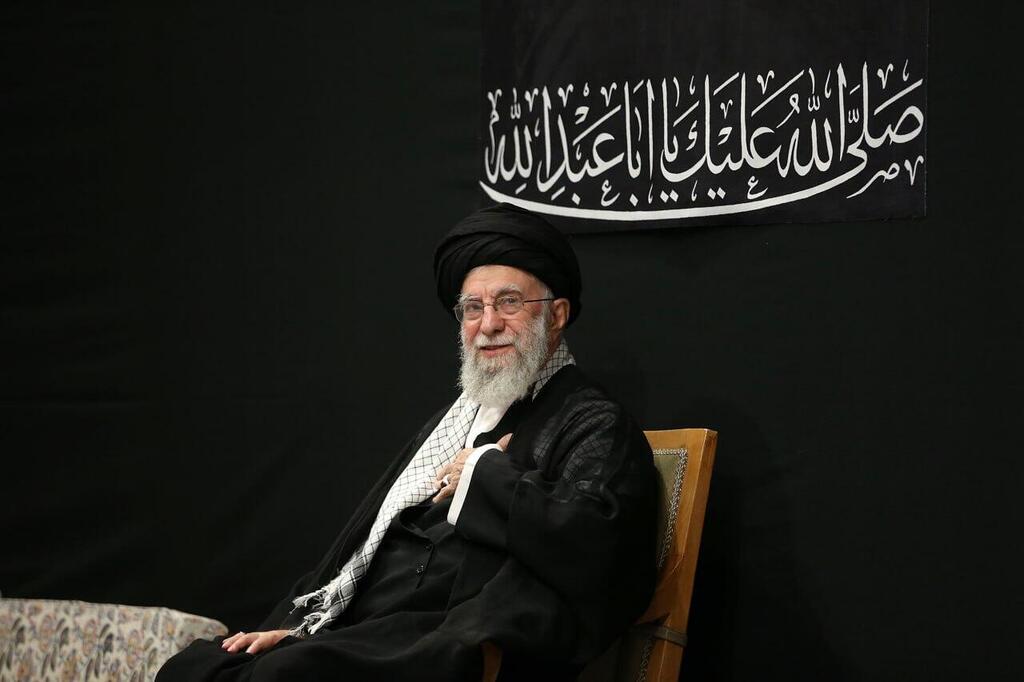
Iranian Supreme Leader Aytollah Ali Khamenei
Domestically, these economic constraints are being felt acutely by the Iranian population. Sanctions targeting the aviation and energy sectors have left both industries under-resourced. Aging equipment, reduced access to spare parts and the inability to attract foreign investment are limiting Iran’s operational capacity. “Ultimately, it’s the ordinary citizen who suffers,” Martin said.
That suffering is compounded by fear. The short-lived truce between Israel and Iran, observers say, feels fragile to many Iranians.
“There’s real fear that the war will resume,” Baheli noted. “Netanyahu’s visit to the U.S. and his track record of using conflict for political leverage, along with Iran’s awareness of its military shortcomings, have fueled this unease. People believe the truce is only temporary,” he added.
Get the Ynetnews app on your smartphone: Google Play: https://bit.ly/4eJ37pE | Apple App Store: https://bit.ly/3ZL7iNv
Amid the instability, Tehran has signaled renewed interest in regional diplomacy. A meeting is reportedly being prepared between Iranian and Saudi officials, aimed at stabilizing relations following years of hostility and proxy conflict. The move could be part of a broader recalibration in Iran’s foreign policy as it struggles to counter its isolation.
“Saudi Arabia wants stability. It cannot afford a war between Iran and Israel, nor a scenario where Iran is perpetually in crisis,” Baheli explained. “The Saudi development agenda depends on regional calm, and for that reason, they are invested in resolving tensions,” he added.
For Europe, the absence of Russian or Chinese support for Iran during the recent conflict may present an opportunity to fill the void diplomatically if Iran is willing to reciprocate.
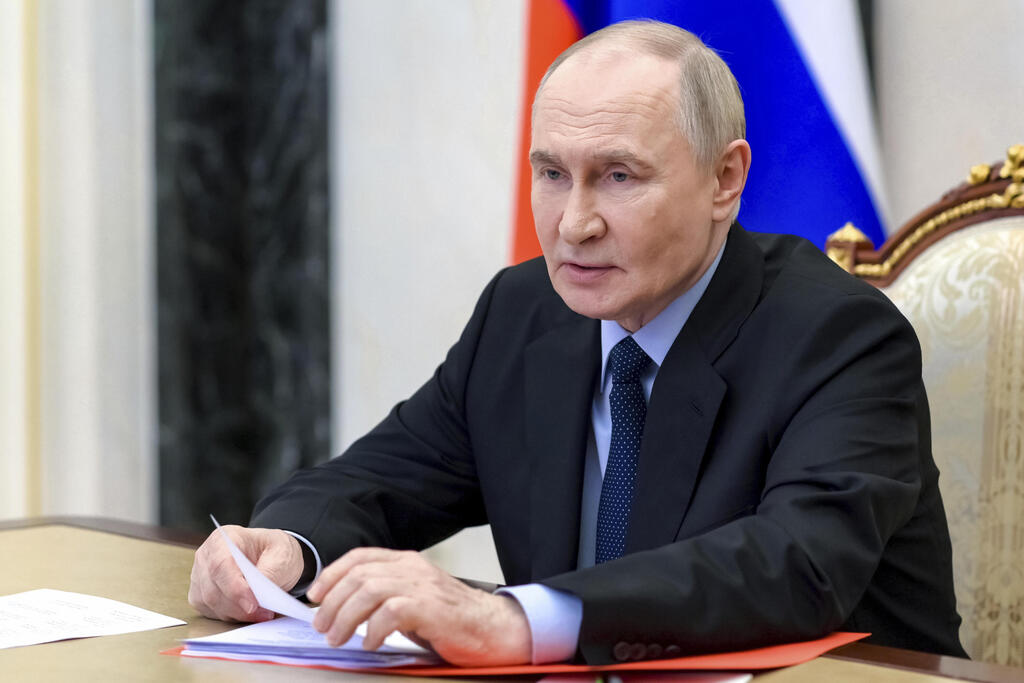
Russian President Vladimir Putin
(Photo: Pavel Byrkin, Sputnik, Kremlin Pool Photo via AP)
“There’s not much the EU can do about the Russia-Iran relationship, but what it can offer is access to markets,” Martin said. “That remains Europe’s greatest diplomatic leverage,” he added.
Still, the road back to negotiation is narrow, and the clock is ticking. Iran’s refusal to cooperate with international inspectors, its strained public finances and its escalating mistrust of the West create a volatile mix, one that risks further conflict if diplomatic channels continue to collapse.
“Despite 47 years of revolutionary slogans, Iran was unprepared,” Baheli concluded. “Israel acted with precision. The lesson is that this wasn’t the final chapter; it was only one round of a broader, ongoing confrontation,” he added.
As Iran faces increasing pressure from both within and outside its borders, its next steps, whether toward confrontation or reconciliation, may determine not only its geopolitical future but also the long-term stability of the region.
“If diplomacy is to succeed, it requires more than pressure; it requires trust, coordination and sustained political will on all sides,” Martin said. “Without that, sanctions will remain a blunt instrument, and the risks of further escalation will only grow,” he concluded.