


As the diplomatic channel between the United States and Iran continues, Israel is preparing for war. Jerusalem’s red lines are nowhere near Tehran’s, which refuses even to consider limits on its missile program — the same missiles that caused destruction in Israel during the 12-day war.
For Iran, its ballistic missile program is not merely a weapons system but a supreme strategic asset, possibly even more important than its nuclear project, given its proven ability to paralyze Israel’s home front and inflict significant damage despite advanced defense systems. Lessons from the war — in which Israel was forced to manage a “munitions economy” in the face of hundreds of launches, intercepting most of them yet still sustaining heavy damage — reinforced in Tehran the view that Israel is vulnerable to attrition attacks that could deplete its interceptor stockpiles.
Netanyahu and the US Secretary of State in Washington, this week
(Video: Omri Meron, GPO)


Because Iran views its missile array as a primary tool of deterrence and decisive force, intelligence assessments conclude it will not relinquish it even under U.S. pressure in negotiations. That hard line places the region on what officials describe as a collision course — either signing an agreement that leaves Israel exposed to a significant threat, or sliding toward all-out war. In response, Israel’s air defense system — composed of seven battalions deployed nationwide and built around five layers — is preparing alongside the U.S. military, and possibly an international coalition.
Worst-case scenario
Tal Inbar, a senior research fellow at the Missile Defense Advocacy Alliance, told ynet that Iran’s launch capabilities have not changed significantly from previous attacks, though the regime still possesses dozens of heavier missiles that have not yet been used.
“We have not seen the capability for extremely massive fire — not many hundreds or thousands simultaneously,” Inbar said. “But in a war in which the Iranian regime feels these are its final hours, it will fire everything it has. In such a case, one could imagine strikes even on symbolic targets that are not military.”
He stressed that these are extreme scenarios. “One can assume that if the United States initiates the attack, there would be an operation designed to prevent as much as possible the use of these tools. The U.S. can do things Israel cannot, for example a barrage of hundreds of cruise missiles on various launch sites in Iran. These are things we have not seen before.”
The U.S. 'large armada'
During the most recent confrontation with Iran, the Israel Defense Forces made extensive use of its defense systems. Reports last month claimed Prime Minister Benjamin Netanyahu asked President Donald Trump to delay a strike on Iran partly due to interceptor shortages. Since then, large American forces have arrived in the region, also to assist with interceptions — despite significant interceptor use in defending Israel in June last year and challenges in replenishing stockpiles.
Israel’s air defense systems are undergoing tests, adjustments and upgrades to address evolving threats. Still, U.S. assistance — providing a broader response to Iranian threats even far from Israeli territory — remains a critical component of the defense array.
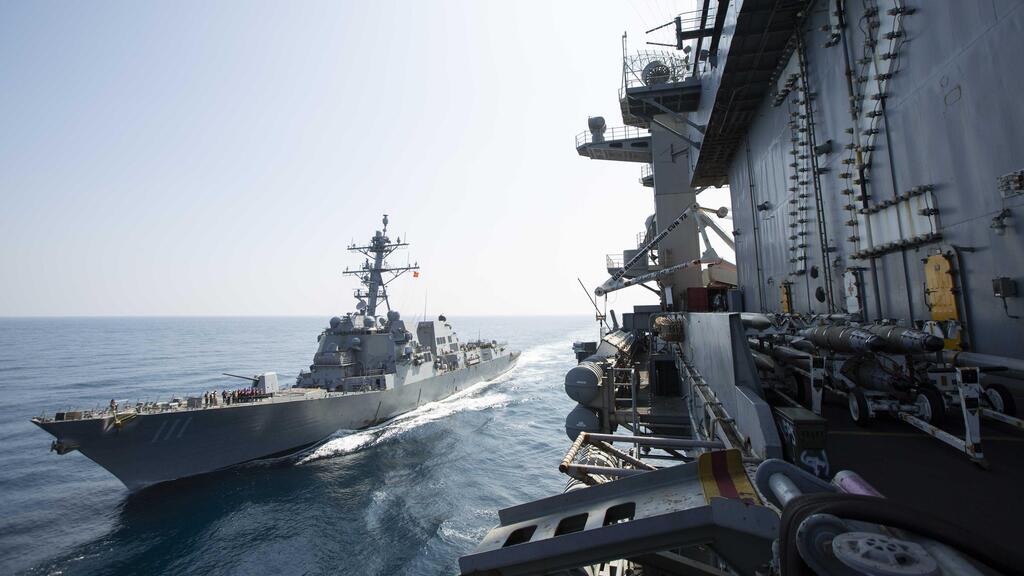
As part of coordination between Israel and the United States, IDF Chief of Staff Lt. Gen. Eyal Zamir made a secret visit to Washington about two weeks ago, following visits by Military Intelligence chief Maj. Gen. Shlomi Binder and Mossad chief David Barnea. Zamir met with Chairman of the Joint Chiefs of Staff Gen. Dan Caine for high-level strategic coordination. Senior American officials have also visited Israel, including U.S. Central Command chief Adm. Brad Cooper. The guided-missile destroyer USS Delbert D. Black docked in Eilat and will continue operating in the Red Sea as part of what Trump described as a “large armada” sent to the region. The deployment includes the aircraft carrier USS Abraham Lincoln, the USS Gerald R. Ford en route to the Middle East and eight additional destroyers.
According to reports, at least 10 U.S. warships are now in the Middle East. The Lincoln carrier strike group includes the destroyers USS Michael Murphy, USS Frank E. Petersen Jr. and USS Spruance. Other destroyers in the region carry guided missiles capable of neutralizing aerial threats. The Wall Street Journal reported the United States has at least eight destroyers within range to shoot down Iranian missiles and drones: two near the Strait of Hormuz, three in the northern Arabian Sea, one in the Red Sea and two in the eastern Mediterranean.
Fox News identified additional vessels, including USS McFaul and USS Mitscher near the Strait of Hormuz, USS Delbert D. Black, and USS Roosevelt and USS Bulkeley in the eastern Mediterranean.
The Journal also reported that the United States is deploying an additional THAAD battery and Patriot systems at bases where its forces are stationed across the Middle East, including Jordan, Kuwait, Bahrain, Saudi Arabia and Qatar. Satellite images show an additional Patriot battery positioned at Al Udeid Air Base in Qatar, a primary U.S. base in the region that was targeted in Iran’s response to strikes on its nuclear facilities in June last year. THAAD systems can intercept ballistic missiles outside the atmosphere, while Patriot systems defend against lower-altitude, shorter-range threats.
Reports say the U.S. has also deployed three squadrons of F-15E fighter jets to Jordan, which could play a role in downing Iranian drones. Those aircraft carried out similar missions during Iran’s first direct attack on Israel in April 2024, in what the U.S. Air Force described as its largest aerial engagement with an adversary in more than 50 years. In addition, six Vermont Air National Guard F-35 jets were recently seen landing in the Azores after being moved from the Caribbean closer to the Middle East. Several U.S. Navy EA-18G Growler electronic warfare aircraft have also relocated from Puerto Rico to Spain in recent weeks.
International coalition expected to assist
During Iranian attacks in April and October 2024, several countries assisted in defending Israel by intercepting drones and missiles and sharing intelligence. The United States, Britain, France and Jordan helped thwart the April 2024 attack. According to the Journal, Saudi Arabia, the United Arab Emirates and other Arab states also took part, quietly sharing intelligence and radar data.
Footage from David’s Sling tests
(Video: Defense Ministry Spokesperson’s Office)
However, during Operation Rising Lion, the international coalition focused more on de-escalation efforts and preventing a broader war, playing a less active role in intercepting launches from Iran. With increased U.S. involvement — and its willingness to lead a strike rather than merely join one — questions remain about how that coalition would respond.
Inbar said past experience demonstrated the effectiveness of regional defense, beginning with detection capabilities largely based on U.S. space assets and the engagement of threats by friendly forces throughout the region. “The coalition and international defense were most evident in the April attack,” he said. “We did not see that in Operation Rising Lion aside from the Americans — and now we may see it again. There is no doubt that if missiles fly that Saudi Arabia or Abu Dhabi can intercept, they will do so.”
He added that in a future confrontation, energy facilities in the Gulf could also come under attack. “If there is a strike, this time they could target assets of value to Iran, such as oil and gas loading terminals or other energy infrastructure not previously attacked.”
First and second layers: accelerated Arrow production
In July last year, following heavy use of Arrow interceptors during the war with Iran, Defense Ministry Director General Maj. Gen. (res.) Amir Baram signed an order to significantly accelerate Arrow interceptor production at Israel Aerospace Industries. The system intercepts ballistic threats outside and at the edge of the atmosphere and defends Israel against long-range strategic threats. Officials describe it as among the world’s most advanced air defense systems.
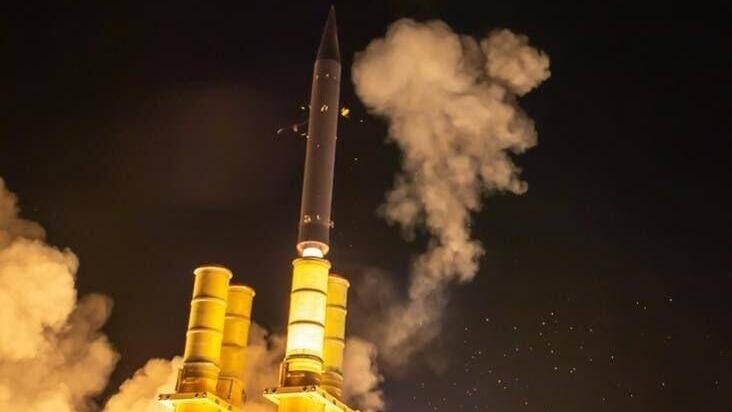
Arrow 3 – the first layer of defense
(Photo: Defense Ministry Spokesperson’s Office)
The Arrow system includes two variants: Arrow 2 and Arrow 3. After long-range ballistic missile launches, the first defensive layer is Arrow 3, a two-stage interceptor that destroys targets at ranges of up to about 2,400 kilometers (1,500 miles) and altitudes of about 100 kilometers (62 miles) outside the atmosphere through direct impact. U.S. Navy SM-3 interceptors, deployed during Operation Rising Lion, can also intercept missiles inside and outside the atmosphere at ranges of up to about 1,200 kilometers (750 miles).

IDF Chief of Staff Lt. Gen. Eyal Zamir during a visit to an Arrow battalion last month
(Photo: IDF Spokesperson’s Unit)
Missiles that evade exo-atmospheric interception are handled by Arrow 2, the second layer, which intercepts long-range ballistic missiles within the atmosphere at altitudes of up to about 100 kilometers and ranges of up to about 1,500 kilometers. The U.S. THAAD system, if deployed in Israel, can also intercept such threats at altitudes of 100 to 150 kilometers and ranges of up to 300 kilometers, sometimes even during the missile’s boost phase.
Last month, Zamir visited an Arrow battalion, assessed readiness and led a drill simulating a missile attack on Israel.
Third layer: upgraded David’s Sling
Earlier this week, in light of existing and emerging threats, the Defense Ministry completed a series of tests on the David’s Sling air defense system, designed to intercept rockets, missiles, cruise missiles, aircraft and drones. Officials said the tests incorporated lessons from combat and included challenging scenarios.
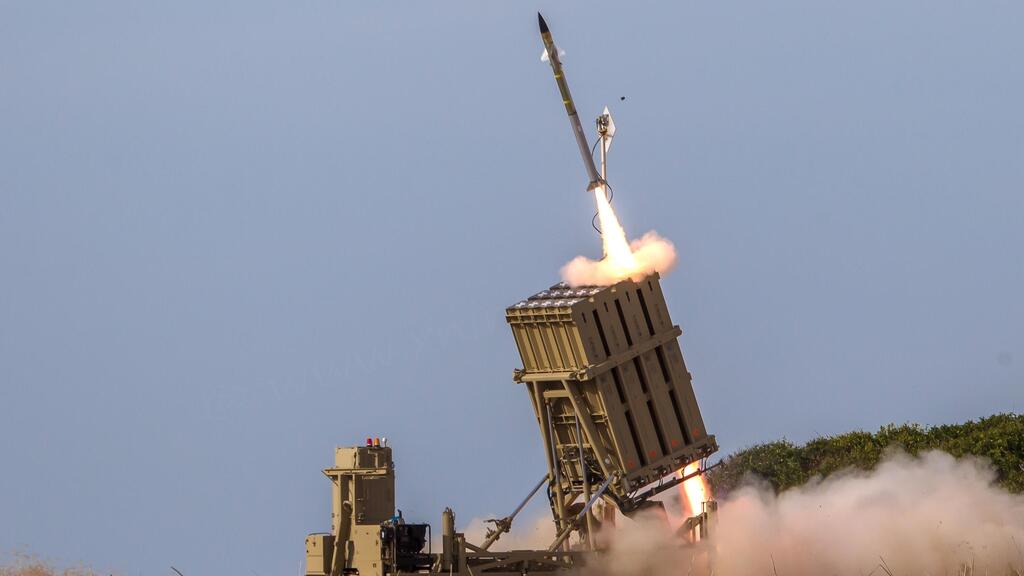
The fourth layer of Israel’s air defense envelope – Iron Dome
(Photo: IDF Spokesperson’s Unit, Nir Ben Yosef)
David’s Sling constitutes the third layer of Israel’s multilayered defense system, after the two Arrow layers. It intercepts medium-range missiles and heavy rockets at altitudes of about 15 to 70 kilometers (9 to 43 miles) and counters cruise missiles through direct impact within the atmosphere. During Operation Rising Lion, it also intercepted missile debris.
Defense officials described the successful tests as another technological and operational leap forward for a system that demonstrated high performance during the war, with successful interceptions that saved lives and prevented heavy damage.
Fourth layer: Iron Dome on land and at sea
The Iron Dome system, which continues to incorporate lessons from the 12-day war, is expected to play a central role in any future confrontation with Iran. It constitutes the fourth layer of Israel’s air defense envelope and intercepts short-range rockets, missiles and mortars at altitudes of about 10 to 15 kilometers (6 to 9 miles). The system can also intercept threats aimed at populated areas or strategic sites, as well as missile debris and unmanned aircraft.
A battery commander in the 947th Iron Dome Battalion told ynet that current versions of the system have evolved significantly since Operation Rising Lion, with ongoing implementation of lessons learned in what she described as an arms race with Iran.
Alongside the land-based system, the Navy operates a sea-based Iron Dome variant deployed on Sa’ar 6 corvettes. Its first interception occurred in April 2024. The ships are also equipped with Barak missiles that intercept larger and more distant threats. The naval system is designed to protect offshore infrastructure, including gas platforms.
During Operation Rising Lion, another system, Barak MX, joined the defense effort and intercepted dozens of threats from Iran in its early days. The modular, multi-mission system provides sea-to-air and surface-to-air defense against aircraft, helicopters, drones, anti-ship missiles and cruise missiles. It was originally designed to protect naval vessels and strategic maritime assets.
Fifth layer: the laser that changes everything
Less than two months ago, at the end of 2025, Israel delivered for the first time its high-powered laser system, Iron Beam, adding it to David’s Sling, Arrow, Iron Dome and the naval system, as well as Air Force fighter jets and helicopters that have also intercepted drones and cruise missiles.
Launch ceremony for the Iron Beam laser system, December last year
(Video: Defense Ministry Spokesperson’s Office)
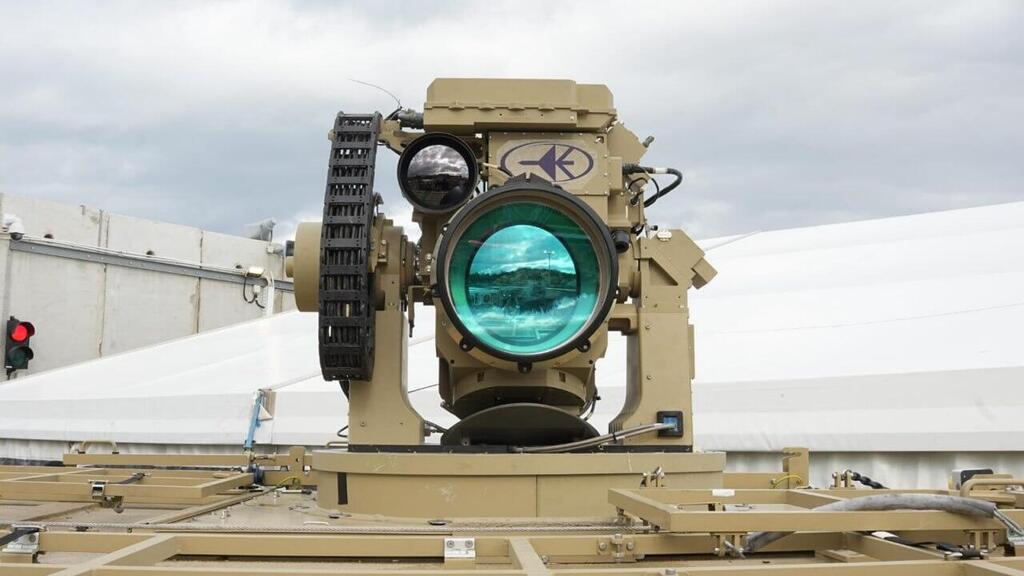
The laser-based active defense system, Iron Beam
(Photo: Defense Ministry Spokesperson’s Office)
The Defense Ministry said the laser, developed over more than a decade, proved effective in extensive tests against various threats, successfully intercepting rockets, mortars and drones. Unlike previous systems, Iron Beam uses an advanced laser source and a unique electro-optical targeting system to intercept a wide range of targets with upgraded range, maximum precision and high efficiency at negligible marginal cost.
Originally known as “Magen Or” and earlier as “Iron Beam,” the system is an Israeli laser-based active defense platform against short-range rockets, missiles and mortars, as well as aircraft, drones and gliders. Developed by Rafael Advanced Defense Systems in cooperation with Elbit Systems, it is considered groundbreaking and the first of its kind in the world. It forms the fifth layer of Israel’s air defense array.