

What began as a government-backed effort to steer young Britons away from right-wing extremism has turned into an unexpected protest symbol against the government itself.
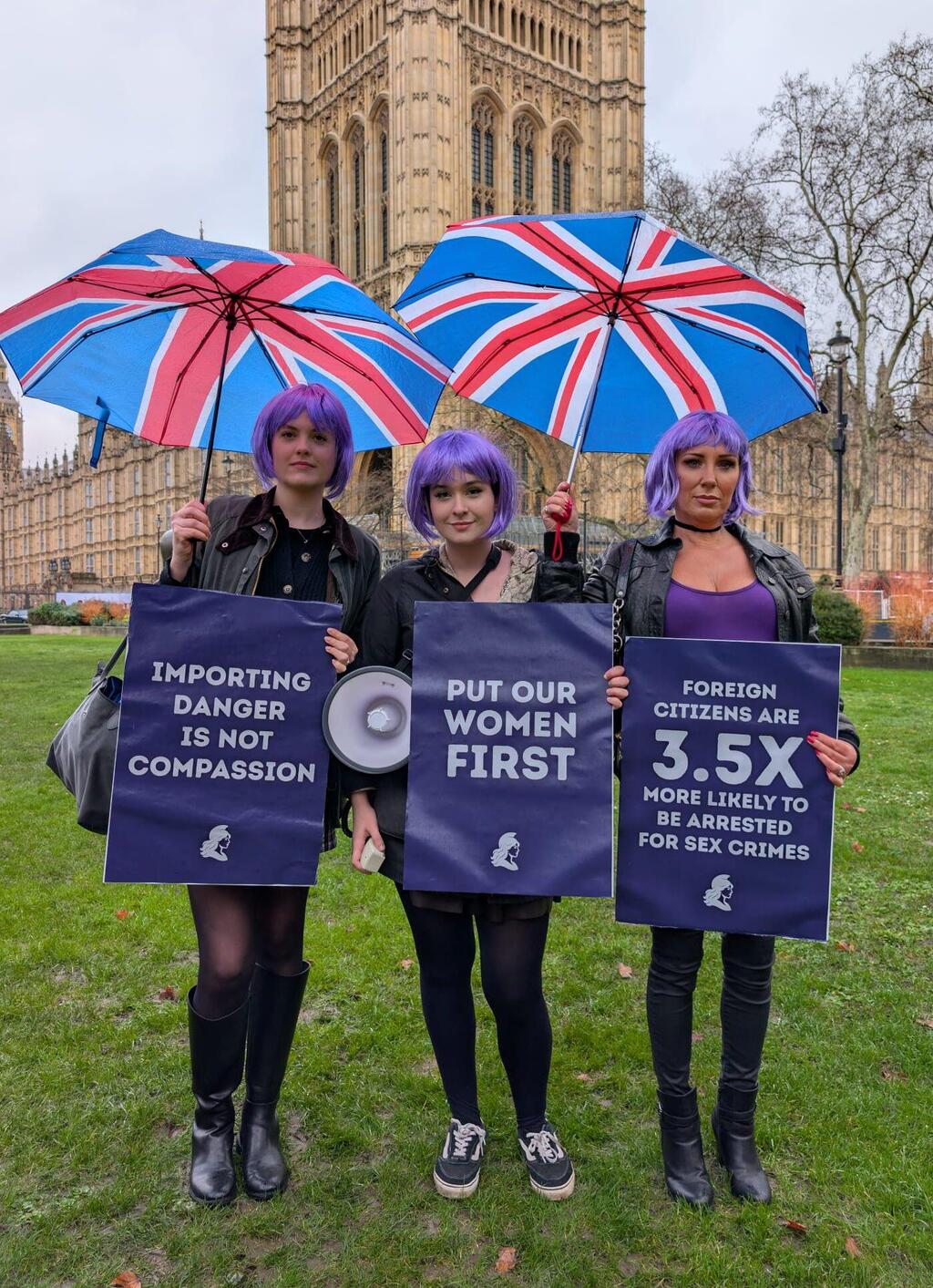
Last week, women wearing purple wigs gathered in London’s Parliament Square to protest illegal immigration and sexual crimes committed by migrants. The demonstration was not unusual in Britain’s current political climate — except for one detail. The protesters were dressed as “Amelia,” a fictional character from an online video game funded by the British Home Office.
Women protest in the UK


The game, “Pathways,” was launched in 2023 with support from the Home Office’s Prevent program, which aims to counter radicalization among youth. Developed by the East Riding of Yorkshire Council and Hull City Council, the interactive platform was designed to help players recognize and respond to extremist content online, particularly narratives associated with the far right.
On the game’s website, it is described as an “interactive learning experience about extremism, radicalization and prevention,” encouraging users to consider how to react to online content and understand the consequences of certain actions.
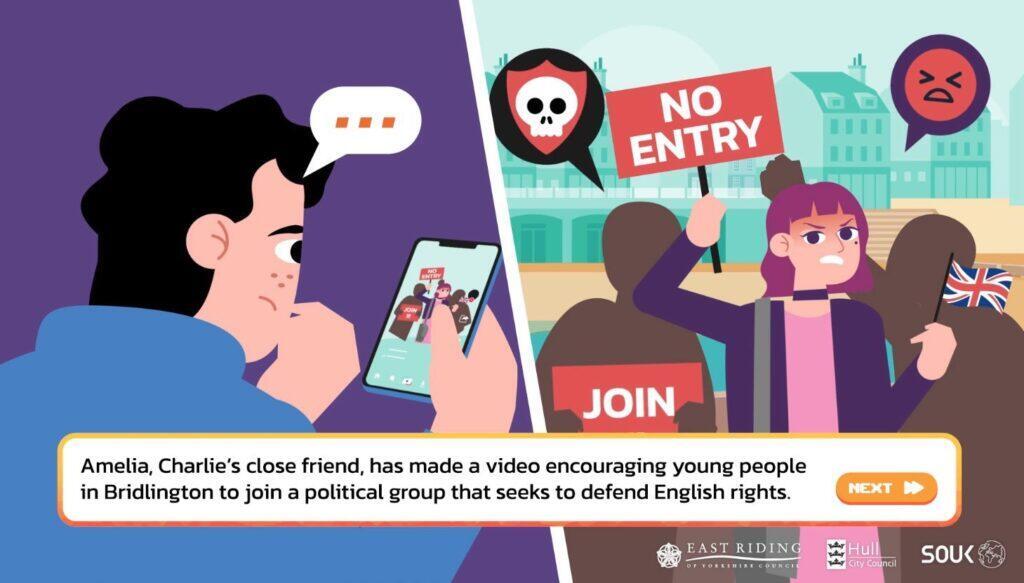
In the storyline, players control a white teenage character named Charlie, who is encouraged to avoid what the game defines as right-wing extremist ideology. This includes attending protests against the “erosion of British values,” searching for immigration statistics online and sharing videos claiming that “the government is betraying white Britons” and that citizens must “take back control of our country.”
Amelia appears early in the narrative as a college student and political activist involved in right-wing groups. She urges Charlie to join anti-immigration protests and defend “traditional British values.” If players consistently choose the “wrong” options, Charlie may ultimately be referred to the government’s Prevent program over terrorism concerns.
From villain to viral icon
Nearly three years after its release, “Pathways” resurfaced on social media, where critics argued that the activities labeled “extremist” were often mainstream political views and disproportionately targeted white British youth. The backlash transformed Amelia from a cautionary antagonist into a viral symbol of defiance.
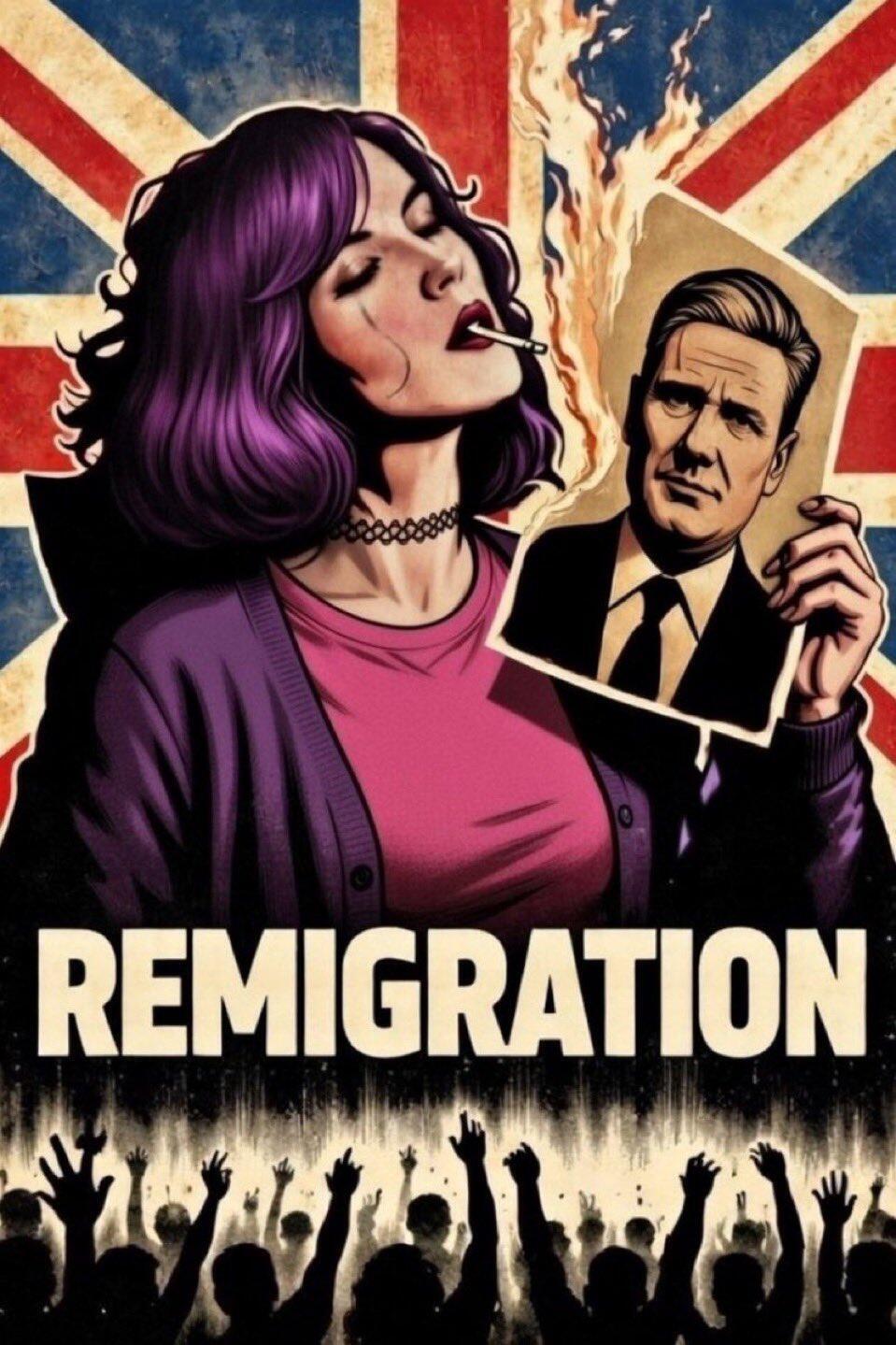
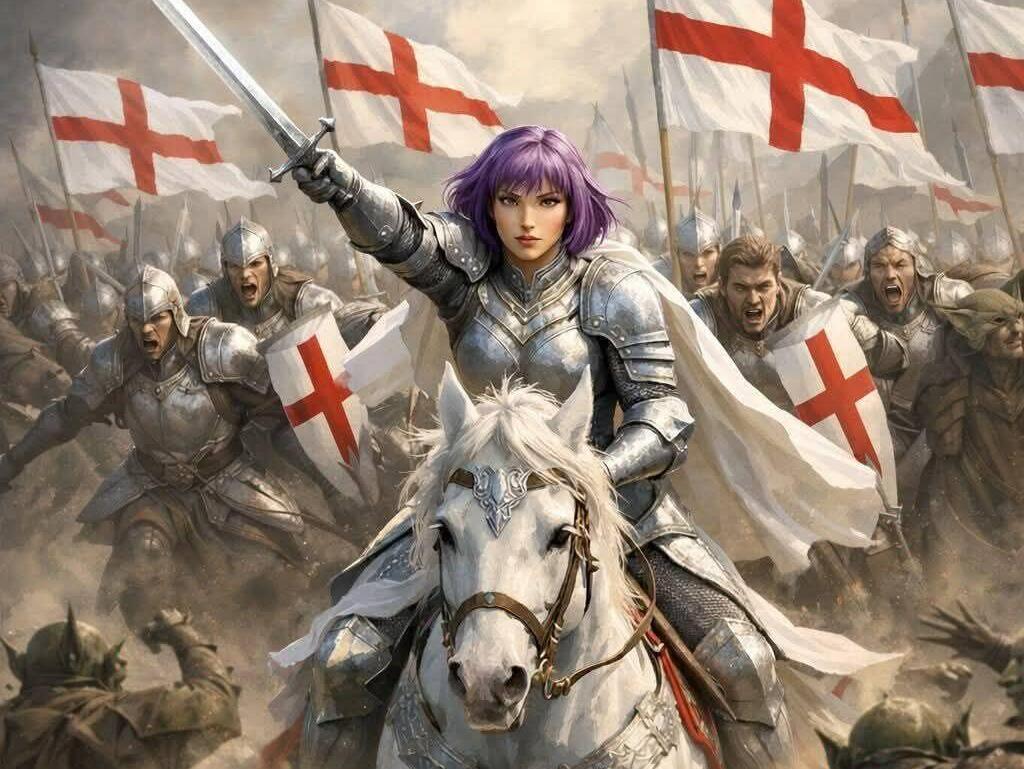
Supporters began sharing AI-generated images depicting Amelia as a heroic figure: leading medieval knights into battle, flying above the British Parliament as a superhero, replacing the central figure in Norman Rockwell’s “Freedom of Speech,” or portrayed as the Lady of the Lake presenting King Arthur with Excalibur.
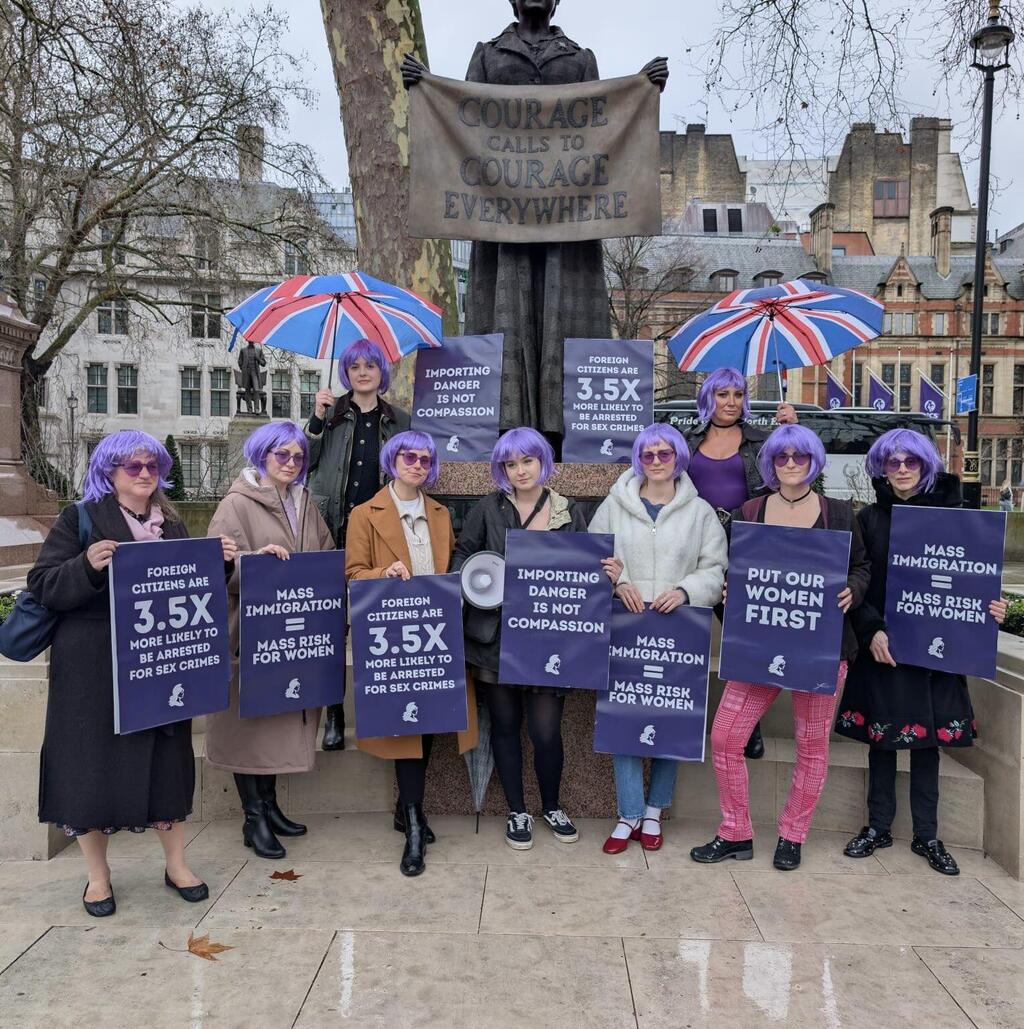
UK protests
In one widely circulated video, Amelia warns popular British fictional characters — including Harry Potter, members of Monty Python and Paddington Bear — about the dangers of radical Islam. In another, she appears as a British “Power Ranger,” rescuing a girl from a Muslim man. A parody “bad ending” video imagines Charlie and Amelia marrying and having “four white children,” presented as an intentionally provocative twist on the game’s messaging.
The character’s popularity reached a new peak when protesters from the Women’s Safety Initiative appeared in Parliament Square dressed as Amelia, chanting “We are all Amelia.”
The group said it was protesting what it described as sexual crimes committed by illegal migrants and accused the government of sacrificing women’s safety. “We are tired of our safety being sacrificed for the comfort of migrant men,” the organization wrote on X.
One protester invoked the UK’s grooming gang scandals, claiming that “mass immigration has harmed the personal safety of too many women in Britain.”
Government response and broader tensions
The Home Office rejected criticism of the game, stating that the Prevent program has diverted nearly 6,000 individuals from violent ideologies and that such projects are tailored to address local threats.
The controversy comes amid broader political tensions over immigration and national identity. Since Labour returned to power under Prime Minister Keir Starmer, critics argue that the government has failed to curb illegal crossings via the English Channel, while providing migrants with housing and access to services.
At the same time, Britain’s High Court ruled this week that the designation of the activist group Palestine Action as a terrorist organization was unlawful, describing the decision by then-Home Secretary Yvette Cooper as disproportionate. The ruling paves the way for the anti-Israel group to continue operating, though the ban remains in place pending the government’s appeal.
Violence at the Elbit factory in Britain
(Video: Sky News)

Palestine Action activists beating a security guard with a hammer
Palestine Action was designated a terrorist organization last July after a series of break-ins and acts of vandalism, including an August 2024 intrusion into an Elbit Systems facility near Bristol, where activists armed with hammers and axes damaged property and clashed with police, and a June 2025 break-in at RAF Brize Norton, where red paint was sprayed on two refueling aircraft.
Following the court’s decision, London’s Metropolitan Police acknowledged that there may be “some confusion” among the public and said officers would no longer arrest individuals solely for association with the group while gathering further evidence.
Against this backdrop, the rise of a fictional video game character as a protest icon underscores the depth of Britain’s culture wars. What was intended as an educational tool to counter extremism has instead become, in the words of one critic, “a spectacular own goal” for the government.