


U.S. preparations for renewed strikes on Iran are accelerating, with nuclear facilities now among the potential targets, as Tehran raises the level of its threats and appears to expand its attacks across the Gulf.
President Donald Trump has reportedly given a provisional green light for renewed military action against Iran, although no new U.S. strikes had taken place by Saturday afternoon. As in previous crises, Trump could still reverse course at the last moment, and it remains unclear whether he is prepared to enter a broad campaign that could send oil prices soaring and still fail to force the Iranian regime to surrender.
Gallery
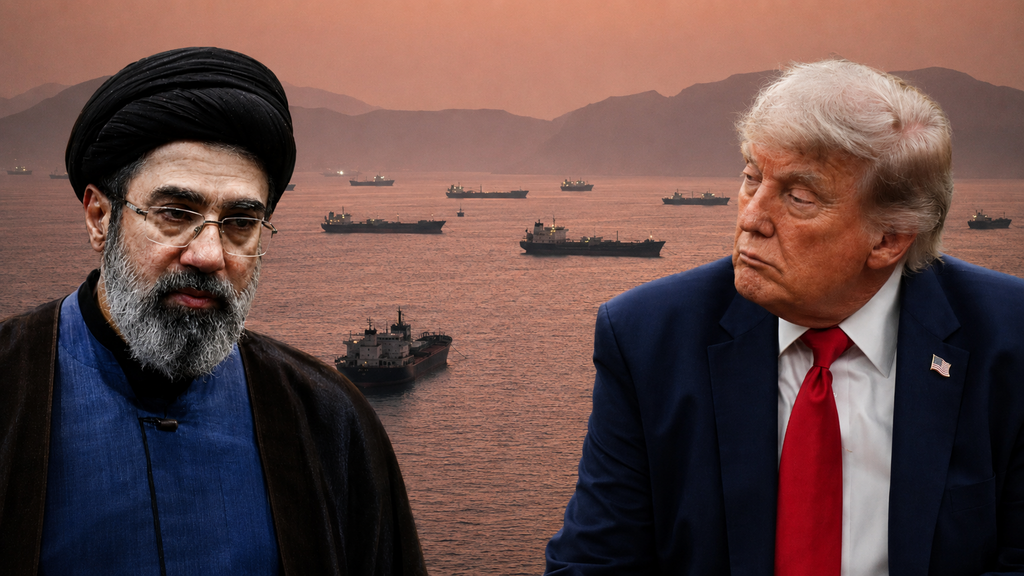
Two incidents involving tankers were reported Saturday near the Strait of Hormuz
(Photo: AFP)
Tehran, meanwhile, appears to be trying to deter him by escalating both its rhetoric and its operations.
Two incidents involving tankers were reported Saturday near the Strait of Hormuz, while Kuwait said it had come under an Iranian drone attack at around 9:30 a.m.
The Kuwaiti military said drones targeting “vital facilities” were intercepted, although equipment belonging to a private company on Bubiyan Island was damaged. No casualties were reported.
Kuwait has repeatedly been targeted by Iran, but such attacks have generally come in retaliation for U.S. strikes against the Islamic Republic. No American attacks were reported overnight.
The United Kingdom Maritime Trade Operations agency earlier reported that a tanker had been struck by an unidentified munition about 20 kilometers northeast of Lima, Oman, near the entrance to the Strait of Hormuz from the Gulf of Oman.
Iran’s radio warning to ships in Hormu


The tanker sustained damage in its engine room and was no longer under control, although no crew members were injured.
Several hours later, UKMTO reported another incident involving an explosion at sea close to a second tanker, around 40 kilometers northeast of Khasab, Oman, also in the Hormuz region. The vessel was not damaged, and the circumstances of the explosion remained under investigation.
Although responsibility has not been formally established, the attacks were widely believed to have been carried out by Iran, which has declared the Strait of Hormuz closed and has attacked vessels using its southern shipping lane for weeks.
Iranian media overnight published a recording of an IRGC Navy officer threatening a vessel identified as the Minowan Glory if it attempted to cross the strait.
“Minowan Glory, this is the Sepah Navy warning you,” the officer was heard saying, using the Persian name for the Islamic Revolutionary Guard Corps. “Do not attempt to cross the Strait of Hormuz and the southern corridor without authorization. Change your course and return to your point of origin.
“If you continue moving forward, you will be destroyed. Captain, you can see the smoke in the Strait of Hormuz. The ship from last night was destroyed. Do not risk your life. Change course and turn back.”
The IRGC later repeated its declaration that the strait was closed to maritime traffic.
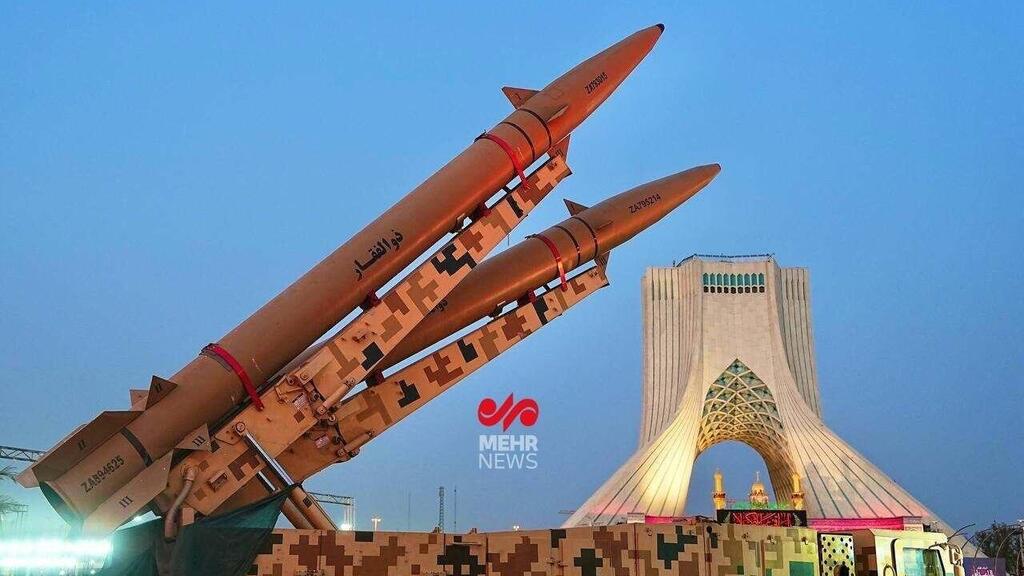
Missiles displayed in a show of force in Tehran last month. 'Don’t be foolish. We’ll return you to the Stone Age,' Iran warned
“The Strait of Hormuz will not be open for passage as long as threats from American actors and their interference in maritime movement in the region continue,” the force said. “The threats and interference by the United States will make the situation more difficult and complex.”
Mohammad Bagher Zolghadr, secretary of Iran’s Supreme National Security Council, warned that the crisis could spread beyond Hormuz.
“The continuation of the naval blockade and the belligerence of the American administration are not only tightening the chokehold around the Strait of Hormuz, but are also blocking other straits and passage points,” he said. “The global economy, the energy market and the Americans will pay the price.”
Iranian officials issued a series of additional threats throughout the day.
Iran’s military said it had recently used “new drones” capable of reaching what it called the “occupied territories,” referring to Israel.
“We never trusted the Americans, and during the memorandum of understanding we worked on developing our weapons,” the military said.
Ali Abdollahi, commander of the IRGC’s Khatam al-Anbiya emergency command, accused Washington of moving rapidly toward a wider regional war.
“The United States is racing toward igniting a large-scale regional war,” he said, warning that “any country that serves as a shield for the enemy will burn in the fire of war.”
Ebrahim Rezaei, spokesman for the Iranian parliament’s National Security and Foreign Policy Committee, later issued an even sharper warning.
“They think they can strike us quickly and force Iran to surrender,” he said. “That is an illusion Netanyahu whispered to Trump. If Iran is attacked, we will return the entire region and its facilities to the Stone Age. It is in your interest not to be foolish.”
Iranian media also began openly identifying regional energy sites that could be targeted in retaliation.
The Fars news agency published a list overnight of what it described as “the most important energy facilities in the world within range of Iranian missiles,” saying that Washington was well aware they were under threat.
Trump’s remarks on Iran last night
The list included Israel’s Leviathan and Tamar gas fields, as well as oil and gas installations in Saudi Arabia, the United Arab Emirates, Qatar, Kuwait and Bahrain.
The Tasnim news agency quoted a “senior security official” as saying that Tehran was prepared to launch a “comprehensive response” against “Israel’s vital infrastructure and American energy infrastructure in the region.”
The official described reports of possible U.S. and Israeli attacks on Iranian infrastructure as “an act of madness.”
The threats come amid growing reports that Washington is preparing a renewed campaign against Iran.
The Wall Street Journal reported that Trump had already approved a strike plan, although the newspaper stressed that he could still cancel it if there were an “immediate development” on the diplomatic front or if he simply changed his mind.
The report did not specify the details of the plan presented to Trump at Camp David on Friday. U.S. media have previously reported that U.S. Central Command proposed a two-week bombing campaign against Iranian missile sites.
CBS reported separately that the United States and Israel had discussed a broad bombing operation against Iran’s energy infrastructure.
According to the report, the strikes could begin during the current weekend, which in the United States continues through Sunday, with the aim of completing the operation before markets open Monday.
The timing reflects concern that attacks on Iranian energy infrastructure could sharply affect oil prices and damage both the global and U.S. economies.
A broad assault on Iran’s energy sector, however, would almost certainly ignite a much wider conflict that would be difficult to end quickly. Tehran is now openly threatening retaliatory attacks against energy facilities throughout the Middle East, including in Israel.
Iranian officials already acknowledged this week that Wednesday’s drone attack on gas tankers in Egypt was intended as a “message” demonstrating Tehran’s ability to strike the global energy system, including new targets.
CNN also reported Saturday that U.S. officials expect strikes against Iran, possibly as early as this weekend, but said the scale and targets of the renewed campaign remained unclear.
The network said Trump was seeking a “resolution to the war.”
Officials told CNN that in addition to CENTCOM’s proposal for two weeks of strikes against Iranian missile facilities, planning had also taken place around possible attacks on Iran’s energy infrastructure.
The Trump administration, however, is deeply concerned about the consequences of such an operation. Iranian retaliation against energy facilities across the region could cause a dramatic rise in oil prices and deepen economic pressure on Americans ahead of the November congressional midterm elections.
CNN also reported that preparations for attacks on Iranian nuclear facilities had accelerated in recent days.
Potential targets include the fortified underground facility at Pickaxe Mountain, where Iran has reportedly transferred centrifuges used for uranium enrichment.
In contrast to the CBS report, CNN said there was currently “no indication” that Israel would participate in the planned renewed bombing campaign.
The U.S. Embassy in Israel also issued a renewed security alert amid the heightened regional tensions.
“Due to heightened tensions in the Middle East, the security environment remains complex with the potential for unforeseen escalation,” the embassy said.
“Americans currently in the Middle East should exercise caution and heightened vigilance and should be prepared for flight cancellations, periodic airspace closures, and potential travel disruptions. Some airlines in the region have postponed resumption of earlier flight schedules; others have cancelled some routes. Americans in the region should consider departing, or be prepared to depart should there be escalation.”
The embassy advised travelers to check flight departure information directly with their airlines or through the Ben Gurion and Haifa airport flight boards.
“Americans outside the Middle East should seriously reconsider travel to and through the region,” the message said. “Those who do travel to or from the region should monitor information about airport and airline operations.”
It also warned that U.S. diplomatic facilities, including those outside the Middle East, had been targeted and that Iran and Iran-aligned groups could attack other American interests overseas, including U.S. businesses and institutions.
“The situation in the Middle East remains fluid,” the embassy said. “The Iranian regime is unpredictable, as seen by its recent decisions to attack areas in the region without warning or provocations as well as to expand attacks to areas not previously targeted, such as Egypt.”
“Americans should remain vigilant, as merely because U.S. interests or businesses have not been attacked in a country in the past does not ensure their safety.”
The embassy added that on February 27, 2026, the State Department authorized the departure of non-emergency U.S. government personnel and the family members of government employees from Mission Israel because of security risks.