


New satellite images taken over Iran reveal suspicious movements near a secret Iranian site at Mount Pickaxe. Images from satellite imaging company Airbus Defence and Space, analyzed by the Institute for Science and International Security, appear to show that as early as April 22, the two eastern tunnel entrances of the underground complex had been blocked with special soil intended to prevent vehicle access to the openings.
The complex is located south of the Natanz nuclear facility. On April 1, the tunnel entrances were open and had not been blocked. Unlike the tunnel entrances at Fordow and Isfahan, according to the image analysis, the material used to block the tunnels does not fully conceal the tunnel openings at either entrance.
Gallery
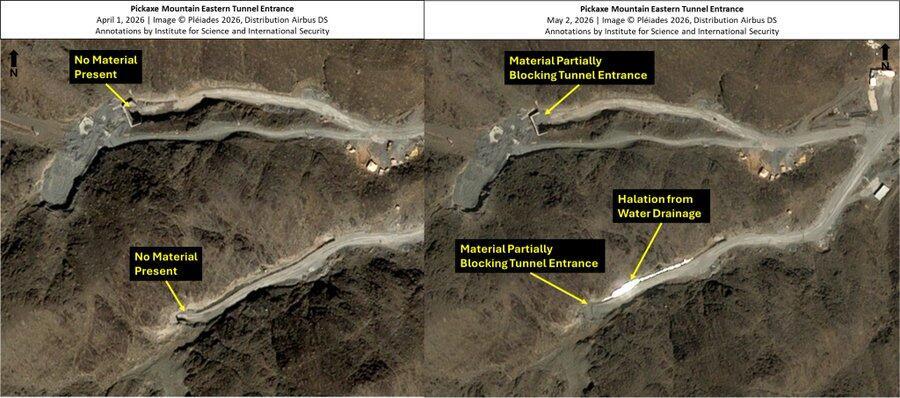
Entrance to the tunnel; left: April 1, right: May 2
(Photo: Under Section 27A of the Copyright Law)
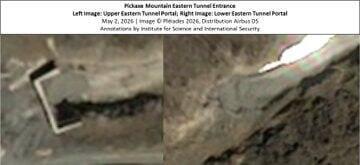
Images from May 2; left: the upper eastern tunnel entrance; right: the lower eastern tunnel entrance
(Photo: Under Section 27A of the Copyright Law)
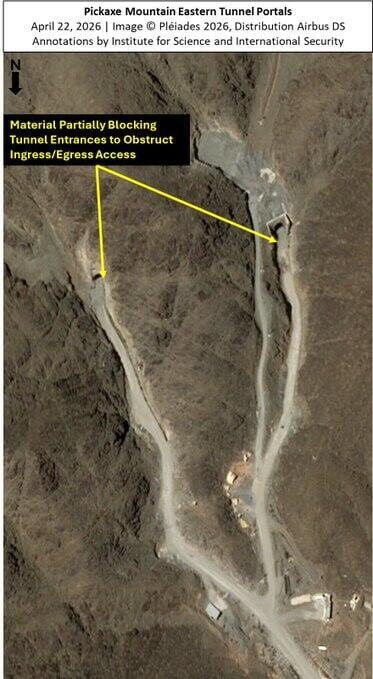
The eastern tunnel entrances seen from above; a partial blockage prevents access to them
(Photo: Under Section 27A of the Copyright Law)
However, the material appears sufficient to significantly obstruct the rapid entry or exit of vehicles from the underground complex, and would require heavy earthmoving equipment to gain access to the facility and clear an entry route.
“At this time, we do not yet see evidence of such blocking at the two western tunnel entrances,” the research institute said. “This activity raises significant questions, as this is a tunnel complex buried deep underground that could be used to protect valuable equipment or materials.”
Earlier this year, the institute noted that it had identified how the old tunnel entrances to the mountain complex had been buried and reinforced with concrete, indicating that something may have been moved into those tunnels.