


The IDF again warned it urgently needs more combat troops and combat support personnel, as the chairman of the Knesset Foreign Affairs and Defense Committee reiterated that the coalition plans to advance legislation extending mandatory service, alongside a bill that would exempt tens of thousands of ultra-Orthodox men from conscription and a reserve duty law.
In a closed-door committee session held Thursday, Brig. Gen. Shay Tayeb, head of the IDF Personnel Directorate’s Planning and Force Buildup Division, said the immediate need for fighters is “critical.” He warned that the current situation cannot continue.
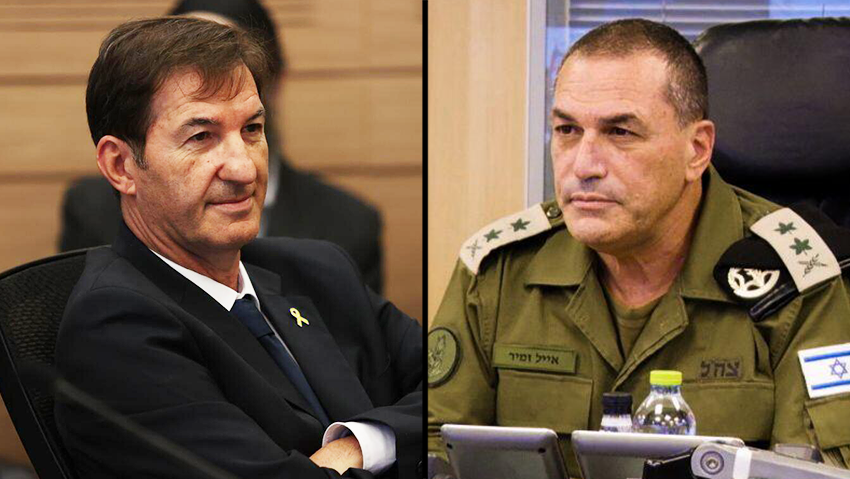
Tayeb’s remarks come as IDF Chief of Staff Lt. Gen. Eyal Zamir’s recent warning to cabinet members continues to reverberate. Zamir cautioned that Israel risks a scenario in which “the army will collapse into itself.” He added that without a reserve service law, a law extending mandatory service and legislation that would bring ultra-Orthodox men into military service, “the IDF will collapse and will not be fit to carry out its routine and security missions, certainly not in wartime.” He described his comments as a formal warning regarding the reserve force structure and urged immediate action.
Committee Chairman Boaz Bismuth, who heard Tayeb’s remarks, said during the discussion that he intends to pass the three laws as a single package, as he has previously announced. However, the reserve service bill has yet to reach the committee and remains with the defense minister. The bill the coalition refers to as the “conscription law” would in practice exempt tens of thousands of ultra-Orthodox men and is not expected to resolve the IDF’s severe and urgent manpower shortage.
IDF spokesman Brig. Gen. Effie Defrin estimated the military needs about 15,000 additional personnel, including roughly 7,000 to 8,000 combat soldiers.
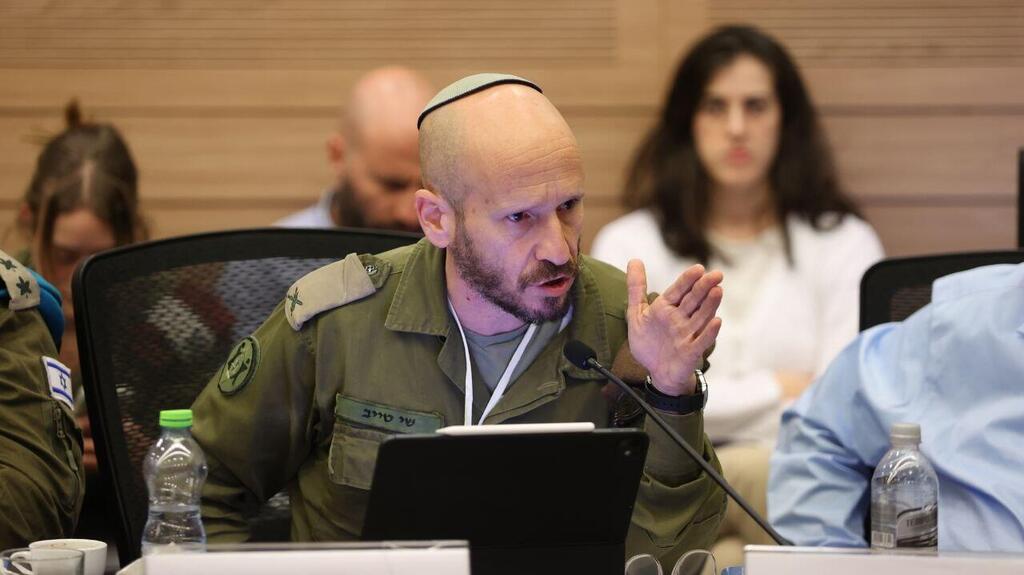
Brig. Gen. Shay Tayeb
(Photo: Alex Kolomoisky)
The Knesset’s summer session is set to open May 10, during which the coalition plans to advance the exemption bill and, according to Bismuth, the two additional measures as well. Coalition members and Bismuth have argued they are acting “at the request of the chief of staff,” but the IDF later clarified that Zamir has not endorsed any specific legislative text. Rather, he has called in general for effective legislation that meets the army’s needs.
The proposed extension of mandatory service would lengthen conscription to a full three years, after it was shortened in previous years. Bismuth’s exemption bill would effectively grant exemptions to tens of thousands of ultra-Orthodox men. Among other provisions, enlistment targets could be met by “former ultra-Orthodox” recruits; alternative service in civilian emergency organizations such as ZAKA, Magen David Adom and United Hatzalah would be allowed; and criminal sanctions would be imposed only after two years of failing to meet enlistment targets.
Deputy attorneys general have previously warned that the proposal in its current form, with low enlistment targets, would effectively grant immediate exemptions to more than 95% of ultra-Orthodox men eligible for service. The bill also faces opposition within the ultra-Orthodox community. The Agudat Yisrael party opposes provisions that include sanctions and quotas, as do the Edah HaChareidis (a hardline ultra-Orthodox umbrella group), the Jerusalem faction and other groups, some of which have recently protested outside the homes of ultra-Orthodox lawmakers.