

A new Channel 4 documentary draws on DNA taken from a bloodstained piece of fabric said to be from Adolf Hitler’s bunker sofa, presenting claims about the Nazi dictator’s medical history, ancestry and possible genetic predispositions. The findings, which have not undergone peer review or been published in a scientific journal, have prompted caution from experts who say the assertions cannot yet be independently evaluated.
The DNA sample was taken from a swatch of material that former U.S. Army Col. Roswell P. Rosengren cut from a couch in Hitler’s underground bunker in Berlin shortly after the war. Rosengren, a communications officer for Gen. Dwight D. Eisenhower, entered the site with Soviet permission. The fabric remained in his family until it was sold at auction in 2014 and later acquired by the Gettysburg Museum of History in Pennsylvania.
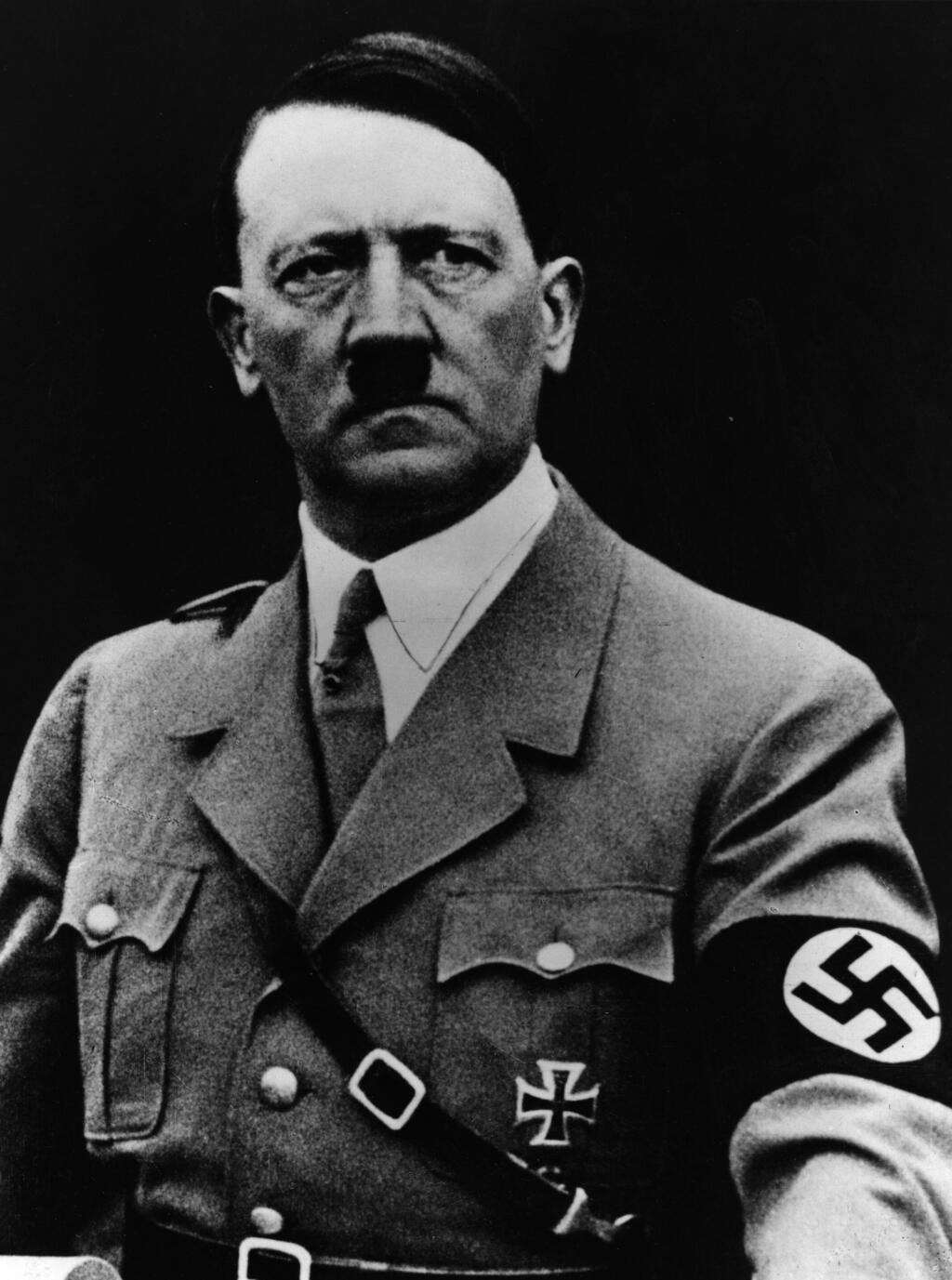
(Photo: Hulton Archive / Getty Images)
Prof. Turi King of the University of Bath, who led the four-year study, said the team confirmed the blood’s origin by comparing the sample with DNA from a verified male-line relative of Hitler. King, known for helping identify King Richard III’s remains, said a perfect Y-chromosome match supports the claim that the blood is Hitler’s and contradicts rumors that he had Jewish ancestry.
Study suggests rare genetic condition
Researchers reported identifying a mutation in the PROK2 gene, which is associated with Kallmann syndrome and related hormonal disorders that can delay puberty and cause undescended testicles. King said the condition typically produces low testosterone and, in a minority of cases, can result in a small but normally formed penis.
The suggestion aligns with a 1923 medical document from Hitler’s imprisonment after the failed Munich putsch, which indicated he had cryptorchidism on one side. Nicholas Bellantoni, an archaeologist who examined parts of the bunker sofa in Russia in 2009, said that if the fabric’s provenance is confirmed, the likelihood the blood was Hitler’s is high.
Possible historical implications
Historians appearing in the documentary, including Alex Kay of the University of Potsdam, said the findings may explain aspects of Hitler’s personal life, including his limited intimate relationships and absence of children with Eva Braun. Kay noted that while such interpretations are possible, they remain speculative without definitive medical records.
Both King and Kay said the Y-chromosome match also undermines long-standing claims that Hitler’s paternal line included Jewish ancestry, a rumor tied to circumstances surrounding his grandmother’s employment in a Jewish household.
Mental health claims draw strongest criticism
The research team also produced what it described as polygenic risk scores for Hitler, suggesting a heightened genetic predisposition to schizophrenia, ADHD and autism when compared with tens of thousands of contemporary samples. Prof. Ditte Demontis of Aarhus University, who participated in the analysis, emphasized that such scores are used only for research, not diagnosis, and cannot determine whether an individual had any condition.
Demontis said the scores placed Hitler above 99 percent of the sampled Danish population for several psychiatric risks but stressed that genetic susceptibility does not predict specific behavior.
Several independent scientists have urged caution. Pontus Skoglund of the Francis Crick Institute said none of the genome-quality data, methods or raw results have been released, making it impossible for outside researchers to assess the claims. Tom Booth, a bioarchaeologist at the same institute, said Hitler is one of history’s most studied figures and questioned whether genetic data adds meaningful insight given the extensive documentary record.
Awaiting peer review
King said the team has submitted its findings to a high-profile journal but did not provide a publication date. She said she joined the project to ensure scientific rigor but acknowledged the risks of stigmatizing people who have the conditions discussed.
“We’re very careful to avoid implying that genetic predisposition equates to behavior,” she said, noting that Hitler relied on an entire political and military apparatus. “His genetics are only a small piece of a much larger story.”