

A Palestinian terrorist approached an IDF outpost last week near the Gaza border, prompting a tense encounter that has reignited concerns among officers over increasing misidentifications in the area.
The man, unarmed and later identified as a suspect from Gaza, reached within 150 meters (about 500 feet) of a military fortification along the so-called "yellow line," the edge of Israeli-controlled areas of Gaza. Military spotters delayed in identifying the figure, and the report relayed to the reserve unit manning the outpost was also late.
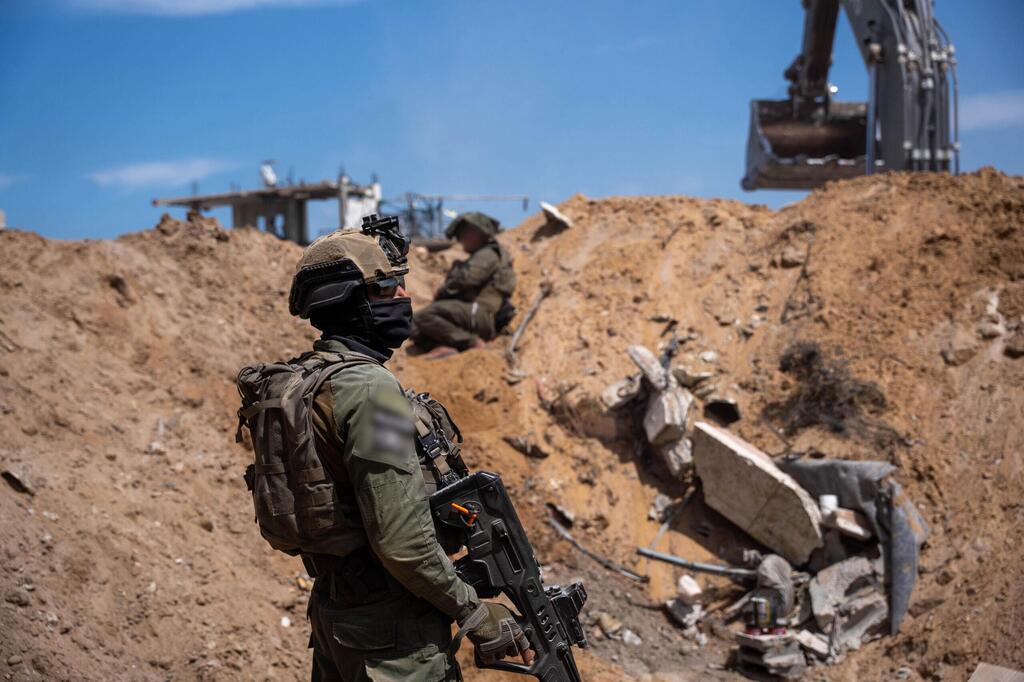
Some soldiers initially mistook the man for one of the Arab laborers hired by the defense establishment to assist with construction projects in the area, a practice that officers warn is leading to growing confusion and security risks.
A unit led by an officer quickly mobilized, encircled the suspect and intercepted him without gunfire after he raised his hands and lifted his shirt to show he was unarmed. He was detained for questioning.
Such incidents have become routine along the yellow line, reflecting the growing complexity and instability of the situation on the ground.
Even amid reports that U.S. President Donald Trump may soon announce the formation of a "Board of Peace" or an international stabilization force to oust Hamas from power in Gaza, little change is expected on the ground.
The body of the last hostage held by Hamas, Ran Gvili, could soon be returned; the Rafah border crossing may reopen under Palestinian Authority control and the IDF could withdraw further from its current positions and grant new concessions to Hamas as part of an emerging agreement.
Gathering intelligence for an attack
The terror organization, which still controls the Gaza Strip and is recovering and rebuilding at a pace that alarms Southern Command officers, has focused in recent months on three main trends: reestablishing its grip in Gaza and eliminating opponents from Palestinian clans backed by Israel; rebuilding its forces through training operatives and producing weapons, including rockets and employing force against the IDF.
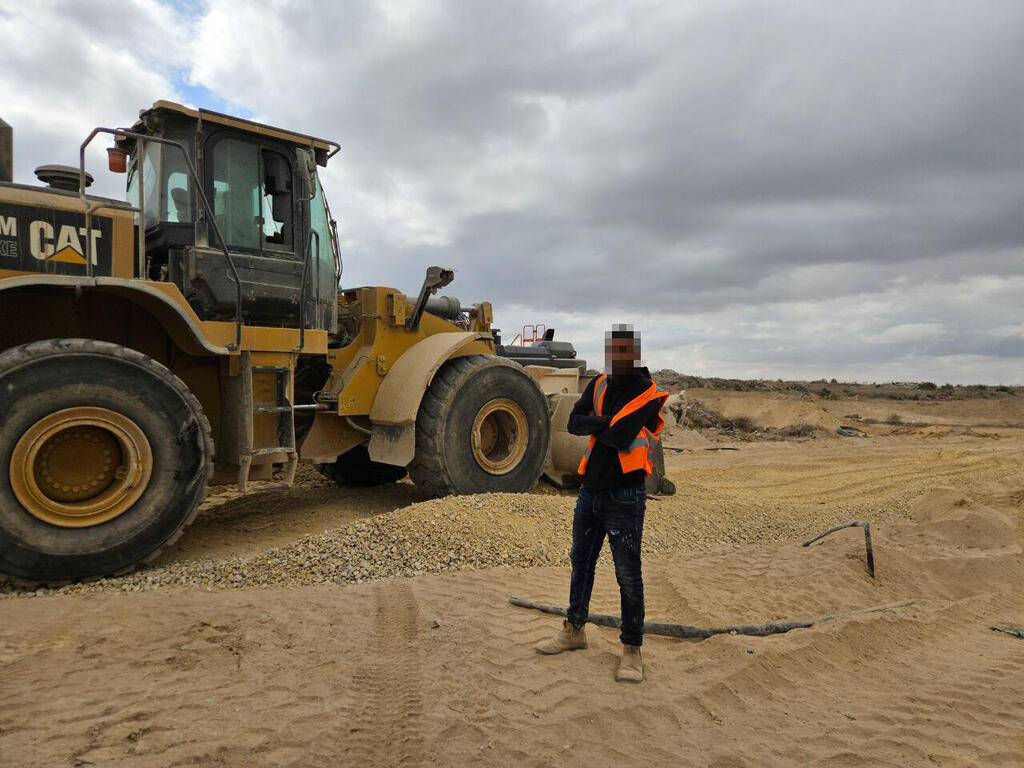
Arab laborers hired by the defense establishment to assist with construction projects in Gaza
(Photo: Yoav Zitun)
IDF units stationed at outposts inside the enclave are training to defend against such an attack by Hamas. Fighters are told daily that Palestinians who approach IDF positions, usually unarmed, and cross the yellow line, are in fact testing the troops’ alertness, response times and possible infiltration routes through terrain folds, building ruins and mounds of debris. This activity is part of advanced intelligence gathering for a future offensive against the soldiers. At the same time, Hamas operatives observe from distances ranging from several hundred meters to a few kilometers, collecting data and analyzing the findings.
That is why IDF officers in the field have increasingly warned in recent weeks about a deceptive calm that Hamas is exploiting on its side of the yellow line. One of the most dangerous phenomena worrying the two divisions currently tasked with defending against Hamas and Palestinian Islamic Jihad (PIJ) involves potential cooperation and intelligence collection, alongside dangerous confusion, stemming from construction work for the IDF carried out by Arab Israeli laborers.
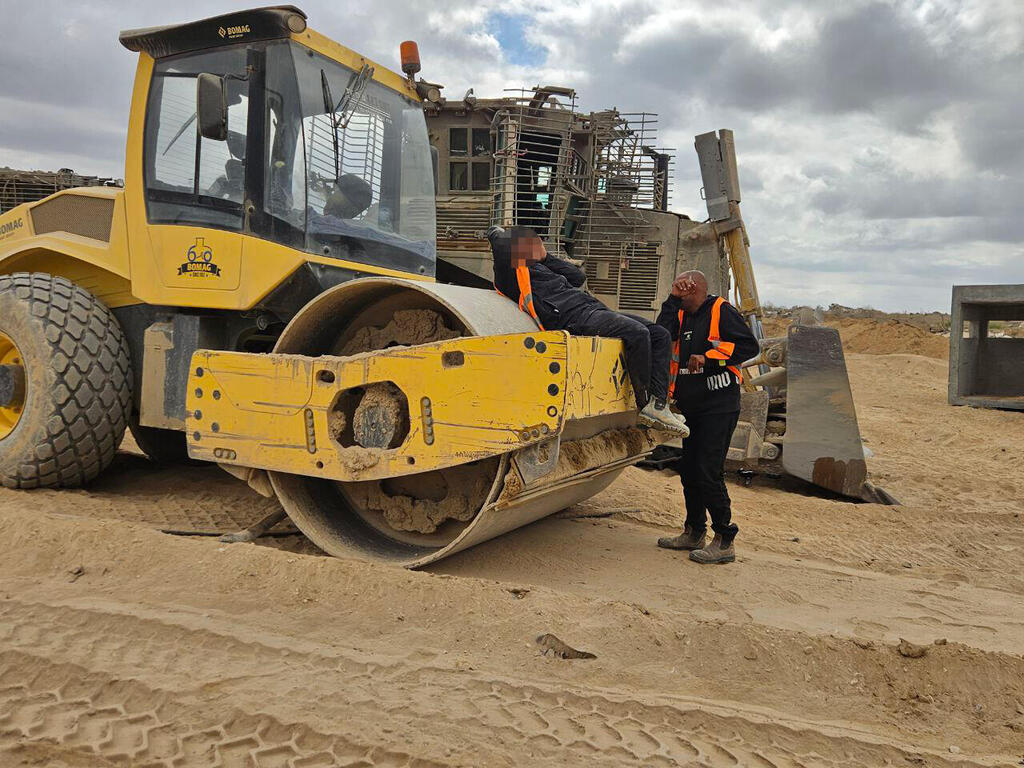
The work involves dozens of contract employees hired by the defense establishment to install systems, pave roads and build positions for IDF soldiers at yellow line outposts and in the buffer zone, in close proximity to the troops themselves. These workers move about in civilian clothing, including inside the outposts and are exposed to sensitive operational information and weapons stockpiles.
“This is not about racism, and the background checks they supposedly undergo are not reassuring,” Gaza Division officers said. “There is a desire to save on military manpower, even though some of these workers, including members of the Bedouin community in the Negev, have relatives inside the Gaza Strip. We try to limit them to certain areas of the outposts, but it is a complex problem that is difficult to control.”
(Photo: Yoav Zitun)
The officers noted that the issue has already led to misidentifications during the war, some of which ended with deadly fire directed at such workers who were suspected of being terrorists. Some officers also sought assurances that the workers were not Palestinians from the West Bank entering with permits, but Southern Command officials told them this does not exist and will not happen.
“Contrary to the report, there was no misidentification," the IDF said in response to the incident. "The forces at the outpost received an alert about a terrorist and acted immediately and according to protocol to neutralize the threat. Once identified by the troops, the suspect raised his hands and surrendered, and therefore no shots were fired. All contractors working along the yellow line operate under the supervision and presence of a military commander and receive a full briefing from unit personnel. Border crossings are made only after identification, permit verification and visual confirmation that the individuals are working on behalf of the Defense Ministry.”
Just last week, unarmed Gazans attempted to steal weapons from an IDF outpost in the southern part of the territory. One of them escaped and was later killed in an airstrike.
New Hamas appointments as IDF hunts tunnels in Gaza
In southern Gaza, Israeli forces are concentrating efforts on locating additional Hamas tunnels and unexploded ordnance in an area designated for the first Palestinian neighborhood to be returned from Hamas-controlled territory to the IDF-controlled side of the yellow line. This is part of the Israeli-American postwar vision for Gaza.
Soldiers continue daily searches for tunnel shafts and passageways across other areas of the enclave under Israeli control. Despite extensive efforts, only two tunnels have been discovered recently on the Israeli side of the yellow line, though military officials believe many more remain, including beneath active IDF positions. One tunnel, near the Kibbutz Kissufim area, remains under investigation. Its depth and branching structure are typical of Hamas tunnels, but mapping it fully is taking weeks, ahead of its eventual destruction. The IDF is still working to determine whether the tunnel crosses into Hamas-controlled areas.
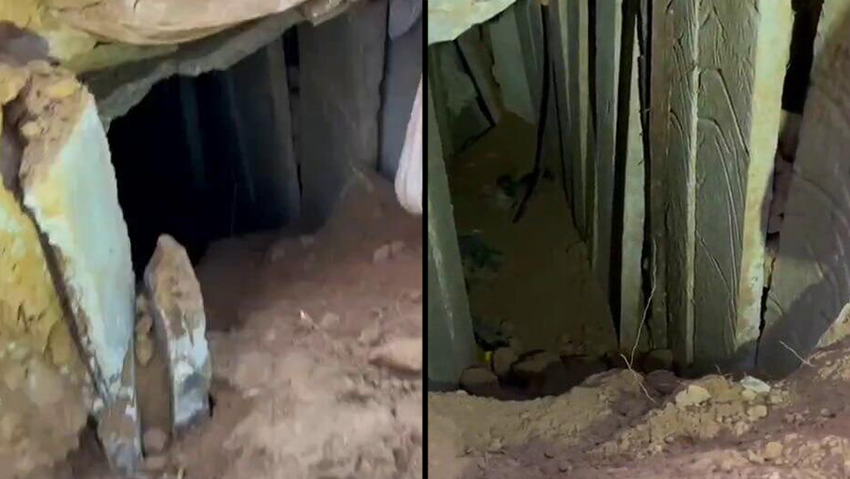
Hamas tunnel found near Israeli border
Military officials acknowledge the scale of the challenge. “It will take years of searching, digging, scanning and fieldwork to locate and deal with all of Hamas’ tunnels in the roughly half of the Gaza Strip still under our control,” an officer said. “If we move soon to Phase B of the agreement with Hamas, we won’t have time to complete it. Some of these tunnels are directly beneath our outposts and fortifications.”
Meanwhile, the IDF has observed Hamas accelerating the appointment of new commanders across various operational headquarters damaged or eliminated during the war. Despite a growing reliance on locally produced weapons, Hamas has not abandoned smuggling routes, even under the tight siege surrounding Gaza.
The IDF suspects that weapons and materials intended for terror activity are being smuggled in via drones from both Sinai and Israel, flying over the Philadelphi Corridor or through other sophisticated means. Troops stationed along the corridor bordering Egypt have been ordered to increase vigilance in monitoring airspace, and the army is also deploying technological tools to track such incidents.