

Prime Minister Benjamin Netanyahu was the fiercest opponent of the nuclear agreement that the United States signed with Iran in 2015, under then-President Barack Obama. The alternative he proposed at the time was simple: “a better deal.”
Years later, Donald Trump withdrew from that agreement during his first term as president, and Iran launched a nuclear race that has continued ever since, despite repeated Israeli efforts to disrupt it. By the time of Operation Roaring Lion, Iran had reached the status of a nuclear threshold state, meaning it possessed the knowledge, infrastructure and material needed to build a nuclear bomb within a short period of time, even if it had not yet crossed the line into producing one.
Gallery
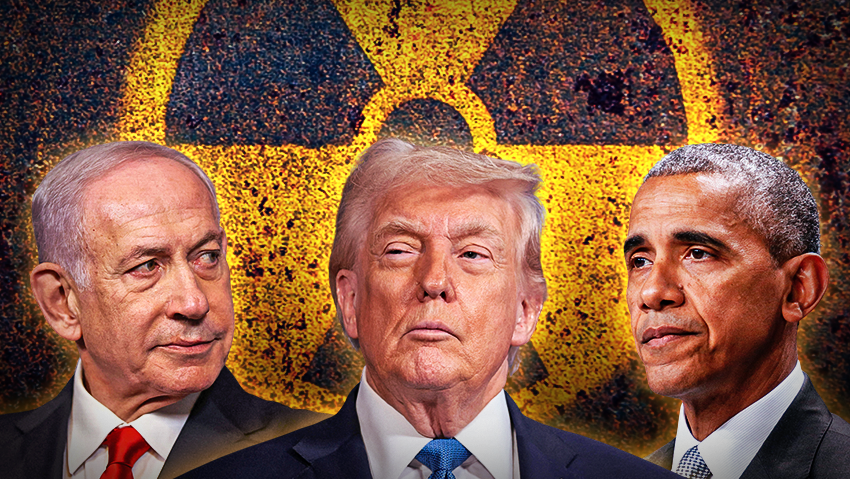
Benjamin Netanyahu, Donald Trump, Barack Obama
(Photo: Dom Zara/shutterstock, JOE RAEDLE / AFP, REUTERS/Jonathan Ernst)
Israel and the United States set out to stop that race once and for all in the latest war, making it a central goal alongside Iran’s missile program and, more broadly, the weakening or removal of the regime.
But based on what is known so far, it is far from clear that the emerging agreement between Washington and Tehran achieves that goal.
And Netanyahu, who in 2015 entered a direct confrontation with the Obama administration by delivering a combative speech to Congress while negotiations were still underway, is this time avoiding such a public clash with the Trump administration.
In fact, for nearly a full day, Netanyahu declined to publicly address the emerging framework, criticize it or endorse it, even though reports suggest Israel has again been left outside the negotiating room.
According to the reports, the emerging agreement is expected to begin with the reopening of the Strait of Hormuz in exchange for a partial lifting of sanctions. The sides would then hold about two months of talks on nuclear issues.
So what has changed compared with the agreement signed between world powers and Iran 11 years ago, and what remains strikingly similar?
Time limits
The 2015 agreement placed significant restrictions on Iran’s nuclear program, but those restrictions were set to expire gradually after 10 to 15 years.
Until then, Iran was allowed to enrich uranium only to 3.67%, and was barred from building enrichment facilities or heavy-water reactors. Its uranium enrichment activity was limited to a single facility, using older-generation centrifuges, under supervision by the International Atomic Energy Agency. Other facilities were to be converted to reduce proliferation risks.
Netanyahu warned at the time that once those clauses expired, Iran would be able to race toward a bomb.
Now, the emerging agreement between Iran and the United States again appears not to speak in terms of “forever,” as Trump initially suggested, but in terms of 20 or 30 years.
A senior U.S. administration official was quoted by CBS as saying the duration of Iran’s commitment is “meaningless,” and that the most important question is the enforcement mechanism.
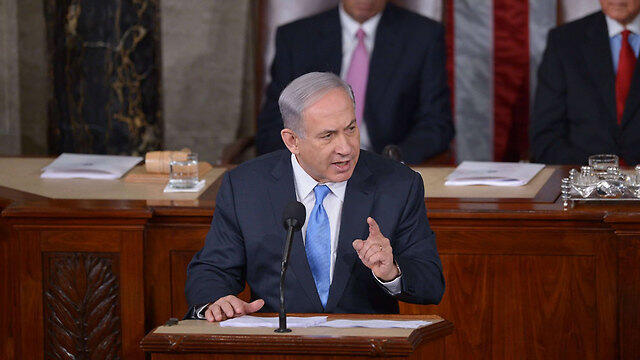
Netanyahu speaking before Congress in 2015
(Photo: AFP)
Iran, for its part, insists that it must be allowed to enrich uranium on its own territory during that period, even under certain restrictions. The United States says no such enrichment will be permitted. That dispute is expected to be resolved only later in the negotiations.
Leaving nuclear infrastructure intact
The 2015 agreement did not require Iran to fully dismantle its underground nuclear facilities. It required Tehran to reduce activity, limit the number of centrifuges and shrink its enriched uranium stockpile.
Netanyahu argued that leaving the infrastructure in place allowed Iran to preserve knowledge and capabilities, effectively cementing its status as a nuclear threshold state.
On Sunday, Netanyahu said that in his conversation with Trump, “we agreed that any final agreement with Iran must remove the nuclear threat.”
“The meaning is the dismantling of Iran’s nuclear enrichment facilities and the removal of enriched nuclear material from its territory,” Netanyahu said.
At the same time, many Iranian nuclear sites have already been significantly damaged by Israeli and U.S. strikes, and Israeli officials believe they would be able to detect any Iranian attempt to rebuild them.
Iran opposes dismantling its nuclear infrastructure, but has apparently agreed in principle to remove enriched uranium from its territory. It remains unclear, however, how that would be done.
In any case, the current framework would halt the war for a defined period without Iran first giving up the enriched uranium buried under the rubble of Israeli and American strikes. Publicly, Tehran continues to demand that any future agreement allow it to maintain a nuclear program for peaceful purposes.
Sanctions relief and regional terrorism
In 2015, Netanyahu warned that lifting economic sanctions would unfreeze tens of billions of dollars in Iranian assets and pour vast sums into the regime’s coffers.
He argued that the money would not be used to improve Iran’s civilian economy, but to arm and finance Tehran’s proxies across the Middle East, including Hezbollah in Lebanon, Hamas in Gaza and the Houthis in Yemen, increasing instability and violence across the region.
The emerging deal also appears likely to inject billions of dollars into Iran’s economy and lift some sanctions at the outset, even before Tehran has actually given up any part of its nuclear program.
The IDF says Iran, after two successful military operations against it, is now in a deep crisis, and that sanctions relief could help lift it off the floor and erase recent military achievements.
For now, Israel’s defense establishment opposes the framework and warns that it is “buying quiet at the price of a long-term threat.”
The ballistic missile program
Netanyahu sharply criticized the 2015 agreement for being disconnected from Iran’s other hostile activities, particularly its ballistic missile program.
Iran continued developing intercontinental missiles capable of carrying nuclear warheads and reaching far beyond the Middle East, without the agreement limiting that activity.
Israelis have felt the consequences of that omission intensely over the past two and a half years. Iran became a missile power, and many Israelis were killed or wounded in two wars and two separate attacks. Military bases and strategic assets in Israel also sustained direct hits.
In the current war, Iran managed to launch one missile more than 4,000 kilometers, in what was seen as a warning signal to the international community.
For months, the Trump administration stressed that ballistic missiles would be part of any future agreement with Iran. But as Tehran continued to reject that demand, U.S. statements on the issue became increasingly vague.
Today, the missile program is barely mentioned. Netanyahu also did not refer to ballistic missiles in his latest statement, suggesting that the new agreement, if signed, will not solve that problem either.
Weak inspections
Although the 2015 agreement included IAEA oversight, Netanyahu argued that the inspection mechanism was not strict enough.
The agreement did not allow inspectors “anytime, anywhere” access to suspicious military sites. Instead, it created a bureaucratic process that could give Iran up to 24 days’ notice before inspections at sites not declared as nuclear facilities, a period Israel argued was long enough to hide evidence of prohibited activity.
It is still unclear what inspection mechanism will be included in the current agreement, or how the international community would know that Iran is meeting its obligations.
A senior Trump administration official told CBS that the current deal would go “further” than the 2015 nuclear agreement on inspections, but the details remain vague.
What Netanyahu wanted then, and how Obama responded
Netanyahu called the 2015 agreement “a severe historic mistake,” saying that rather than distancing Iran from the bomb, it paved a safe and protected highway for Tehran to reach it.
At the time, at least publicly, he argued that the right alternative was not war, but continued and intensified economic pressure backed by a credible military threat, until Iran was forced to sign “a better deal” that would completely dismantle its nuclear infrastructure.
Obama recently addressed the pressure that Netanyahu tried, unsuccessfully, to apply at the time. He said the prime minister presented him with the same arguments he later presented to Trump in an effort to persuade him to go to war with Iran.
“I think my assessment then was accurate,” Obama said. “It is possible Netanyahu got what he wanted, but is that ultimately good for the people of Israel? I doubt it. Is it good for the United States? I doubt it. I think there is an extensive record of my disagreements with Netanyahu.”
How Netanyahu is responding now
In 2015, Netanyahu waged an unprecedented public campaign against the nuclear agreement advanced by the Obama administration, including a high-profile speech to Congress over the president’s head.
His demand then was unequivocal: complete dismantling of Iran’s nuclear infrastructure, zero enrichment on Iranian soil and rejection of any framework that could turn Iran into a threshold state.
Now, facing an emerging framework that includes some similar compromises, including sanctions relief, possible enrichment on Iranian territory and no apparent answer to the ballistic missile program, Jerusalem is taking a far more pragmatic and restrained approach.
Externally, that posture looks like quiet acceptance of a complex diplomatic reality.
The dramatic shift is due first and foremost to the identity of the man in the Oval Office and Netanyahu’s desire to avoid a direct confrontation with him.
Unlike the open clash with Obama, Netanyahu recognizes the sensitive dynamic with Trump, a president who sees himself as a master dealmaker and wants to present a quick diplomatic achievement that ends the war.
Jerusalem understands that a public confrontation with Trump, who demands loyalty and can respond harshly to anyone seen as obstructing his plans, could carry a heavy strategic cost.
That is especially true at a time when Israel has already lost much of the Democratic Party in the United States and is facing strain even inside the Republican Party.
For now, at least, Netanyahu appears willing to absorb parts of an agreement he would once have rejected outright.
At this stage, it does not appear that maximum military and economic pressure on Iran will deliver the desired result of eliminating the nuclear program once and for all, let alone the missile program or the regime itself.
In Obama’s view, the achievements that Trump and Netanyahu are now trying to secure could have been reached without war and without triggering a global energy crisis.
The IDF, however, believes that if Israel’s military gains are translated into diplomatic achievements, it may still be possible to say that Israel’s security has improved significantly.
Everything depends on how far Donald Trump is prepared to go.