

China and Russia on Tuesday vetoed a U.N. resolution encouraging states to coordinate efforts to protect commercial shipping in the Strait of Hormuz, calling the measure biased against Iran, while Washington’s ambassador urged “responsible nations” to join the United States in securing the waterway.
The 15-member Security Council voted 11 in favor of the resolution, presented by Bahrain, with two against — China and Russia — and two abstentions.
Gallery
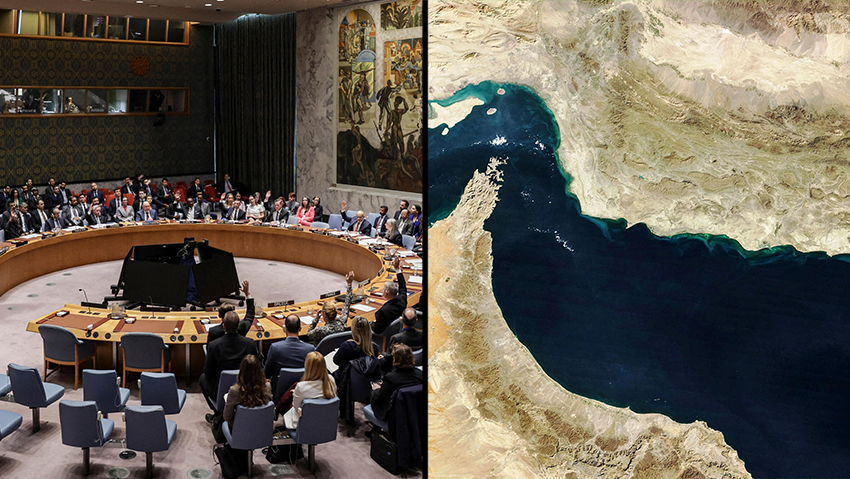
Satellite image of the Gulf of Oman and Strait of Hormuz, and UN vote on reopening the Strait of Hormuz
(Photo: AFP/ NASA Reuters/Jeenah Moon)
U.S. President Donald Trump warned that “a whole civilization will die tonight” as Iran showed no sign of accepting his ultimatum to reopen the Strait of Hormuz by Tuesday evening, Washington time.
Oil prices have surged since the United States and Israel struck Iran at the end of February, triggering a conflict that has lasted more than five weeks. Tehran has largely closed the strait, which previously carried about a fifth of global oil and liquefied natural gas.
“The draft resolution has not been adopted, owing to the negative vote of a permanent member of the Council,” Bahrain’s Foreign Minister Abdullatif bin Rashid Al Zayani said.
US ambassador condemns the vetoes
U.S. Ambassador to the United Nations Mike Waltz condemned the Russian and Chinese vetoes, calling them “a new low,” as Iran’s closure of the strait disrupts the delivery of medical aid and supplies to humanitarian crises in Congo, Sudan and Gaza.
“No one should tolerate that. They are holding the global economy at gunpoint. But today, Russia and China did tolerate it. They sided with a regime that seeks to intimidate the Gulf into submission, even as it brutalizes its own people,” Waltz said.
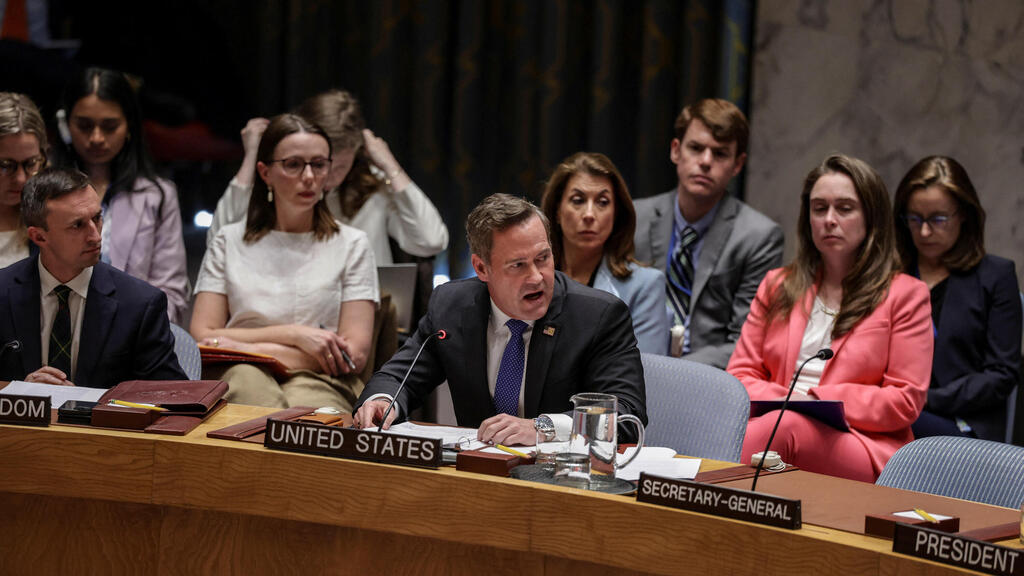
U.S. Ambassador to the UN Michael Waltz
(Photo: Jeenah Moon/ Reuters)
He added that Iran could choose “to reopen the Strait, to seek peace and to make amends.”
“Until then and afterwards, we call on responsible nations to join us in securing the Strait of Hormuz, protecting it, ensuring that it remains open to lawful commerce, humanitarian goods and the free movement of the world’s goods,” he said.
France also condemned the vetoes.
“The aim was to encourage strictly defensive measures to provide security and safety for the Strait without escalating the situation,” France’s U.N. ambassador Jerome Bonnafont said.
Russia and China say the text was biased
Russia and China argued that the resolution was biased against Iran.
China’s U.N. envoy Fu Cong said adopting such a resolution while the United States was threatening massive escalation would have sent the wrong message.
Russia’s U.N. ambassador Vasily Nebenzya said Moscow and Beijing were proposing an alternative resolution addressing the broader Middle East situation, including maritime security.
Iran’s U.N. ambassador Amir Saeid Iravani praised the vetoes, saying they prevented the Security Council from being “misused to legitimize aggression.”
He added that the U.N. secretary-general’s envoy was en route to Tehran for consultations.
China and Russia used their vetoes even after Bahrain significantly softened the draft following objections, particularly over language that could be interpreted as authorizing force.
The final version removed any authorization for the use of force and omitted references to binding enforcement.
Instead, it encouraged states “to coordinate efforts, defensive in nature, commensurate with the circumstances, to ensure the safety and security of navigation across the Strait of Hormuz.”
It also said such efforts could include escorting commercial vessels and deterring attempts to obstruct international navigation through the strait.