


Unless there are last-minute surprises, the security cabinet is expected to approve Sunday evening the reopening of the Rafah crossing on the Egypt-Gaza border in both directions — even before the return of the last hostage’s body, Sgt. First Class Ran Gvili.
Throughout the war in Gaza and afterward, Prime Minister Benjamin Netanyahu and several ministers spoke out against reopening the crossing from Egypt into the Strip. However, international pressure led by the United States appears to have prevailed as part of Phase 2 of President Donald Trump’s plan.
Gallery
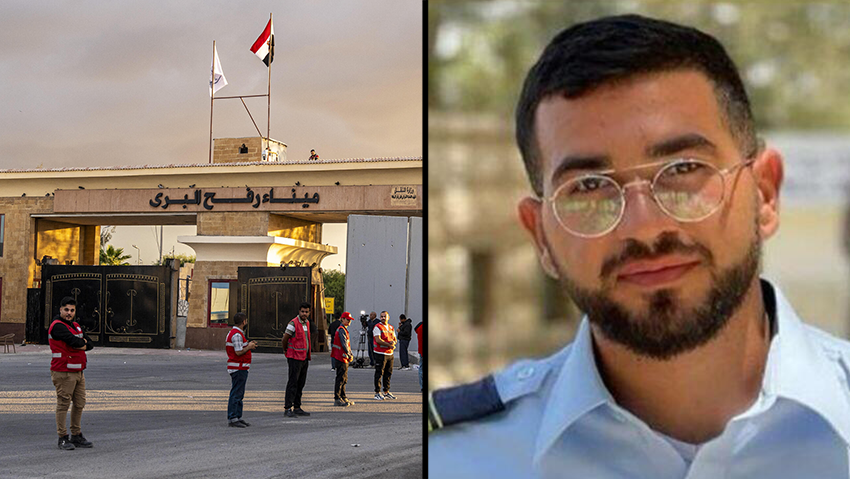
Sgt. First Class Ran Gvili and the Rafah crossing
(Photo: Ali Moustafa/Getty Images, Israel Police Spokesperson)
On July 11, 2024, nine months after the war began, Israel’s presence at the Rafah crossing and along the Philadelphi Corridor was cited as a condition Israel would not relinquish. Netanyahu said at a graduation ceremony for officers at the IDF’s training base Bahad 1: "We will not allow weapons smuggling to Hamas from Egypt, first and foremost through Israeli control of the Philadelphi Corridor and the Rafah crossing."
On Sept. 2, 2024, days after six hostages were murdered in a tunnel in Rafah, Netanyahu convened an urgent news conference to explain why he opposed a deal. He described the Rafah crossing as "Hamas’ oxygen and rearmament pipeline" and declared Israel would not withdraw from it. "For many months after the first deal, Hamas did not budge," Netanyahu said at the time. "It insisted that we must declare an end to the war in advance. That, of course, does not lead to a deal or the release of any hostages. The first crack came when we entered Rafah, took control of the Philadelphi Corridor and took control of the Rafah crossing. Suddenly, they started speaking differently."
On Feb. 3, 2025, while the war was ongoing, journalist Ronen Bergman reported on ynet that among the additional obstacles Netanyahu added to his demands after the sides were close to an agreement was continued control of the Rafah crossing. "Another minister and I (Ron Dermer) were the only ones in the war cabinet who prevented Palestinian Authority control of the Rafah crossing," Netanyahu said on one occasion. "We will not allow the Palestinian Authority, and we are working to thwart any control of the Strip by it."
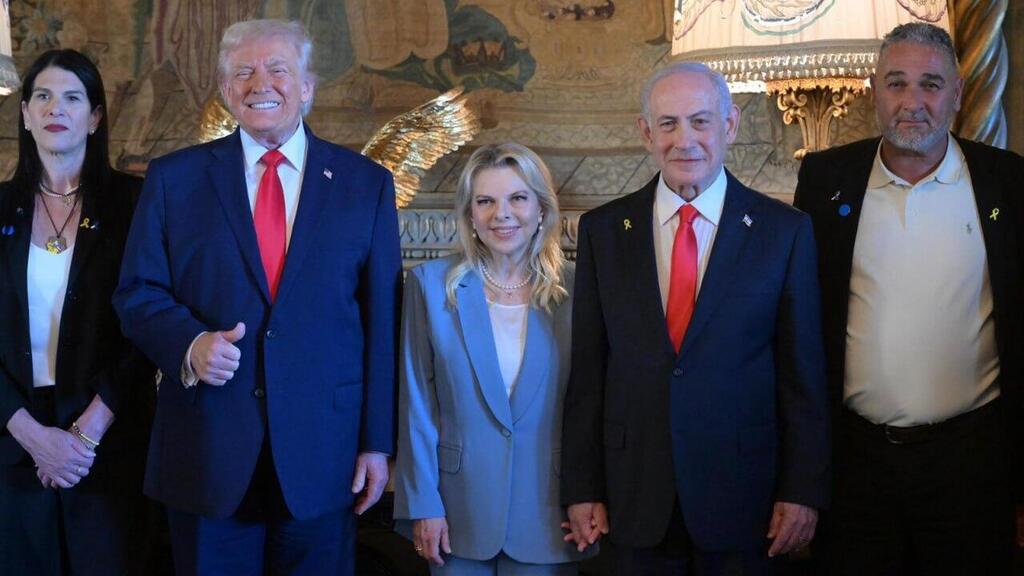
December 2025: Trump, Netanyahu and his wife with the parents of fallen hostage Ran Gvili
(Photo: Amos Ben Gershom/GPO, Sara Netanyahu)
Bergman reported that the Rafah crossing was, in fact, operated in part with the involvement of Palestinian Authority personnel — contrary to Netanyahu’s statements. The report said PA officials, including senior Fatah figures, were managing the crossing in cooperation with a special European force and with Egyptian security services assisting in securing the area against Salafist terror groups. National Security Minister Itamar Ben-Gvir responded on X: "The Israeli government continues to violate the promises and principles it declared as part of the reckless deal. The prime minister emphasized countless times that he would not allow the PA to manage the crossing and that this poses a security risk, but unfortunately, on this issue as well, he is folding."
‘Under no circumstances open the Rafah crossing’
On Jan. 6, Finance Minister Bezalel Smotrich said in the Knesset, referring to the possibility of reopening the crossing while Gvili’s body remained in Gaza: "I am calling from here on the prime minister — under no circumstances open the Rafah crossing, and do not move forward even a millimeter until Ran returns. This is our duty. Hamas can and must return Ran to a grave in Israel."
On Jan. 23, Communications Minister Shlomo Karhi was asked how Israel could move to Phase 2 of the U.S. plan without the return of Gvili. He replied: "Let’s not forget that 254 hostages returned — all the living hostages — because of our determination not to fold, not to retreat and not to surrender. One hostage remains, and we are working day and night to bring him home, and he will return home."
Asked whether the Rafah crossing should be opened, Karhi said: "I think everything should be done in whatever way is found to bring Ran Gvili, of blessed memory, back, in whatever way the prime minister and the cabinet see fit. It’s easy to sit in the studio and say ‘open’ or ‘don’t open.’ On the face of it, opening it does not seem right. But if it becomes clear that this pressure tool is actually preventing us from bringing him back, there could be a different decision."
Energy and Infrastructure Minister Eli Cohen addressed the issue last Thursday, Jan. 22, in an interview with Army Radio. "I don’t think the Rafah crossing should be opened — only for Gazans to leave to other places," Cohen said. "I don’t understand the logic of Gazans entering Gaza when it is in ruins. I am not aware of any agreement to open the Rafah crossing."
Despite the statements, international pressure appears to have taken effect. At the World Economic Forum in Davos, Switzerland, last week, Palestinian technocratic Prime Minister Mohammad Mustafa said the Rafah crossing would open in both directions this week. Shortly after his remarks, a senior Israeli official said unequivocally: "Until Ran Gvili returns, the Rafah crossing will not open." Minutes later, a political source confirmed the issue would be brought before the cabinet.
Technocratic prime minister: Rafah crossing will open
(Video: The White House)


To resolve the matter, Trump envoys Steve Witkoff and Jared Kushner arrived in Israel over the weekend. In Jerusalem, there was anger at Witkoff for pressing to open the Rafah crossing before the return of the last hostage. An Israeli official, speaking on condition of anonymity, sharply criticized him in comments to ynet: "Witkoff pushed to bring our biggest rival, Turkey, to the border. The clock is ticking backward toward a confrontation with Turkey, which would pose a real danger to our security."
On the Israeli side, officials said Netanyahu’s meeting with Trump’s envoys went well, but the same Israeli official was sharply critical. "Witkoff has become a lobbyist for Qatar’s interests," he said.
Gvili’s family, whose son has been held in Gaza for 842 days, appealed to Netanyahu ahead of the meeting, urging him to "focus efforts on his return." The family said: "We call on the prime minister to tell the respected American envoys that anyone who wants to advance Gaza’s reconstruction and peace in the Middle East would do well to first focus efforts on bringing Rani home."
Witkoff’s office said: "Yesterday, a U.S. delegation including Special Envoy Steve Witkoff, Jared Kushner, Senior Advisor Aryeh Lightstone, and White House advisor Josh Gruenbaum met with Prime Minister Benjamin Netanyahu. The discussion focused on the continued progress and implementation planning for Phase 2 of President Trump’s 20-Point Plan for Gaza, which the United States and Israel are advancing together in close partnership, as well as broader regional issues.
"The United States and Israel maintain a strong and longstanding relationship built on close coordination and shared priorities. The discussion was constructive and positive, with both sides aligned on next steps and the importance of continued cooperation on all matters critical to the region."
Family appeal to ministers
Ahead of Sunday’s cabinet meeting, the Gvili family appealed to ministers: "Do not surrender to Hamas terror. Moving to Phase 2 must first and foremost include the return of all the hostages. Hamas is still holding our Rani hostage. Hamas has not disarmed, and the State of Israel cannot proceed with opening the Rafah crossing while Hamas deceives everyone.
"We appeal to you as a mother and father and as citizens of Israel, whose security and the security of its citizens were before Rani’s eyes when he put on his uniform and went out to save lives on that terrible morning: Do not forget him, do not skip over him, do not leave him behind and do not agree to open the Rafah crossing before Rani is home. Israel must not forget its heroes. First and foremost, Rani must be brought back."
Lihi Gordon contributed to this report.