

An emerging U.S.-Iran agreement could reshape the Lebanese arena. According to information received by Israel, Iran insisted on including a clause linking all fronts and halting fighting across them. As far as is known, the United States agreed, despite the clause being less convenient for Israel.
Lebanese Parliament Speaker Nabih Berri also confirmed the matter, telling Al Jazeera that Iranian Foreign Minister Abbas Araghchi had told him “Lebanon is part of any ceasefire agreement.”
Israeli strike in Beirut


Against the backdrop of the emerging understandings between Washington and Tehran, including over Lebanon, Israel’s Security Cabinet is set to meet Wednesday night to discuss developments.
For the IDF, the northern front is now in an uncomfortable situation. Hezbollah continues firing at Israeli troops in southern Lebanon, and the IDF is still taking casualties. At the same time, the military’s freedom of action has been limited.
For weeks, the Israeli Air Force had not struck Beirut until Wednesday evening, and targeted assassinations had stopped. Even Hezbollah Secretary-General Naim Qassem, whom Defense Minister Israel Katz had threatened several times during the war, appears to have secured a kind of immunity under Iranian protection.
IDF officials say that until an agreement is reached ensuring Hezbollah’s disarmament, even in stages — first in southern Lebanon and later across the country — Israeli forces will have to remain on their current defensive lines.
The goal is to prevent Hezbollah from rebuilding its strength and to stop the return of anti-tank missile fire that paralyzed life in northern Israel for months.
On the ground, however, the situation is far from quiet. IDF Chief of Staff Lt. Gen. Eyal Zamir toured the Khiam area Wednesday, in the heart of a zone officially defined as under a ceasefire but still functioning as an active combat arena.
“We have a historic opportunity to change the regional reality in the multi-front campaign,” Zamir said during an operational assessment with Northern Command chief Maj. Gen. Rafi Milo and 91st Division commander Brig. Gen. Yuval Gaz.
Zamir also referred to the campaign against Iran, saying coordination with the U.S. military is continuing.
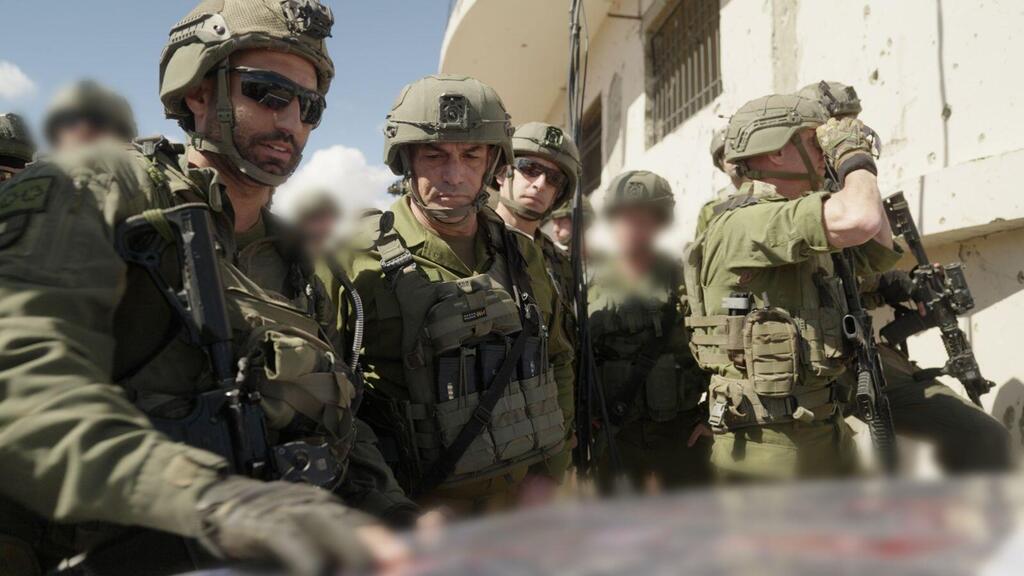
“In Iran, we still have a series of targets ready for attack,” he said. “We are on high alert to return to a powerful campaign that will deepen the achievements and weaken the regime.”
Zamir entered a Hezbollah tunnel discovered about 25 meters underground. According to the IDF, the tunnel was found beneath a children’s clothing store in the middle of a civilian neighborhood.
“This is further proof that Hezbollah uses the population as a human shield for terror,” Zamir told commanders in the field.
He said more than 2,000 Hezbollah terrorists had been killed since the start of Operation Lion’s Roar and told troops: “You have no restriction on the use of force. Continue to locate the enemy and destroy it.”
Despite the full backing Zamir is giving commanders, defense officials understand that any U.S.-Iran agreement could reshuffle the cards in southern Lebanon.
The IDF has completed its main mission: removing the threat of a Radwan Force raid and neutralizing direct anti-tank fire at northern communities. But now comes the dilemma of the day after.
Israeli forces are deployed along the “yellow line,” but the key question remains when they will withdraw. Commanders warn that allowing Lebanese residents to return to villages that have been cleared would undermine a security achievement bought in blood.
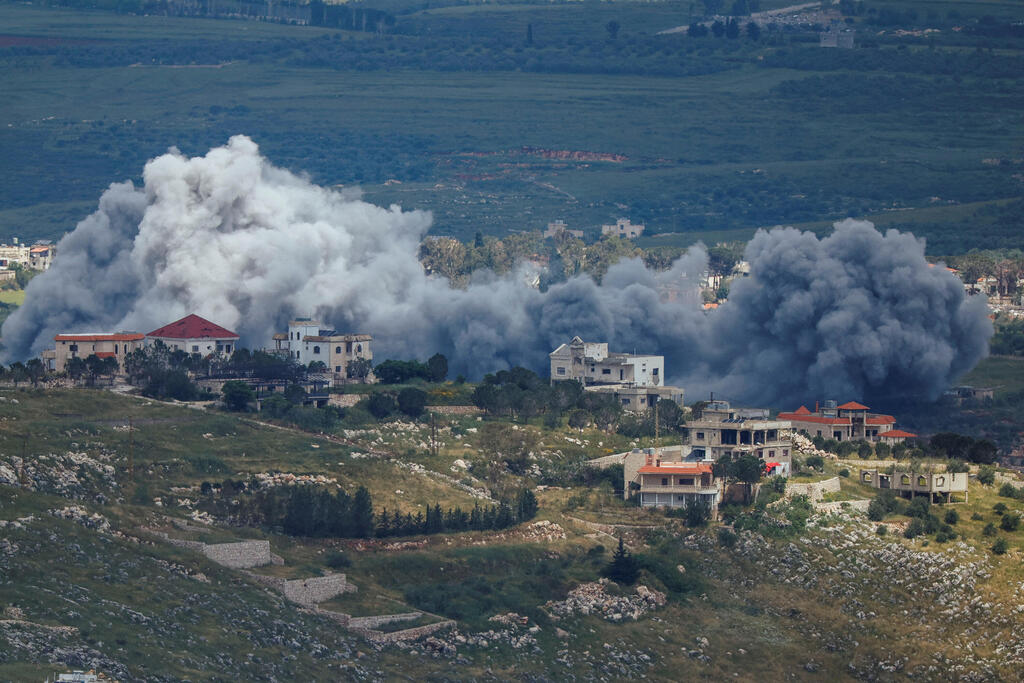
IDF strikes in southern Lebanon
(Photo: REUTERS/Ammar Awad)
“The Lebanese government will not be able to dismantle Hezbollah on its own,” security officials say. “That is why leaving the territory up to the yellow line must take a long time.”
The Gaza front must also be considered. A clause linking the fronts in a U.S.-Iran deal could force Israel to avoid renewed fighting there as well, even as Hamas continues refusing to disarm and sets conditions.
Senior IDF officials say Israel should now use the fact that there are no Israeli hostages left in Gaza to act with full force, through firepower and ground maneuver, to disarm Hamas and collapse its rule in the Strip, even if it operates behind the scenes.
Those officials say that because fighting in Lebanon is limited, forces are now available to act in Gaza and finish the job quickly.
But senior officers and defense officials also acknowledge that Israel must take into account the exhaustion of reservists, without whom a major Gaza operation cannot be carried out, while also maintaining readiness for maneuver in Lebanon and a possible flare-up in Judea and Samaria — not to mention approval from the White House.