

In October 2023, quietly, a small settlement arose in the remote Ozark Mountains in the state of Arkansas in the United States: a whites-only settlement. Return to the Land, this community calls itself, led by Eric Orwoll, a blond man with blue eyes from California, who has attracted hundreds of Americans - amid a disturbing trend of rising antisemitism, and against the backdrop of the rise of the far-right in the U.S. The unique rural settlement has a simple rule: no entry for Jews, no entry for Blacks, no entry for LGBTQ.
"You want a white nation? Build a white town," says Orwoll in one of the long videos he uploaded to his YouTube channel, where he has about 20,000 registered subscribers. "It can be done. We're doing it."
Back to the land: A settlement for whites only in Arkansas


White supremacy, neo-Nazi statements and Holocaust denial - in a cordial and "welcoming" facade: This is the Return to the Land community.
The separatist community defines itself as follows: "Return to the Land is a private membership association (PMA) for individuals and families with traditional views and common continental ancestry. We hold events and conferences, and we help groups of our members form European heritage communities."
"We seek to create a decentralized movement, formed of various individuals and societies returning to the land. We will promote strong families with common ancestry, and raise the next generation in an environment that reflects our traditional values. We will facilitate economic and social harmony between all groups and individuals in our movement. Above all, we will continue to engage in a never-ending pursuit of excellence, refusing to lower our standards or lose sight of our goals."
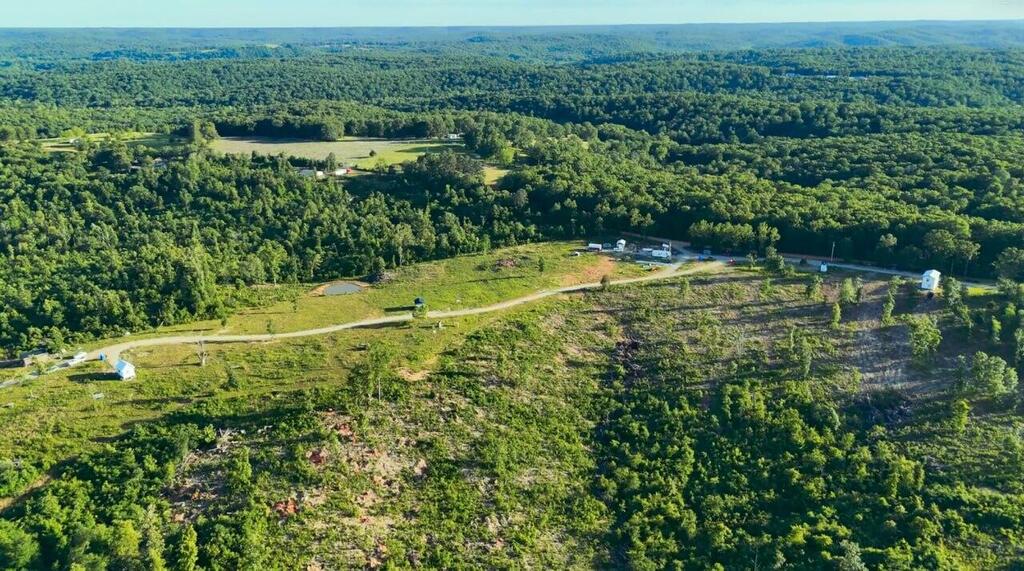
The first settlement established in the green and remote hills of northeastern Arkansas now sprawls across about 160 acres, and its population numbers about 40 residents, including six children. The settlement's pioneers paved roads to the remote area, dug wells and built cabins and houses, and also established a community center and school for the local children. They regularly publish their work on social media and invite other white Americans to join them.
The nearest town is called "Pocahontas," and the settlement is located about two and a half hours' drive from Little Rock, Arkansas's capital city, and about 350 km from St. Louis, Missouri. The remote area, considered a national park, is known worldwide thanks to the American thriller series Ozark, starring Jason Bateman and Laura Linney, which tells the story of a family forced to move from Chicago to that isolated area after the father gets entangled with a Mexican drug cartel.
The burgeoning community has aspirations to grow, and another settlement was already established in the area at the beginning of the year. According to the Return to the Land website, there are four additional settlements under construction: another one in the Ozark Mountains, one to be established in one of the Deep South states - including Alabama, Mississippi and Georgia - and two settlements to be established in the Appalachian Mountains, stretching from New York state southward. Hundreds of Americans have already registered as members of the broader Return to the Land community.

Construction work in the settlement
Additionally, the community allows its members, whether they live in the settlement or not, to donate to the project. Among the options: donations to families who brought a child into the world within the Return to the Land framework to "incentivize population growth"; donations to the community's legal battle and assistance in hiring lawyers and accountants, as they say "victory in the constitutional arena will be a source of hope for the entire Western world"; as well as donations through digital currencies or by transferring gold or silver to an address in a town in Arkansas.
In an extensive report by the Sky News, channel reporter Tom Cheshire surveyed the community and spoke with residents and leader Orwoll. "What we've done here is establish a place where we have control over who our neighbors are, to protect our culture - white American culture," said the settlement leader.
Between Arkansas and the Supreme Court, between Martin Luther King and Orwoll
Community opponents claim that Return to the Land brings back to life segregation laws. Although slavery was abolished in the United States at the end of the bloody Civil War in 1865, in practice, many laws were enacted that continued to discriminate against the African-American community in the country, including the Jim Crow laws. These laws were only repealed about 100 years later, in the 1960s, due to the struggle of the civil rights movement led by Dr. Martin Luther King Jr., and thanks to figures like Rosa Parks.
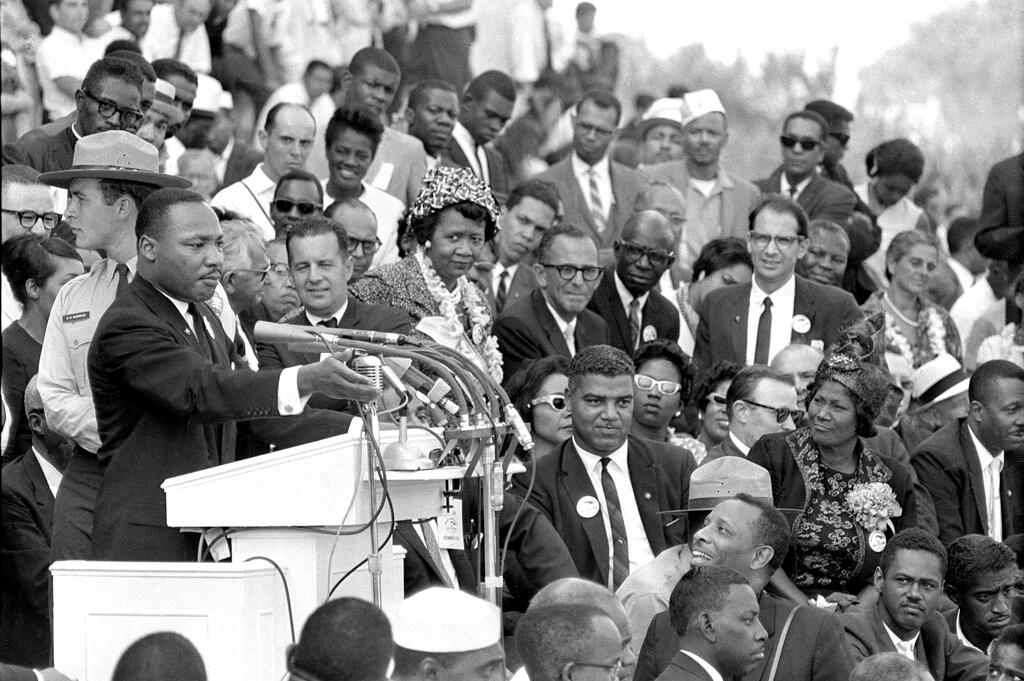
Dr. Martin Luther King Jr.
(Photo: AP)
The white community of Return to the Land rejects this claim: "We're not trying to hurt others, we're just a small community in the middle of the Ozarks," says Orwoll with a slight chuckle. "You just don't let everyone into your house." However, the Civil Rights Act of 1968, also known as the Fair Housing Act, establishes that it is forbidden to discriminate against citizens in choosing their place of residence for racist reasons.
While Arkansas is not considered one of the Deep South states, it is definitely a red state identified with conservative values, and most of its residents support the Republican Party - currently led by President Donald Trump. In the last 50 years, Arkansas has given its six electors to the Republican Party, except for three cases: when Democratic President Jimmy Carter was elected in 1976 and when Bill Clinton, a former Arkansas governor, won elections twice, in 1992 and 1996.
That same 1968 law poses a legal challenge threatening the community's existence, but since the settlement is primarily defined as a Private Members Association (PMA), its people believe they are not violating the law. And this is how it works: after a certain candidate passes the community's admission tests (more on that later), he can buy shares in the legal entity of Return to the Land, defined as a limited company. These shares translate to actual land area, on which they can build their homes.
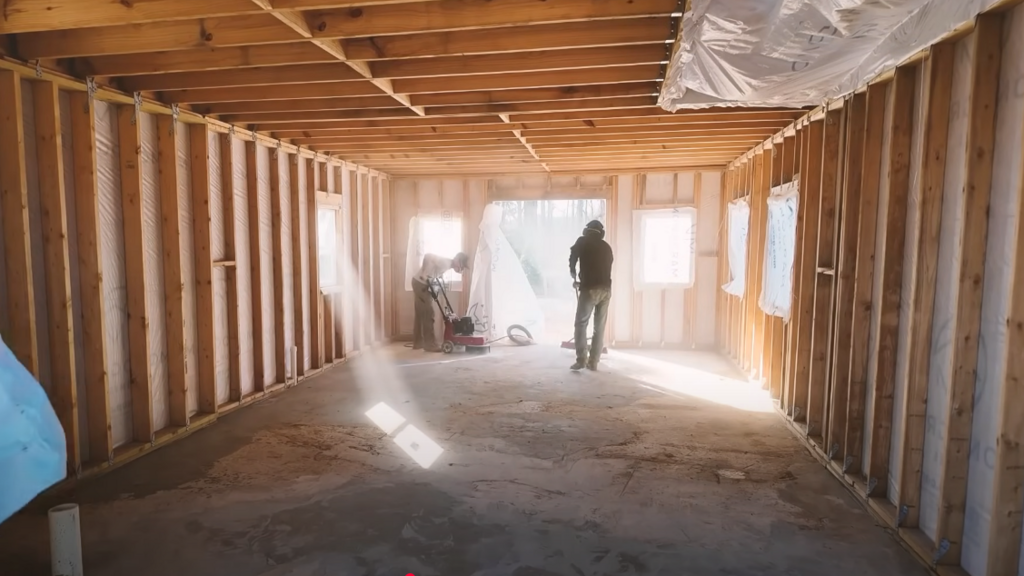
Construction work in the settlement
Peter Serry, Orwoll's right-hand man, who also stands behind the legal side of the initiative, says this is the community's way to "circumvent" the Fair Housing Act. He adds that he "hopes" this will pass the legal test should it reach court. When asked if he thinks the community has a racist character, he replied that "I don't know, people have all kinds of definitions for that word. I'm sure there will be many on the internet who will call me a racist, but I don't really care. Maybe yes." In response to a reporter's question, Serry did not deny the claim that the community brings racial discrimination back to life.
"I think there's a big misunderstanding about what we're doing here," says Nikki, 32, who decided to move to live in the settlement. "They think we hate everyone," added Allison, 29, who sat beside her. "This is a loving community." The Sky News reporter confronts them: "It's a loving community if you're part of it, but if you're Black, Jewish or gay, you can't be part of the community." To this, Nikki responds: "They can establish their own communities, and they already have them. I think that's great for them."
"If others are allowed to do it, I don't understand why whites are forbidden. It doesn't make sense," added Nikki, who noted that she eagerly awaits seeing the community develop and establish whites-only cities. "It will be cool, interesting to see where this goes over time." The discussion around the separatist settlement in Arkansas is not exclusive to the U.S., and it recalls other events of discrimination in housing choice, including in Israel.
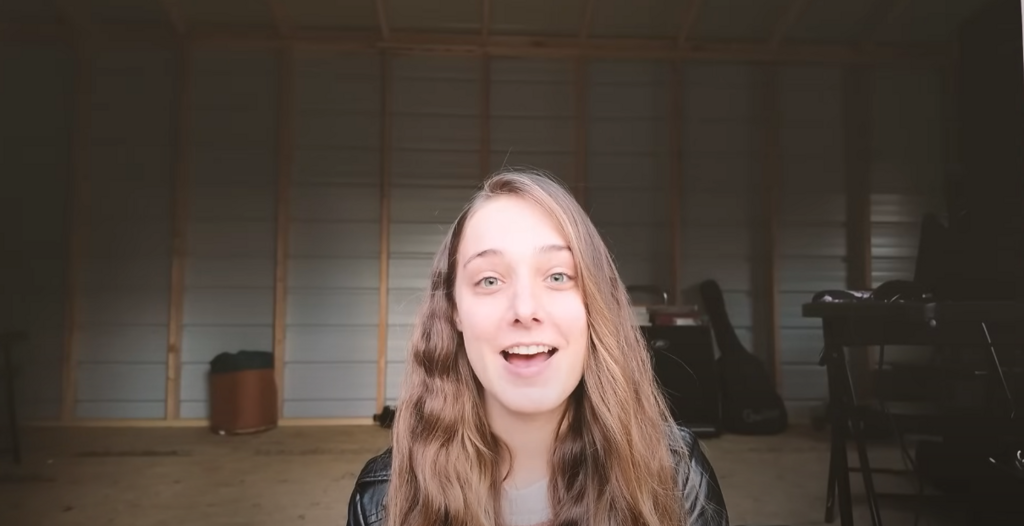
Allison: 'This is a loving community'
"Many white Americans are afraid that their identity is under threat - because of massive immigration, low mortality rates and all kinds of cultural changes," says Orwoll in an interview with TMZ. When the Jewish interviewer asks the community leader if he too can live in the settlement, Orwoll answers: "You're welcome to apply; each case is examined individually. We don't immediately reject, and if a person comes from non-white descent, there's a chance we'll accept them. We do see Jews as those whose roots came from the Middle East, so they probably won't fall into the category of European descent."
Ynet approached Return to the Land with a request to conduct an interview with Orwoll. After three days without response, the following answer was received: "Thank you very much for contacting us. Eric says he greatly appreciates the request, but at the moment he is forced to decline it."
'How often do you think about the Roman Empire?'
Since the community refused to conduct an interview with us, we tried another way to reach them: to be accepted to Return to the Land. To this end, we went to the project's website, to the Community Membership tab, and filled out the membership form under a false name. The preliminary questions were fascinating: after filling in personal details, we were asked about our gender (two options - man and woman), our marital status and our sexual orientation.

We were then asked to briefly tell where we're from, where we grew up and where we currently live, and then to describe if we have "special abilities and skills" to bring to the community. After these requests, we had to describe our "political and social views," and then tell where our family came from, and if necessary, also that of our spouses and children, with emphasis on the geographical region and ethnic origin from which they came.
Additionally, the community wanted to know how we heard about it and why we're interested in the settlement, and we were asked if we have a criminal record and if we "work directly or indirectly, or receive money for certain work on behalf of the United States government or any other entity connected to it." We were also asked about our religious and philosophical views.
"A land acquisition group is particularly successful when all participants have no real disagreements on political and social issues," was written in the middle of the application form. "Please answer the following questions dealing with controversial topics, so we can place you in an appropriate group."
Members of the community

Members of the community
Below are the questions, which can be answered positively, negatively or neutrally: Do you support same-sex marriage? Do you support transgenders? Do you support immigration? Do you support COVID vaccines and mask wearing? Do you support abortions? Do you support segregation? Do you support high birth rates? Do you support multiculturalism? How often do you think about the Roman Empire?
The last question is a reference to a trend that developed on social media in 2023, where women ask their male partners how frequently they think about the ancient empire of Rome. To many people's surprise, many men replied that they think about it quite often. The rest of the questions on the admission form deal with political issues widespread in the U.S. in recent years.
The Nordic symbol, Heil Hitler in numbers
"Race is much more than just skin color," Orwoll claimed in an interview with TMZ. "Genetically, race creates cognitive differences, in the same way it creates differences in external appearance. I think we should have the right to choose whether to mix or separate."

Eric Orwoll
According to Orwoll, "less than 50% of babies born today in the U.S. are white. I'm white, my children are white, and there's something in your background that affects who you are and your identity. We don't want this identity to be harmed." Despite the moderate front Orwoll tries to present, the Sky News reporter confronts him with things he said in some of his YouTube videos, where he emphasized that although "many are waiting for a modern Adolf Hitler," he won't just come and "we need to do the work so he will come."
"Hitler is a controversial historical figure, like all complex historical figures," Orwoll responds. "The prevailing perception of him is one-sided and influenced by propaganda that began in World War II. On the other hand, the opposite perception, according to which Hitler did nothing wrong, is also one-sided. I'm not saying we should wait for a new person who will commit a holocaust, but that we should wait for a charismatic leader who will look after your interests."
Serry has expressed himself more than once in distinctly more antisemitic ways, even neo-Nazi ones. In the Return to the Land Telegram group, he posted a message with the number 1488 - a number considered a slogan of the white supremacy movement. The number 14 represents the "14 words" slogan coined by American neo-Nazi activist David Lane: "We must secure the existence of our race and a future for white children."

Reutrn to the Land logo
(Photo: from social media)
The number 88 represents twice the eighth letter of the Latin alphabet - the letter H. When doubled, you get the combination HH - initials of the Nazi call "Heil Hitler." The community's symbol, scattered throughout the small settlement and adorning the official accounts of Return to the Land, was created inspired by the Nordic symbols of ancient Scandinavian cultures - objects of Nazi admiration in Germany. So too the swastika, which originally came from ancient cultures in the Indian subcontinent, but was identified by the Nazis as a symbol of the ancient Aryan race.
'Tel Aviv? The 'most gay city in the world?''
Last week, Serry shared on his X account an interview with Republican Senator Tom Cotton, considered pro-Israel, where he talks about the situation in the Gaza Strip and accuses Hamas of claims of hunger throughout the enclave. Serry attacked Cotton and AIPAC - the pro-Israel lobby in the U.S. "AIPAC senators are gay," he wrote on X. "We need an anti-Israel lobby to run (in elections) against each of them."
A week before that, Serry shared a tweet stating that "Jews are doing everything they can to divide and destroy Return to the Land," and that "in the name of Jesus, we must not let them sow their satanic discord." He also shared a post by a user who criticized another user who spoke against community leader Orwoll, saying that "Jewish tactics no longer work on us." About this, Orwoll's right-hand man wrote, as if quoting: "'And then, one day, the white man became immune to Jewish lies and manipulations.'" Additionally, Serry wrote on X that "no Jew is innocent."

Construction work in the settlement
The Sky News reporter tried to confront Serry with his antisemitic statements, asking him if the Holocaust is in his eyes "a bad thing" and if it is indeed "a unique crime in history." "That's your opinion," Serry responds, claiming that the Holodomor - a term for the mass starvation that Stalin's Soviet regime imposed on Ukraine in the early 1930s and which claimed the lives of millions of people, "was a much worse thing." After an argument with the reporter, Serry agreed to admit that the Holocaust "was a bad thing."
However, after the Sky News report was published, Serry retracted his "admission" that the Holocaust was a negative thing, in a post on X. "News reporter: 'Peter, was the Holocaust a good or bad thing?'" he wrote, as if recreating the conversation with the reporter. "Me: Oh, you mean the Holobunga (a mocking term by the white supremacy movement for the Holocaust). It didn't happen, but do you want me to talk about why it should have happened?" In another post, he again regretted saying the Holocaust "was a bad thing."
After Prime Minister Benjamin Netanyahu condemned French President Emmanuel Macron's statement that Paris would recognize a Palestinian state in September, claiming that "establishing a state for Palestinians next to Tel Aviv is a reward for terror," Serry wrote on X: "Tel Aviv? The city defined as 'the most gay in the world'? The fate of this city should be like that of Sodom and Gomorrah." Orwoll also regularly publishes antisemitic content on his accounts, dealing mainly with the claim that Israel and AIPAC pull the strings of the American government.

Peter Serry
Netanyahu met last week in his Jerusalem office with Arkansas Governor Sarah Huckabee Sanders, who accompanied House Speaker Mike Johnson on his visit to Israel. He also met with a delegation of Republican Congress members on behalf of AIPAC.
Sky News network approached Arkansas Attorney General Tim Griffin and asked for his official response to claims that the community violates the law. "This is the first I've heard of these allegations," Griffin said. "Racial discrimination has no place in Arkansas or anywhere in a free society. These allegations raise all sorts of legal issues, including constitutional concerns. My office is reviewing the matter."