

The end of the dictator who ruled Iran for 36 consecutive years with an iron and ruthless grip: Iran confirmed overnight Saturday into Sunday that its supreme leader, Ali Khamenei, was killed in the opening strike of Operation Roaring Lion, in an Israeli attack on his official residence, where he had been meeting with senior advisers.
The official announcement came after Israel, as well as US President Donald Trump, confirmed that Khamenei had been killed while Tehran denied the reports — and many Iranians took to the streets to celebrate his death. Iranian media reported that, in addition to Khamenei, his daughter, son-in-law, granddaughter and daughter-in-law were also killed.
Iranian state TV report on Khamenei’s death


Celebrations in Iran after Khamenei’s killing
Gallery
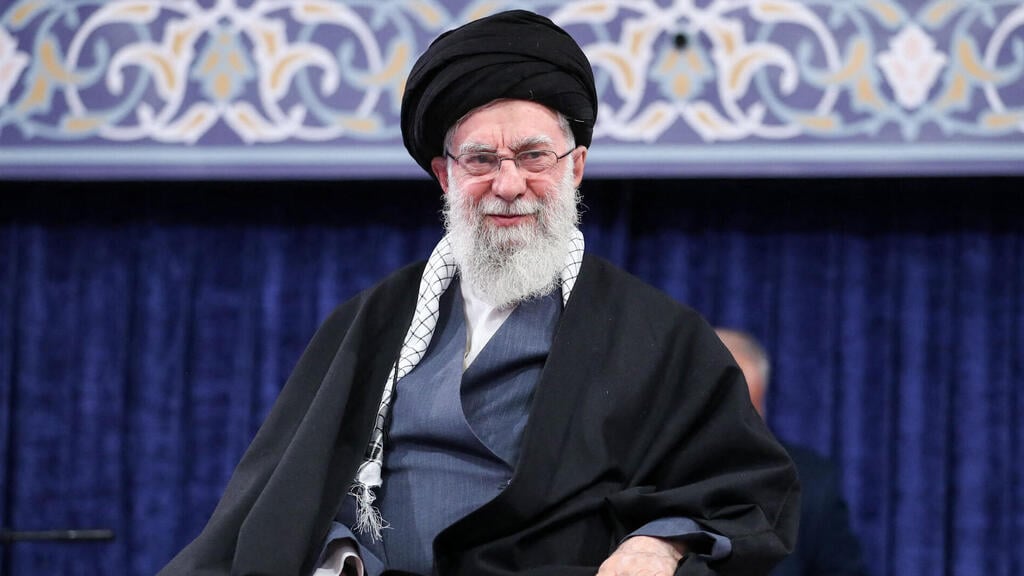
Ali Khamenei; 36 years of rule, with an iron and ruthless grip
(Photo: AFP PHOTO / HO / KHAMENEI.IR)
The 86-year-old Khamenei had long been in poor health, and for years speculation swirled inside and outside Iran over who would succeed him. In recent months, since Operation Rising Lion, he was reported to have been hiding in a bunker in Tehran with family members. Prime Minister Benjamin Netanyahu said in a statement Saturday evening that the compound where Khamenei had been staying was destroyed and that “there are many signs that this tyrant is no more.” A short time later, a senior official said his body had been found.
The killing was described as the crown jewel of the Israeli Air Force’s “Genesis” sortie, during which some 200 fighter jets struck about 500 targets in the opening hours of the campaign. “Proud of you, we started on the right foot,” Air Force commander Maj. Gen. Tomer Bar said of the operation. Satellite images released after the strikes in Tehran showed heavy damage and smoke rising from Khamenei’s residence, where he was ultimately killed in the compound where he lived and worked.
Khamenei was born in Mashhad. As a young man, he studied at the religious seminary in Qom and taught Islam. Among his teachers was Ruhollah Khomeini, who later became Iran’s supreme leader. Because of his political activity against the shah’s regime and his hardline Shiite beliefs, he was arrested several times in the 1960s by security forces. After his release, he was barred from teaching.
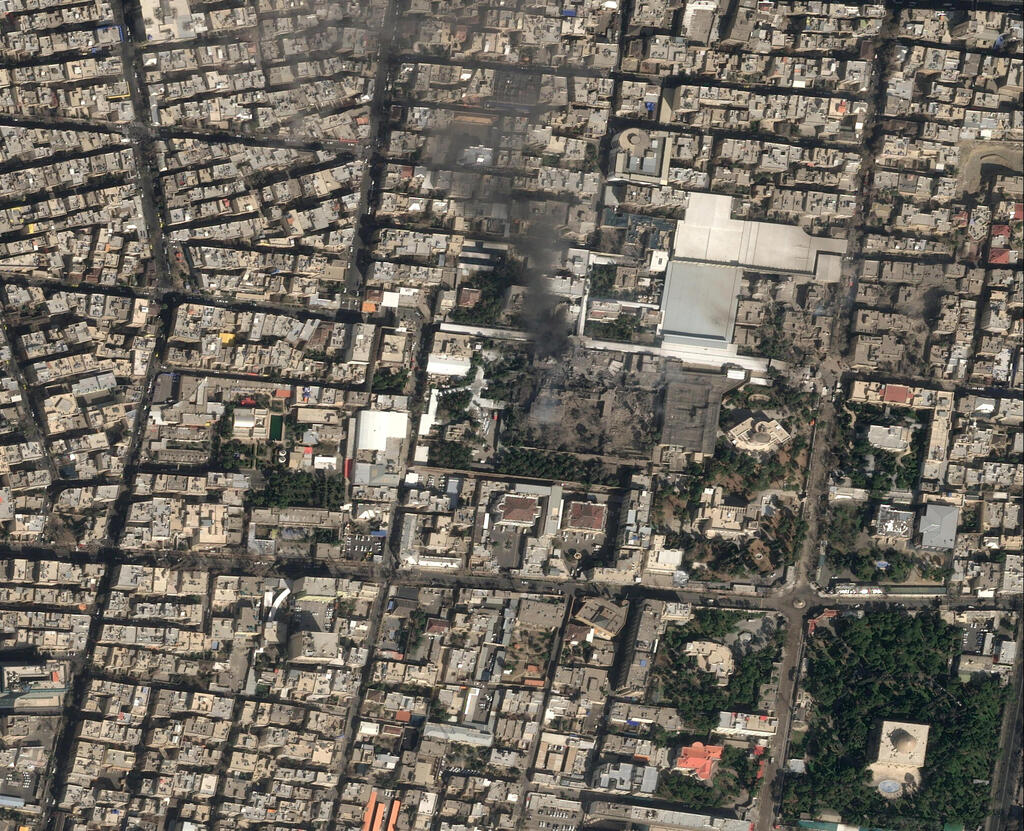
Satellite image of the destruction caused to Khamenei’s residential compound
(Photo: Pleiades Neo (c) Airbus DS 2026)
He grew close to Khomeini during the latter’s exile in France and assisted him during Iran’s 1979 Islamic Revolution. After Khomeini returned to Iran, Khamenei was appointed to senior posts, including deputy defense minister, member of the Revolutionary Council and Khomeini’s representative on the Supreme Defense Council. In a 1981 bombing targeting senior party leadership, the secretary-general was killed and Khamenei, who was lightly wounded, was appointed to the position. That same year, he ran for president and was elected. He was re-elected in 1985.
As president, Khamenei shared Khomeini’s religious fundamentalist worldview, which included isolation from the West and calls for Israel’s destruction. Under his leadership, Hezbollah and other militant groups received extensive support. After Khomeini’s death in 1989, Khamenei was appointed Iran’s supreme leader.
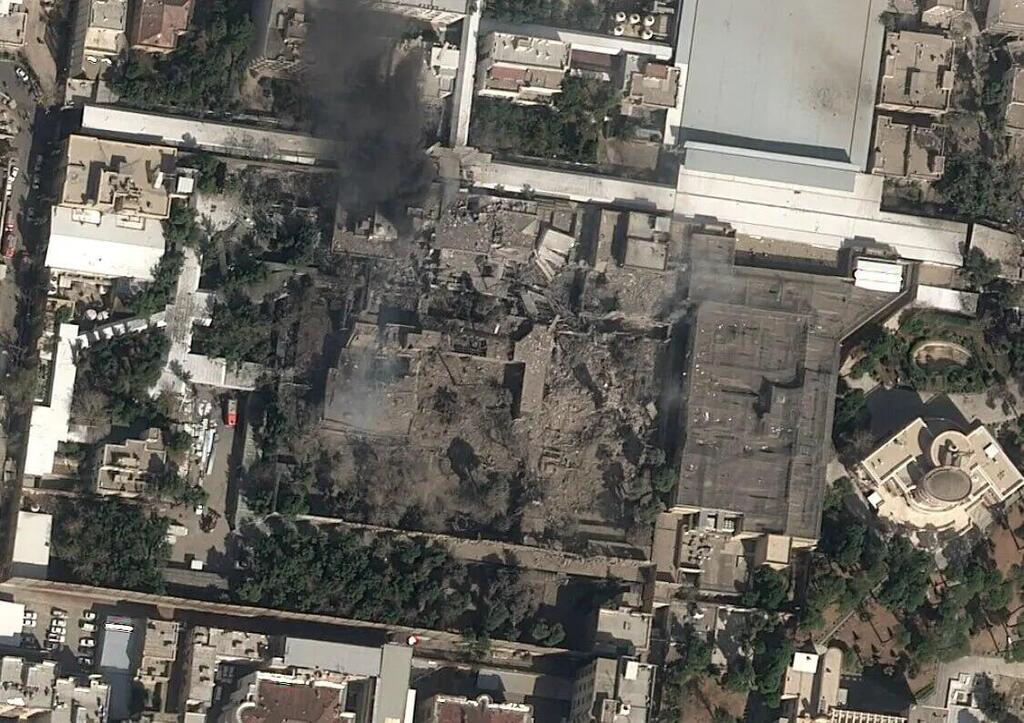
The destruction at the supreme leader’s secured compound
(Photo: Airbus, New York Times)
His selection as successor sparked considerable opposition, and during his tenure tensions emerged between him and President Mohammad Khatami, who served from 1997 to 2005 and sought to implement reforms. Khamenei backed Mahmoud Ahmadinejad’s presidential candidacy and stood by him after unrest erupted over allegations of election fraud. He supported a forceful crackdown on protesters.
Over the years, Khamenei tightened his grip on state institutions in Tehran while brutally suppressing dissent and building a regional “axis of resistance.” During the war with Israel, and especially at moments of escalation, he frequently threatened Israel and adjusted strategy in pursuit of what he called “greater deterrence.” Ultimately, that strategy proved a failure and led to the killing of many of his closest senior aides.
Khamenei drew inspiration from anti-colonialist ideologies that called for purging Iran of what he viewed as Western influence. He met with thinkers who sought to merge Marxism and Islamism and translated into Persian the writings of Egyptian Islamist ideologue Sayyid Qutb, a prominent figure in the Muslim Brotherhood. Like many clerics of his time, Khamenei was far more involved in political activism than in theological scholarship, and as a young activist he took part in numerous demonstrations against the shah.
Before being chosen as successor, he briefly served as deputy defense minister and was later appointed Tehran’s Friday prayer leader, a post he held until his death. In June 1981, he was the target of an assassination attempt by the Mujahedeen-e-Khalq, an Iranian opposition group that carried out numerous attacks during that decade. A bomb hidden in a tape recorder exploded during a speech he delivered at a mosque in Tehran. Khamenei was seriously wounded and permanently lost the use of his right arm. “I do not need the hand — it is enough if the brain and the tongue work,” he said at the time, an episode that helped shape his image as a survivor, a kind of “living martyr” of the Islamic Revolution.