


IDF leaders say they see a rare strategic opportunity to significantly weaken Iran’s capabilities and warn that the campaign should continue until the Iranian regime collapses.
“It is impossible to miss this opportunity. We must not take our foot off the gas until this regime collapses — neither we nor the United States. This is an opportunity we will not get again,” a senior IDF General Staff officer said.
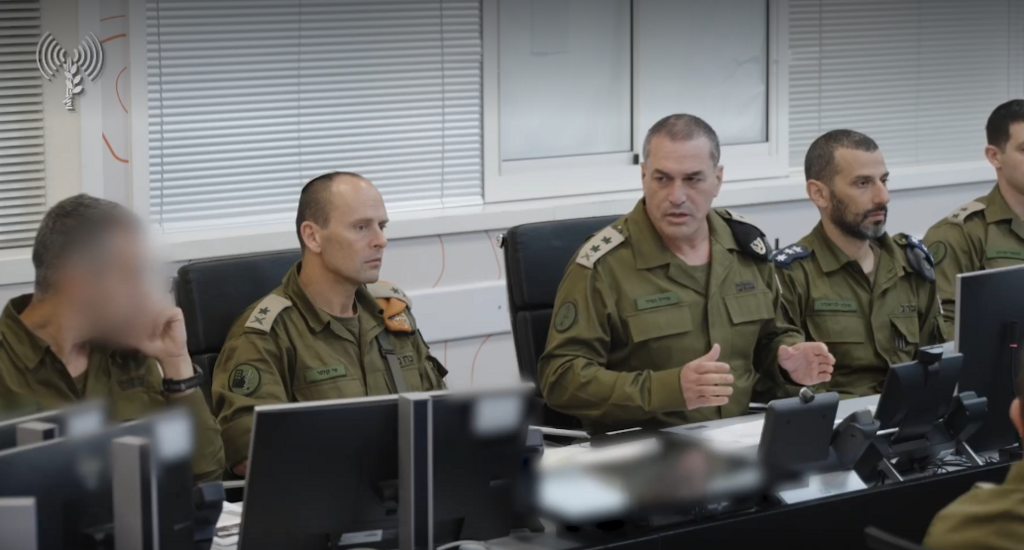
Discussions with generals at the General Staff reflect a similar view, describing the current moment as a rare convergence of military and political conditions that could allow Israel and its allies to inflict deep damage on Iran.
Defense officials say coordination with the United States is especially close as the campaign enters its next phase. According to a senior official, Israel and the United States have divided operational sectors, targets and missions and are working with what he described as “excellent coordination.”
During the first week of the campaign, most of the offensive effort was carried out by Israel, the official said. But a significant shift is expected as U.S. forces increase their role. “The Americans are bringing an enormous mass of capabilities, and we will see that in their strikes,” a General Staff official said. “They are not operating according to a munitions economy — they are using what they have.”
The next phase of the campaign is expected to focus on systematic strikes against Iran’s military and industrial capabilities, Israeli officials said. The IDF plans to expand operations and intensify attacks on Iran’s military, industrial and technological infrastructure. “We are continuing the pounding and expanding into additional areas, while systematically thwarting military capabilities,” additional General Staff officials said.
The Israeli military is preparing for a campaign that could last several weeks. One senior officer said the planning aligns with statements by former U.S. President Donald Trump calling for Iran’s “total surrender.” “Trump spoke about four weeks. We are also preparing for at least a month,” the official said.
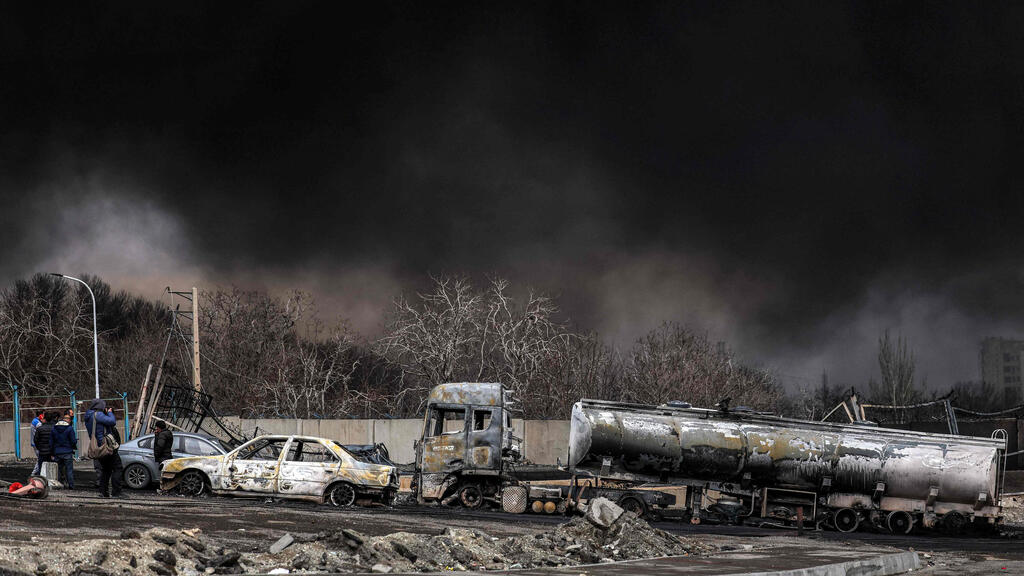
Destruction in Tehran
(Photo: AFP)
IDF Chief of Staff Lt. Gen. Eyal Zamir said during a situation assessment Sunday evening that Israelis should prepare for a prolonged conflict.
“Israel has been in a state of ongoing emergency for two years,” Zamir said. “What we need now above all is persistence and patience. It will take more time — however long it takes, it will take. This is the war of our generation, and it will determine our future and our security here for many years to come.”
One of the central goals of the campaign is destroying Iran’s ballistic missile network. According to Israeli military estimates, Iran began the conflict with about 460 missile launchers and now has roughly 150 remaining.
Still, Israeli officials say the threat remains significant. “Surface-to-surface missiles remain a central challenge,” one official said. “The Iranians are trying to clear the ‘blockages’ we created by striking the tunnels and restore launch capabilities, but they are not succeeding.”
Military officials say the limited size of Iranian missile barrages is not due to conservation of weapons but rather the impact of Israeli strikes. "There are entire surface-to-surface missile commands that cannot function,” Israeli Air Force officials said. “Commanders and headquarters have been hit, launch sites damaged and tunnels blocked. This effort continues constantly alongside the other operations.”
Despite the military gains, Israeli defense officials say military action alone is unlikely to bring about regime change in Iran. “However successful a military move may be, it will ultimately require action by the Iranian public as well,” a security official said. “But we are optimistic about the results of the joint operation with the Americans.”
Israeli officials also warned that ending the campaign prematurely could allow Iran to quickly rebuild its missile capabilities. “If we stop now, they will rebuild the missile array,” one official said. “China and North Korea will help them, and we will find ourselves facing the same problem again in a short time.”