


Diplomatic relations do not yet exist, but Israel is preparing for what could be a dramatic and unprecedented visit: a year and a half after Ynet and Yedioth Ahronoth revealed that Indonesia had agreed to normalize relations with Jerusalem in exchange for Israel’s support for its bid to join the OECD, the president of the world’s largest Muslim-majority country, Prabowo Subianto, is reportedly expected to arrive in Israel Tuesday. It would be the first-ever visit to Israel by a sitting Indonesian president. However, Indonesia’s Foreign Ministry has denied the report, saying the president will not be coming.
If the visit does take place, Subianto is expected to land in Israel on Tuesday night, at the end of the Jewish holiday, and meet with Prime Minister Benjamin Netanyahu in Jerusalem on Wednesday. The trip was reportedly arranged secretly with American mediation, without the involvement of the usual Israeli officials who handle contacts with Indonesia.
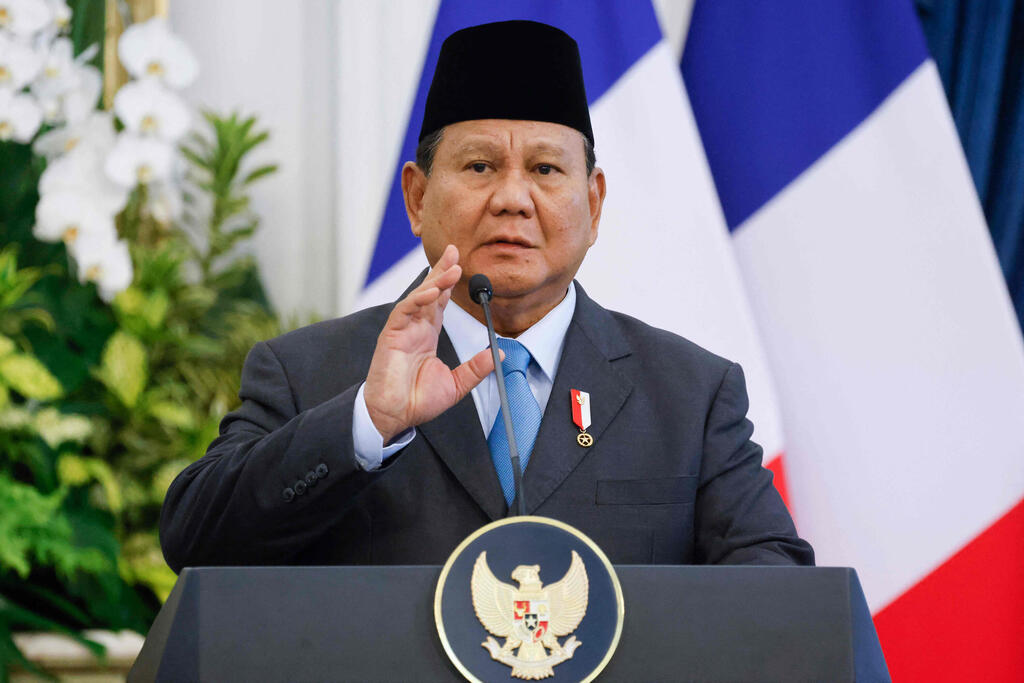
Indonesian President Prabowo Subianto
(Photo: Ludovic MARIN / AFP)
In his address to the UN General Assembly last month, Subianto said that ensuring Israel’s security was a precondition for “true peace.” The Indonesian president even greeted the assembly with the word shalom in Hebrew and expressed his support for a two-state solution.
Netanyahu hinted yesterday at Subianto’s possible visit when he asked the Jerusalem District Court to cancel Wednesday’s hearing in his ongoing trial, saying that a “significant diplomatic visit” by the president of Cyprus was scheduled for that day, and adding that “a particularly urgent and important diplomatic visit” would take place later that evening.
Today, the judges ruled partially in Netanyahu’s favor, agreeing only to shorten Wednesday’s testimony session—from 12:30 to 5 p.m.—and to end next Monday’s session early as well, at 1:30 p.m.
Although Israel and Indonesia do not have formal diplomatic relations, occasional contacts between the two countries do take place. The absence of such ties prevents Israeli passport holders from entering Indonesia without special permission. Before the Oct. 7 Hamas attacks, understandings had reportedly been reached regarding Indonesia’s inclusion in the “Abraham Accords.” However, after the outbreak of the war, massive anti-Israel demonstrations were held across Indonesia.
(Video: UN)


In Israel, opinions are divided over whether Indonesia might move to normalize ties before Saudi Arabia — an agreement with Riyadh would likely open the floodgates. Some believe Indonesia could move first, raising hopes for warmer relations, especially in tourism. Others are more skeptical, arguing that Indonesia’s leadership is not ready to advance such a move given public sentiment and would likely wait until after the war or a Saudi deal.
A senior Israeli official said several months ago, “It’s doubtful Indonesia will be the first, since it fears protests and unrest from extremists. It’s more reasonable that it would wait for Saudi Arabia.”
Over the past year, Israeli athletes have been barred from entering Indonesia, a decision that cost the country the right to host several international tournaments.