

The United States is increasing pressure on Israel to move to the second phase of the Gaza ceasefire agreement even before the body of an Israeli police officer abducted on Oct. 7 is found, Israeli officials said Saturday.
The issue has become a point of friction between Jerusalem and Washington, with Israel insisting that the remains of all captives be recovered before advancing to the next stage of the deal.
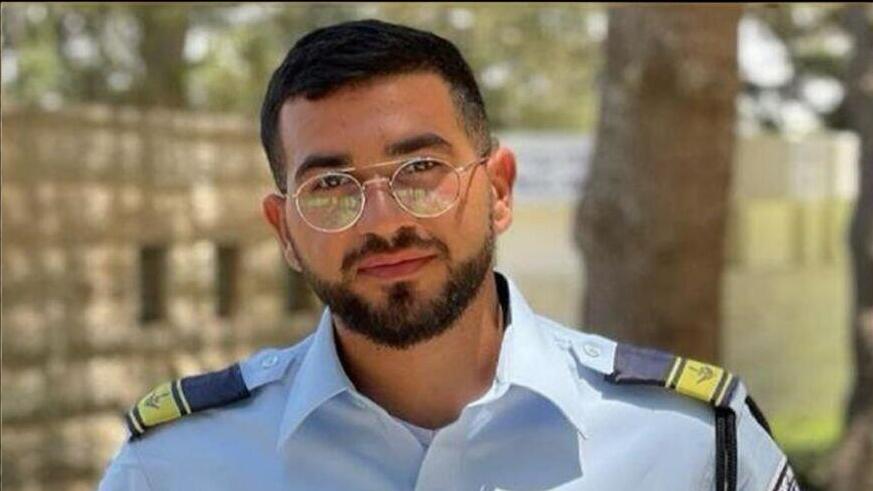
Sgt. First Class Ran Gvili
(Photo: Israel Police)
U.S. officials are finalizing a plan they expect President Donald Trump to present in the coming weeks — even if the missing officer, Sgt. First Class Ran Gvili, is not located. Israeli authorities believe Hamas and Palestinian Islamic Jihad know where Gvili was taken but are not making sufficient efforts to recover his body.
Israel fears that moving to phase two without his return would eliminate any incentive for the terrorist groups to hand over his remains, increasing the likelihood they may never be retrieved. If Israel and the United States fail to reach agreement, Trump and Prime Minister Benjamin Netanyahu are expected to seek a compromise during their planned meeting at the president’s Mar-a-Lago estate later this month.
“Stage one of the hostage deal is not complete as long as Ran is not home," Gvili’s family said in a statement. "We demand that Prime Minister Netanyahu and President Trump pressure Hamas and Palestinian Islamic Jihad to return Ran immediately. There can be no move to the second stage until he is here.”
At a rally in his hometown of Meitar, Gvili’s mother, Talik, said, “Everyone has come back but Ran remains. We want no step taken until Ran returns. We are one people, and we will win over evil so that no mother ever endures what we have endured.” His father, Itzik, added that Gvili had insisted that all hostages be released before him.
Speakers at the rally — including survivors, local rabbis and regional officials — urged the government to keep Gvili’s case at the center of negotiations. “Ran is our last hero,” said Rabbi Beni Kalmanzon, who lost his son in the Oct. 7 attack. “His parents will not cause trouble. Do not take advantage of their restraint and Zionism.”
As U.S. and Israeli negotiators continue talks on Gaza’s future security architecture, Washington is pushing ahead with plans for an international stabilization force, the ISF, amid concerns that many states are reluctant to send troops who could face Hamas fighters. One option under review is incorporating Turkish forces, despite strong Israeli opposition to any Turkish military role in Gaza.
An Israeli official said the U.S. is also examining scenarios in which the force would initially deploy on the Israeli side of the Gaza border, including potentially near Rafah, where foreign troops could begin reconstruction efforts and gradually draw residents into a designated zone. Israel maintains that Hamas must be fully disarmed.
“Trump wants to declare the shift to phase two before the end of the year,” the senior official said. “We say that contradicts the agreement. It requires the release of all hostages. There is concern he may move ahead anyway.” The official said the U.S. push for Turkish involvement is a “red line” for Israel. “We would sooner accept the Palestinian Authority than Turkey, and we oppose that as well,” he said.
In their phone call this week, Trump urged Netanyahu to show greater flexibility both on advancing to phase two and on shaping Gaza’s future security arrangements. The two leaders are also expected to discuss U.S. plans to supply F-35 fighter jets to Turkey, a move that has raised concern in Jerusalem.