

Frederick Taiko Ofori spent much of his life with a guitar in his hands. So when the Ghanaian musician was killed in a road accident, his family decided the instrument should accompany him on his final journey.
His coffin was built in the shape of a giant guitar.
Gallery
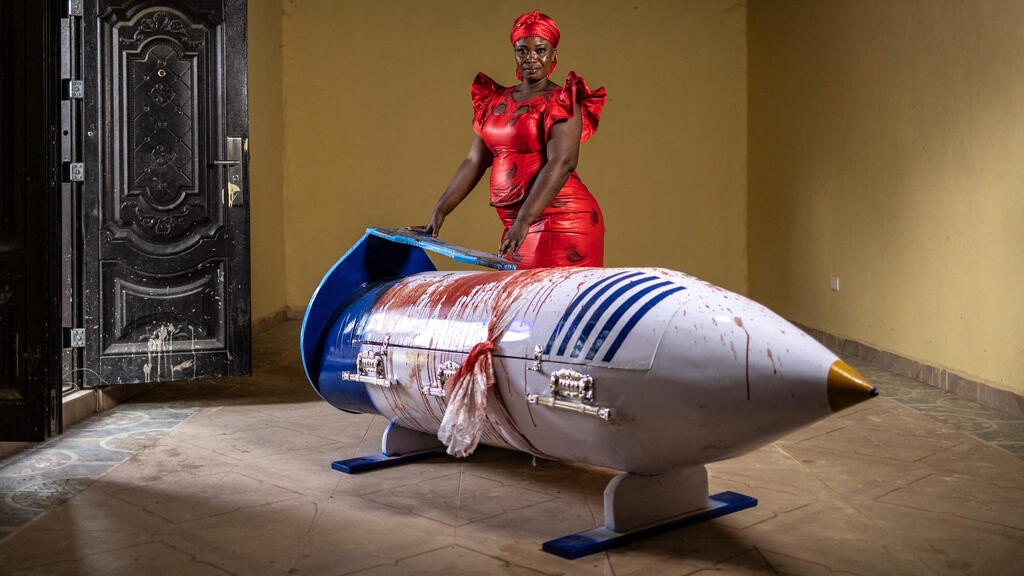
Elizabeth Blankson, a relative of late teacher Samuel Komi Tetteh, stands beside his pen-shaped coffin, marked with the blood of a slaughtered sheep
(Photo: Olympia de Maismont/AFP)
At his funeral on the outskirts of Accra, Ghana’s capital, the brightly painted wooden instrument stood among vivid red flowers, a portrait of the 40-year-old musician and mourners gathered beneath awnings to escape the sun.
To an outsider, the scene might seem unusual. But in Ghana, particularly among Ga communities around Accra, so-called figurative or fantasy coffins have long provided a way of celebrating the life, profession and identity of the dead.
Fishermen may be buried in giant fish or canoe-shaped coffins. Farmers can be laid to rest in cocoa pods or chickens. Drivers are buried in cars, religious figures in Bibles, pilots in aircraft and footballers in enormous boots.
For those whose passions were less occupational, almost anything can become a coffin: a beer bottle, an ice cream container, a mobile phone or even a bottle of Coca-Cola.
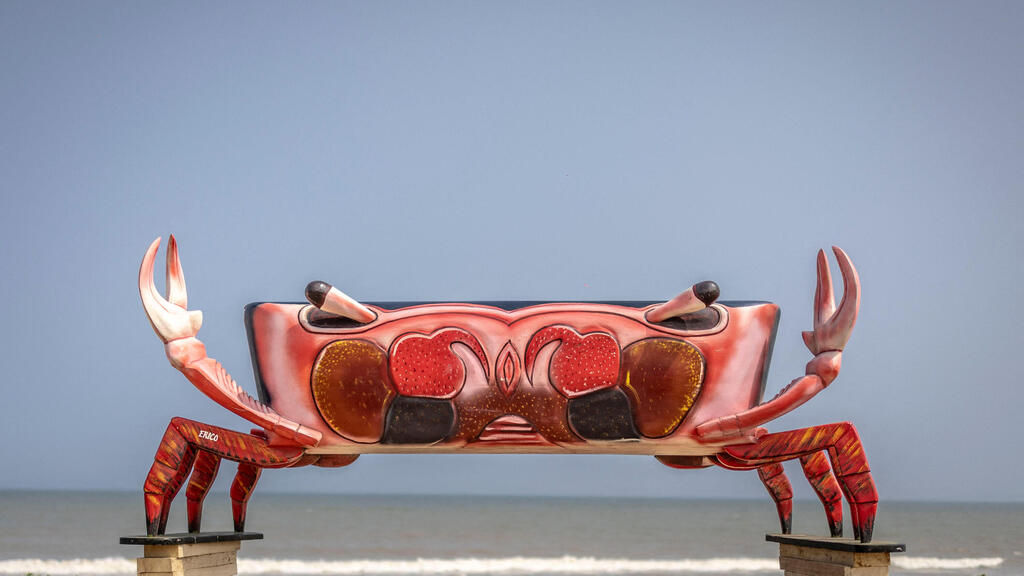
A crab-shaped coffin made for a fisherman
(Photo: Olympia de Maismont/AFP)

Coffin maker Lawrence Anang, 26, beside a syringe-shaped coffin commissioned for a doctor
(Photo: Olympia de Maismont/AFP)
Ofori left behind a wife, a young family and a baby born just one week before his funeral. His musical career had been cut short, but even in death, the guitar remained part of his identity.
The coffin was built entirely from wood by Daniel Obele Mensah, a coffin maker known by the cheerful nickname “Hello,” who has spent three decades crafting coffins inspired by the professions, passions and social standing of the deceased.
“Whenever someone commissions a coffin from me that represents the profession of the person who died, it moves me,” said Mensah, 54. “It helps me pay real tribute to the deceased and the family.”
The modern tradition developed among Ga craftsmen around Accra in the mid-20th century, drawing partly on the decorated ceremonial palanquins once used by local leaders.

An airplane-shaped coffin made for the funeral of a pilot, modeled after Ghana Airways
(Photo: Olympia de Maismont/AFP)
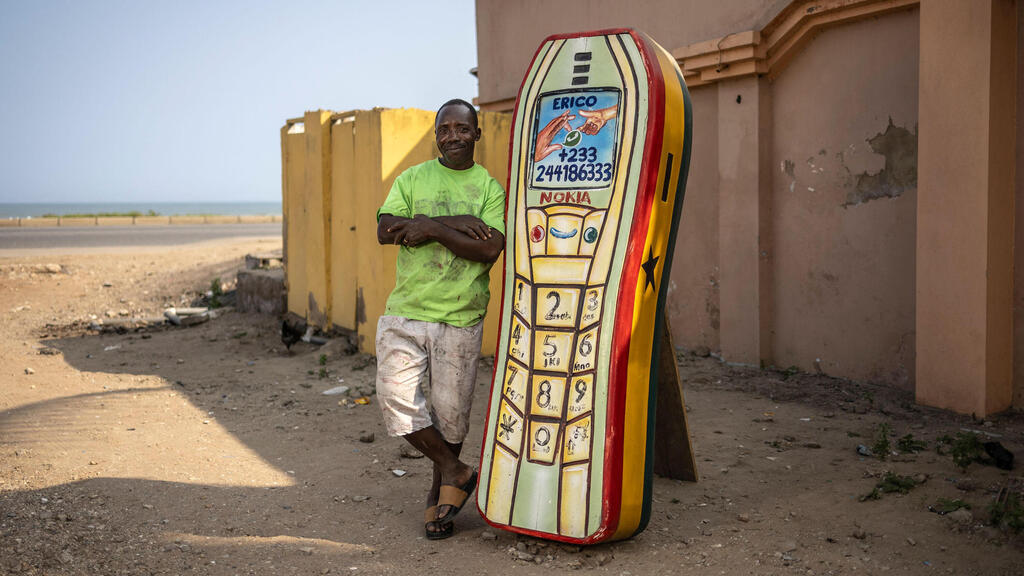
For someone reluctant to part with their phone: a wooden coffin shaped like a Nokia handset
(Photo: Olympia de Maismont/AFP)
Over time, the coffins also developed an unlikely place in contemporary art. They can require meticulous craftsmanship even though most disappear underground almost immediately after being completed.
Only a small number survive in museums and private collections. One guitar-shaped coffin made by Ghanaian artist Paa Joe, for example, has been displayed on loan at the Metropolitan Museum of Art in New York.
A crocodile can cost $900
Samuel Komi Tetteh was dressed in white as mourners arrived before his funeral.
The 83-year-old was known in his community simply as “the teacher” after spending more than half a century working as an educator.
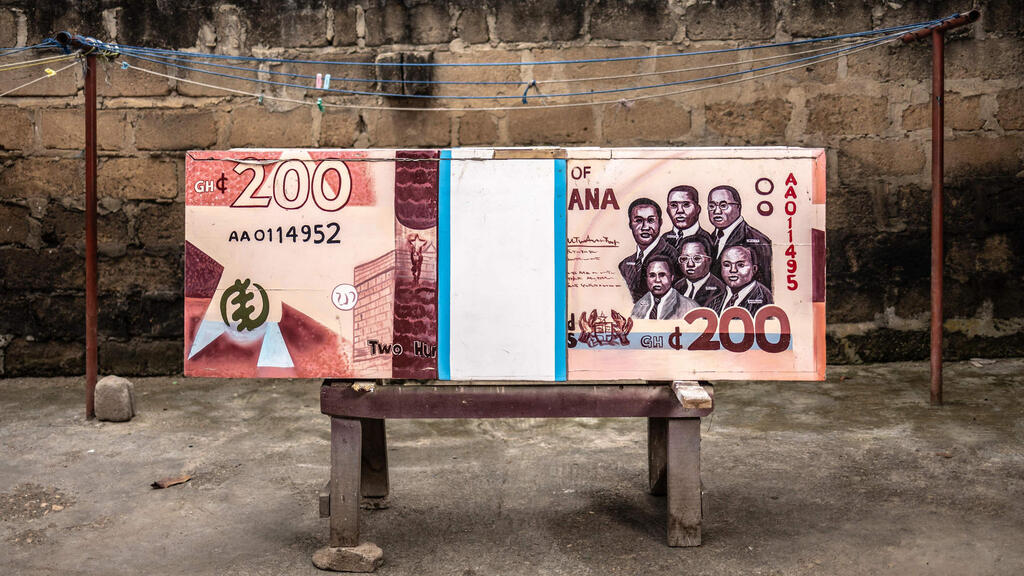
A coffin shaped like a 200-cedi Ghanaian banknote, made for a banker
(Photo: Olympia de Maismont/AFP)

A giant football boot coffin created for a late footballer
(Photo: Olympia de Maismont/AFP)
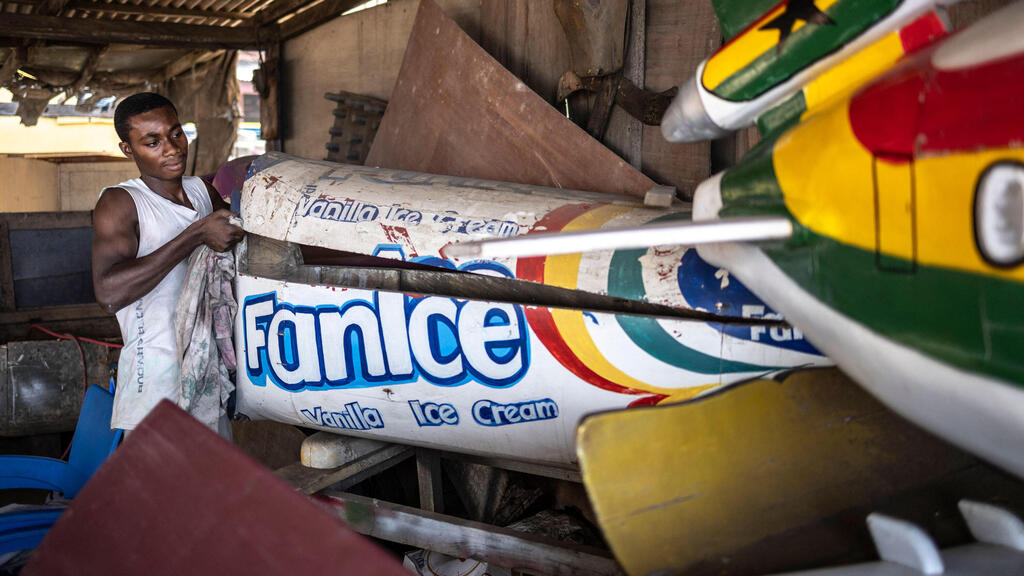
The family said the deceased loved ice cream, so he was buried in a coffin modeled on an ice cream brand
(Photo: Olympia de Maismont/AFP)
The quiet early hours eventually gave way to pounding music as mourners filed past his body. Then came his coffin: a giant wooden pen, its surface marked with blood from a slaughtered sheep.
Mensah had spent about two weeks building it.
Guests had only a short time to admire the elaborate piece before the enormous pen was lowered into the ground and buried.
In workshops across Accra, the lives of dozens of other people are waiting to be translated into painted wood.
Some customers arrive carrying a photograph of exactly what they want. Others simply describe the person who died, leaving the craftsmen to transform the story into a design.
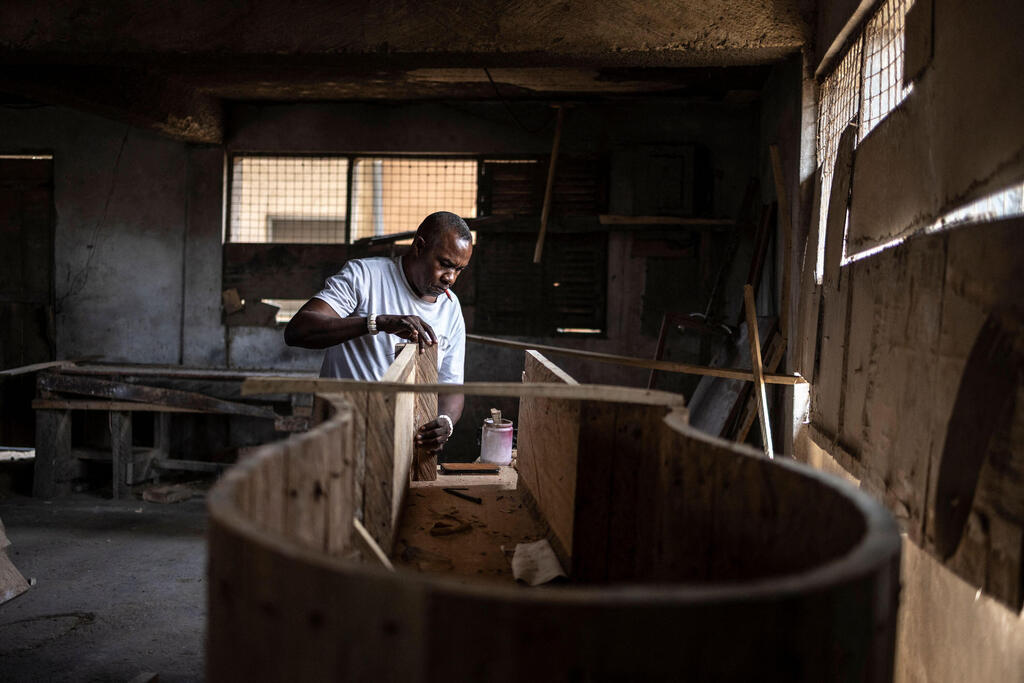
Daniel Obele Mensah works on the giant guitar coffin made for the late musician
(Photo: Olympia de Maismont/AFP)
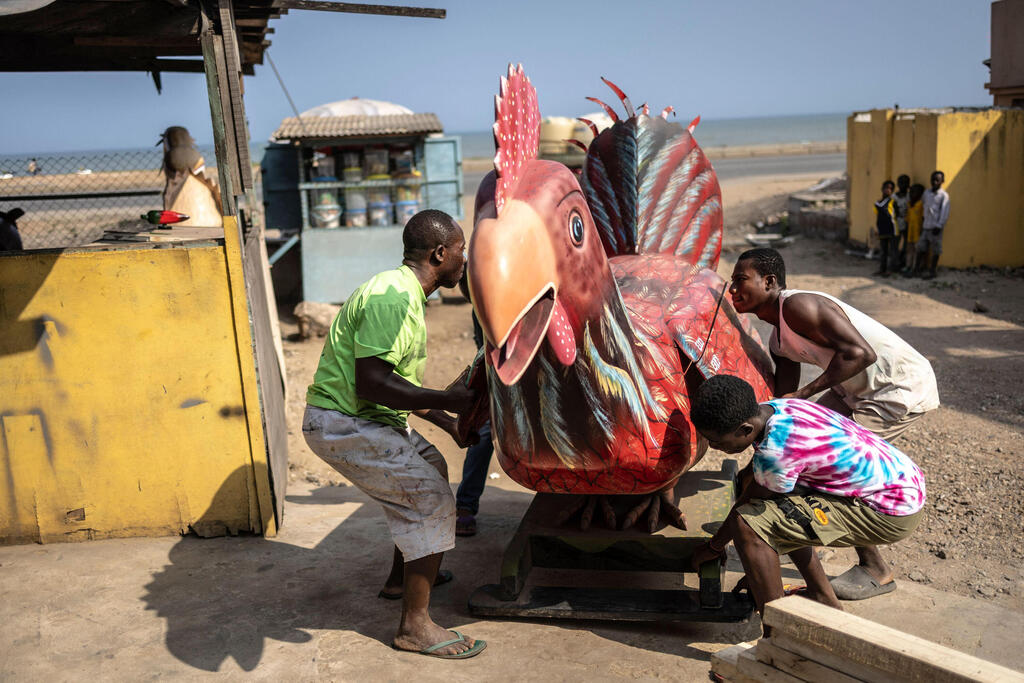
A rooster-shaped coffin made to honor a farmer
(Photo: Olympia de Maismont/AFP)
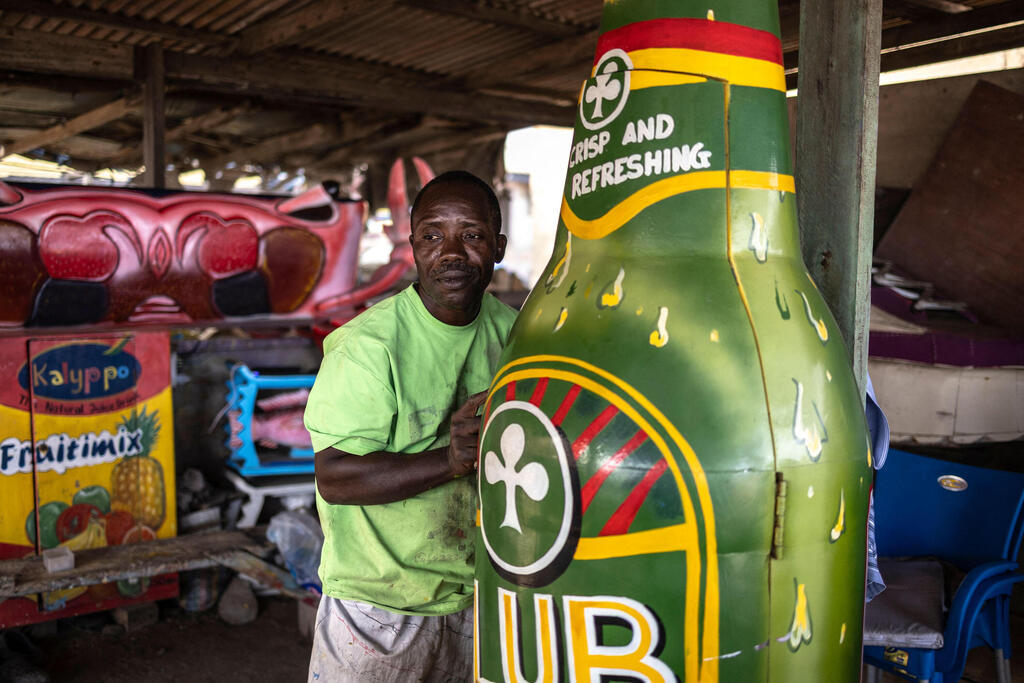
A coffin shaped like a bottle of Ghanaian Club Beer, made for a late bar manager
(Photo: Olympia de Maismont/AFP)
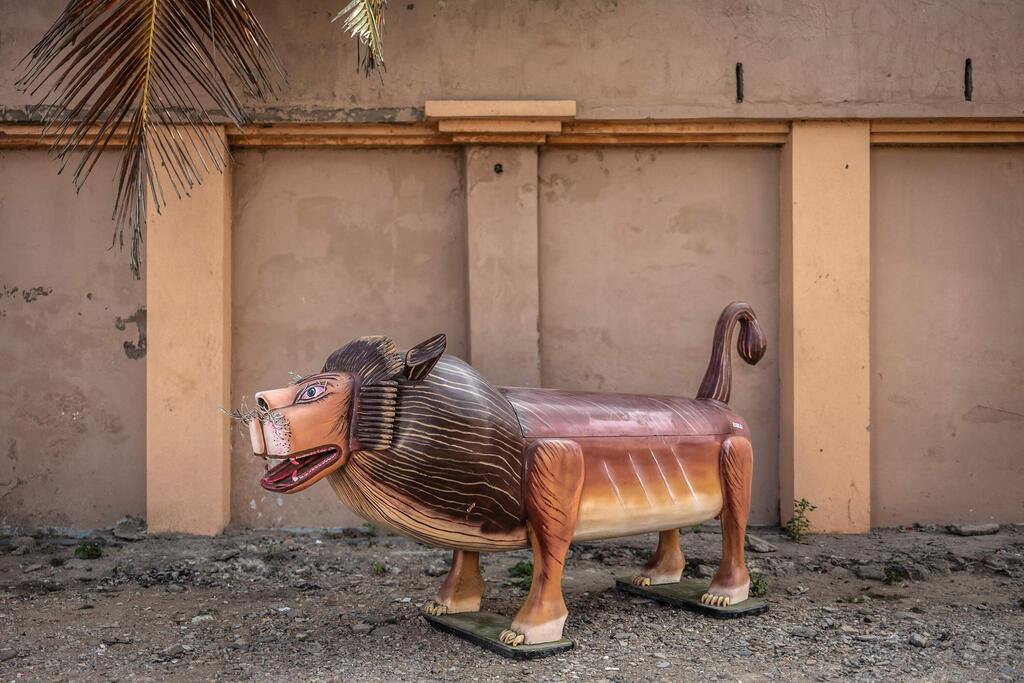
A lion coffin created for the funeral of a traditional chief
(Photo: Olympia de Maismont/AFP)
One of the most complicated creations remembered by coffin maker Lawrence Oko Anang was a crocodile commissioned more than a decade ago for a pastor in Ghana’s Volta region.
His father built the coffin while Anang, then still learning the craft he had begun studying at age 10, helped in the workshop.
Now 26, Anang runs the business with his younger brother.
He said the coffins typically sell for around 10,000 Ghanaian cedis, or about $900.
Pieces intended for exhibitions are more expensive because craftsmen use stronger materials designed to survive for decades under museum lights rather than disappear beneath the soil.
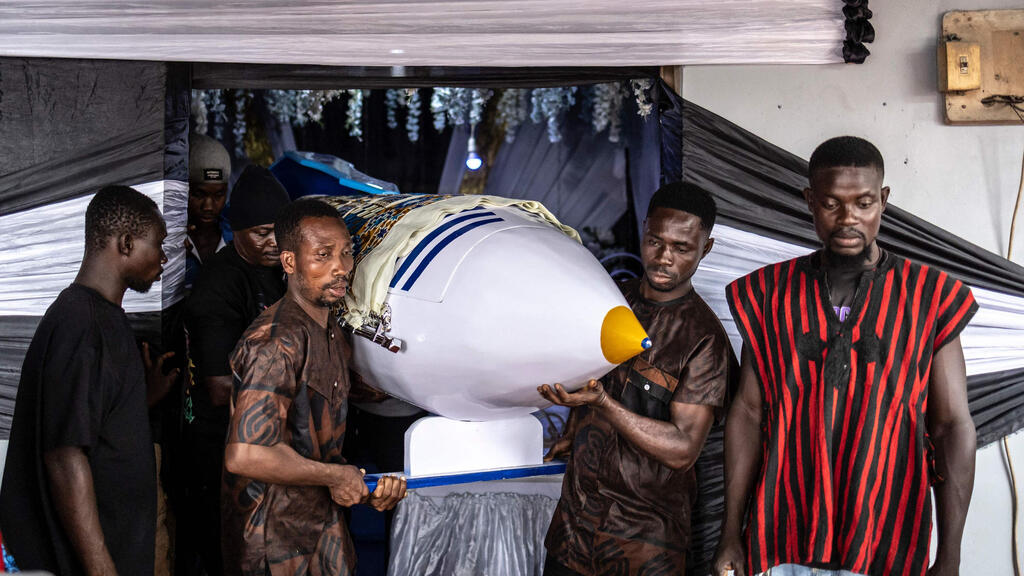
Relatives gather beside the pen-shaped coffin built for Samuel Komi Tetteh
(Photo: Olympia de Maismont/AFP)
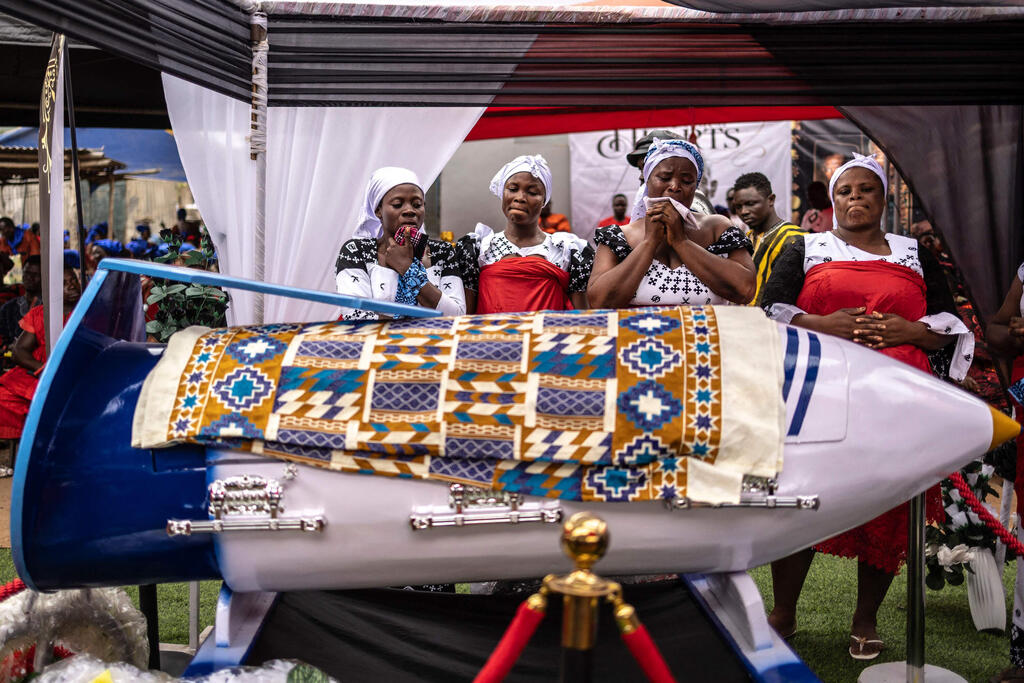
The pen-shaped coffin at the funeral of the teacher, who spent more than 50 years in education
(Photo: Olympia de Maismont/AFP)
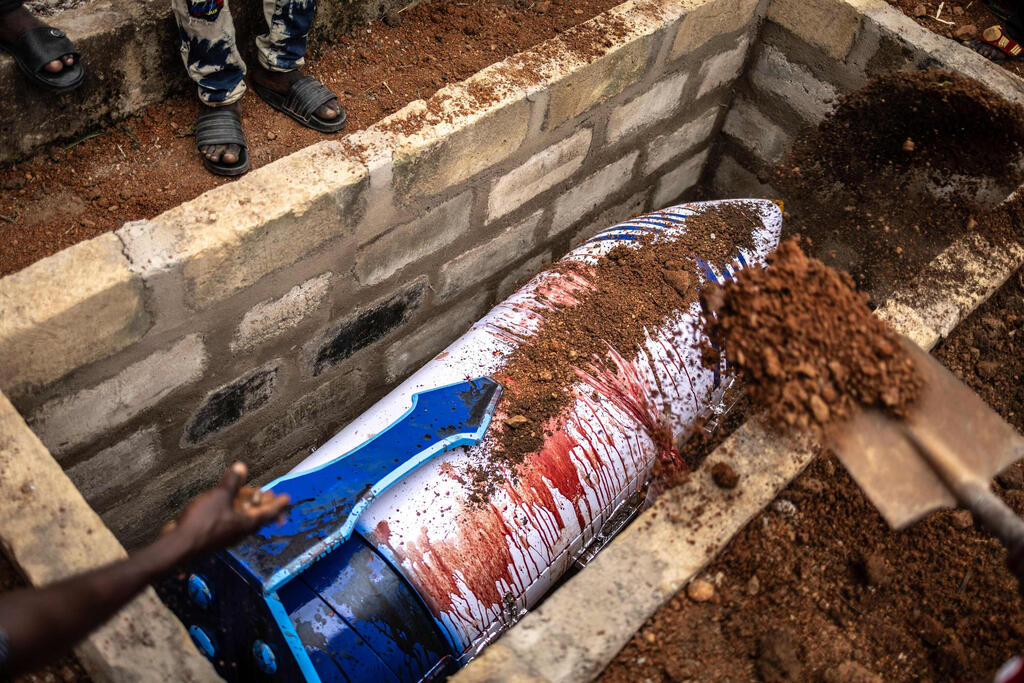
The giant pen is lowered into Tetteh’s grave
(Photo: Olympia de Maismont/AFP)
The trade still depends heavily on skills handed down through families from one generation to the next, though the work has changed considerably since earlier craftsmen relied entirely on hand tools.
Modern equipment has accelerated production, timber supplies have become more reliable and overseas commissions from museums and collectors have helped expand the business.
The ability to transform ordinary pieces of wood into a fish, plane, Bible, pen or guitar also makes the people who produce them difficult to categorize.
Anang considers himself a carpenter, coffin maker and artist all at once.
At Ofori’s funeral, however, such distinctions mattered little.
The people he left behind gathered around the enormous guitar. Then it was slowly lowered into the earth and disappeared from view.
Another life was buried, and another work of art vanished with it.