


"Why does our dad have to leave again and again? Why can't he just come home already?" These are the questions Avigail Greenberg Brand of Jerusalem had to confront during the latest round of reserve duty served by her husband, Alon, a soldier in the IDF's 11th Brigade.
More than three years after the outbreak of the war, as many Israeli families have returned to some semblance of normal life, reservists' families continue to grapple with prolonged absences, uncertainty and mounting exhaustion. For some, each new deployment begins before they have had a chance to recover from the previous one.
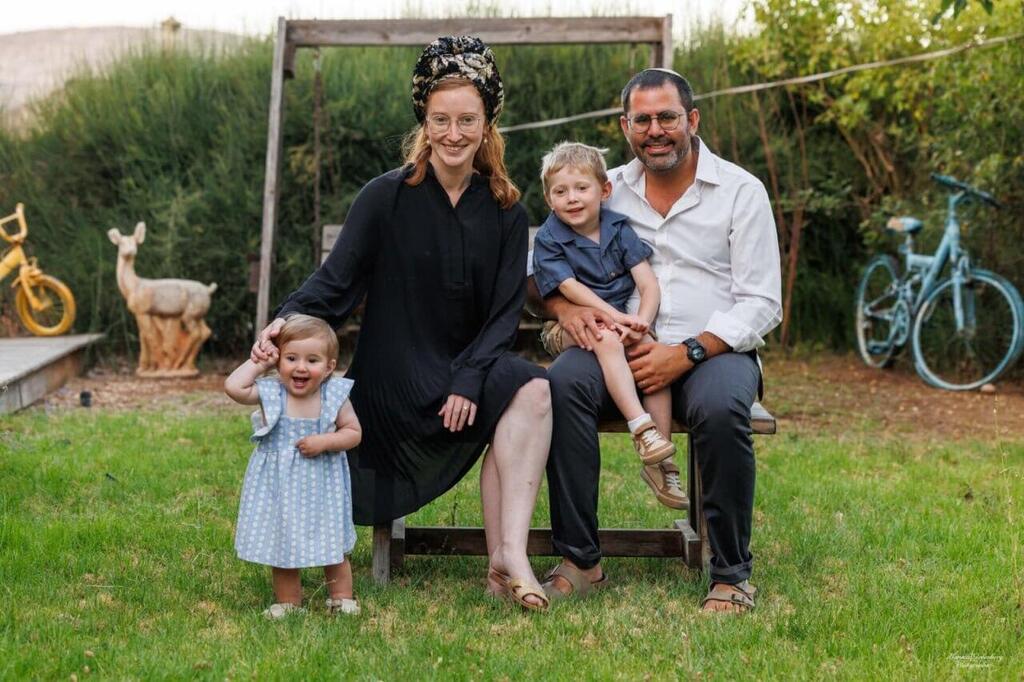
Alon Brand completed his latest round of reserve duty just four months ago, with another call-up already approaching. Each time he leaves their Jerusalem home, he says goodbye to his wife, Avigail, and their children, Hillel, 4½, and Tamar, 15 months old.
Avigail told ynet that the challenges facing the family at home began to emerge after Alon's first deployment ended in early 2024. At the time, however, his reserve duty periods were relatively far apart, and she felt uncomfortable speaking openly about her difficulties while fathers in other families were spending even longer periods away from home.
"Who am I to keep talking about it when others served far more reserve duty days that year?" she recalled asking herself.
But about a year ago, the deployments became more frequent.
"Everything changed. Suddenly, we too were caught in an endless cycle of reserve duty, precisely when the war had become less intense. Meanwhile, life on the home front was increasingly returning to normal, and I felt things were becoming harder, more suffocating, and that people understood us less."
Alongside the constant fear for Alon's safety during each deployment, Avigail must explain to their children the complicated reality of having their father absent for extended periods, without any certainty about when he will return.
"Our oldest was a year and a half old when it all began, and our youngest was born during the war. My husband was called up for reserve duty during my pregnancy, a month after I gave birth and repeatedly since then. It's hard,” she said.
According to Avigail, each deployment brings greater challenges as the children grow older and the emotional wounds from the previous separation have yet to heal.
"Every deployment looks completely different from the one before because the children are growing up. Their understanding keeps developing, including their understanding that Dad is sometimes here and sometimes not. Emotionally, it all accumulates. You never start from scratch. Every deployment adds another layer to everything we've already been through."
During the latest deployment, the children began asking, "Why does our dad have to leave again and again, and why can't he just come home already?"
When Alon returned home for a brief break, Avigail remembers the anger their son Hillel expressed.
“Usually, the anger faded quickly because he was so happy to see his father. But this time, the anger was noticeably present,” she said.
Avigail is no longer surprised when people question why Alon is still serving in the reserves. "There's an illusion of normalcy," she explained.
Although Alon's return home brings relief, the family continues to face challenges even between deployments. “For example, Alon now teaches at a university one evening a week, so he isn't home to put the children to bed. His absence brought back the children's feelings of their father being away on reserve duty. We're still recovering. The difficulties don't simply disappear when he comes home.”
Throughout the war, Alon's reserve service has been a central factor in nearly every decision made by the Brand family.
“Every decision I make about my career and our family revolves around being able to support us while Alon is away on reserve duty and after he returns, when he needs time to catch up on everything he's missed and we have to rebuild our family routine.”
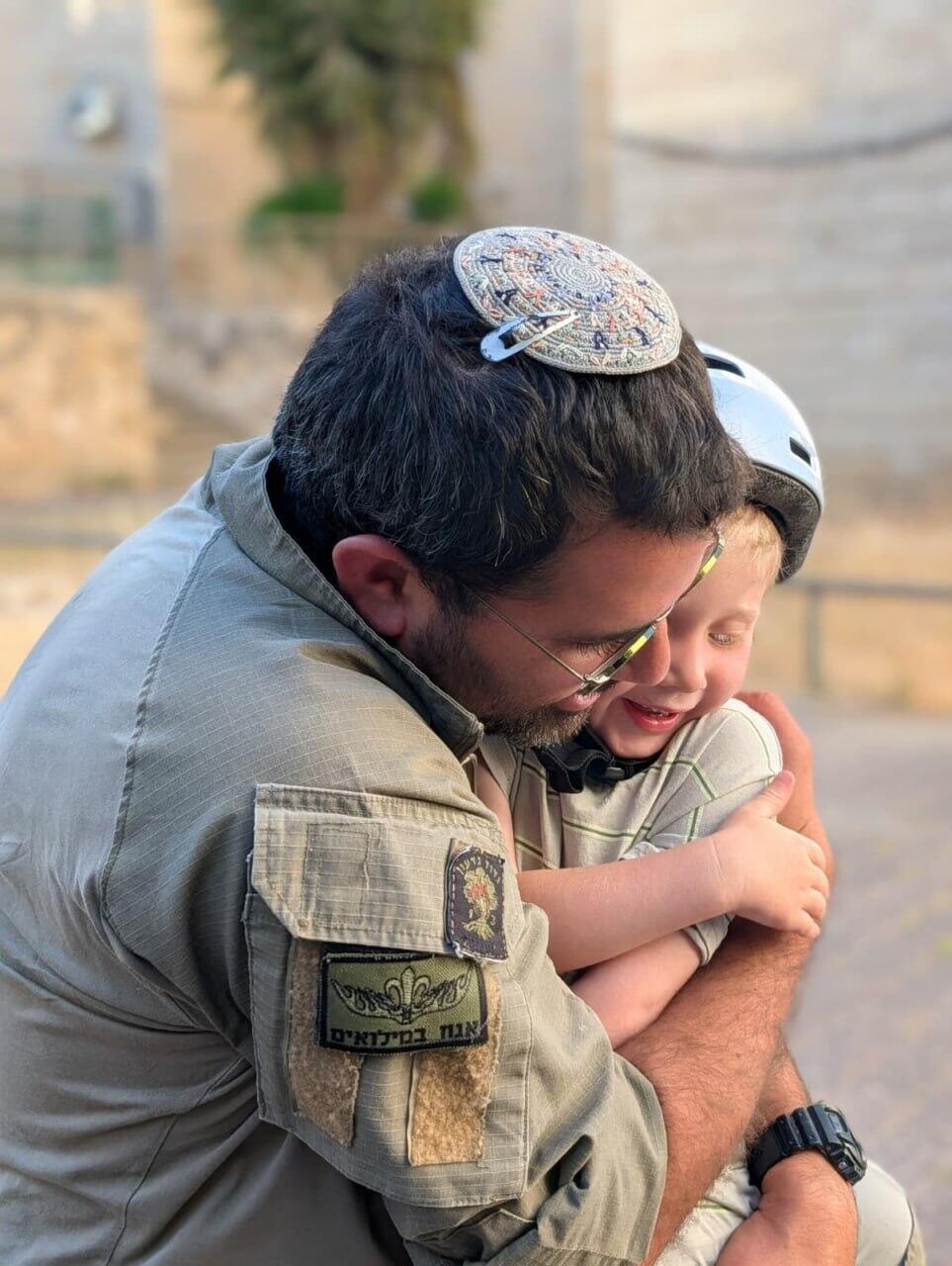
Alon Brand and his son Hillel
(Photo: Baruch Greenberg)
"Every choice I've made over the past two years has revolved around this. Before the war, I worked as a lawyer, putting in more hours than a full-time job. Now I work part time. I have to remain the anchor that supports and holds the household together. Sometimes we switch roles. There were periods when he carried more of that responsibility, but now there's no choice, so it's me."
Following the latest elections, with no clear indication of when a new government will be formed, Avigail said the most pressing need is to unite Israelis who identify with Zionism and serve the country, ensuring they play a leading role in national decision-making.
"The urgent task is to unite the Zionist Israelis that serves the country and put it at the forefront of national decision-making. Of course, all citizens of the country are equal, and cooperation is always welcome. But those who lead and make the hardest decisions should be the ones carrying the burden.
"There are various forms of autonomy that we've allowed to develop within the country, and now we need to address them. Ultimately, it all comes down to this fundamental issue: The Zionist Israelis needs to learn how to join forces."
In her view, elected officials must immediately address the issues facing those who serve in the military. "We must bring additional segments of the population into military service so the IDF can expand its manpower," she said.
"At the same time, we need proper governance, with functioning government ministries and elected officials who work for us. We need to consider which disagreements we can put aside for a while and focus on strengthening the foundations of our country, so we will be stronger in future conflicts, both militarily and economically.
“To me, these two issues go hand in hand. The same Zionist Israelis who serve in the military also keep the economy running, and they need to work together to address these challenges.”
Despite the difficulties, Avigail wanted to end on a message of pride. "We are proud to be part of the reservist families. It is a privilege to protect our country and to be among those who do not stand by. Israel is our home, and we will continue giving everything we can to make life in this home better."
'We feel invisible'
Tsofnat Shechter of Pardes Hanna is a mother of four: Shoham, 7½, Yehuda, 5½, Maayan, 2½, and Raam, 9 months old.
Her husband, Elishiv Haim, serves in the IDF's 9th Brigade and has completed 450 days of reserve duty since the war began. “Families left behind at home feel invisible. At the beginning of the war, everyone had the strength and energy to support us. People recognized what the reservists, their wives and children were going through. Now they've forgotten about us.”
"Nobody cares about us anymore. It's become routine. People are surprised to hear my husband is even being called up for reserve duty."
Shechter said she wants the public to recognize the challenges that reservists' wives and children continue to face, even in everyday life. "It's important to me that people see us, the women and children, and understand that everyday life is hard for us too.
"We organize our entire lives around his reserve duty. When he's away, it's difficult. When he comes back, we have to readjust to living together. And when he comes home, he brings the emotional weight of his service with him, and we have to deal with that too.
"It affects our marriage, our family, simple everyday decisions and major ones, like careers and making a living.
"It affects our family life too. He was away for most of my pregnancies with our two youngest children, and the fact that he made it to the delivery room at all was a miracle. You feel like you have no one to lean on."
Shechter recently posted a video describing the challenges she faces. "I received hugs, love and apologies. Some women thanked me for giving voice to what they're going through," she said.
But she also recalled hurtful comments she had received in the past. "People said reserve duty was about the money. You know what? Take all of it and give me back my husband, my peace of mind, my life. I don't need any of it."