

Amid all the noise, arguments, political battles and the constant sense that Israeli society is locked in an internal war, there is another story as well. It is less loud, far removed from the Knesset and the television studios and, in my view, it is one of the most important stories in Israel since October 7: the story of the younger generation.
After nearly three years of war, it is precisely Israel’s teenagers who are offering no small reason for optimism. They volunteer, sign up for a year of national service, join pre-military academies, seek to prepare for the army and want to perform meaningful service. Above all, many of them understand that the country is living through a period in which it is not enough merely to talk about responsibility. You also have to take it. It is almost like a parallel universe.
Since October 7, war is no longer something they know only from textbooks. Teenagers have seen communities evacuated, hostage families, funerals, reservists returning to the front again and again and the ongoing fighting. How have they responded? Since the war began, demand among teenagers to join pre-military academies has jumped by about 50%, while demand for those programs, for gap-year service programs and for combat service in the IDF has reached an all-time high.
Since the start of the war, 32 new pre-military academies and branches have been established. About one-third of their activity centers are located in the Gaza border communities, along the northern border, in the Jordan Valley and in outlying areas.
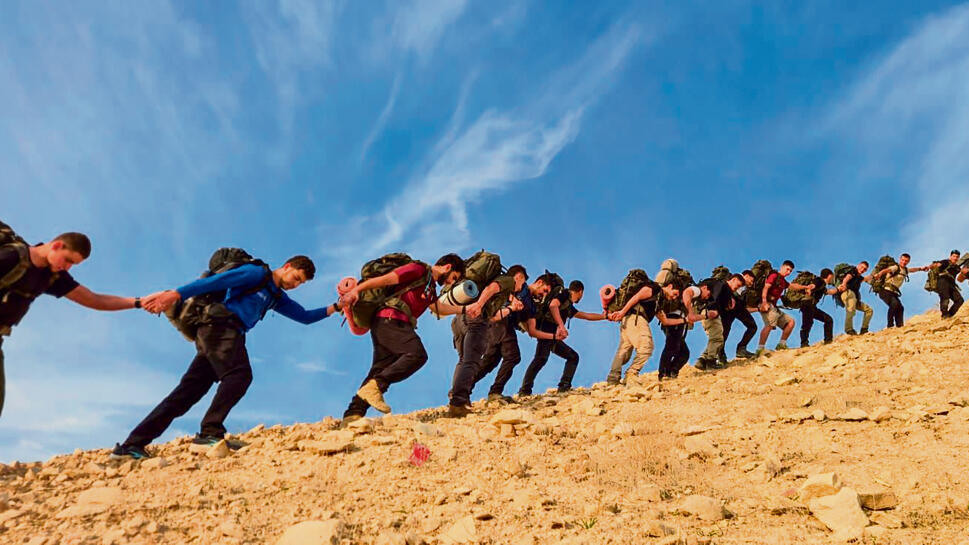
Pre-military preparatory school students train for conscription: A generation that understands the magnitude of the hour
Israel currently has 69 pre-military academies with 122 branches, attended by about 6,700 young men and women. Alongside them are some 3,700 young people in year-of-service programs, around 2,400 in six-month programs and about 2,600 in hesder yeshivas, which combine Torah study with military service. Together with other preparatory tracks, roughly 14,000 young Israelis are currently enrolled in programs preparing them for military or national service.
Competition for places in the most sought-after academies is intense. In some, the number of applicants reaches into the thousands, several times the number of available spots.
There is something symbolic about it. At a time when the state evacuated residents from border areas, young people are choosing to go there. To volunteer. To work with local communities. To be close to the places where the greatest disaster in the country’s history took place and to try to become part of their recovery.
It also creates an interesting problem for the IDF. There are tens of thousands of requests to defer military service. If the army’s manpower needs allowed it, more of those requests could be approved. But after nearly three years of war, the IDF needs personnel, especially combat soldiers. Delaying the service of thousands of prospective recruits means fewer soldiers in the immediate term. That is why the option of postponing enlistment is limited.
The story of the “launch” pre-military programs illustrates this best. More and more teenagers have recently sought to prepare for military service, but not all of them wanted or were able to postpone enlistment for a full year.
The IDF identified the demand and developed a response: a short, intensive and focused program lasting three to eight weeks, without requiring a lengthy enlistment deferral.
In the pilot year, 450 teenagers participated in the project. This year, more than 1,200 have already gone through the programs, and the number is expected to rise further.
They train, take part in navigation exercises, meet commanders, learn about military units and roles, work on their physical fitness and mental resilience and arrive at the army better prepared.
One figure is particularly striking: Motivation for combat service has risen since the start of the war. For example, 96.5% of graduates of the “launch” academies who enlisted entered what was defined as meaningful service. Forty-seven percent serve in combat roles.
For many of them, this stems from a desire to be on the side that protects the country.
Amid all the political battles and the harsh public discourse, there is a younger generation showing responsibility in a different way. Not through slogans. Through actions.
They willingly give the country another year of their lives. They volunteer. They go to the periphery. They go to the northern border and the Gaza border communities. They train. They ask to become combat soldiers. They want to enter the army better and better prepared.
In my view, this is about much more than pre-military academies. It is a story about a generation.
Within the divided, angry and exhausted Israel that has emerged from the war, there are thousands of young people choosing a different path.
They do not ignore the arguments, but they do not allow those arguments to run their lives either. They simply ask where they are needed. And then they go there.
Perhaps that is the optimistic story that should be told at the start of the year. Not that everything is fine. Far from it.
But despite everything, there is a younger generation here that understands the magnitude of the moment, wants to contribute and is prepared to take responsibility.
And in times like these, that is no small thing.