

On the eve of the start of U.S.-Iran negotiations tomorrow (Friday) in Muscat, the capital of Oman, and after a crisis last night stemming from Iran’s insistence that the talks focus on its nuclear program and no other issues, Israel’s security cabinet convened this evening for an accelerated meeting that had originally been scheduled for Sunday.
The discussion took place against the backdrop of Israeli concerns that in the talks President Donald Trump could make concessions and reach a limited agreement that would leave the ayatollahs’ regime intact and focus only on restrictions on Iran’s nuclear program, not on its ballistic missile program or on the support and funding it provides to proxies and militias across the Middle East.
The new footage from the US aircraft carrier Lincoln
(Video: CENTCOM)


Trump: Iran is negotiating
(Video: Reuters)
The negotiations will be led on the American side by special envoy Steve Witkoff and Trump’s son-in-law Jared Kushner, and on the Iranian side by Foreign Minister Abbas Araghchi. According to reports, the talks will be held face to face and, according to Araghchi, will begin tomorrow at 10 a.m. local time (8 a.m. in Israel).
Although Iran claims the talks will deal only with the nuclear issue, The New York Times reported in the afternoon that in practice they will also address the missile program and Iran’s support for its proxies but will “focus” on the nuclear file. Three senior Iranian officials told the Times that this was the compromise that saved the talks, after it was reported last night that they had been canceled due to Iran’s refusal. Shortly afterward, both sides said the talks would proceed as planned. At the same time, Reuters quoted other Iranian officials as saying the American demand is to limit the range of Iran’s missiles to 500 kilometers. Such a range would not allow them to reach Israel, whose closest point to Iran is about 1,000 kilometers away.
The Iranian officials who spoke to the Times, along with another senior official from an Arab country, presented the compromise as one in which both sides, including the Americans, gave something up, against the backdrop of Washington’s insistence, encouraged by Israel, that the talks also address the missile program and Iranian support for militias in the Middle East. And although the report said the focus of the talks would be the nuclear program, if accurate, Iran’s very willingness to discuss its missiles, which it views as an insurance policy preserving its deterrence, would be a significant concession. According to the Times, the sides also agreed that the goal of the talks would be to formulate a “framework” for an agreement.
Gallery
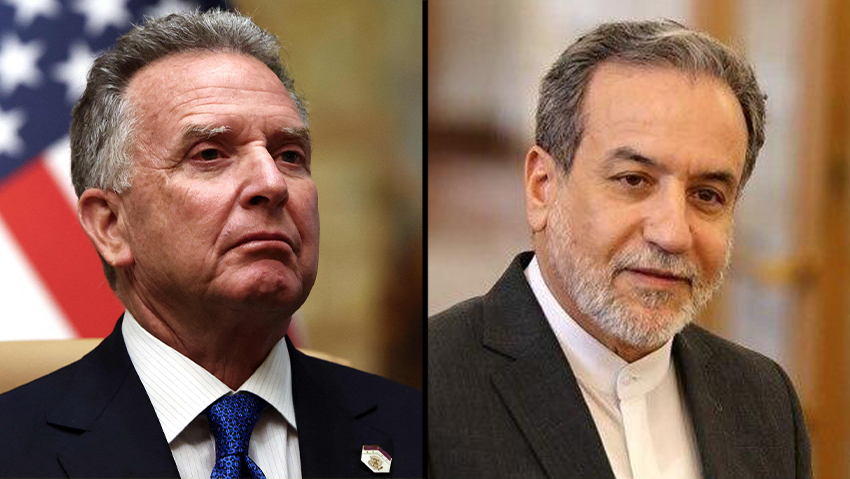
Iranian Foreign Minister Araghchi and US envoy Witkoff, who are set to meet tomorrow in Oman
(Photo: REUTERS/Evelyn Hockstein/Pool )
Tehran quickly denied the Times report. Iran’s state broadcaster said: “The New York Times claimed that Iran agreed to discuss the missile program and armed groups in addition to the nuclear program, in exchange for moving the talks to Oman and excluding representatives of regional states. This claim is an absolute lie. The talks are about the nuclear issue, and the outcome will be clear after the talks are held, not before they begin.”
Publicly, both in negotiations with the United States that preceded the 12-day war and the bombing of Iranian nuclear facilities and in current statements by senior officials in Tehran, Iran has adamantly refused to discuss its missile program. “Let’s not talk about impossible things,” Araghchi said this week in an interview with CNN when asked about the missile program, which Israel badly damaged in the 12-day war but which has since reportedly undergone significant rehabilitation and again poses a major threat to Israel and to U.S. forces in the region. Araghchi called on the United States “not to miss the opportunity to achieve a fair and just agreement that ensures there will be no nuclear weapons.” He added: “This is something that can be achieved even within a short period of time.”
U.S. Secretary of State Marco Rubio said last night that if Iran wants the talks to lead to something meaningful, they must also address the range of Tehran’s ballistic missiles, the funding of terrorist organizations in the region and its “treatment” of the Iranian people. By “treatment,” Rubio was referring to the brutal suppression of mass protests in Iran last month, in which thousands of demonstrators were killed. The crisis that threatened the talks and raised the possibility that Trump would carry out threats to strike Iran began after Tehran backed away this week from initial understandings to hold the talks in Istanbul, with representatives from Arab states including Turkey, Egypt, Qatar and Saudi Arabia invited. Iran later reversed course and on Tuesday asked that the talks be held in Oman, as in previous rounds last year, and that only U.S. and Iranian representatives take part, without Arab participation.
According to the Iranian officials who spoke to the Times, Tehran’s leadership feared that a summit with regional representation would allow Trump to present the negotiations as a kind of “show” and push Iran into a situation in which it was effectively negotiating with the entire region rather than only with Washington. That concern was heightened by the fact that regional states are also worried about Iran’s missile program and its support for militias and terrorist groups and could have demanded that the talks address those issues.
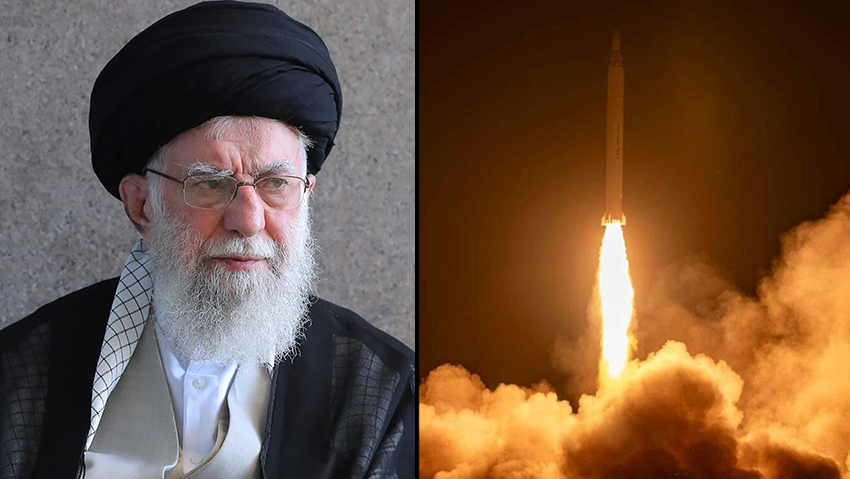
(Photo: Iranian Leader's Press Office - Handout/Getty Images )
The United States agreed to change the location of the talks, but according to Iranian officials, the negotiations nearly collapsed yesterday after Araghchi told his Arab counterparts that if Washington insisted on expanding the talks beyond the nuclear issue, they would be canceled. Reports that the talks had already been canceled led to another plunge in the Iranian rial, already at a record low against the dollar. At that point, Arab states and Turkey reportedly intervened to save the talks. Ultimately, the compromise described by the Times was reached, under which the talks will focus on the nuclear program but also include the missile issue and support for militias.
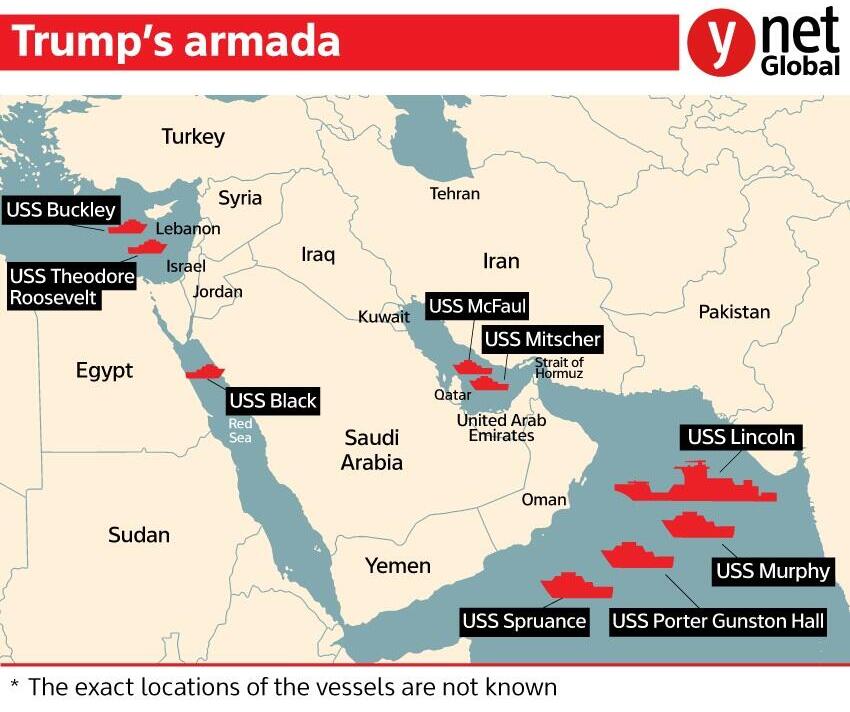
Meanwhile, the U.S. military on Thursday afternoon released the first footage from the aircraft carrier USS Abraham Lincoln since it shot down an Iranian drone two days ago that had approached “aggressively” while the carrier was about 800 kilometers from Iran in the Arabian Sea. The footage, shown in time lapse, depicts aircraft landing on and taking off from the carrier, which the United States has sent to the region along with eight destroyers as part of what Trump has described as a “big, beautiful armada.” In a post on X accompanying the video, U.S. Central Command said sailors aboard the USS Abraham Lincoln are trained to work as a team to launch and recover aircraft safely and on schedule. Trump, speaking at a Christian religious event in Washington, said Iran is negotiating with the United States because it does not want to be harmed.
Trump's armada
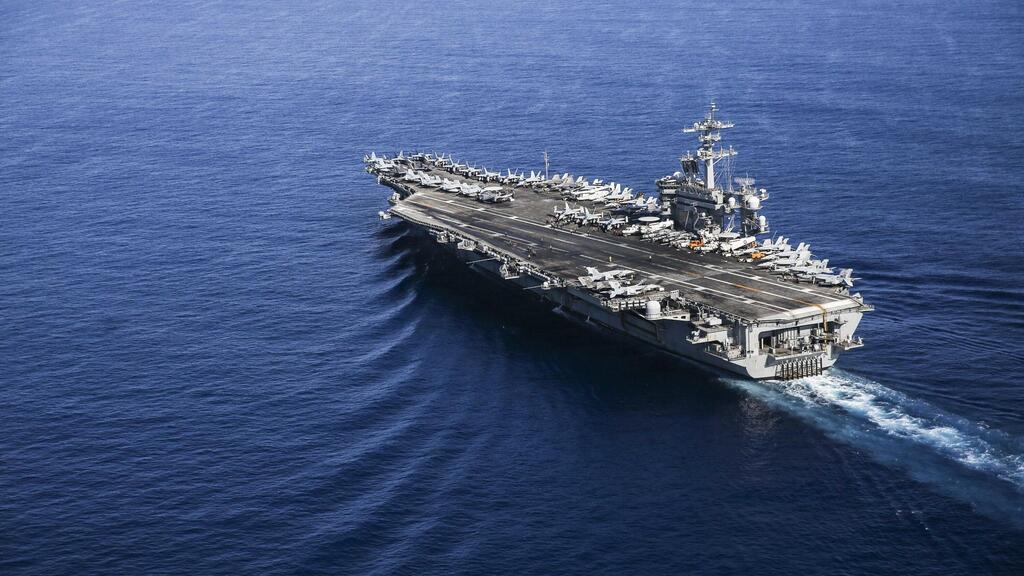
The US aircraft carrier Lincoln
(Photo: US Navy)
Danny Citrinowicz, a research fellow in the Iran Program at the Institute for National Security Studies and a former head of the Iran desk in Israeli military intelligence, told ynet that the United States will “do everything” to prevent the talks from collapsing. He said Washington fears a confrontation with Iran that would lead to a “no-win campaign.” He outlined three scenarios: “The first: tomorrow is the first and last meeting. The second: tomorrow is the first meeting and the sides agree to meet again. The third: tomorrow a statement is issued that the sides agreed to calm the situation and move toward an agreement. I cautiously assess that because everyone fears an explosion, at least option two will be achieved.”
“If there is an agreement, it will be on Iran’s terms. The Iranians will give something, they will give the 440 kilograms of enriched uranium and the return of inspectors and perhaps they will also agree to a regional consortium for enrichment, but the significant concession will be by the Americans,” he said, referring to Iran’s stockpile of enriched uranium prior to last year’s bombing of its nuclear facilities and to a compromise proposed in talks last year to establish a regional consortium including Iran and Gulf states to enrich uranium for energy production outside Iran.
“Either they will give in or they will have to strike, and that is an event I am increasingly convinced the Americans do not want, certainly not now, because they understand what a complex situation they would be entering. This time there is also no surprise, and there is involvement by mediators.”