

Iranian media reported Sunday that Tehran’s delegation to negotiations in Switzerland was weighing how to respond to fresh threats from U.S. President Donald Trump, after he warned Iran it would be hit harder if it failed to restrain Hezbollah in Lebanon.
Iran’s Fars news agency, citing an informed source, said Trump’s threat had halted the negotiations in Switzerland and placed their continuation in doubt. PressTV reported that Tehran had lodged a formal protest with the Americans, while Iran’s state broadcaster said it was not yet clear whether talks with the United States would continue or be stopped.
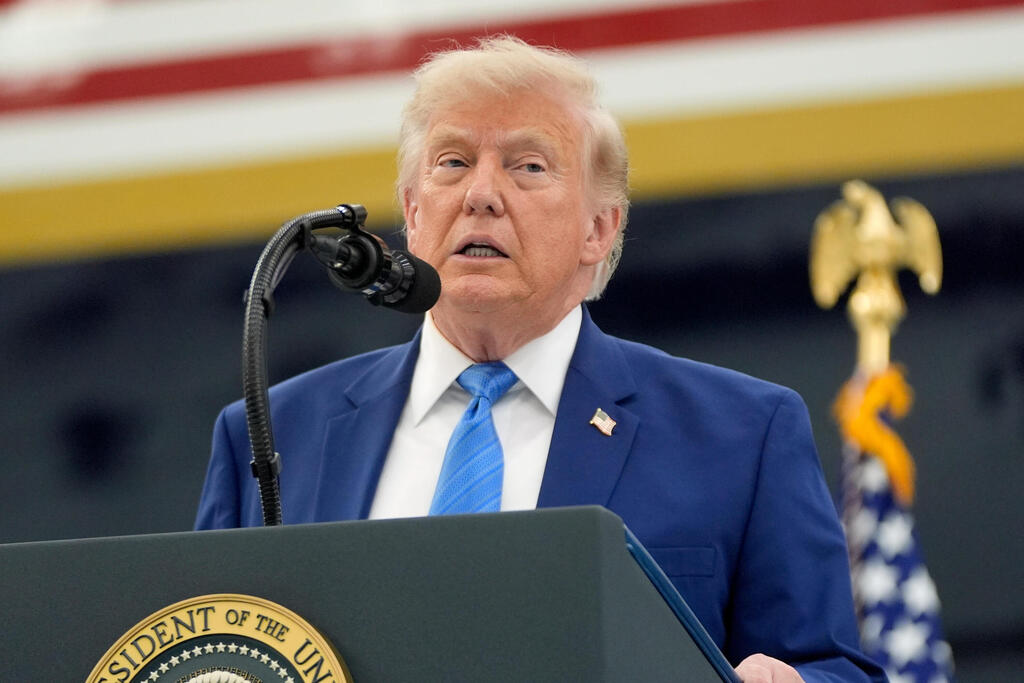
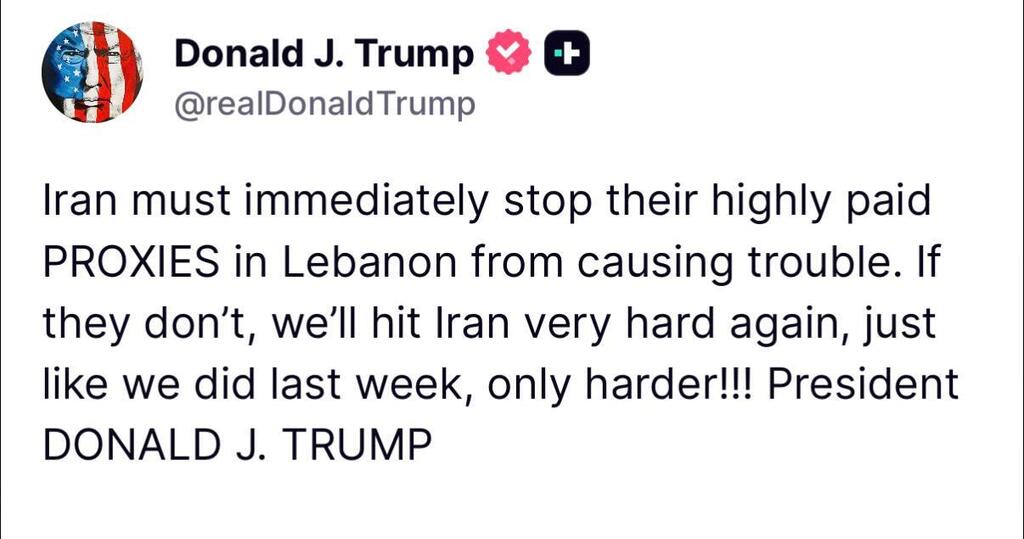
Trump's threat
(Photo: Truth)
The warning came after Trump spoke to Fox News following the start of the Switzerland talks. He threatened Tehran if the sides failed to reach an agreement, saying Washington could take control of the Strait of Hormuz, impose a tariff on passage through the key shipping route and claim part of the oil moving through it.
Minutes later, Trump issued another warning on Truth Social, writing: “Iran must immediately stop their highly paid PROXIES in Lebanon from causing trouble. If they don’t, we’ll hit Iran very hard again, just like we did last week, only harder!!!”
Ebrahim Rezaei, spokesman for the Iranian parliament’s National Security and Foreign Policy Committee, dismissed Trump’s warning, saying the time for “empty threats” had passed. If the U.S. had been able to take control of the Strait of Hormuz, he said, it would have done so during the war.
Mohammad Bagher Ghalibaf, speaker of Iran’s parliament and head of the Iranian delegation in Switzerland, also responded sharply.
He said the Americans should consider whether their threats had achieved anything other than bringing talks to a dead end, adding that Iran did not take those threats seriously. He warned U.S. officials to be careful with their statements and said Iran’s armed forces were ready to respond.
Vance and Iran’s foreign minister in the same room in Switzerland


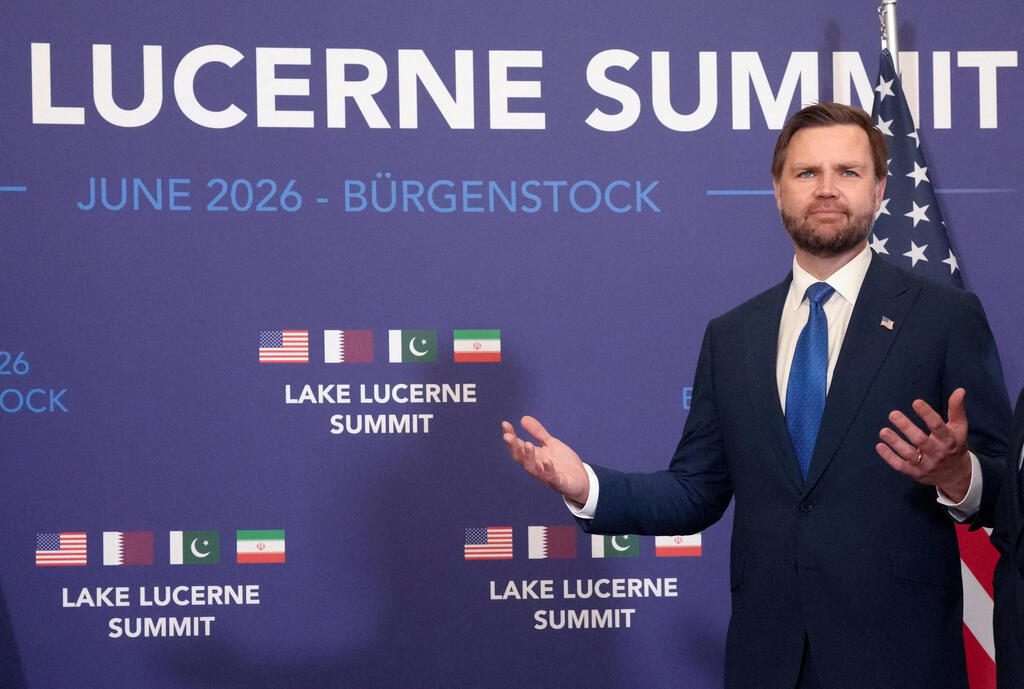
JD Vance
(Photo: REUTERS/Nathan Howard/Pool )
The latest escalation came as negotiations between the United States and Iran opened at the Bürgenstock resort in Switzerland, aimed at ending the war. The delegations, led by U.S. Vice President JD Vance and Ghalibaf, first met with mediators from Qatar and Pakistan.
Iranian Foreign Minister Abbas Araghchi was seen in the same room as Vance. Fars later reported that the first round of talks had ended after two hours.
Vance said Trump had given the U.S. delegation authority to seek a diplomatic solution across a wide range of issues and had asked them to “turn over a new leaf” in ties with the Iranian people. He said the sides were trying to achieve lasting change in the Middle East, arguing that Iran had been a central driver of regional instability but that major progress had been made in recent hours.
On Lebanon, Vance said there had been significant progress over the past two days toward preserving the ceasefire between the sides.
The talks are being mediated by Pakistan and Qatar. Pakistani Prime Minister Shehbaz Sharif and Qatari Prime Minister Mohammed bin Abdulrahman Al Thani also attended the summit.
Sharif said intensive efforts had led to the meeting between Washington and Tehran and described it as a major day that could lead to global peace. Al Thani said the meeting’s importance was widely recognized, though the real celebration would come only if a final agreement was reached.
At the end of the first round, Iran’s state broadcaster reported that, contrary to claims by some foreign media outlets, Iran’s nuclear program was not discussed during the first 80 minutes of the talks. It said the discussions focused on implementing Clause 13 of the memorandum, with priority given to Lebanon.