

Iran said Tuesday evening it had launched what it described as a “decisive” retaliatory operation against U.S. targets while American strikes on Iranian territory were still underway.
Iranian reports said missiles were fired toward U.S. bases in Jordan and claimed an American MQ-9 military drone was shot down over Iran.
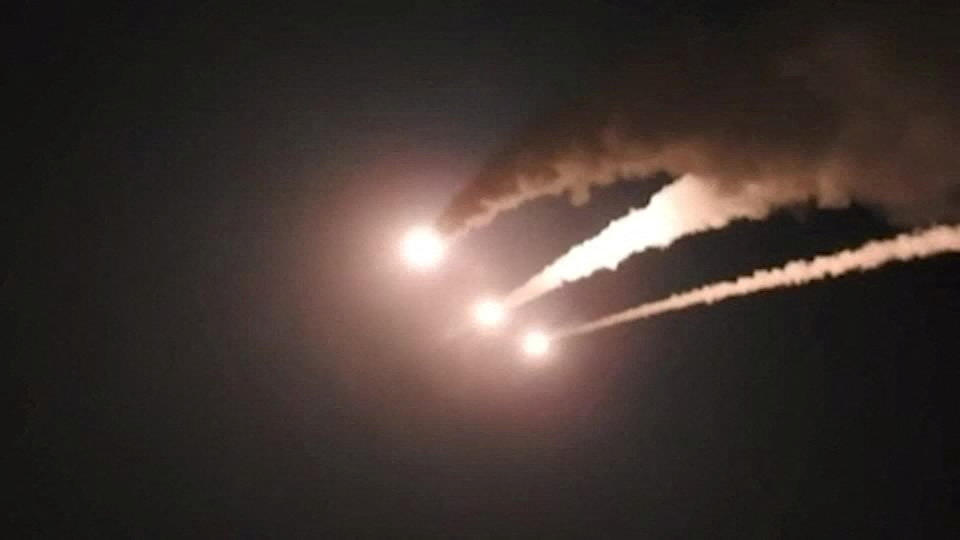
The Islamic Revolutionary Guard Corps said U.S. forces had struck locations along Iran’s southern coast, including civilian sites, and that its forces had begun responding. In what it described as the first action of the retaliation, the IRGC said it had downed an MQ-9 drone.
Explosions were also heard in Eilat, following the launch of interceptors targeting Iranian missiles launched towards the city of Aqaba on the Israel-Jordan border. Residents of the city reported that they detected interceptors being launched from the city area towards Jordan.
In Jordan, authorities reported shortly before 11 p.m. that alerts had been sent to residents’ mobile phones, including in Aqaba, warning that they could be in danger. “The area where you are located may be exposed to falling debris. We ask you to remain calm and seek shelter in the nearest building or stay inside your vehicle,” the Jordanian warning said. According to reports, Jordanian air defense systems intercepted missiles in several parts of the country. Sirens sounded across Jordan at 11:15 p.m. The Islamic Revolutionary Guard Corps said the target was the Tabaqin camp on the Gulf of Aqaba coast.
Interceptors launched from Eilat toward Jordan


Jordan later said 13 ballistic missiles had been launched from Iran, with air defense systems intercepting 10 of them. The remaining three, according to the Jordanian military, exploded in areas “far from population centers.” At the same time, two U.S. officials told Reuters that there were no casualties among forces stationed there. Reuters noted that there was no official confirmation of an attack on a U.S. base in Bahrain.
The United States announced that the wave of strikes had ended at 1:33 a.m. “We struck IRGC targets, including air defense systems, radars, naval assets, facilities, mine-laying capabilities and communications sites,” U.S. Central Command said.
Explosions were reported at numerous locations across Iran, including the port city of Bandar Abbas on the Strait of Hormuz, Qeshm Island inside the strait and the port city of Chabahar in southeastern Iran on the Gulf of Oman. Iranian reports also said Jiroft Airport in Kerman province, in the country’s southeast, had been struck. Explosions were also reported in Jask, another port city on the Gulf of Oman, as well as in Sirik on the Strait of Hormuz and nearby Minab. According to Iranian reports, four civilians attending a wedding were killed in the strike on Sirik. Iranian emergency services said another 50 people were wounded. Another strike was reported in Asaluyeh on the Persian Gulf coast, home to one of Iran’s main energy hubs.
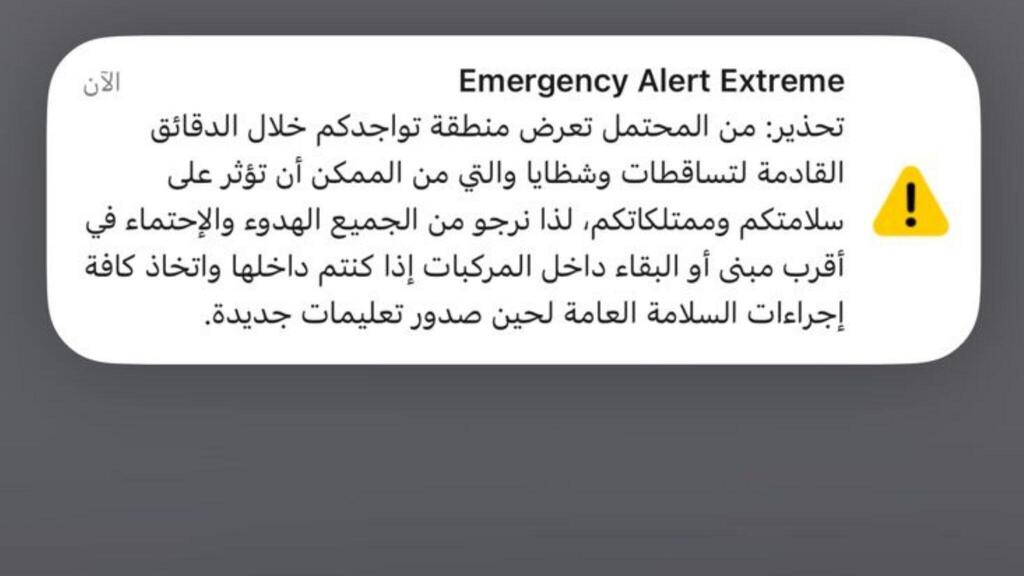
The rocket alert warnings sent to Jordanians
Two Iranian sources told The New York Times that the strikes caused significant damage, without providing details. They said the targets hit included a military base in Bandar Abbas, the perimeter of the airport on Qeshm Island and additional targets in Sirik and Jask.
Minutes after the first reports of explosions, U.S. Central Command confirmed that the strikes were carried out by the United States and said they were aimed at various IRGC targets. “The strikes follow recent attempts by the IRGC to attack commercial shipping in the Strait of Hormuz and U.S. troops stationed in the region,” CENTCOM said.
Iran’s Tasnim News Agency, which is affiliated with the IRGC, meanwhile praised the missile fire. The agency said it was “one of the most extensive Iranian missile attacks against American bases and sites” in comparison with recent launches. “Iran warned that an attack by the American enemy would be answered. The important targets that were struck will be announced later,” the report said.
Following the renewed escalation, crude oil prices jumped about 5% on Tuesday to roughly $90 a barrel, while Brent crude futures surged about 7% to around $94.50. Natural gas prices also rose, with AFP reporting that European gas prices reached levels not seen since 2023.
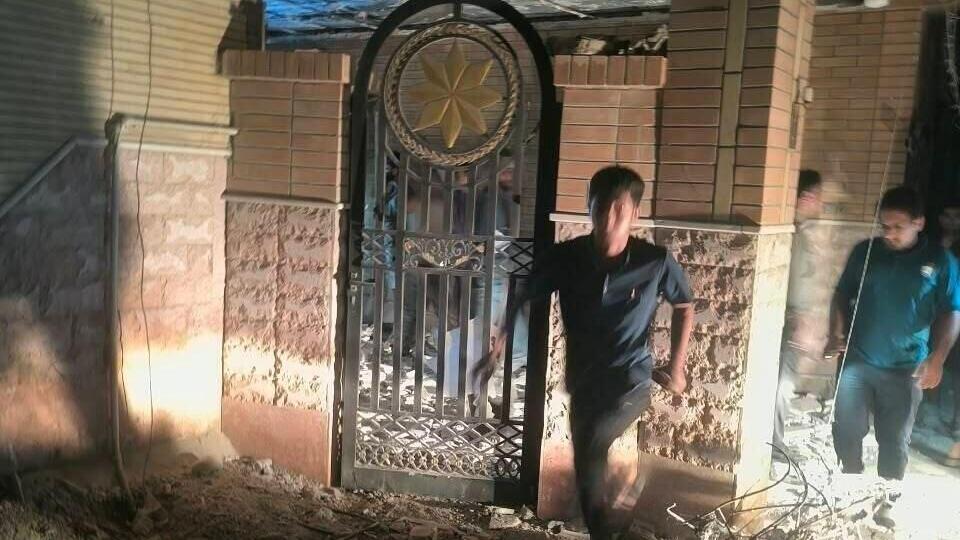
Iran claims this is the site of the American attack on a wedding in Sirik

About 90 minutes after the strikes began, U.S. President Donald Trump said on Truth Social that the United States was carrying out “large and powerful” attacks on Iranian targets near the Strait of Hormuz.
Trump said the strikes were retaliation for what he described as Iran’s failed attempt to lay sea mines in the strait and for the firing of eight missiles at a U.S. military base in Jordan, all of which he said were intercepted.
He warned that any further Iranian retaliation would trigger an attack at “a much harder and higher level,” adding that an even larger strike was still “waiting in the wings.”
“When it is over, there will be very little left of the Islamic Republic of Iran,” Trump wrote.
In an interview with Fox News, Trump issued a similar threat, saying: “If they respond, they will be hit at a much greater level. And if they do it again, they won’t be there.”
He described the Iranians as “crazy and stupid” and said the United States had also struck a radar installation that Tehran had been rebuilding.
“They tried to rebuild their radar because they can’t see anything,” Trump said. “We waited until it was almost completed, and then we hit it.”
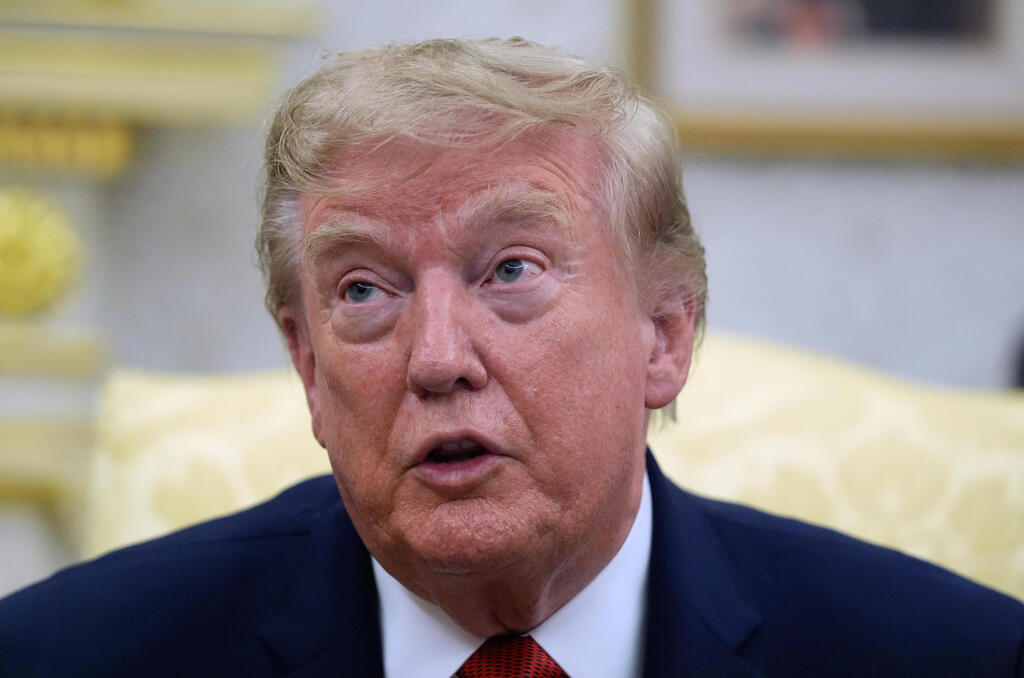
Trump: there will be very little left of the Islamic Republic of Iran
(Photo: Manuel Balce Ceneta/AP)
Trump also expressed deep skepticism about the prospect of another agreement with Tehran, saying: “I think an agreement with them isn’t worth the paper it’s written on. We gave them many, many chances.”
At the same time, the U.S. Embassy in Jerusalem warned Americans in the Middle East that the security situation remained volatile and could escalate unexpectedly, advising heightened vigilance and warning of possible flight cancellations, airspace closures and travel disruptions.
The embassy also warned that U.S. diplomatic facilities, including some outside the Middle East, had previously been targeted and that Iran and groups aligned with it could attack additional American interests overseas.
The latest confrontation comes as Trump has continued to signal that he wants to maintain economic pressure on Tehran rather than return to a prolonged war.
“This is very limited,” Trump told reporters Monday, while arguing that Iran remained under severe economic strain. “That doesn’t mean we won’t hit them. We’ll see what happens.”
Trump had already vowed Monday to “hit hard” after Iranian missile and drone attacks on U.S. bases in Jordan and the United Arab Emirates overnight Sunday.
Those attacks followed an earlier U.S. strike on missile launchers on Larak Island in the Strait of Hormuz.
Washington said the Larak strike was intended to prevent Iran from deploying naval mines in the strait and disrupting tanker traffic moving through the waterway as part of a U.S.-led effort to keep oil flowing out of the Persian Gulf and ease pressure on global prices.
First published: 22:53, 09.01.26