

Israeli Navy Commander Vice Admiral Eyal Harel issued a pointed warning Tuesday to countries seeking to alter the balance of power in the Mediterranean and Red seas, saying Israel was monitoring their actions and would defend its freedom of operation — remarks that appeared aimed in part at Turkey amid rapidly escalating regional tensions.
Harel did not name Turkey in an address at a naval officers’ graduation ceremony at the Haifa naval base. But his references to attempts to change the Mediterranean balance of power came as Israel increasingly views Ankara’s military expansion and naval activity as a strategic challenge.
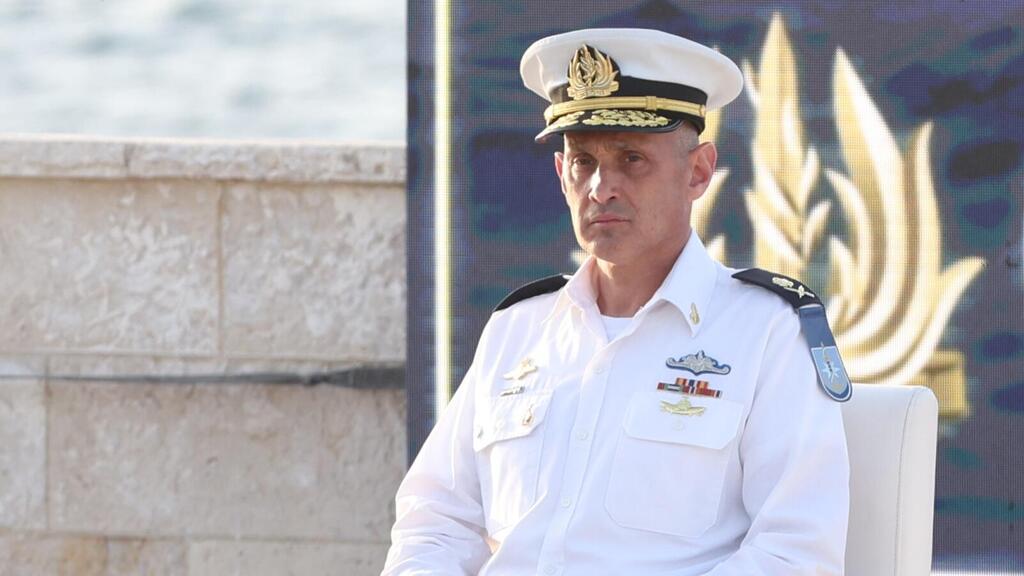
“In the new maritime arena, there is no longer such a thing as a distant front,” Harel said. “To anyone seeking to challenge the State of Israel from the maritime arena and from afar, I say from here: Distance will not provide immunity to anyone who seeks to harm us.”
“The Israeli Navy was built to bring the power of the State of Israel and the IDF even to those who seek to challenge it from thousands of miles away,” he added.
Harel sharpened the warning by explicitly addressing efforts to change the regional balance of power.
“To anyone seeking to change the balance of power in the Mediterranean and the Red Sea, I say: We see the actions, we are monitoring them and we are preparing for them,” he said.
“The Israeli Navy will not accept a reality in which the State of Israel’s freedom of action, or its strategic interests in the national maritime arena, are under threat,” Harel added. “We will be there, and everywhere else, overtly and covertly, to fulfill our responsibility and our mission by every means.”
The remarks come amid a deepening strategic rivalry between Israel and Turkey that has increasingly spilled into Syria and the eastern Mediterranean.
Israel has grown alarmed by Turkey’s expanding military influence in Syria since the fall of Bashar Assad’s government in late 2024 and the rise of President Ahmad al-Sharaa’s government in Damascus. Turkey, which has close ties with the new Syrian leadership, has sought to deepen military cooperation with Damascus.
Last month, Israeli aircraft struck the Abu al-Duhur air base in northern Syria, about 45 miles (70 kilometers) from the Turkish border. Israeli officials said the strike was intended to prevent a Turkish military buildup at the facility, while Turkey denied that it planned to establish a permanent base there. Ankara condemned the Israeli strike as reckless, while Israel accused Turkey of pursuing “dangerous adventures” in Syria.
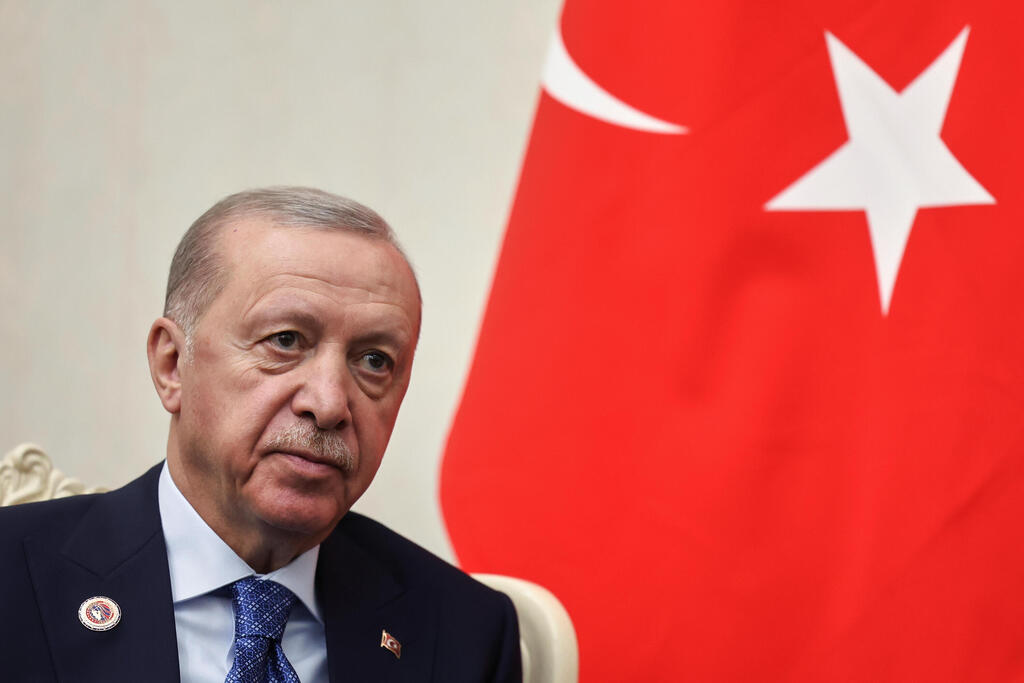
Turkish President Recep Tayyip Erdogan
(Photo: Vyacheslav Prokofyev, Sputnik, Kremlin Pool Photo via AP)
The United States has sought to prevent the rivalry from developing into a direct military confrontation, including through efforts to establish deconfliction arrangements among Israel, Turkey and Syria.
The maritime dimension has also become increasingly prominent. Israeli military officials have been closely monitoring Turkish naval movements around the eastern Mediterranean, including near Cyprus, Greece and Syria, amid concerns that Ankara is seeking to expand its regional reach.
Meanwhile, Israel has moved closer strategically to Greece and Cyprus, both of which have longstanding disputes with Turkey over maritime boundaries and energy resources in the eastern Mediterranean.
Israel and Greece last week signed a landmark 3 billion euro ($3.5 billion) agreement under which Israeli companies will help build Greece’s multilayered Achilles Shield air defense network. The deal, the largest defense agreement between the two countries, comes as Athens modernizes its military amid persistent tensions with Ankara.
Turkey and Greece, both NATO members, remain divided over territorial waters, airspace and maritime jurisdiction in the Aegean and eastern Mediterranean. Ankara has recently renewed warnings over the militarization of Greek islands, while Greece has pushed back against Turkish maritime claims.
Zamir touts navy’s expanding strategic reach
IDF Chief of Staff Lt. Gen. Eyal Zamir, also speaking at the ceremony, focused on the navy’s growing role in Israel’s military strategy and announced that Israel’s sixth submarine, the INS Drakon, was on its way from Germany to Haifa.
“At this very moment, in the depths of the Mediterranean, the INS Drakon, the State of Israel’s sixth submarine, is making its way to Israel,” Zamir said.
He described the submarine as a symbol of the navy’s transformation into “a powerful strategic arm” capable of operating throughout the Middle East and beyond.
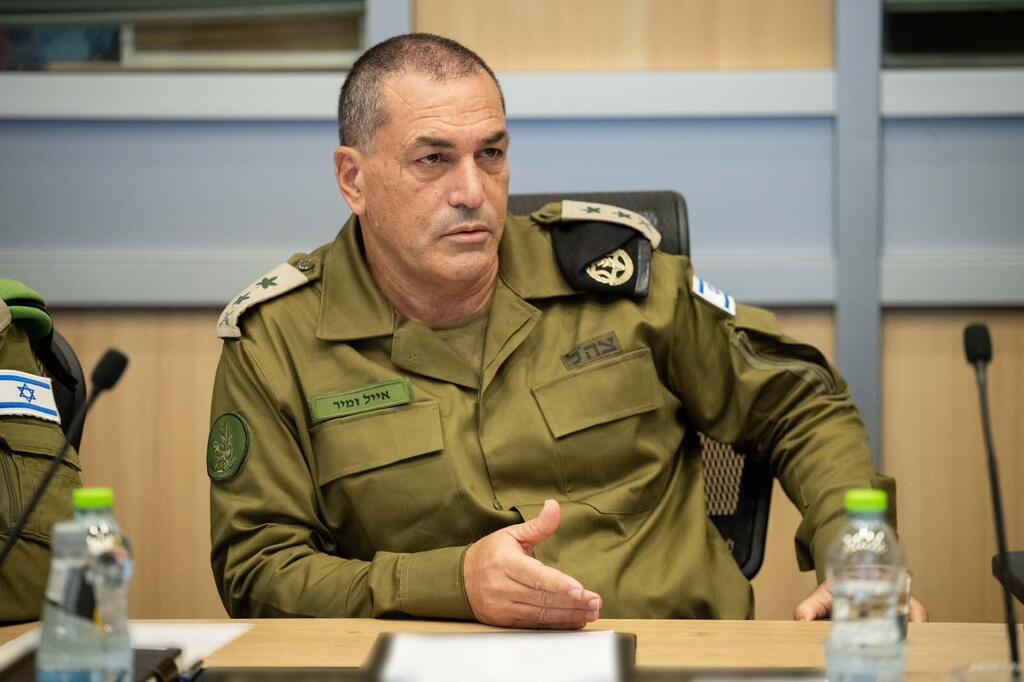
IDF Chief of Staff Lt. Gen. Eyal Zamir
(Photo: IDF)
Zamir said Israel’s experience since the Hamas-led Oct. 7, 2023, attack had fundamentally changed its security doctrine from containing threats to acting preemptively against them.
“We will not allow existential threats from radical enemies to develop, and we will not allow terrorist organizations to establish themselves on our borders,” he said.
Zamir said the navy had played a major role across several fronts during the war, citing operations near Gaza, Lebanon and the Bab el-Mandeb Strait.
Israel, he said, effectively functions as an “island state” because its principal economic connection to the outside world runs through maritime trade, making the protection of shipping routes, ports and maritime infrastructure a strategic necessity.
The military’s multiyear “Hoshen” modernization plan therefore places particular emphasis on naval power, Zamir said. The INS Drakon will be followed by additional advanced systems, including Reshef-class missile ships designed to operate at greater ranges and for longer periods with increased firepower.
Zamir also said the IDF was preparing for a major expansion of autonomous warfare.
He said he had approved the creation of a new military branch dedicated to unmanned systems and artificial intelligence, which is scheduled to be inaugurated during Hanukkah later this year.
The branch will oversee development of robotic and autonomous systems for operations at sea, on land and in the air, Zamir said. Such systems will operate alongside human forces or independently, with the goal of increasing operational capabilities while reducing risks to soldiers.
The navy will receive autonomous systems designed to operate both above and below the surface, he said.
Zamir said Iran and its regional allies had been weakened during the war but remained threats, adding that the struggle over strategic shipping routes and maritime superiority was continuing.
“Shipping lanes are a target, and the struggle for superiority at sea does not stop for a moment,” Zamir said. “We are vigilant and prepared for any development, in every arena.”