


Two nights without U.S. strikes on Iran have brought a measure of relief to the Persian Gulf after 13 consecutive nights of attacks and days of Iranian retaliation. But efforts by Gulf states to forge a common path toward ending the conflict are being complicated by long-standing rivalries that have deepened since the war began.
Officials from Saudi Arabia and the United Arab Emirates have appeared together in recent weeks in an effort to demonstrate reconciliation between the two regional powers. Jordan and representatives of the six-member Gulf Cooperation Council, or GCC, have held meetings at the U.S. State Department and on Capitol Hill, while the council has issued a series of joint statements condemning Iranian attacks.
Gallery
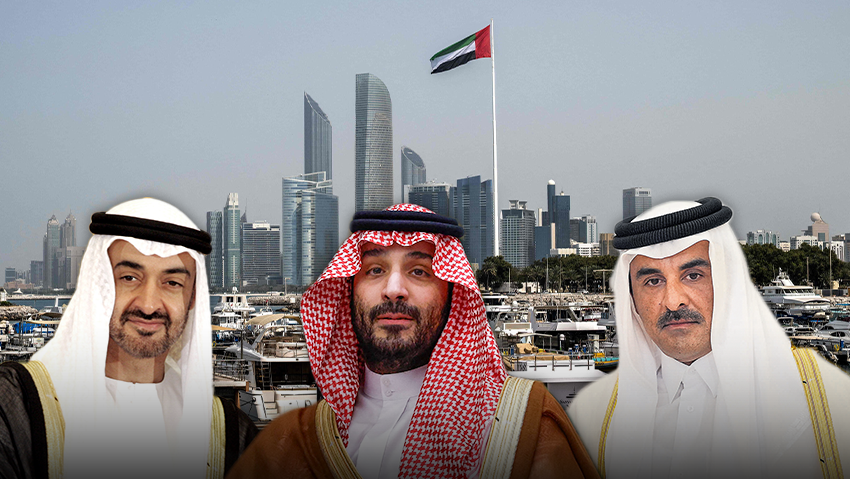
UAE leader Mohamed bin Zayed Al Nahyan, Saudi Crown Prince Mohammed bin Salman, Emir of Qatar Tamim Al Thani
(Photo: Alex Brandon/AP, Evelyn Hockstein/POOL/AFP, Ryan Lim / AFP)
Yet although the countries share a central goal — keeping the Strait of Hormuz open — they differ sharply over how to achieve it, according to an extensive report by Politico.
Those divisions reflect competing economic and strategic interests, including which countries can bypass the strait when exporting energy, whose infrastructure is most closely linked to Iran and which economies have suffered the greatest damage during the crisis.
The GCC, which includes Bahrain, Kuwait, Oman, Qatar, Saudi Arabia and the United Arab Emirates, was established in 1981 amid the Iran-Iraq War. Disputes among its members predated the current conflict, but the war with Iran has brought them more clearly into view.
“They’ve got a lot to get over and the war has exacerbated extant divisions in the Gulf,” David Schenker, who handled Middle East affairs at the State Department during President Donald Trump’s first administration, told Politico.
One of the clearest signs of tension came in April, when the United Arab Emirates withdrew from OPEC. A diplomat from a non-Gulf Arab country said the move angered other states, particularly Saudi Arabia.
“The Gulf will no longer be the same as it was before,” the diplomat said. “The GCC is nonfunctional.”
The divisions among Iran’s neighbors have complicated attempts to negotiate an end to the war or reopen the Strait of Hormuz. Some governments favor a harder line against Tehran, while others are focused primarily on restoring shipping through the strategic waterway, which is a crucial route for global oil and gas exports.
“I don’t think they could bring the war to a close, but they could be more productive in managing the consequences of the war,” said Allison Minor, who served as director for Yemen and Oman at the National Security Council during Trump’s first term.
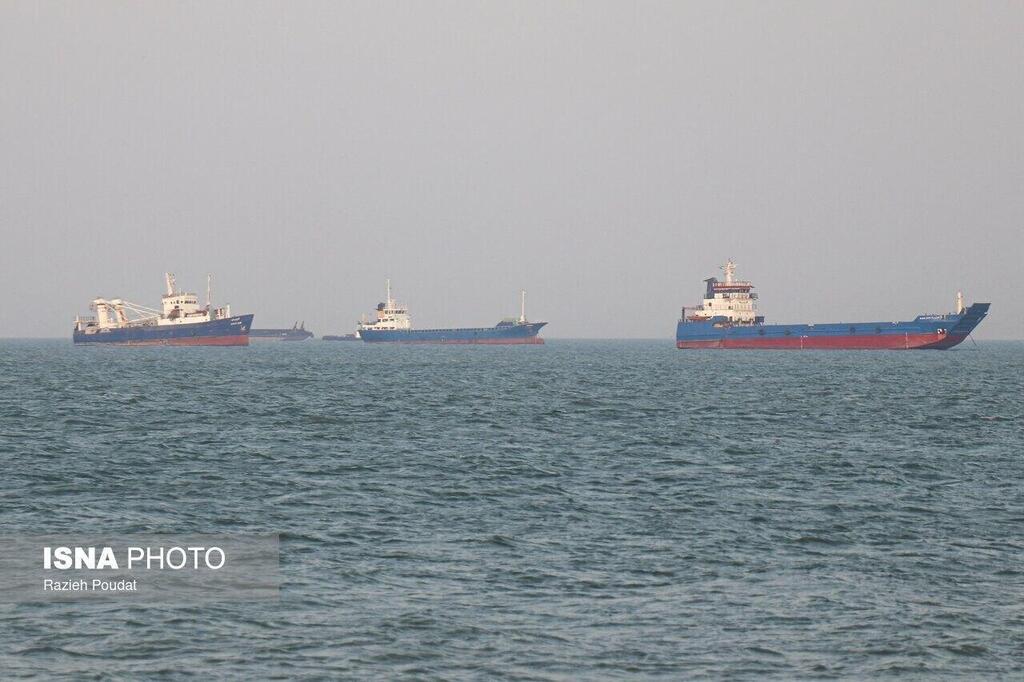
The Strait of Hormuz
Minor said Gulf countries could work with European governments to monitor the strait and help persuade China to quietly use its influence with Iran to reopen the shipping lane.
The resumption of U.S. bombing over the past two weeks increased pressure on Gulf governments to coordinate. Iran responded with attacks on Bahrain, Kuwait and Jordan, while its Houthi allies in Yemen targeted Saudi tankers in the Red Sea.
U.S. and Israeli strikes on Iran in late February caught Gulf governments off guard. But Iran’s heavy retaliation widened their differences.
“The Omanis were the most accommodating of Iran. The Qataris somewhat less so but still engaging and mediating. The UAE was the most prepared to get involved in a muscular way. Saudi was in the middle,” Michael Ratney, a former U.S. ambassador to Saudi Arabia, told Politico.
Oman initially appeared to be negotiating with Iran over a system of transit fees in the Strait of Hormuz, an effort Trump halted in May.
“Oman will behave just like everybody else, or we’ll have to blow them up,” Trump told reporters at the time.
At the other end of the spectrum, reports said both the United Arab Emirates and Saudi Arabia carried out airstrikes or drone attacks against Iran, while the UAE deepened its defense ties with Israel.
The different policies partly reflect the countries’ varying levels of vulnerability. Saudi Arabia, the United Arab Emirates and Oman can bypass the Strait of Hormuz for at least some of their oil and gas exports. Qatar, Kuwait and Bahrain cannot.
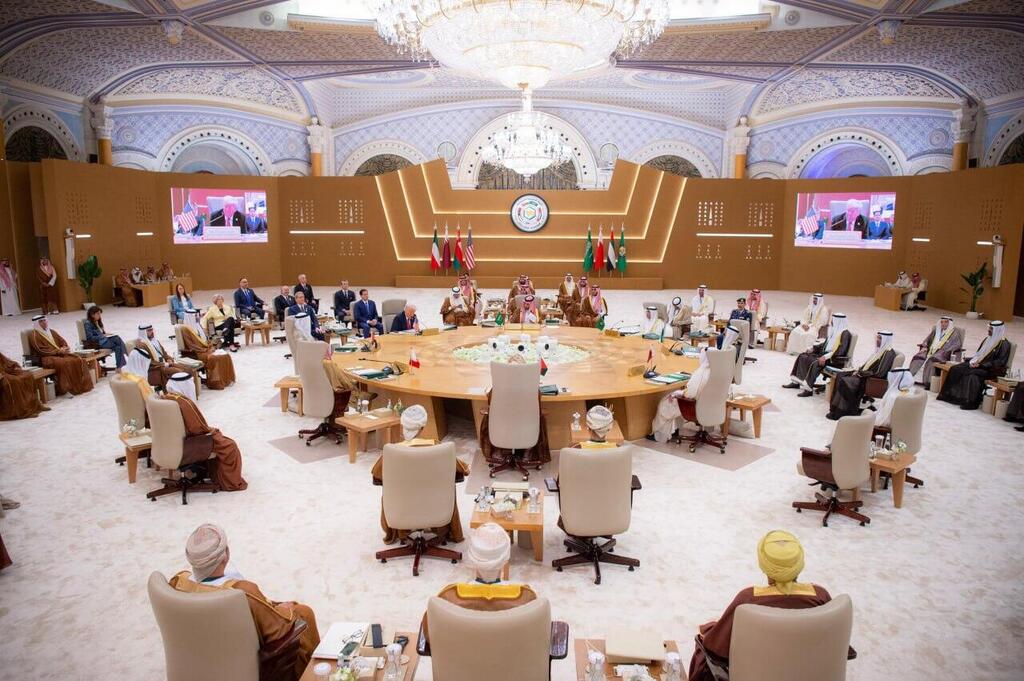
A meeting of the Gulf Cooperation Council
(Photo: from X)
A senior aide to a Republican member of Congress who recently attended a House Foreign Affairs Committee discussion with representatives of Gulf countries and Jordan said all the governments expressed concern about becoming Iranian targets and requested additional weapons shipments.
But, the aide said, “some were more on the same page with the U.S. mission than others.”
The wartime disputes are unfolding against a history of regional competition. Late last year, Saudi Arabia bombed Yemen after an arms shipment from the United Arab Emirates arrived in the country. Riyadh and Abu Dhabi also back opposing sides in Sudan’s civil war, and only in recent years ended their boycott of Qatar.
Ratney said a memorandum of understanding signed by the United States and Iran on June 15 appeared to briefly reunite the region’s governments.
“At a certain point, they all just wanted the oil and gas moving, having concluded that the various war goals weren’t going to materialize,” he said.
But Minor said distrust remains high as fears grow that the region could again slide toward a full-scale war.
“Each country is afraid that the other country is funneling cash to Tehran not to hit them, and that it could come at the expense of their neighbors,” she said.
Reuters reported last month that the United Arab Emirates was planning to transfer billions of dollars to Iran. Abu Dhabi denied the report.
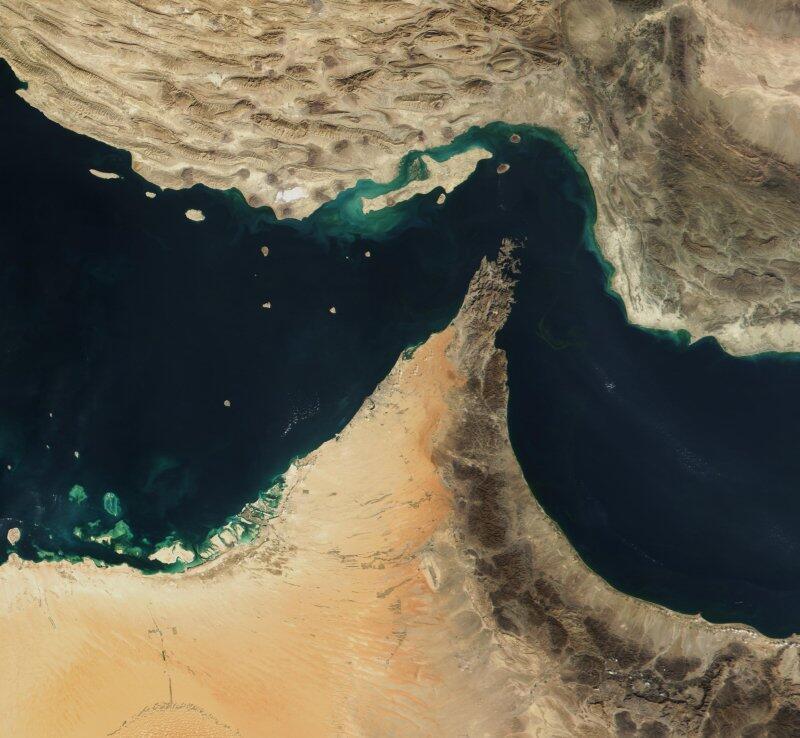
The Strait of Hormuz and Musandam Peninsula
(Photo: Wikimedia)
Qatar, meanwhile, has promoted a ceasefire initiative aimed at reducing tensions. Reports also said Kuwait and Bahrain attacked targets in Iran, though Kuwait denied the claim Tuesday night.
“There’s no unity in the GCC,” said Nate Swanson, who conducted negotiations with Iran on behalf of the Biden and Trump administrations. “The best you could hope for is coordination.”
All Gulf governments are also demanding a role in U.S. decision-making.
After the GCC hosted U.S. Secretary of State Marco Rubio at a council meeting in Bahrain in June, GCC Secretary-General Jasem Mohamed Albudaiwi said any future agreement must take the bloc’s concerns into account.
“During the meeting, it was emphasized that any future understandings or arrangements must incorporate the requirements of the GCC countries in order to safeguard their interests,” he said.
The statement was not included in the State Department’s official summary of the meeting.
Gulf states are also developing infrastructure for a future in which the Strait of Hormuz may remain closed or unreliable.
The United Arab Emirates is building a new pipeline to the port of Fujairah on the Indian Ocean. Kuwait’s state oil company is also discussing the possibility of moving its oil through Saudi or Emirati pipelines.
But those projects would remain vulnerable to Iranian attack as long as the war continues. A Houthi attack on Saudi tankers Thursday also raised doubts about the effectiveness of the land pipeline Riyadh already uses to bypass Hormuz.
For now, there is no clear end to the conflict. “These devastating blows will continue until the president deems otherwise,” White House spokesperson Olivia Wales said.