

This week marks one year since the electronic monitoring law to prevent domestic violence came into effect. Yet despite approximately 10,000 requests for protective orders filed each year by women—about 100 of them considered high-risk and warranting enhanced protection—electronic monitoring has been implemented only 25 times.

Organizations fighting domestic violence, as well as the Ministry of Welfare—which is responsible for conducting risk assessments of men eligible for electronic supervision—say one major reason for the low number is insufficient public awareness of the law, which allows women under threat to request a protective order with technological enforcement to ensure their abusive partner stays away.
“The main problem is a lack of awareness,” explains Lili Ben-Ami, CEO of the Michal Sela Forum for the Prevention of Violence Against Women. “There’s been no public campaign or messaging to make sure the women seeking help know they can ask for this protection. Even police officers and judges aren’t sufficiently familiar with it. A woman can ask for electronic protection, and the judge will say: ‘I don’t understand what that is.’”
The electronic monitoring law was passed in the Knesset two years ago, after a decade-long battle. It aims to prevent repeat violations of restraining orders issued by courts to protect women under threat. Under the law, a bracelet enables constant tracking of both the threatened woman and the man posing a threat.
In the time between the law’s passage and its implementation, the Ministry of Welfare recruited and trained seven social workers for the role of “danger assessors.” These professionals provide evaluations of the risk level facing the threatened woman and make recommendations to the court on whether electronic monitoring should be applied. In addition, the Israel Prison Service established a new unit, known as “Misgav,” tasked with carrying out the actual monitoring.
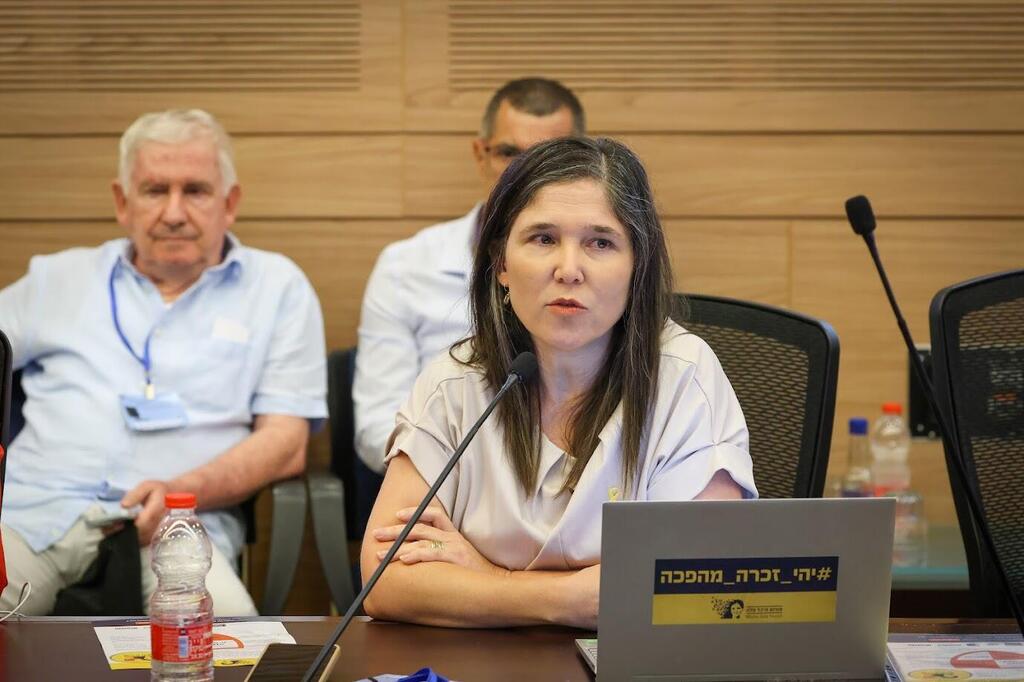
A Knesset discussion about violence against women
(Photo: Knesset Spokesperson)
These assessors are capable of conducting 300 evaluations per year—but the current number is much lower due to poor public awareness of the law. “We could have been used much more,” says Saad Taly, director of the Domestic Violence Division at the Ministry of Welfare.
Get the Ynetnews app on your smartphone: Google Play: https://bit.ly/4eJ37pE | Apple App Store: https://bit.ly/3ZL7iNv
Of just 82 requests from women for electronic monitoring, 75 men were referred for a risk assessment—a necessary step before any monitoring begins. In practice, only 54 assessments were conducted, of which 49 identified a high level of danger. Ultimately, courts approved just 25 monitoring cases, 17 of which are currently active.
According to Taly, the gap between filing a request and beginning monitoring often emerges in court proceedings. “Sometimes, during the hearing, the complainant herself changes her mind and decides to settle for a standard restraining order—because electronic monitoring also requires her to carry a tracking device, and she doesn’t want that. Sometimes the lawyers on both sides agree on an alternative arrangement.”
In some cases, electronic monitoring wasn’t implemented due to technical limitations determined by the Misgav unit. For example, in areas where GPS reception was disrupted during the war, or because the couple lived too close to each other for the system to work effectively.
The Ministry of National Security stated: “In line with Minister Ben-Gvir’s policy, the ministry and its agencies are placing special emphasis on addressing domestic violence in general, and violence against women in particular. Accordingly, we legislated for the first time the technological monitoring law. Additionally, as part of the ministry’s and the prison service’s ongoing efforts, a dedicated awareness conference is expected to take place in the coming months.”