

For nearly two decades, the State of Israel has lived under a technological sedative called Iron Dome. For all its brilliance, the system lulled both the political and military leadership. It turned the rocket threat from Gaza and Lebanon from a strategic problem into a statistical nuisance: as long as the system maintained phenomenal interception rates, political leaders could absorb "drizzles" of fire, buy temporary calm with money and ignore the monsters being built across the border. They called it "no casualties", but in practice it was a ticking time bomb operating under the cover of defense.
Without Iron Dome, the IDF would likely have been forced to conquer Gaza a decade ago. The system gave Israel artificial breathing room that ultimately proved to be a honey trap, sparing it from the need to achieve a decisive outcome.
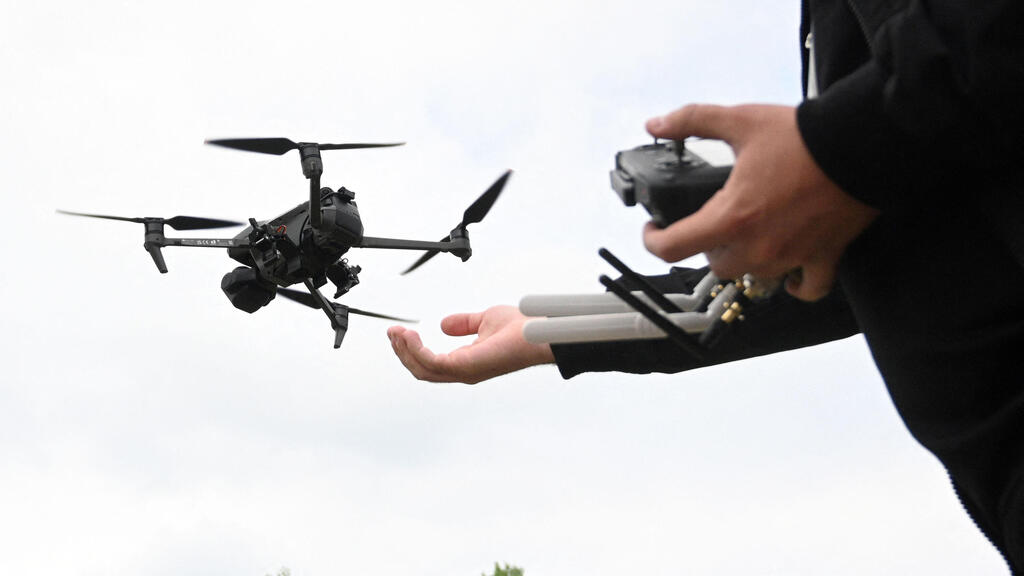
What begins as a tactical incident — FPV drone striking a building or military post — becomes a strategic threat that paralyzes an entire region
(Photo: YURIY DYACHYSHYN / AFP)
Unlike a rocket, which is fired and forgotten along a predictable ballistic trajectory, a drone is a piloted, dynamic, cheap and frighteningly precise aircraft. If a rocket is a blind punch, a drone is a surgeon’s scalpel. And without an airtight "drone dome", the equation changes completely.
What begins as a tactical incident — a first-person view (FPV) drone striking a building or military post — becomes a strategic threat that paralyzes an entire region. A country, economy or daily routine cannot function under relentless swarms that slip beneath radar coverage and deliberately bypass defense systems. And this brings us to the Middle East’s new formula: the deeper the drone’s fiber-optic line, the deeper the entanglement.
Neutralizing drones is no longer a matter of bombing launchers from afar with sterile air power. To stop a drone operator sitting in a bunker wearing VR goggles, the IDF must physically reach the end of the fiber-optic cable through which the aircraft is controlled. The longer their fiber, the deeper their technology penetrates into the terrain, the deeper the security zone the IDF will be forced to physically occupy.
History is repeating itself here, only through technological evolution. In the 1980s, the PLO’s Katyusha attacks on northern communities were a tactical problem that forced Israel into a strategic operation, pushing the threat back and eventually reaching Beirut to establish a physical security zone — one Israel returned to in 2026.
Today, drones will do exactly the same thing. Distances have shrunk, capabilities have advanced and the conclusion is clear: the inability to produce a technological silver bullet for drones comparable to what Iron Dome provided will force the IDF back to the fundamentals of ground maneuvering, territorial control and prolonged deployment.
If the political leadership believes it can continue managing "rounds" or "containment" in the drone era, it is simply refusing to wake up from the illusion. Drones will drag the IDF into a deep operational rethink, one that will require physical security zones far wider than anything known since the historic security zone. And that is without even mentioning the West Bank.
The Israeli public needs to understand the new equation: there are no miracles, no absolute protection from the air and no way to fight fiber optics with speeches at the UN or statements to the media. In the absence of a technological solution, the only way to stop the next drone swarms will be to send soldiers deep into hostile territory. At this rate, Israel’s next border will be determined by the range of the operator on the other side — and we may all yet find ourselves eating hummus in Tyre and Sidon.