

The Gaza war took center stage on the opening day of the UN General Assembly’s annual high-level debate in New York, as leader after leader used the global platform to deliver some of the sharpest criticism yet of Israel’s conduct in Gaza and the West Bank.
The language ranged from accusations of “war crimes” and “forced displacement” to “genocide” and “concentration camp,” underscoring the growing diplomatic challenge facing Israel as the conflict approaches its third anniversary.
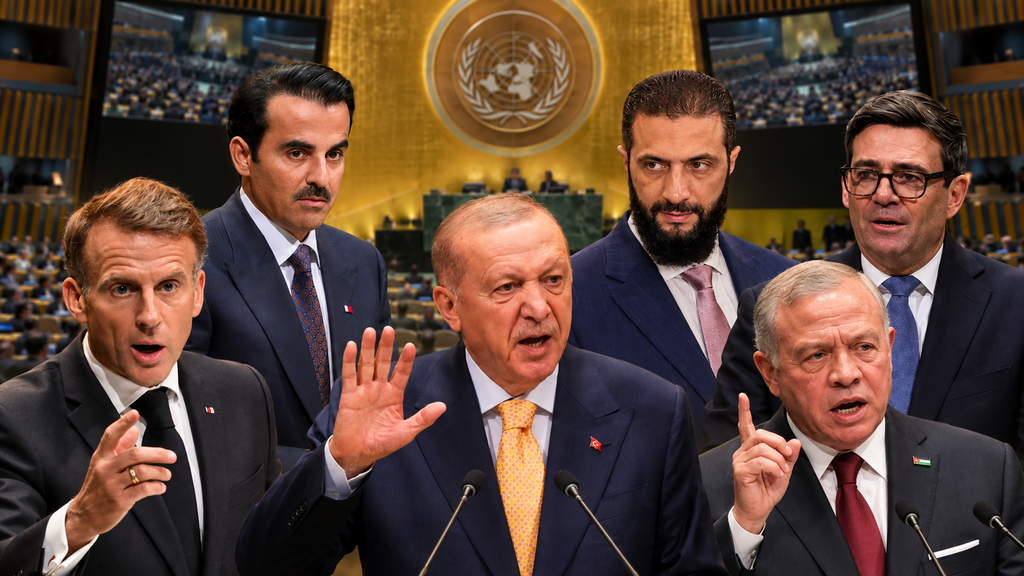
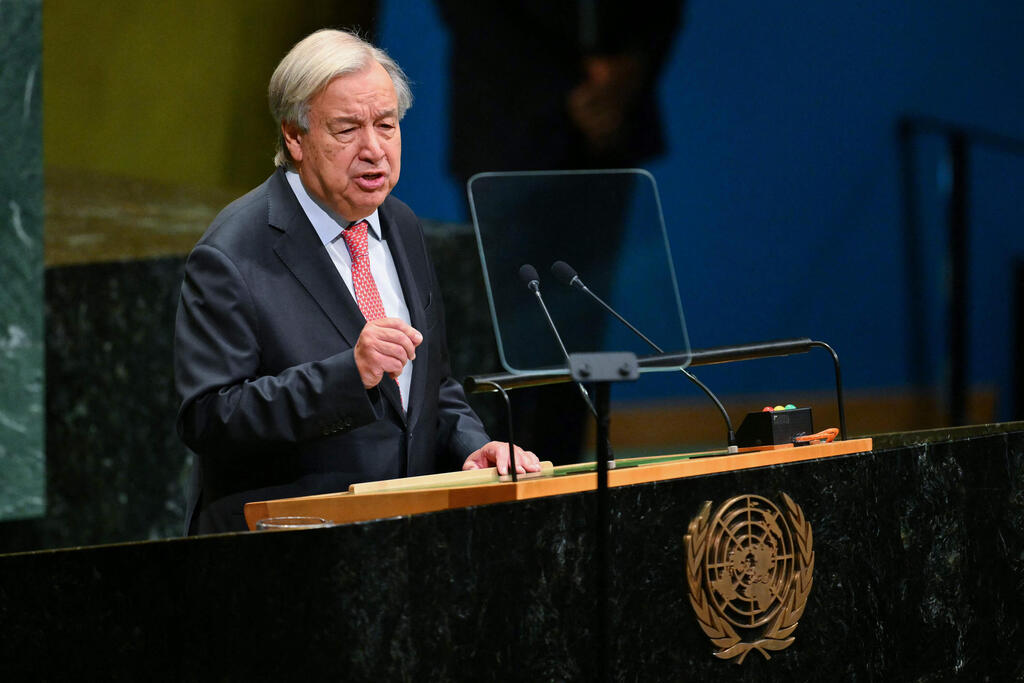
UN Secretary-General António Guterres set the tone. He condemned Hamas’ October 7 attack as an “abhorrent terror attack,” but said what followed was an “onslaught on Palestinians in Gaza” involving killing and destruction on a scale unlike anything he had witnessed during his tenure. He also warned that violence, displacement and settlement expansion in the West Bank were “raising the spectre of ethnic cleansing.”
One of the most strident speeches came from Turkish President Recep Tayyip Erdogan, who described Gaza as “the world’s largest graveyard for children” and went on to call the enclave “the most inhumane, most shameful concentration camp of our time.” He urged countries that have yet to recognize a Palestinian state to do so and called for greater international pressure on Israel.
Erdogan also criticized Washington’s decision to prevent Palestinian Authority President Mahmoud Abbas from traveling to New York, saying Turkey would continue to give voice to the Palestinian cause from the UN podium. The Israeli delegation, including Ambassador to the UN Danny Danon, walked out during his speech, while Palestinian delegates applauded.
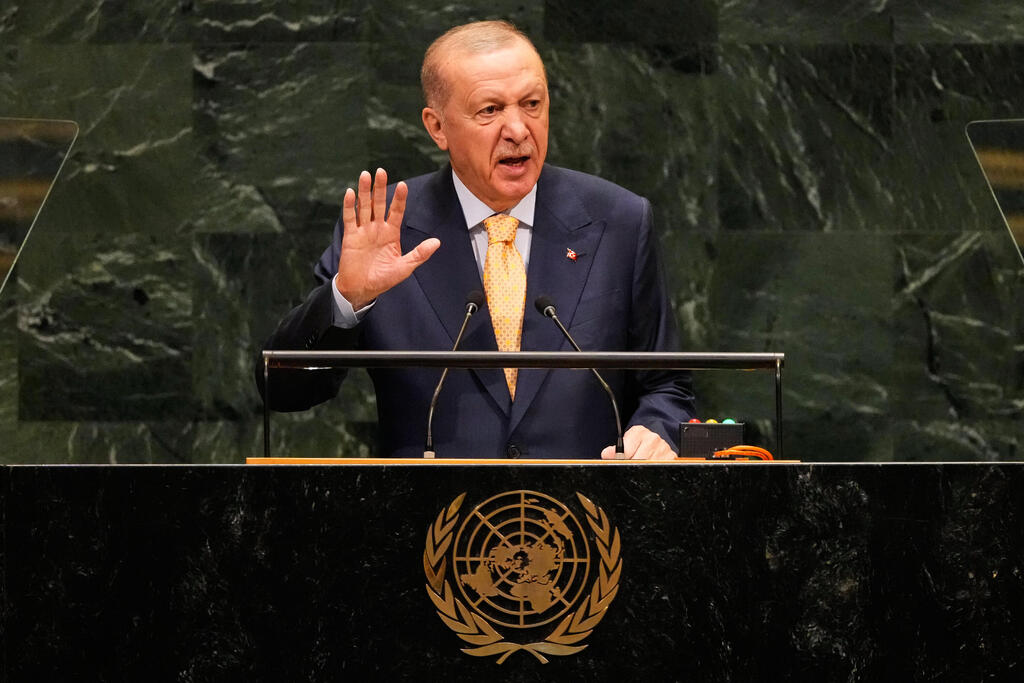
Turkish President Recep Tayyip Erdogan
(Photo: AP Photo/Seth Wenig)
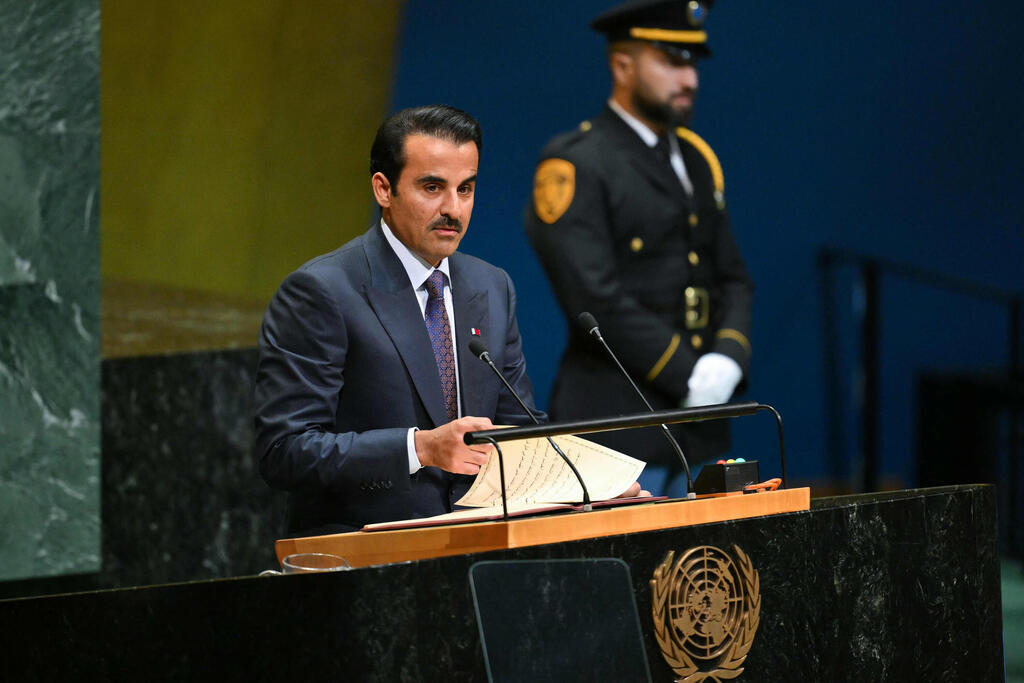
Qatar’s Emir
(Photo: ANGELA WEISS / AFP)
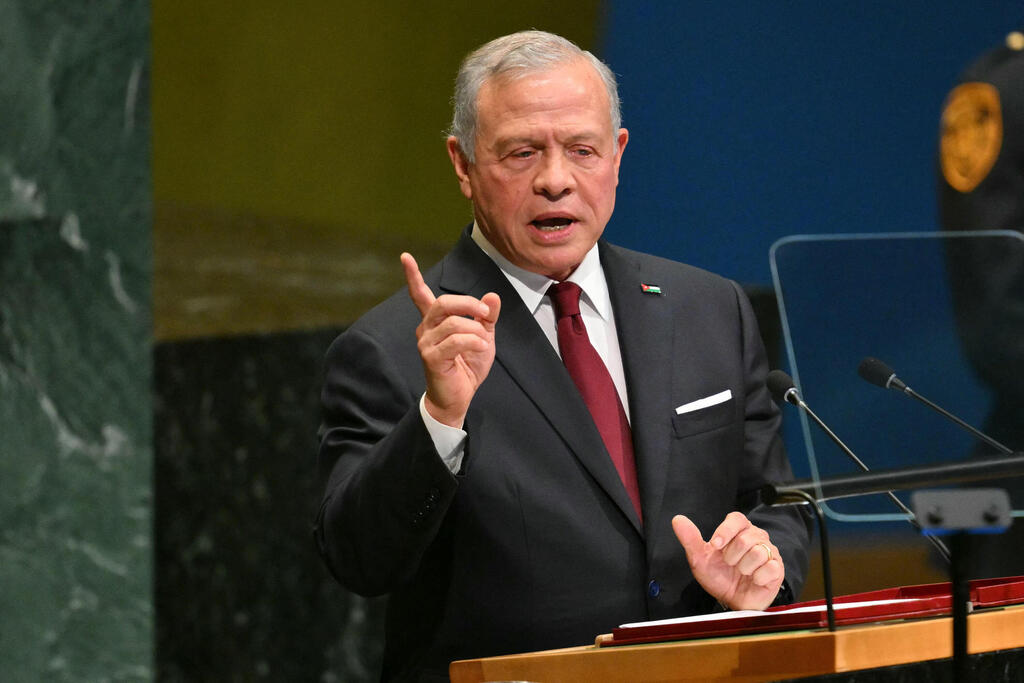
Jordan’s King Abdullah II
(Photo: ANGELA WEISS / AFP)
Qatar’s Emir Sheikh Tamim bin Hamad Al Thani used equally stark language. “What has happened in Gaza is genocide in every sense of the word, and a stain of shame on the conscience of humanity as a whole,” he told the assembly. He accused Israeli leaders of openly promoting the departure of Gaza’s population and called on Israel to end its military activity, withdraw from the enclave and lift restrictions on it.
Israel has repeatedly rejected accusations of genocide, saying its military campaign is directed against Hamas and that the terrorist group operates from within civilian areas.
Jordan’s King Abdullah II, whose country has maintained a peace treaty with Israel since 1994, also delivered a sweeping indictment of Israeli policy.
Abdullah argued that destruction in Gaza and what he described as the “de facto annexation” of parts of the West Bank were part of an attempt to erase the Palestinian presence and make a future Palestinian state impossible. He described the forcible removal of Palestinians from their homes as “forced displacement” and a “war crime,” and accused Israel of an “appetite for expansion” that threatened the wider region.
The Jordanian monarch urged governments not to treat Gaza and the West Bank as separate crises, arguing that they were two elements of the same Israeli strategy.
He also pointed to the 2002 Arab Peace Initiative, which offered Israel normalization with Arab and Muslim states in exchange for an agreement with the Palestinians, arguing that the proposal had remained available for more than two decades.
Criticism spreads to Western allies
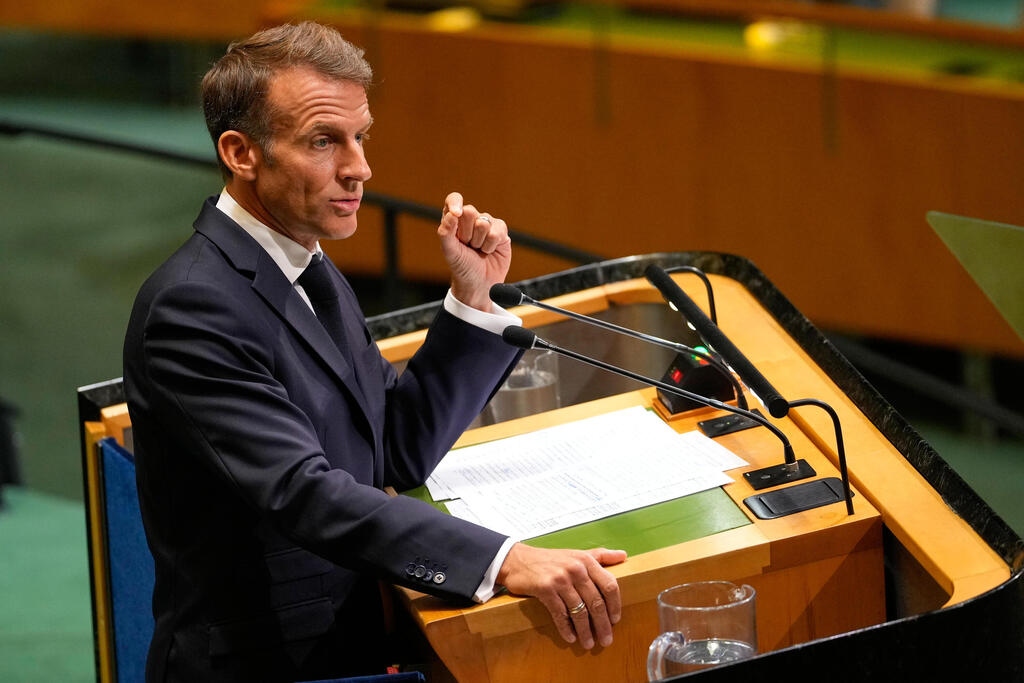
Israel’s challenge, however, is not limited to criticism from Turkey, Qatar or other Arab states. French President Emmanuel Macron, delivering his final UN General Assembly address before his term ends next year, sharply criticized the situation in Gaza and also claimed that Hamas does not operate in the West Bank, despite the terrorist group maintaining local infrastructure there that has been involved, among other things, in carrying out attacks against Israelis.
Emmanuel Macron
(Photo: AP Photo/Yuki Iwamura)
Andy Burnham
(Photo: AP)
Macron directly challenged the way U.S. President Donald Trump portrayed his plan to end the war. He said that despite declarations of peace, not a single humanitarian corridor had reopened, asking: “Are we simply standing by and watching a spectacle that should shame us all?” He also criticized Israeli policy in the West Bank, arguing that developments there were making the establishment of a Palestinian state less possible with each passing day. Those who believe that violating the sovereignty of neighboring countries will make Israel more secure, he said, are mistaken, and are in fact “weakening its security, today and in the future.”
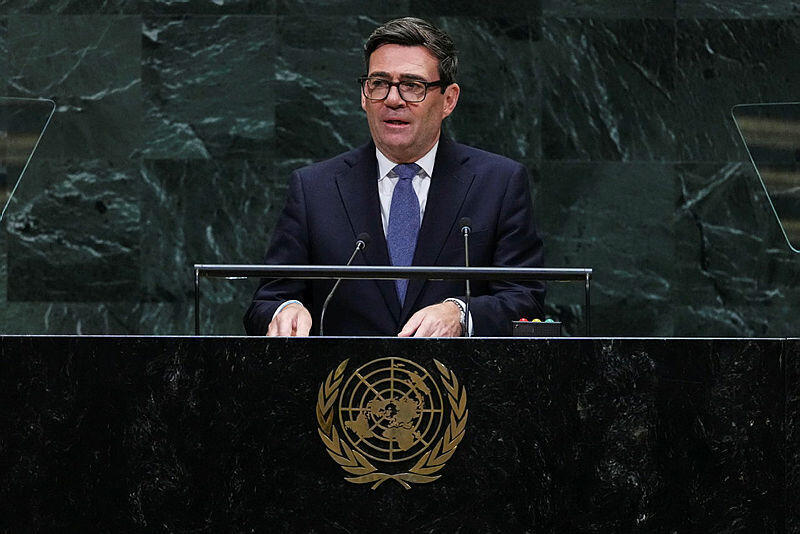
British Prime Minister Andy Burnham likewise began his UN address by condemning the October 7 Hamas attack as “utterly horrific” and saying Britain stood with Israel and Jewish communities worldwide in the face of continuing threats from Iran. “But this does not justify the Israeli government’s actions in Gaza or the West Bank,” he said.
Burnham said Britain would not “stand by” as suffering continued and the prospect of a two-state solution came under threat. He singled out Israeli plans for construction in the E1 area east of Jerusalem, saying the project could put a viable Palestinian state beyond reach.
He also defended his government’s move to restrict dealings with Israeli settlements, arguing that continuing to voice support for two states without taking action would further undermine public trust in politics.
Brazilian President Luiz Inácio Lula da Silva
(Photo: Yuki Iwamura)
António Guterres
(Photo: ANGELA WEISS / AFP)
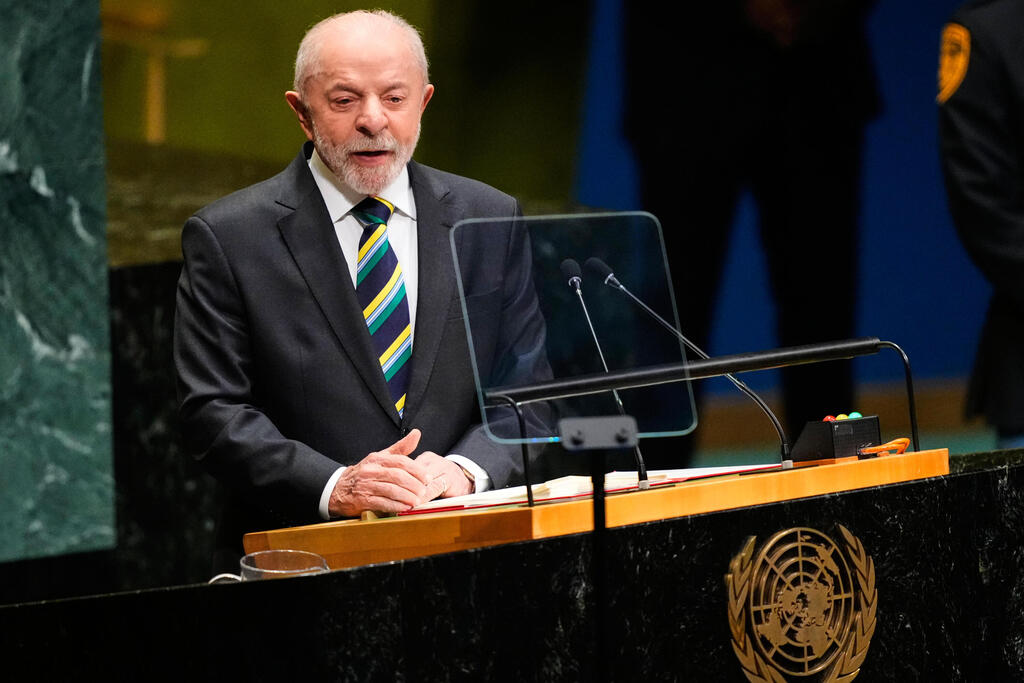
Brazilian President Luiz Inácio Lula da Silva also accused Israel in particularly severe terms, saying “generations of Palestinians” would carry the pain and trauma of what he called the “genocide of women and children” carried out by Netanyahu’s government in Gaza.
At the same time, Lula said Israeli civilians had paid the price for the “radicalism and intolerance” of Hamas’ terrorist attack. He also criticized measures targeting the International Criminal Court and warned that continued settlement expansion was making a two-state solution increasingly difficult.
Syrian President Ahmad al-Sharaa added his voice to the criticism outside the General Assembly hall, speaking at an Atlantic Council event on the sidelines of the gathering ahead of his own UN address.
Asked about the trauma caused in Israel by the October 7 attack, al-Sharaa said he understood what had happened to innocent civilians but argued that one historical event could not determine an entire country’s policy.
He said October 7 should not dictate Israel’s approach toward Syria and warned that such a policy would create new security threats. “If you want to protect your security, you have to respect the security of others,” he said.
Al-Sharaa accused Israel of creating new problems around itself rather than solving existing ones and criticized Israeli strikes and military activity inside Syria. He contrasted Syria’s improving relations with the United States, Britain, Gulf states, Iraq and Lebanon with its relationship with Israel. “I believe the problem is with Israel, not Syria,” he said.
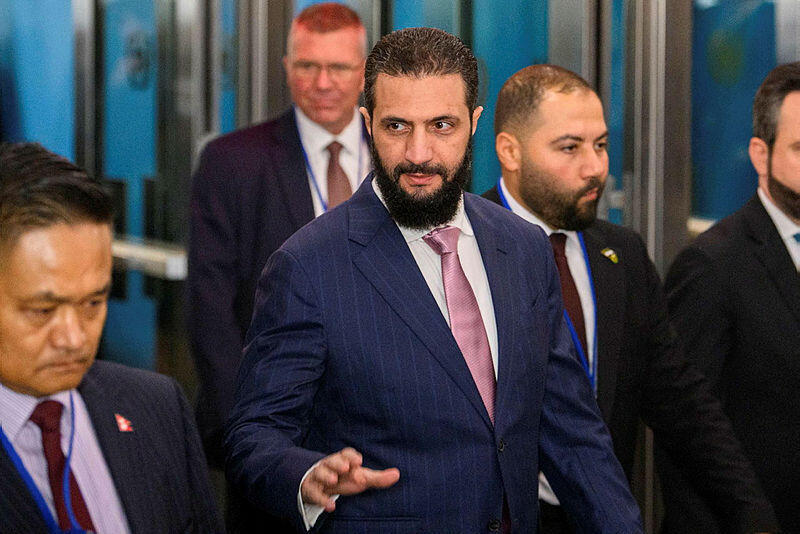
Ahmad al-Sharaa
(Photo: AFP)
The Syrian president also disclosed that direct talks with Israel, which he said have been underway for nearly a year with US involvement, had at one stage reached “almost 90%” agreement. “There were several sessions of negotiations with Israel, and we almost reached 90% of agreements,” he said, adding that Israel subsequently withdrew or introduced additional conditions.
According to al-Sharaa, Damascus is first demanding that Israel return to the lines established under the 1974 disengagement agreement. Only then, he said, could the sides move toward broader security arrangements and potentially discuss a lasting peace.
The succession of speeches is far from over. Representatives of Syria, Iran and Spain are among those expected to address the General Assembly as the debate continues, with Palestinian and Irish representatives also due to speak later in the week.
Prime Minister Benjamin Netanyahu is scheduled to address the assembly on Thursday and has already signaled that he intends to use the podium to push back against international criticism. “I’m going to tell the truth about our heroic soldiers,” Netanyahu said before the gathering, while also promising to confront New York Mayor Zohran Mamdani over his fierce criticism of Israel.
Beyond speeches, pressure turns into policy
The criticism heard inside the General Assembly is increasingly being matched by diplomatic and economic measures.
Foreign ministers from Qatar, Egypt, Jordan, the United Arab Emirates, Indonesia, Pakistan, Turkey and Saudi Arabia met in New York and expressed “deep concern” over continuing humanitarian suffering in Gaza. They called on Israel to meet outstanding commitments under the first phase of the current plan, including facilitating humanitarian aid and the rehabilitation of critical infrastructure.
Earlier this month, 12 Western countries, including Britain, France, Canada, Spain and several Nordic states, announced that they had introduced, supported or were considering restrictions on trade involving Israeli settlements in the West Bank.
Britain, France and Canada said they intended to introduce national measures banning trade in settlement goods, while other European countries have already taken steps of their own. The same joint statement reaffirmed the countries’ commitment to Israel’s security and condemned Hamas’ October 7 terrorist attack.
The result is a UN gathering in which unusually harsh rhetoric toward Israel is increasingly accompanied by concrete policy measures, while Netanyahu prepares to take the same podium and make Israel’s case before the world.