

IDF operations continued in the Gaza Strip on Sunday despite reports that a proposed agreement with Hamas could require a halt to Israeli strikes, as Israeli officials reiterated that any military withdrawal would depend on the terrorist group's complete disarmament.
Palestinian officials reported that at least 18 people were killed in Israeli strikes across Gaza since Sunday morning. According to Palestinian reports, one of those killed was Nafez Sbeih, who was identified as a commander in Hamas' armed wing, the Qassam Brigades. His precise role was not immediately clear.
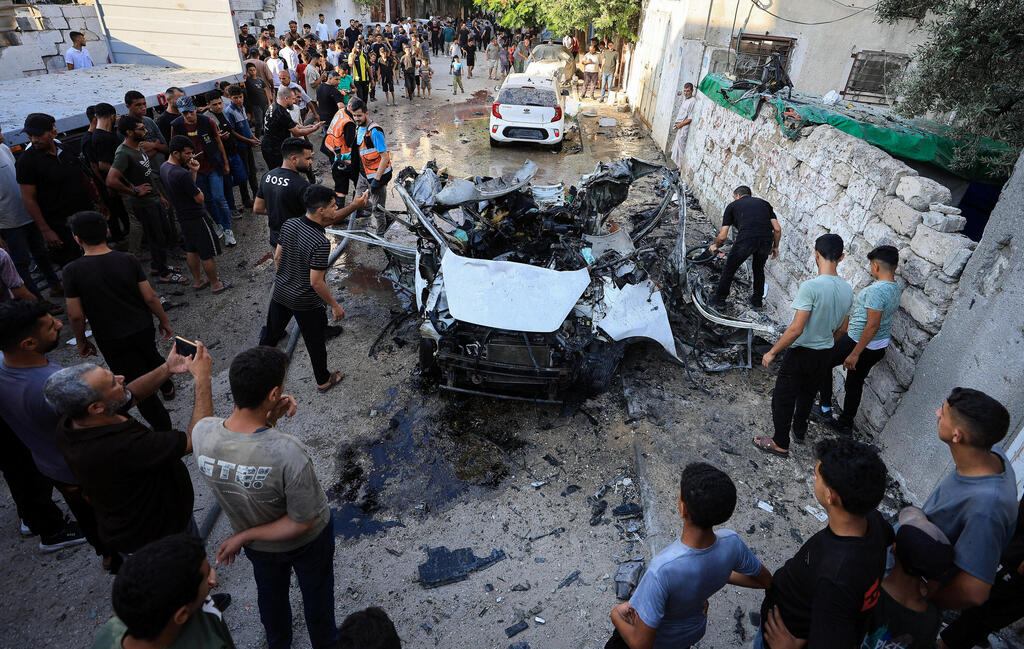
The IDF did not announce any strikes on Sunday and has made no public changes to its operational posture since details of the proposed agreement began emerging. Israeli forces continue to control about 63% of the Gaza Strip, according to Israeli assessments.
The reports came about 18 hours after exiled Palestinian politician Mohammed Dahlan wrote that Jared Kushner, U.S. President Donald Trump's son-in-law and former Middle East adviser, was working with Israel to halt military operations in Gaza. Kushner has not publicly commented on the claim.
Speaking to The Associated Press on Sunday, Doron Spielman, a spokesman for Prime Minister Benjamin Netanyahu's office, said Israel had shared its "serious security concerns" about the proposed agreement with the White House.
Spielman said Israeli intelligence assessments indicate Hamas remains committed to rebuilding its military capabilities rather than disarming.
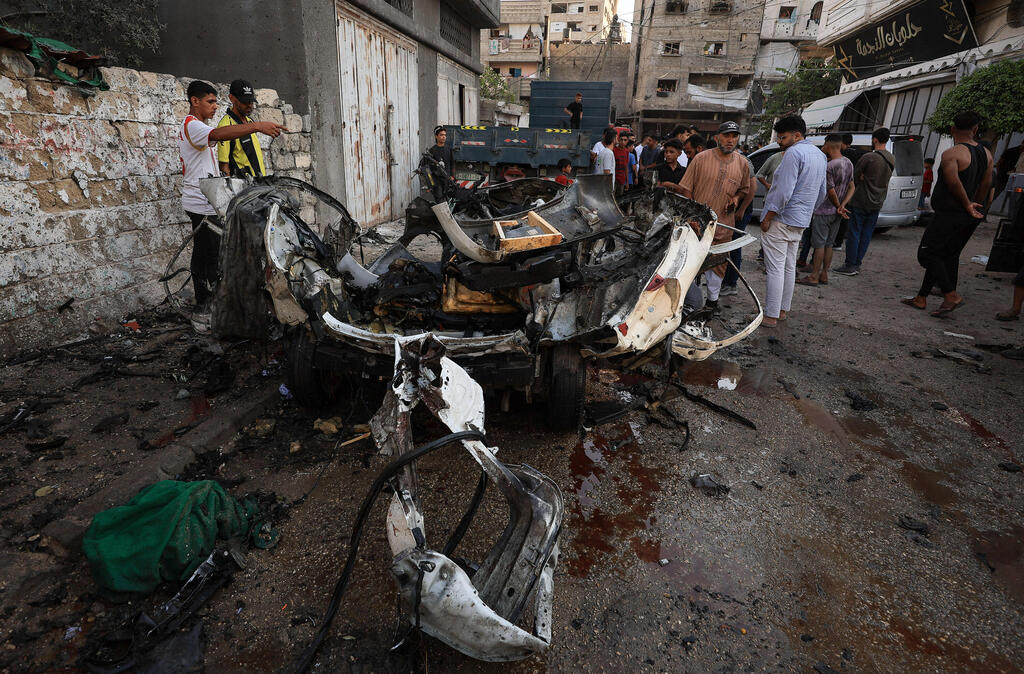
(Photo: REUTERS/Dawoud Abu Alkas)
"Our assessment is that if we redeploy before Hamas is truly disarmed, it will quickly expand its presence throughout Gaza, rebuild its terrorist infrastructure, once again threaten Israeli communities, and seek to carry out another Oct. 7-style attack," he said. "Disarming means physically giving up the weapons. Nothing less."
The comments underscore a central gap between Israel's publicly stated conditions and the framework for ending the war that has been promoted by international mediators.
On Friday, the Gaza Board of Peace, a body established under an initiative backed by Trump, released what it described as a roadmap for implementing a proposed Gaza agreement.
The framework outlines a phased, time-limited and internationally supervised process under which Hamas and other Palestinian armed groups would gradually surrender their weapons while Israel would complete a full military withdrawal from the territory.
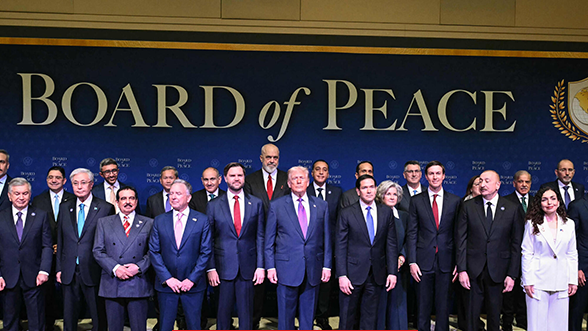
The Gaza Board of Peace
(Photo: SAUL LOEB / AFP)
Under the proposal, within 14 days of approval by both sides, a detailed implementation schedule would begin, culminating in the transfer of all civilian and security authority to a newly created National Committee for the Administration of Gaza, or NCAG.
The proposal is based on the principle of "one authority, one law, one weapon."
Under the plan, Hamas and other Palestinian factions would relinquish governing authority, while heavy weapons, tunnels and weapons stockpiles would be decommissioned and placed exclusively under the authority of the new committee.
The proposal appears to link Israel's phased withdrawal to verified progress in disarming Hamas and other armed groups. Implementation would be overseen by an international verification commission alongside the deployment of an international stabilization force.
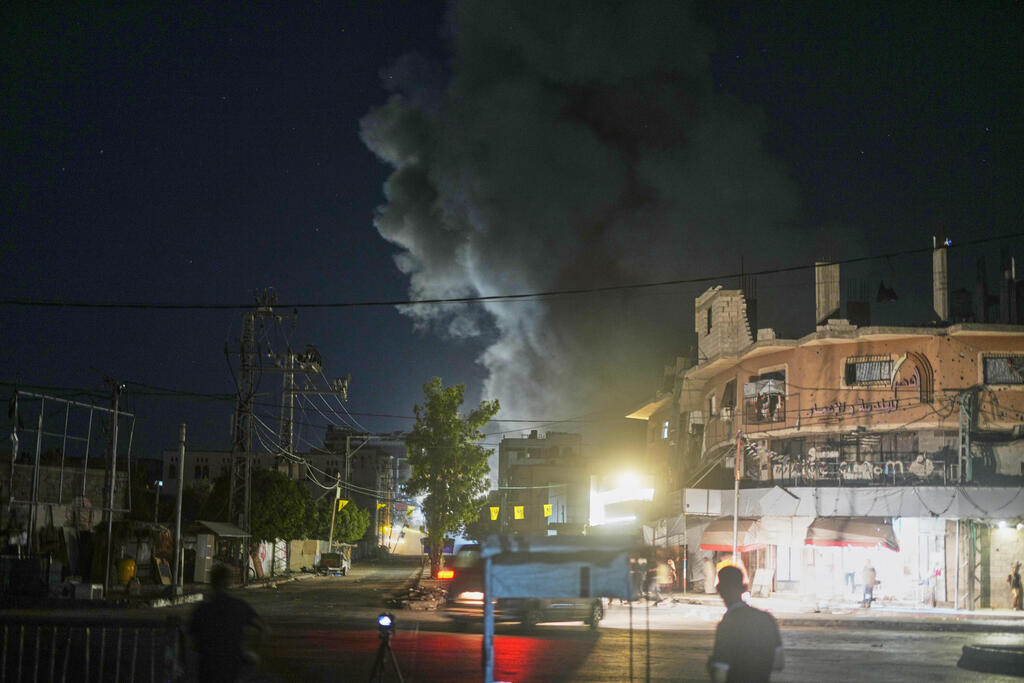
Israeli airstrike in central Gaza
(Photo: AP Photo/Abdel Kareem Hana)
According to the draft, the United States, Israel, Hamas and other Palestinian factions would adopt Trump's peace initiative as the basis for a postwar arrangement in Gaza.
The stated objectives include ending the fighting, completing Israel's withdrawal, establishing a new Palestinian governing authority, rebuilding Gaza and creating a political process leading to Palestinian self-determination and eventual statehood.
Progress from one phase to the next would depend on all parties fulfilling their obligations, as verified by the international monitoring mechanism.
The proposed National Committee for the Administration of Gaza would become the territory's sole civilian and security authority, assuming responsibility for public institutions, essential services, policing and public assets.
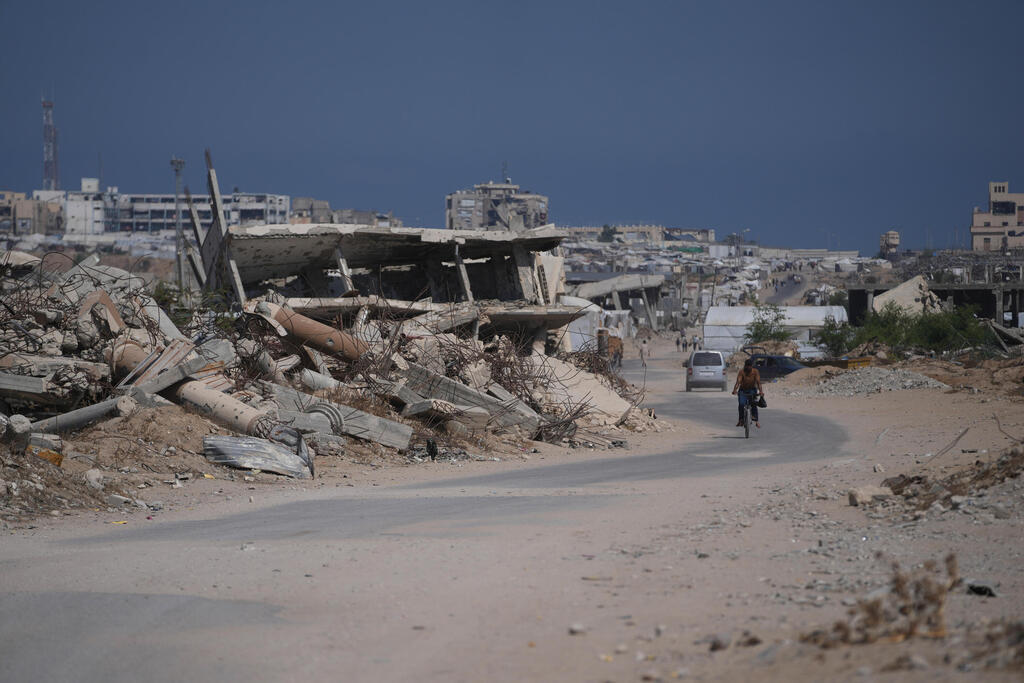
אוהלים בין ההריסות ברצועת עזה
(צילום: AP Photo/Abdel Kareem Hana)
Members of Palestinian terrorist groups would not be integrated into the new security services. Personal firearms would be subject to licensing and regulation by the new Palestinian authorities, while heavy weapons would be removed from service through a phased international process.
The proposal also calls for an international stabilization force to monitor the ceasefire, safeguard humanitarian aid, train Palestinian police and support the new governing committee, although it would not perform routine policing duties.
It also envisions a multiyear internationally funded reconstruction program and an internal Palestinian reconciliation agreement that would prohibit factional violence, revenge attacks, military parades and armed public demonstrations.