

Yael Selig Avgi, an attorney in the Central District Prosecutor’s Office, says she has already “seen everything and handled everything,” including cases against organized crime groups.
But her current role, as the prosecutor responsible for juvenile offenses in the district, is the one keeping her up at night. “This is the scariest job I’ve ever done,” she said — not because she fears top criminals. For her, the daily work with minors, sometimes very young ones, naturally turns her attention inward, to her own home.
The killing of Yemanu Binyamin Zelka at a pizzeria in Petah Tikva
(Video: from social media)


“As a mother of three boys who play Roblox,” she said, “there are things that can happen to anyone. It’s really right under our noses, and children can be pulled in very easily. For example, a child who struggles at school because of learning difficulties can drift toward a less positive group outside school.”
From there, she said, the path to crime can be short. “Sometimes I feel like I spend all day conducting child interrogations on my own children,” she said, half joking and half serious. “I check that no one is pressuring them.”
The knife has become consensus
The teenagers of summer 2026 reached high school carrying the psychological damage of the COVID-19 pandemic. The years that followed were hardly routine. Again and again, they were left idle at home through repeated rounds of conflict, while their parents tried to survive between war and reserve duty.
In Arab Israeli society, many are growing up amid a surge in violent crime that has claimed many lives. Much of young people’s social lives takes place on screens, and prosecutors handling juvenile offenses in Israel’s districts say they are seeing the consequences on the ground.
“Something is happening, and it is difficult and serious,” said Ruti Shavit, an attorney in the Tel Aviv District Prosecutor’s Office. “The crime sometimes begins at age 11, and these are no longer isolated cases but a phenomenon.”
Benny Pascal, an attorney in the Haifa District Prosecutor’s Office, said: “The age is dropping, and the severity is rising. We see 14- and 15-year-olds using practices associated with criminal organizations, or eighth-graders setting up an ambush for a friend and stabbing him in a forest.”
Bus driver attacked by teenagers in Netanya
(Video: Bus Driver Union)
He said prosecutors are also seeing cases involving cars set on fire because of threats, or a community center torched because its director removed a teenager from an activity the previous day. “The increase in severity is enormous,” Pascal said.
Sometimes, the defendants are so young that “even the court sits there stunned,” Selig Avgi said.
One example is the case of N., who was just 13½ when he boarded a public minibus in Netanya one evening with several other youths. An indictment filed against him about six months ago describes a sequence of destruction and violence: The teens began rioting, making noise, banging on the driver’s compartment door and interfering with the ride. Security cameras on the bus recorded stunned passengers shrinking uncomfortably in their seats.
“These were people who boarded a bus to get to their stop and witnessed a terrible situation,” Selig Avgi said.
The driver stopped the minibus and asked the boys to get off. When N. remained alone, he pulled out a knife and stabbed the 70-year-old driver five times.
“Not only did we have to file an indictment against a 13½-year-old child,” she said, “but on the day the indictment was filed, we told the court that it could become a homicide case because the driver was sedated and ventilated in serious condition for a month.”
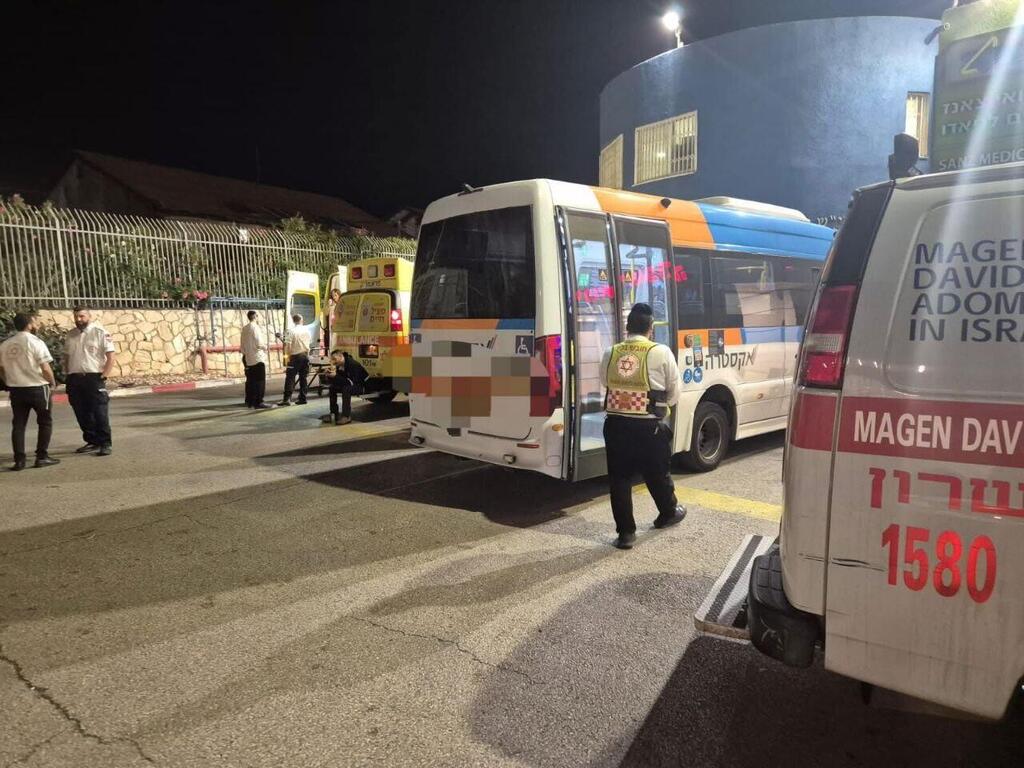
The case is exceptional in its severity, but prosecutors say it reflects a broader trend — including the growing habit of carrying knives, which Selig Avgi said “has become consensus.”
A month after the stabbing in Netanya, other teenagers smashed bus windows with stones and attacked the driver. A few months later, Israel was again exposed to the cost of a knife drawn with alarming ease: the killing of Yemanu Binyamin Zelka at a pizzeria in Petah Tikva, a city east of Tel Aviv. A 15-year-old boy allegedly pulled out a knife and stabbed him while a group of other teenagers attacked him.
'Don't forget the harmful act'
Like many countries, Israel's criminal justice system treats minors differently from adults. Proceedings involving juveniles are conducted behind closed doors and with strict privacy protections, but the distinction also extends to how offenses and offenders are viewed.
“The Youth Law places rehabilitation front and center as a primary consideration,” said Daphne Finkelstein, head of the juvenile division and director of the Youth Forum at the State Attorney's Office.
The forum brings together prosecutors responsible for juvenile crime across Israel's districts and serves as a venue for discussing particularly sensitive cases and broader nationwide trends.
One example, presented by Einat Nahon Efrati of the Southern District Prosecutor's Office, involved three boys ages 14 and 15. What began with one teenager insulting another by saying he was “not a man” escalated into a beating carried out by the offended boy and two friends.
Later, the group located the victim again. This time, one of the teenagers was carrying a knife and stabbed the victim in the back.
The legal question was whether all three defendants could be charged with aggravated assault, even though only one carried the knife and the other two claimed they did not know he was armed.
After reviewing the evidence, prosecutors concluded that they could, in part because all three continued participating in the attack after the stabbing.
The forum, prosecutors say, allows them to consult with one another and navigate the constant tension between rehabilitation and punishment — between deterrence and accountability on one hand, and the recognition that many offenders are very young and often come from difficult backgrounds.

The SSQ teen gang
(Photo: from X)
“When dealing with juvenile cases, each case stands on its own,” said Rivka Elkobi of the Jerusalem District Prosecutor's Office. “In adult cases, you don't first examine the offender's personal circumstances. But when the defendant is a child, the default approach is different.”
In recent months, a new policy took effect requiring juvenile cases to be handled only by prosecutors specially trained in the field. Major decisions, including whether to file charges, must now be approved by the district officials responsible for juvenile crime.
The work requires prosecutors to draw on perspectives from welfare and treatment professionals and to confront questions that other prosecutors rarely face.
One example involved the 13½-year-old accused of stabbing the bus driver in Netanya. Israeli law places severe restrictions on detaining suspects under age 14, and pretrial detention until the conclusion of proceedings is generally impossible.
“But here you have a child who is likely highly dangerous,” Selig Avgi said.
Eventually, authorities found a solution by placing him in a locked Youth Protection Authority facility operated by the Welfare Ministry for juvenile offenders.
The larger question, prosecutors say, is what punishment to seek. “On the one hand, rehabilitation must be the highest priority in juvenile cases,” Selig Avgi said. “But ultimately you ask yourself: As the prosecution, can I finish a case like this without asking for prison time?”
“As the offenders get younger, the 'embrace' they receive — from parents, but sometimes also from probation services and the courts — becomes warmer and closer,” said Noga Ben Sidi of the criminal division at the State Attorney's Office. “That sharpens our role, which is also to ensure that the harmful act itself is not forgotten.”
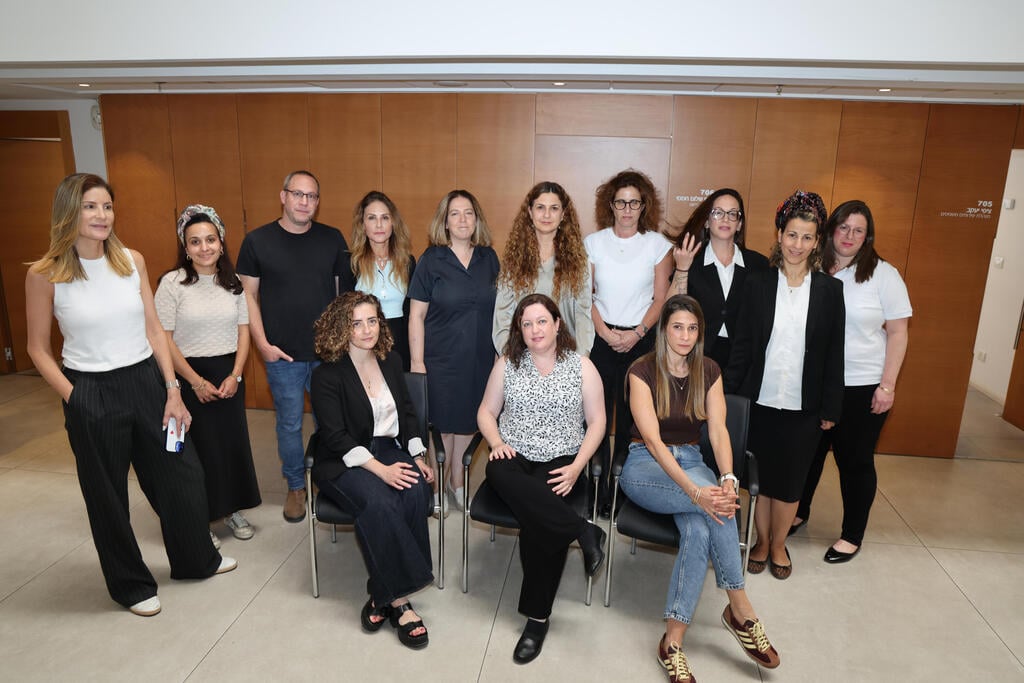
Juvenile prosecutors meet to discuss cases and trends in youth crime
(Photo: Yariv Katz)
She said the approach stems first and foremost from a desire to prevent young offenders from reappearing in the system. “They still have many years ahead of them, and we don't want to meet them again in the next case — the more serious one,” she said.
But prosecutors say they also have another responsibility: giving a voice to victims, who are often minors themselves and not much older than the offenders. “The victim's life is divided into before the incident and after the incident — what was before will never be the same again,” said Ayelet Planitzky-Ravid of the Northern District Prosecutor's Office.
“When victims constantly hear 'rehabilitation, rehabilitation, rehabilitation,' it's difficult to accept,” she said. “We won't ignore the need for rehabilitation, but our role in court is also to make the victim present — and in many cases the victim is a child too.”
“I want the court to see that child as well,” she added. “To remember that this was someone who had a life before the incident, and that life was interrupted after being injured by a chair or table thrown at them in school or in another incident. I want that child to be present in the courtroom, not just represented by initials in an indictment.”
‘Enough with rehabilitation’
There is also the public interest, a core concept in the work of prosecutors, who represent not a private individual but society as a whole. That approach often leads to a tougher stance toward offenders.
In juvenile cases, the public interest is sometimes hidden from view because proceedings are held behind closed doors. Still, in light of what prosecutors describe as a growing wave of youth violence, they say that consideration must be made more visible.
“The goal is to send a message: We as a state view this event as serious and are not moving on as if nothing happened,” Planitzky-Ravid said. “If these things are made public, and people know that even at age 15 the state treats this as a serious matter, then that is a meaningful message from the state.”
“Today, the feeling is that groups of teenagers are so threatening that people are afraid to intervene,” said Oshra Petel Rosenberg of the criminal division at the State Attorney’s Office. “That is also a consideration.”
Recently, especially after the killing of Zelka and the killing of 19-year-old Destao Chekol, who was beaten and murdered by boys ages 15 and 16, public sentiment has shifted in the other direction. “The conversation has become, ‘Enough with all this rehabilitation,’” Selig Avgi said.
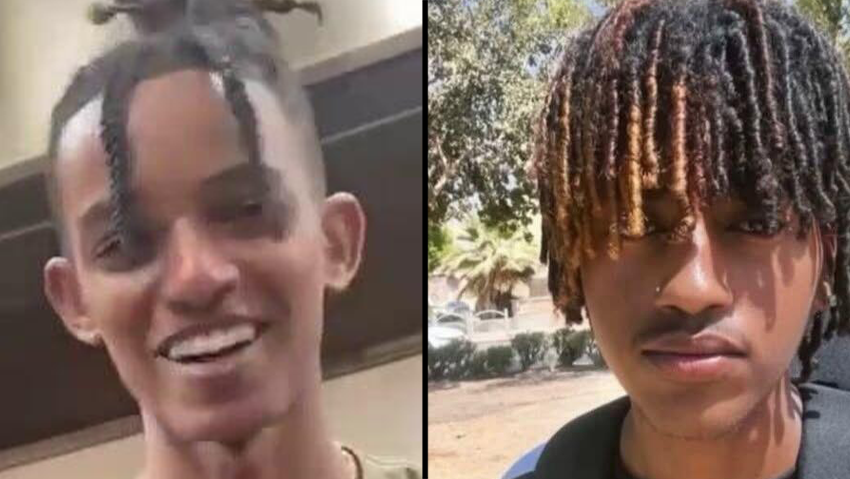
Yemanu Binyamin Zelka, Destao Chekol
(Photo: from social media, Ilana Curiel)
But prosecutors say it is important to remember that successful rehabilitation is far from simple, though it has much greater chances of success than imprisonment without a rehabilitative process. “We know many successful rehabilitation stories,” Finkelstein said. “Teenagers who became army officers and productive citizens. As juvenile prosecutors, we face real social and moral dilemmas that are difficult to reduce to simple rules.”
Einav Itsko Gold of the Haifa District Prosecutor’s Office pointed to another problem. “We handle many weapons cases and see a phenomenon of minors keeping weapons at home for others — at least that is what they claim — and they do not always understand the severity of the act,” she said. “For the teenager, it is something that shows he is a man, something that shows status.”
Nude photos leak: ‘Lives are turned upside down’
In the world of teenagers, even more than among adults, life online is inseparable from daily life — and from crime. “Today, relationships are managed online,” said Alexandra Kara of the State Attorney’s Office cyber division. “There is no longer just a boyfriend and girlfriend at school. It happens online.”
It often begins with teasing and harmful images. In the most extreme cases, those that lead to indictments, prosecutors say it becomes a pattern marked by “forcefulness and cruelty.”
“They know the other side is hurting — physically hurting — and still say, ‘Keep going, I don’t care,’” Kara said.
She warned that when such cases are dismissed as “not that serious” because they are “only” online, the attitude can spill over into physical offenses. “When the minor meets that same girl at school, he may hurt her,” she said.
“The child is just in his room with a phone, and everything looks fine,” Elkobi said. “But with the press of a button, he can destroy a girl’s life.”
She described a case in which a teenage girl had to leave her community after boys distributed a nude photo of her. “Lives are turned upside down,” she said.
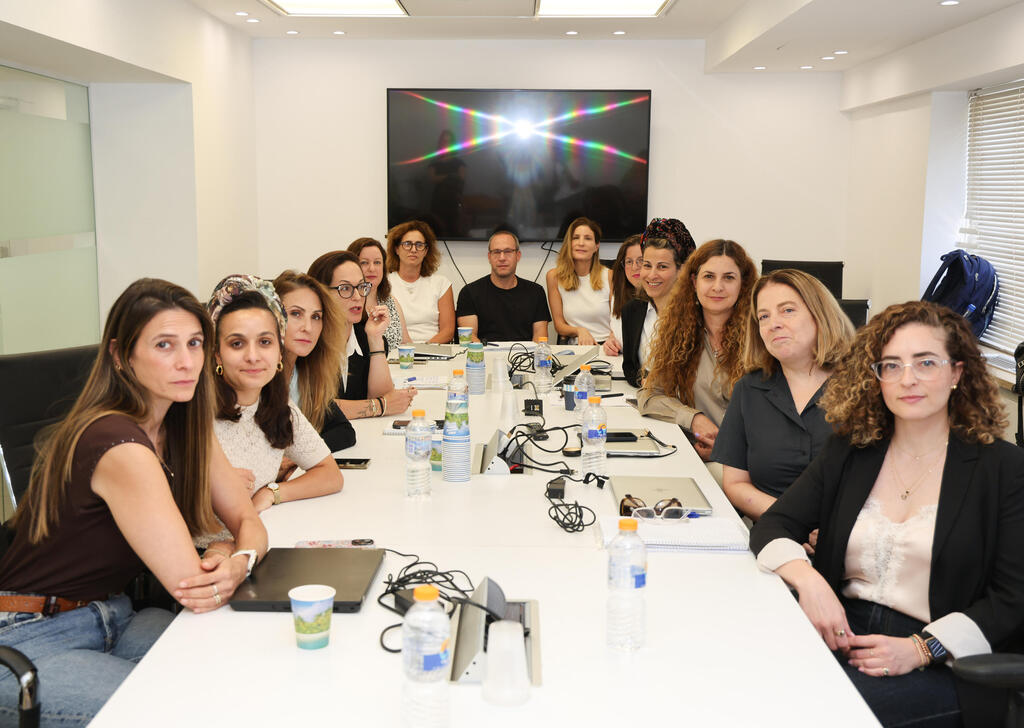
Juvenile prosecutors meet to discuss cases and trends in youth crime
(Photo: Yariv Katz)
Blame for the escalation in juvenile crime can be directed at the COVID-19 pandemic, the war or parents who are not always present in their children’s lives and do not insist enough on knowing what is happening inside their phones or computers.
But prosecutors say it is also important not to overlook Israel’s underfunded welfare and education systems, unfilled positions in social service departments, and educational psychologists and school counselors overwhelmed by their workloads. “In the most important and meaningful places, we are significantly understaffed,” Planitzky-Ravid said.
In that sense, prosecutors say there is something frustrating about dealing daily with offenses, some of which might have been prevented had someone noticed the deterioration in time. “These are children who passed through systems, changed schools, and no one saw there was a problem until they committed a crime,” Elkobi said.
And when the offense happens, prosecutors say, it can occur in an instant. “We see incidents that escalated from nothing,” Nahon Efrati said. “We enter the event after it has already happened. Our job is to think about how to prevent the next harm, in the right way.”