


Gaza flotilla activists announced Wednesday morning that they had reached the same point where Israel stopped a previous flotilla, about 200 kilometers from the Gaza Strip. According to the organizers, there is “increasing drone activity above the flotilla,” and they expect developments in the coming hours. “We have entered a high-risk zone. Stay alert,” they wrote. The activists are broadcasting the voyage live from cameras installed on board.
They claimed that unidentified vessels approached several of the ships, some with their lights off, prompting participants to implement security protocols in preparation for possible interception. The unidentified vessels later withdrew, and the activists said they are continuing their voyage to Gaza.
Gaza flotilla


Later, the flotilla organizers released an official statement claiming that “Israeli occupation naval forces launched an intimidation operation against the flotilla. One of the lead vessels, Alma, was aggressively surrounded for several minutes by warships, and onboard communications—including closed-circuit broadcasts—were remotely disabled. The ships approached dangerously, forcing the captain to execute a sharp evasive maneuver to prevent a head-on collision. Shortly afterward, the vessels turned to the ship Sirius, carrying out similar harassing maneuvers before eventually leaving. These reckless and frightening actions placed flotilla participants in severe danger.”
According to the flotilla, its mission is “peaceful and non-violent, carrying humanitarian aid and citizens from more than 40 countries. Obstructing our passage is illegal, and any attack or interception constitutes a war crime. Despite these provocations, we continue with determination to challenge Israel’s illegal blockade of the Gaza Strip, to stand with the Palestinian people and deliver aid to a besieged population facing famine and genocide.”
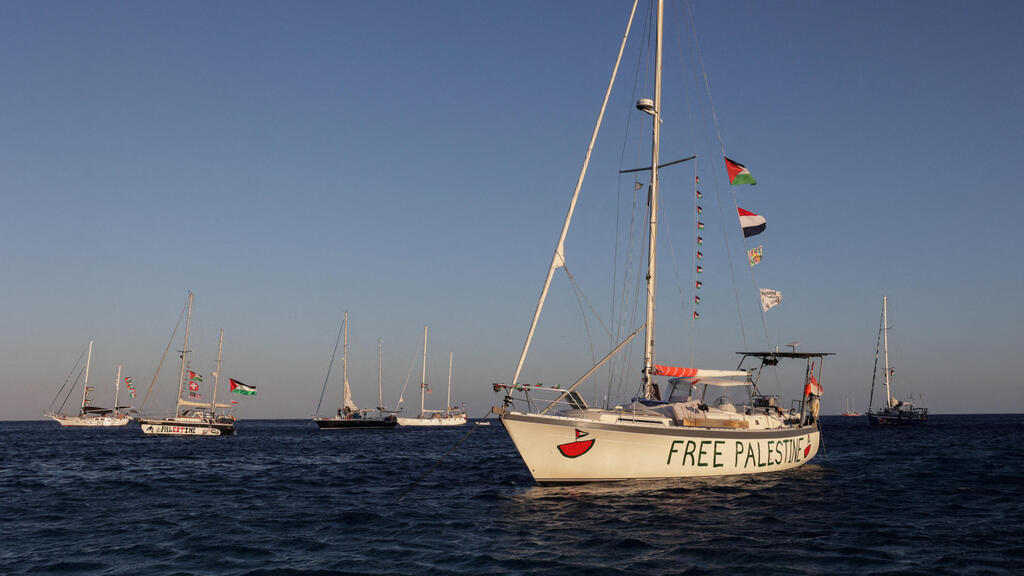
The IDF conveyed messages to flotilla leaders—including climate activist Greta Thunberg, as well as lawyers and members of parliament from various countries—that they would not be permitted to reach Gaza’s shores. The military clarified that if they wish to deliver humanitarian aid, they may dock at Ashdod port, unload the cargo there, and Israel will transfer it to Gaza. As of now, the activists have rejected all such offers.
While the IDF—and particularly the navy—are preparing for the possibility of forcibly taking control of the flotilla, police are already readying some 600 officers for the activists’ expected arrival at Ashdod port after their arrest. The goal is to bring them quickly to Israeli shores, where they will be detained and deported. Those who refuse will be held in custody until the conclusion of a fast-track legal process that will allow for deportation. Because the operation is set to take place on Yom Kippur, the police obtained special rabbinical approval in advance.
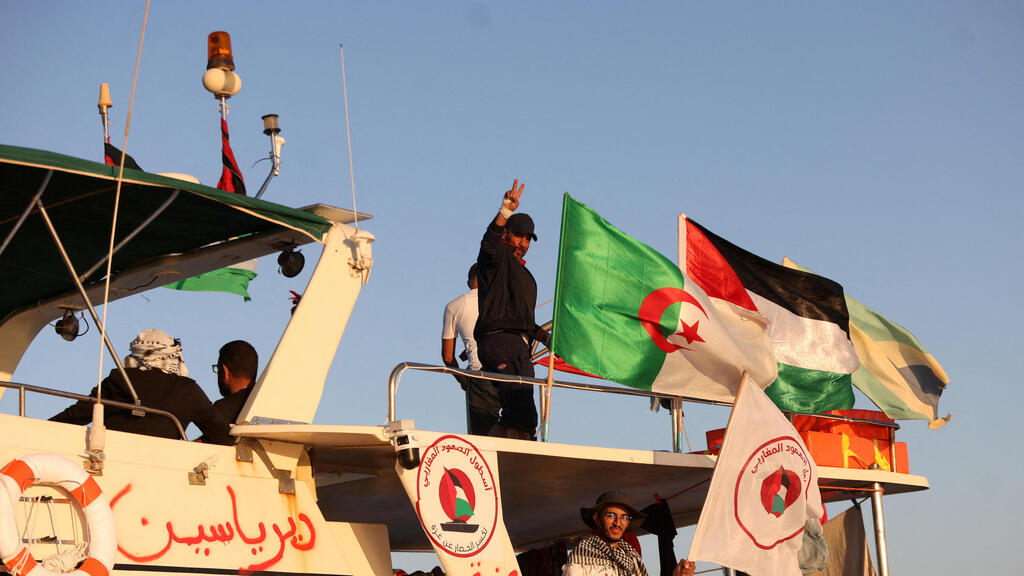
(Photo: Stefanos Rapanis/ Reuters)
Unlike the previous “Madelene” flotilla, which carried about 12 activists, the current flotilla—named Sumud—involves 50 ships and some 500 participants. It presents an unprecedented challenge for the IDF, raising the risk of escalation and potential loss of control. A special task force has therefore been established, including the IDF, Shin Bet, police, and the Foreign Ministry.
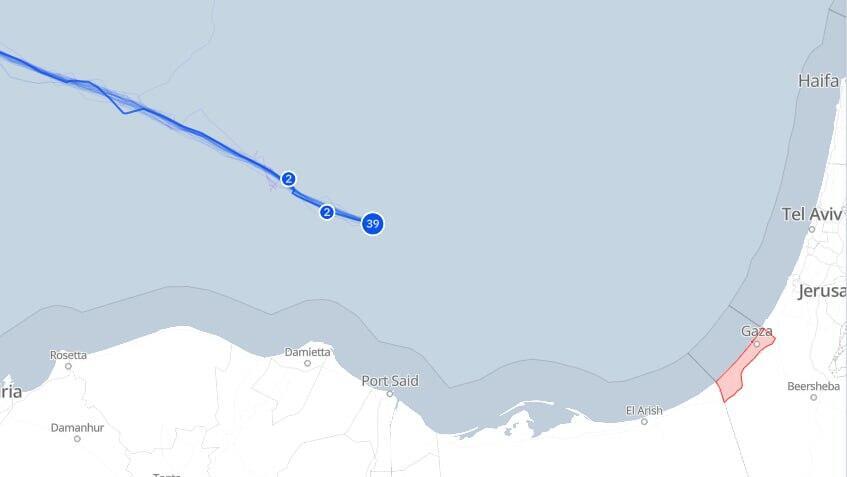
The Gaza flotilla’s location, as recorded on the website at 12:15
One activist, Tiago Ávila—who also attended the funeral of Hezbollah leader Hassan Nasrallah in February—said he published footage of an Israeli vessel that approached the flotilla. He alleged the ship disrupted his communications equipment and carried out “very dangerous maneuvers” around the boats. “Despite the loss of electronic devices, no one was injured, and we are continuing,” he said.
Following this activity, live broadcasts from several of the vessels were interrupted.

Greta Thunberg on one of the Gaza-bound flotilla ships
(Photo: Stefanos Rapanis/ Reuters)
Until recently, the flotilla was escorted by ships from Italy, Turkey, and Greece, but in Israeli territorial waters, it is expected to sail alone. The Israeli military has warned flotilla leaders—including climate activist Greta Thunberg—that they will not be allowed to reach Gaza’s shores. Israel has said that if the group wants to deliver humanitarian aid, they can dock at Ashdod port, unload their cargo there, and Israel will transfer it to Gaza. The activists have so far refused that offer.
First published: 08:41, 10.01.25