


The expected agreement between Iran and the United States is placing Lebanon’s government, led by President Joseph Aoun and Prime Minister Nawaf Salam, before a major test.
For months, Lebanon’s official leadership has sought to distance the country from long-standing Iranian influence, outlaw Hezbollah’s military and security activity and advance the concentration of weapons under state authority. Now, however, Beirut finds itself facing an agreement pushed by Iran that could bring an end to Israeli strikes in Lebanon.
Gallery
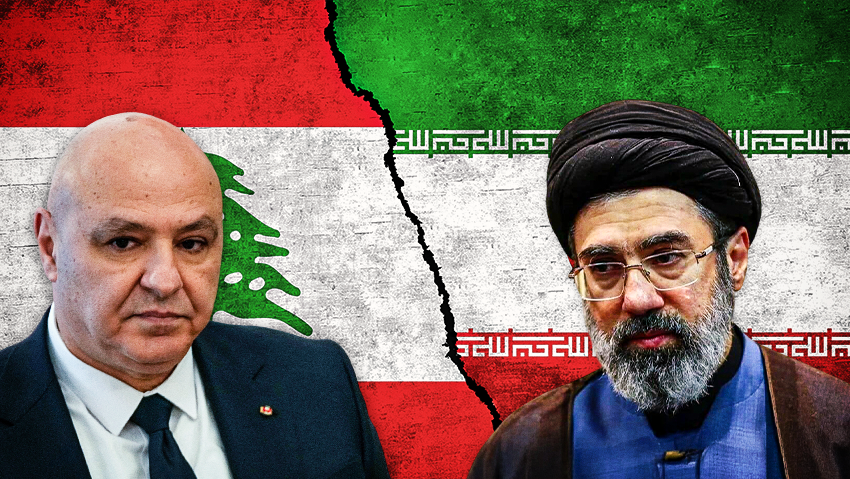
Joseph Aound and Mojtaba Khamenei
(Photo: AP, shutterstock, Petros Karadjias/Pool via REUTERS, Anna Moneymaker / AFP, ATTA KENARE / AFP, Sputnik/Alexander Kazakov/Pool via REUTERS)
Lebanon’s leadership does not oppose the end of Israeli attacks. On the contrary, it has made that one of its central goals in direct negotiations with Israel in recent weeks. But it does not want another country, especially Iran, to manage the contacts on its behalf.
That point has been made repeatedly by Lebanese officials in recent months: “No one but the Lebanese state may negotiate on behalf of Lebanon.”
Aoun also said last week: “We welcome assistance from many countries, from the Gulf states to Europe and others, but our condition is that they do not interfere in our internal affairs to advance their own interests.”
The issue is now especially sensitive because the official relationship between Lebanon and Iran has been strained in recent months. Iran’s ambassador to Lebanon, Mohammad Reza Shibani, is still considered persona non grata in the country. At the same time, Hezbollah and Iran have continued trying to preserve the unity of the so-called axis and shift the new Lebanese leadership’s approach toward Tehran.
On Monday afternoon, Hezbollah-affiliated Lebanese channel Al-Manar reported a drone strike in the village of Tebnine in southern Lebanon. The strike targeted a vehicle and was described by the IDF as the removal of a threat.
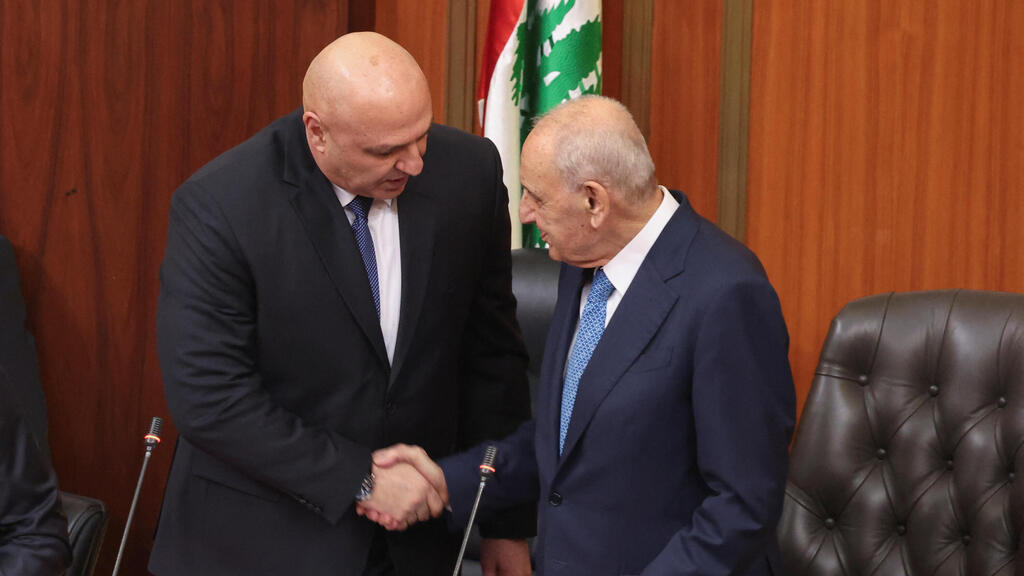
Nabih Berri with Lebanese President-elect Joseph Aoun
(Photo: REUTERS/Mohamed Azakir)
A new reality, and Hezbollah’s message
On June 12, before the current announcement of the expected US-Iran agreement, Hezbollah’s parliamentary bloc praised Iran for its missile response to last week’s Israeli strike in Beirut’s Dahieh district.
Hezbollah’s representatives in parliament said the Iranian response required Lebanon’s political leadership to rebuild its relations with Tehran. The bloc also condemned the direct negotiations with Israel.
Now, the emerging agreement between Iran and the United States has created a situation in which Iran is the actor seen as helping bring Israeli attacks in Lebanon to a halt. Iranian and Hezbollah officials are expected to keep stressing that point and argue that it was not Lebanon’s official leadership that extracted the country from the crisis, but Iran.
Iranian Foreign Ministry spokesman Esmaeil Baghaei said Monday that “ending the war in Lebanon is an inseparable part of the comprehensive ceasefire agreement. Iran is closely monitoring the implementation of the commitments.”
Hezbollah, for its part, formally congratulated “Iran, its leadership and its people on the great achievement of reaching an agreement, which led to a comprehensive ceasefire on all fronts, including Lebanon.”
The terror group said it expressed “deep gratitude for Iran’s unwavering support for Lebanon, its people and the resistance, and for its insistence that Lebanon be present in every agreement.”
“The Islamic Republic is truly a strong, loyal ally and supporter,” Hezbollah said. “This stage requires the government and all Lebanese political forces to return to a united national position. All calculations and paths that were taken must be reconsidered.”
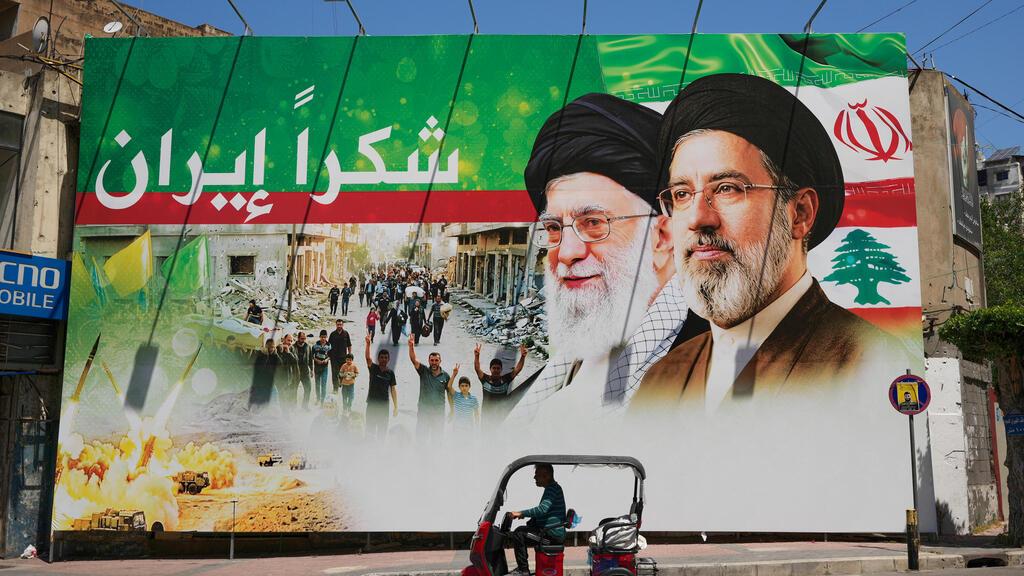
Thank-you signs for Iran in Beirut
(Photo: AP Photo/Hussein Malla)
Lebanon’s leaders praise deal, but questions remain
Lebanese Parliament Speaker Nabih Berri, who belongs to the Shiite Amal movement, an ally of Hezbollah, praised what he called the memorandum of understandings between Iran and the United States.
“We praise the memorandum of understandings between Iran and the United States and recognize the efforts of Pakistan, Qatar, Saudi Arabia and Egypt to reach an understanding that lays the foundations for security and stability in the region, including Lebanon,” Berri said.
Prime Minister Salam also welcomed the development.
“Since the beginning of the war imposed on Lebanon, the Lebanese government has worked to end it and prevent further harm to Lebanon and the Lebanese people,” he said. “Today, we hope that the US-Iran ceasefire agreement will succeed in ending this war and stopping the killing, destruction, displacement and all other tragedies and suffering inflicted on the Lebanese people.”
“I express my gratitude to everyone who contributed to achieving this outcome,” Salam added. “We will redouble our efforts through the ongoing negotiations in Washington to ensure a full Israeli withdrawal from our territory and the release of our prisoners. We will intensify efforts to secure the resources needed for reconstruction.”
Aoun also welcomed the agreement.
“I followed the announcement of the memorandum of understandings, and its emphasis on halting military operations and reducing escalation in the region, including Lebanon,” he said. “In this context, I appreciate the respect for Lebanese sovereignty in the memorandum and the recognition that Lebanon’s stability and security are an inseparable part of any serious effort to establish stability in the region.”
“The Lebanese people now expect these understandings to be translated into practical steps, to put an end to the cycle of violence and establish a phase of stability, security, recovery and reconstruction,” he added. “I also express my gratitude to all the countries and bodies that contributed to completing this memorandum, and to everyone who worked to include Lebanon in efforts aimed at ending escalation and stopping military operations on all fronts.”
But despite the official statements, it is unclear how much Lebanon’s leadership actually knows about the details of the emerging agreement. Lebanese channel Al Jadeed reported that “Lebanon’s presidency has not yet received official notification of the ceasefire in Lebanon or of the details of the agreement.”
Meanwhile, Hezbollah lawmaker Hussein al-Hajj Hassan claimed that Hezbollah and Berri had been informed that an Israeli withdrawal was included in the framework.
“If the Israeli army does not withdraw, we will speak then, and we will not recognize any lines,” he said.
Addressing displaced residents, he added: “Be patient. We will return with our heads held high. A joint statement by Hezbollah and Amal will be issued when a safe return is possible.”
The next round of direct negotiation meetings between Lebanese and Israeli delegations is expected to begin on June 22. Lebanon’s official leadership will now enter those talks with an “achievement” that Iran helped secure, rather than one Beirut achieved on its own.
If the Lebanese leadership’s challenge of preserving separation and independence from Iran was already difficult, the emerging agreement and the linking of regional fronts will make it harder. The question now is whether, despite the latest developments, Lebanon’s leadership will continue to act firmly against Hezbollah and Iranian influence in the country.