


Just one year after Iran unveiled its first drone carrier, the Shahid Bagheri — designed to carry multiple squadrons of drones and operate helicopters — the U.S. military said it struck the vessel, which is now burning.
In a statement issued overnight between Wednesday and Thursday, the commander of U.S. Central Command (CENTCOM), Adm. Brad Cooper, said American forces had sunk or destroyed more than 30 vessels during the campaign. He added that in the past several hours, U.S. forces had also struck an Iranian drone carrier roughly comparable in size to a World War II–era aircraft carrier.
Footage of the strike released by the US military


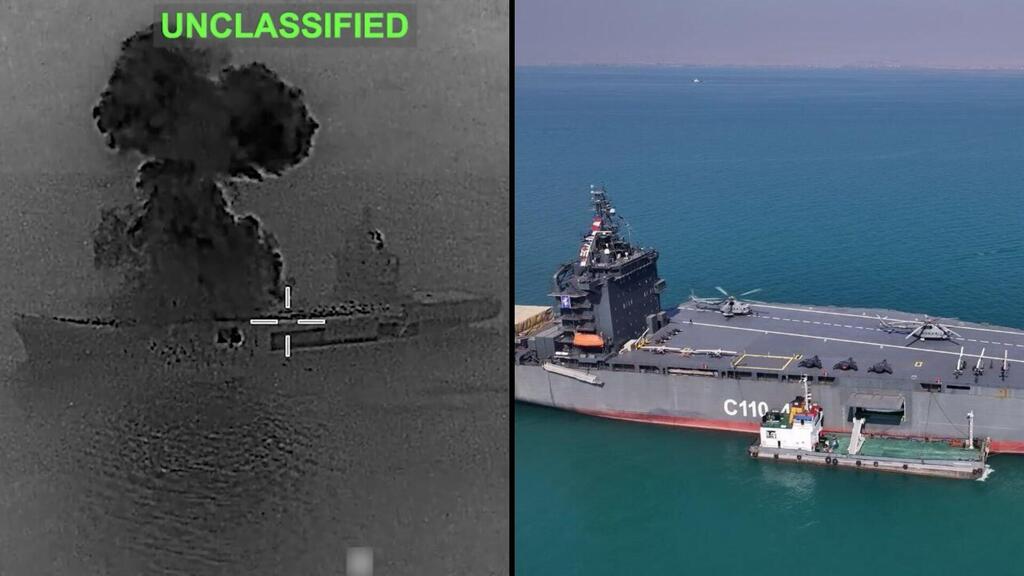
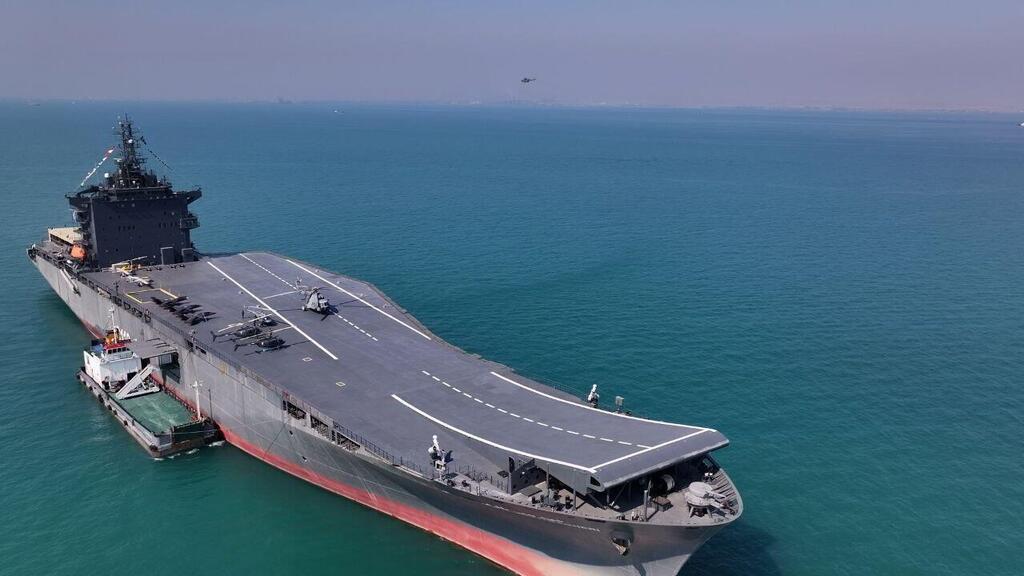
With a 180-meter angled runway, and dozens of drones and fast attack boats: the Shahid Bagheri
Alongside footage of the strike, CENTCOM said U.S. forces were continuing their operations against Iran’s navy without pause. The command said the Iranian drone carrier — described as roughly the size of a World War II aircraft carrier — had been hit and was currently on fire.
The Shahid Bagheri drone carrier is in fact a converted merchant ship that underwent extensive modifications. It features an angled runway about 180 meters (590 feet) long, allowing drones to take off and land. Images released in Tehran during its launch ceremony also showed helicopters positioned on the deck.
The vessel is about 240 meters (787 feet) long and, according to Iranian reports, can carry several squadrons of drones.
Reports in Iran say the ship can deploy up to 60 drones used for reconnaissance and attack missions. In addition to the aircraft on board, the Shahid Bagheri is reportedly equipped with air defense systems and anti-ship missiles, and carries dozens of fast attack boats.
These boats are used by Iran to carry out maritime attacks, either with personnel on board or as explosive-laden suicide vessels.
Beyond its offensive and defensive capabilities, the drone carrier also serves as a forward logistics base for the naval forces of Iran’s Islamic Revolutionary Guard Corps. According to Iranian reports, the vessel is equipped with intelligence-gathering and electronic warfare systems, and its interior facilities include a hospital and even a soccer field.
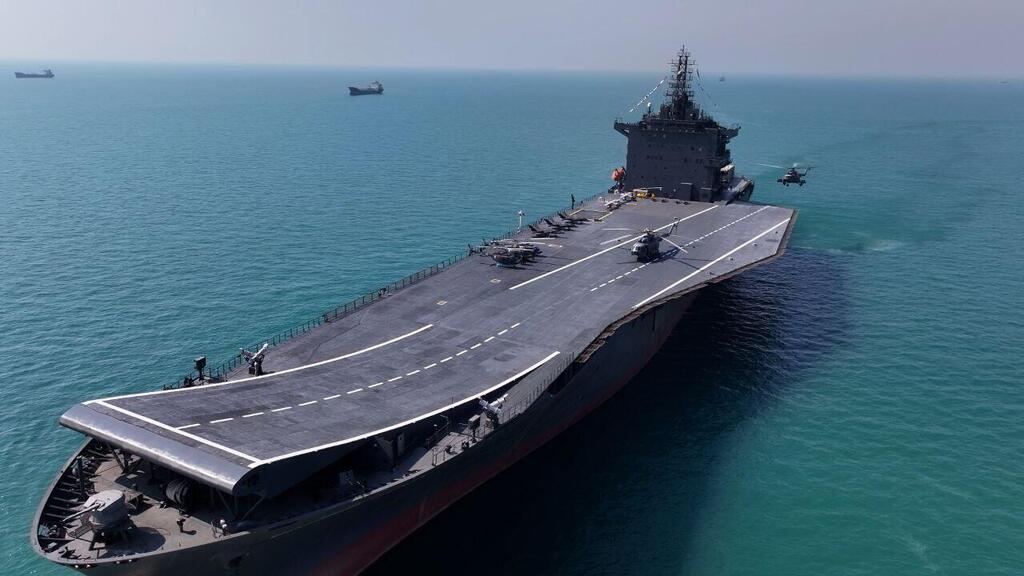
Also operates helicopters and includes a hospital and a soccer field
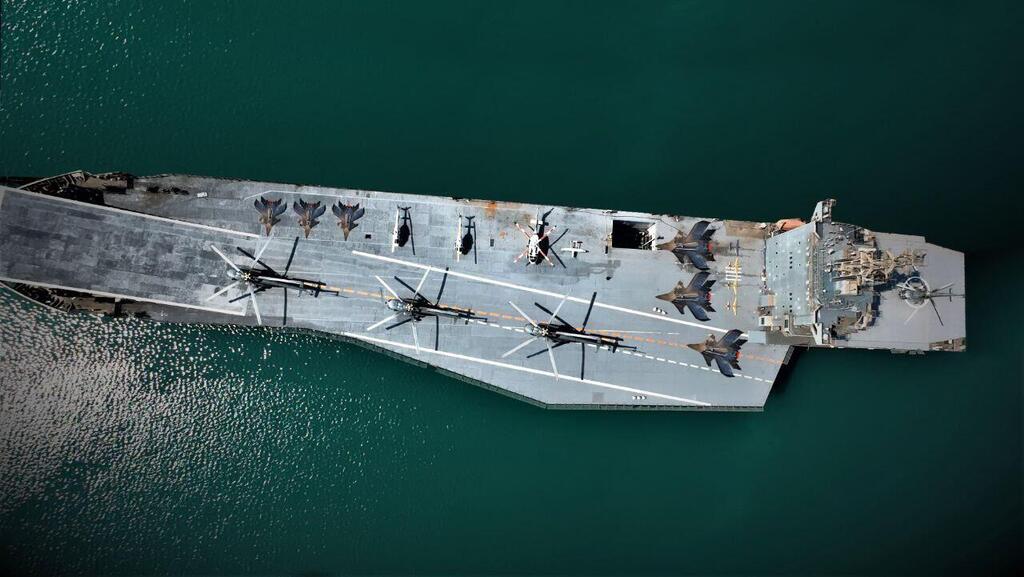
Earlier this week, the U.S. military had already reported striking the Shahid Bagheri, after Iran circulated new footage of the vessel about a month ago. The update came as Washington denied an Iranian claim that it had sunk a U.S. aircraft carrier. At the time, the U.S. military said the only carrier that had been hit was the Shahid Bagheri and that American forces had struck it within hours of the start of the operation. Cooper’s statement overnight indicated the large drone carrier had been targeted again.
Former Israeli Defense Minister Yoav Gallant previously revealed Iran’s plans to convert merchant ships into military platforms that he described as floating terrorist bases.
Speaking at a conference at Reichman University in May 2023, Gallant presented an image of the Shahid Bagheri and warned that such vessels were intended to carry a wide range of weapons, including drones, missiles and advanced intelligence and attack systems. He said the goal was to create forward operating bases capable of projecting Iranian power far from the country’s shores.
Gallant said at the time that these floating bases were already operational. He noted that one of the vessels had recently been observed sailing toward the Gulf of Aden, describing it as part of Iran’s broader maritime campaign in the Persian Gulf and the Arabian Sea.
According to Gallant, Iran was seeking to expand these activities into the Indian Ocean and beyond — including the Red Sea and eventually the Mediterranean — as part of a strategy aimed at threatening both civilian and military shipping lanes and maintaining a constant maritime threat in the region.
He argued that Iran’s approach amounted to a form of pirate-style maritime terrorism and said the country was behaving more like a collection of armed gangs than a conventional state.
Gallant also outlined what he viewed as the solution to the challenge, arguing that only international cooperation and the formation of coalitions against Iran-backed terrorism — combined with a credible military threat across multiple arenas — would provide an effective response to Iran’s activities in the air, at sea and on land.